


Posted by Faroo Pets Grooming
on July 31, 2026

Pet coat conditioning is the grooming step that follows shampooing — it restores moisture to the hair shaft, smooths the cuticle, and protects your pet’s coat for easier brushing and healthier fur. Think of it as the step that actually finishes the job shampoo starts. While shampoo lifts dirt and opens the hair cuticle, conditioner smooths and seals it, locking in hydration and leaving the coat softer, shinier, and far easier to manage.
The core benefits you’ll notice right away:
- Detangling — knots loosen and brush out with less pulling
- Hydration — the hair shaft and skin barrier stay moisturized
- Reduced static — especially helpful for long or fine coats
- Easier brushing — less friction means less discomfort for your pet
- Natural shine — smoothed cuticles reflect light better
Table of Contents
- What is pet coat conditioning, and how does it actually work?
- Which type of conditioner does your pet actually need?
- How to condition your pet’s coat at home, step by step
- How often should you condition your pet’s coat?
- What ingredients are safe, and what should you avoid?
- Why human hair conditioner is unsafe for pets
- Quick checklist for choosing the right conditioner
- Key Takeaways
- The difference conditioning makes — a groomer’s perspective
- Professional conditioning at your door with Faroopets
- Useful sources and further reading
What is pet coat conditioning, and how does it actually work?
Shampoo does its job by opening the hair cuticle to remove dirt, oil, and buildup. That’s exactly what you want during a bath. The problem is that an open cuticle leaves the hair shaft exposed, rough, and prone to tangling. Conditioner restores moisture, improves manageability, and protects the coat during brushing and clipping.
When conditioner is applied after shampooing, it smooths those lifted cuticle scales back down. The result is less friction between hair strands, which means fewer knots, less breakage, and a coat that dries faster. It also supports the skin’s natural barrier, which helps prevent dryness, flaking, and irritation.
Conditioning is both cosmetic and functional. A well-conditioned coat looks better, but it also holds up better under brushes, clippers, and heat. Professional groomers treat conditioning as a protective step, not just a finishing touch.
The practical outcomes are real: less friction between strands, improved light reflection for that natural shine, and reduced breakage during brushing. For pets with long or curly coats, skipping this step regularly can lead to dull, dry, difficult-to-manage fur and even skin irritation over time.
Which type of conditioner does your pet actually need?
Not all conditioners work the same way, and choosing the right type makes a real difference. Here’s how the main options compare:
| Type | How It Works | Best For |
|---|---|---|
| Rinse-out conditioner | Applied post-bath, left briefly, then rinsed | Routine hydration for most coat types |
| Leave-in spray / detangler | Sprayed on damp or dry coat, not rinsed | Between-bath manageability; daily use |
| Coat mask / deep treatment | Left on for several minutes before rinsing | Very dry, brittle, or matted coats |
Coat masks are intensive treatments designed for repair, while rinse-out conditioners and leave-in sprays work mostly on the surface to smooth and seal the cuticle. Here’s how to match the type to your pet’s coat:
- Short, smooth coats (Beagles, Boxers): a light rinse-out conditioner after baths is usually plenty
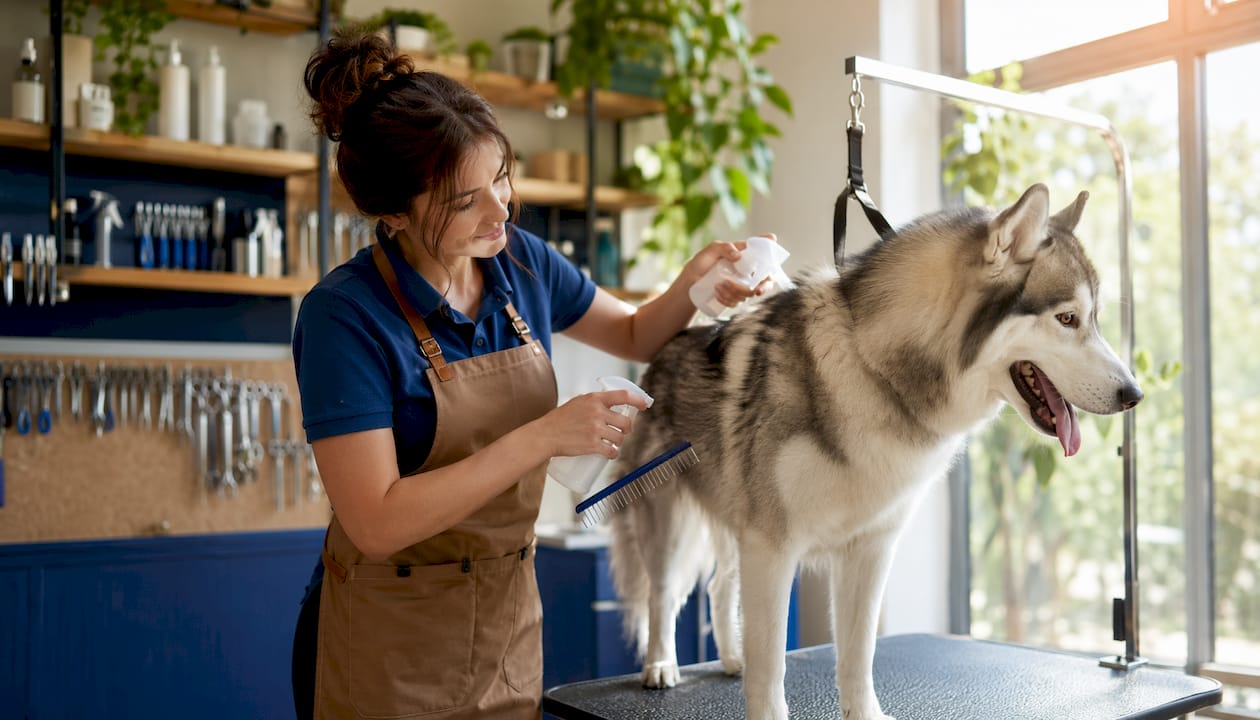
- Double coats (Huskies, German Shepherds): use sparingly; heavy conditioning can weigh down the undercoat and affect insulation
- Long or silky coats (Yorkies, Maltese): rinse-out every bath, plus a leave-in spray between sessions
- Curly or wool coats (Poodles, Bichon Frises): rinse-out every bath; masks every few weeks for extra hydration
- Active or outdoor pets: leave-in sprays help manage debris and tangles between baths
Pro Tip: For double-coated breeds, less is more. A light rinse-out conditioner on the topcoat is usually sufficient — avoid saturating the undercoat, which can flatten it and reduce its natural insulating properties.
How to condition your pet’s coat at home, step by step
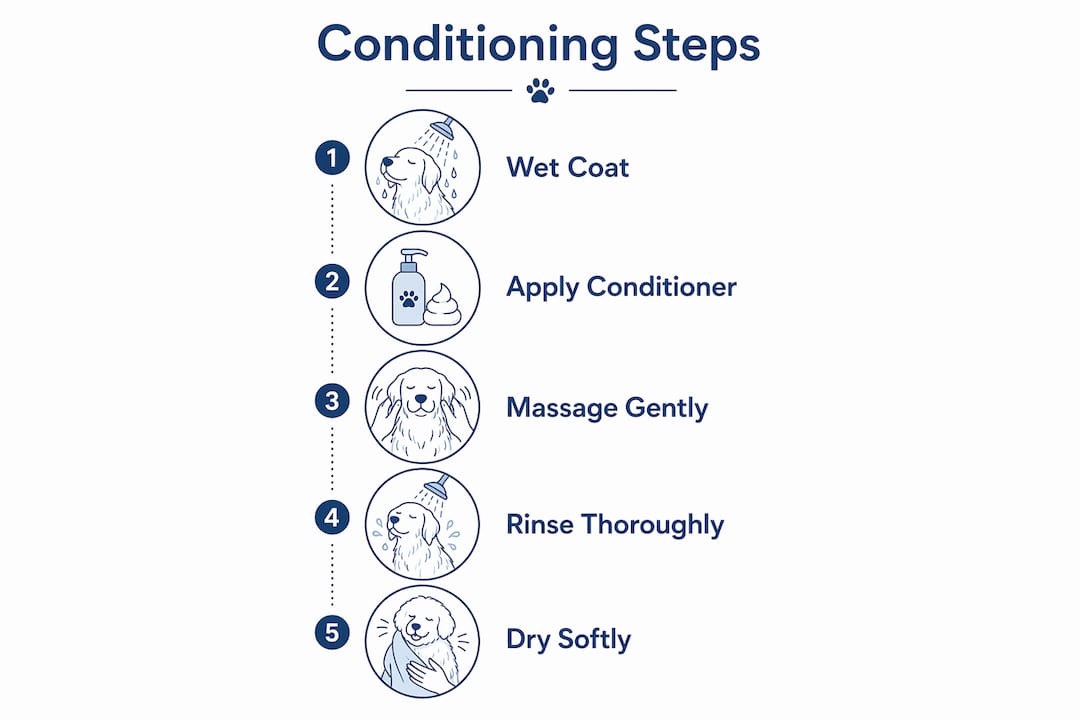
Getting the technique right matters as much as choosing the right product. Follow these steps for a safe, effective at-home conditioning session.
- Brush before bathing. Remove loose tangles and mats before the bath. Brushing prior to bathing allows conditioner to distribute evenly and improves detangling results.
- Shampoo first with a pet-safe formula. Rinse thoroughly so no shampoo residue remains before applying conditioner.
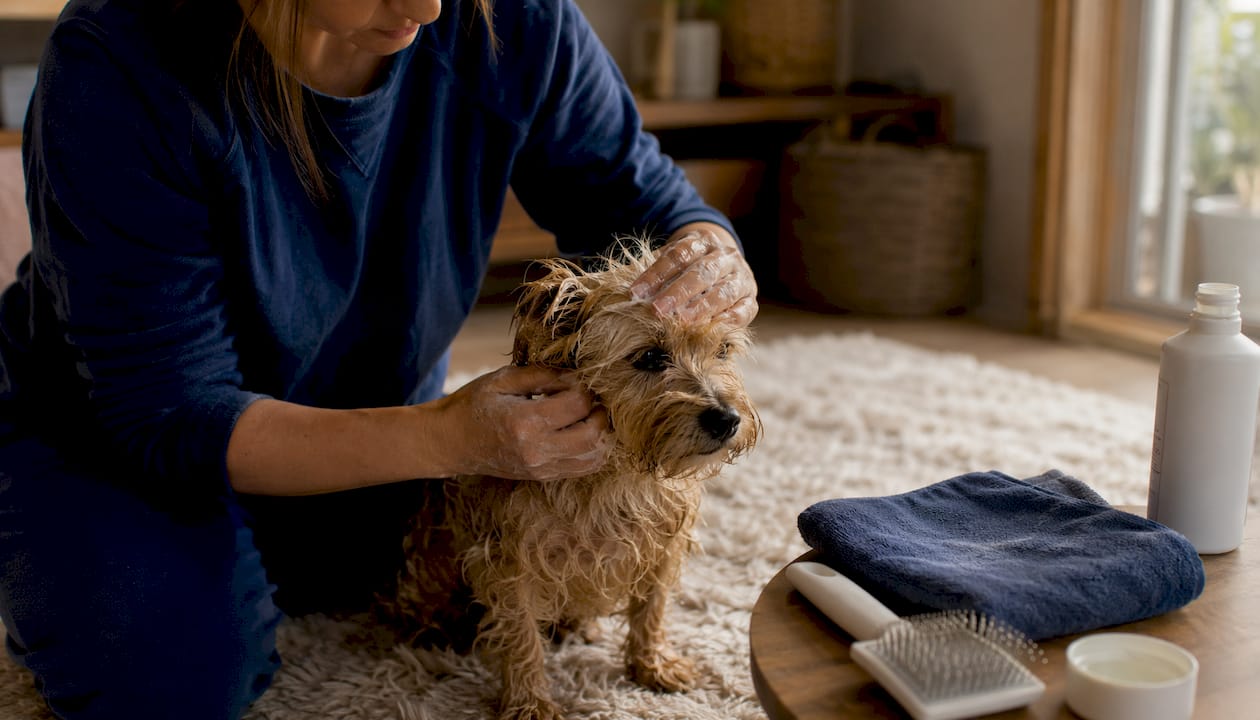
- Apply conditioner to the coat, not the face. Work it through with your fingers or a wide-tooth comb, avoiding the eyes, ears, and mouth. Focus on areas prone to tangling — behind the ears, under the legs, and along the belly.
- Wait the recommended time. Rinse-out conditioners typically need 2–5 minutes; coat masks may need longer. Always follow the product label.
- Rinse thoroughly. Leftover conditioner residue can attract dirt and cause skin irritation. For leave-in sprays, skip this step and simply work the product through the coat.
- Dry gently with low heat. Gentle low-heat blow-drying with brushing locks in conditioning benefits and reduces the risk of hot spots or heat damage.
- Brush and finish. Use a brush suited to your pet’s coat type while the coat is still slightly damp to take full advantage of the conditioner’s slip.
A wide-tooth comb or rake is your best friend during conditioning. Working it through the coat while the conditioner is still on helps loosen knots gently, so rinsing leaves the coat smooth rather than tangled.
Pro Tip: Squeeze out excess water before applying conditioner. A soaking-wet coat dilutes the product and reduces how well it absorbs.
⚠️ Safety note: Always keep conditioner away from your pet’s eyes and ears, and watch for redness, scratching, or unusual behavior after any new product — these are signs to stop use and rinse immediately.
How often should you condition your pet’s coat?
Not every dog needs conditioner every bath — frequency depends on coat type, skin condition, and lifestyle. Here’s a simple way to think about it:
Condition based on coat need, not the calendar. A curly-coated Poodle and a short-haired Beagle have very different conditioning needs, even if they’re bathed on the same schedule.
General frequency guidelines:
- Long, curly, or wool coats: condition every bath
- Short or smooth coats: every other bath, or when the coat feels dry
- Double-coated breeds: sparingly, and only when the coat shows signs of dryness
- Leave-in sprays: can be used more frequently than rinse-out products, especially for dry or tangle-prone coats
Signs your pet’s coat needs conditioning:
- Visible tangling or matting after brushing
- Dull, lackluster fur that doesn’t reflect light
- Brittle hair that breaks during brushing
- Coat takes longer than usual to dry
- Excessive static when brushing
Environmental factors matter too. Pets that swim frequently, spend a lot of time outdoors, or live in dry climates tend to need conditioning more often. For active pets, a leave-in spray after outdoor sessions can help manage debris and keep the coat manageable between baths.
What ingredients are safe, and what should you avoid?
Choosing the right formula protects your pet’s skin and coat. Here’s what to look for and what to skip:
Look for:
- Mild emollients (shea butter, coconut oil) for moisture
- Colloidal oatmeal for soothing dry or sensitive skin
- Aloe vera for gentle hydration
- Omega-rich botanical oils (argan, flaxseed) for shine and barrier support
- pH-balanced formulas designed for pets
Avoid:
- Human-formula fragrances and synthetic perfumes
- Sulfates in high concentrations, which can strip natural oils
- High alcohol content, which dries the coat
- Parabens, especially for pets with sensitive skin
- Certain essential oils (tea tree, eucalyptus, peppermint) — toxic to cats and potentially irritating to dogs
Species-specific caution: Cats are significantly more sensitive to topical ingredients than dogs. Their grooming behavior means they ingest whatever is on their coat, so any product used on a cat must be explicitly labeled safe for feline use. Vet-approved shampoos and conditioners are the safest choice for both species.
If you notice redness, itching, or unusual licking after applying any product, stop use immediately, rinse the coat thoroughly with warm water, and contact your vet. Reactions can develop even with products labeled “natural.”
A pet’s diet also plays a role in coat health. Omega-3 and omega-6 fatty acids support skin and hair from the inside out, and topical conditioning works best when nutrition is solid too.
Why human hair conditioner is unsafe for pets
Human conditioners are formulated for human skin, which sits at a pH of around 4.5–5.5. A dog’s skin is significantly more alkaline, typically ranging between pH 6.2 and 7.4. Applying a human-formula product disrupts that balance, weakening the skin’s protective barrier and leaving your pet vulnerable to bacterial growth, dryness, and irritation.
Common human conditioner ingredients like silicones, heavy fragrances, and certain preservatives can coat the hair shaft in a way that attracts dirt and clogs follicles on pets. The result often looks like improvement at first — the coat feels softer temporarily — but the underlying skin suffers.
Pro Tip: When shopping, look for the phrase “formulated for dogs” or “formulated for cats” on the label, not just “pet-safe.” Species-specific pH formulation is the detail that actually matters.
Quick checklist for choosing the right conditioner
Use this before you buy:
- ✅ Labeled for your pet’s species (dog or cat — not interchangeable)
- ✅ pH-balanced for pets (not humans)
- ✅ Matches your pet’s coat type (short, long, curly, double)
- ✅ Rinse-out or leave-in based on your grooming routine
- ✅ Fragrance-free or hypoallergenic if your pet has sensitive skin
- ✅ Clear timing instructions on the label
- ✅ Free of tea tree oil, eucalyptus, and high-alcohol ingredients
- ✅ Backed by a vet recommendation or professional groomer endorsement
Be skeptical of packaging that promises “salon-quality shine” without listing ingredients. A product that names its active moisturizing agents (oatmeal, aloe, omega oils) is more trustworthy than one that leads with marketing language. For pets with chronic matting, severe dryness, or skin conditions, a professional-grade treatment from a certified groomer will outperform any over-the-counter product. Nutrition matters here too — the right diet for skin and coat supports everything topical conditioning does.
Key Takeaways
Pet coat conditioning is the post-shampoo step that restores moisture, smooths the hair cuticle, and protects your pet’s coat from tangles, dryness, and breakage.
| Point | Details |
|---|---|
| Conditioning follows shampooing | Shampoo opens the cuticle to clean; conditioner seals it to protect and hydrate. |
| Match product type to coat | Long and curly coats need rinse-out every bath; double coats need only light, occasional use. |
| Never use human conditioner | Human formulas disrupt a pet’s skin pH and can cause irritation, buildup, and barrier damage. |
| Watch for reaction signs | Redness, itching, or unusual licking after a new product means stop, rinse, and call your vet. |
| Faroopets offers professional conditioning | Faroopets’s mobile grooming sessions include conditioning treatments suited to your pet’s coat type. |
The difference conditioning makes — a groomer’s perspective
We’ve seen it firsthand: a dog that comes in matted and dull leaves looking and feeling completely different after a proper conditioning treatment. The time saved on mat removal alone is significant. When a coat is regularly conditioned, knots don’t have the chance to tighten into painful mats, and the grooming session itself is gentler and faster for the pet.
What most owners underestimate is how much conditioning protects the coat between sessions. A well-conditioned coat sheds debris more easily, tangles less on walks, and holds a groomed finish longer. For pets with maintenance grooming schedules, conditioning isn’t optional — it’s what makes the whole routine work.
When we recommend in-salon masks or multi-session packages, it’s usually for pets with chronic dryness, heavy outdoor exposure, or coats that have been neglected for a while. A single deep treatment can reset the coat’s condition, and a maintenance schedule keeps it there. For owners who want that level of care without the guesswork, Faroopets is the professional option we’d point you toward.
Professional conditioning at your door with Faroopets
Your pet deserves more than a quick rinse. Faroopets brings certified, caring groomers directly to your home in a sanitized mobile van, so your dog or cat gets a full conditioning treatment without the stress of a salon visit.

Our luxury full dog grooming and luxury full cat grooming packages include professional conditioning suited to your pet’s specific coat type, applied by groomers who know the difference between a double coat and a curly one. For pets that need ongoing care, our multi-session grooming packages keep conditioning benefits consistent across appointments. Ready to give your pet’s coat the care it deserves? Book your grooming session today and let us handle the rest.
This article is for general informational purposes only and is not a substitute for professional veterinary advice. Always consult your vet for guidance specific to your pet’s health and skin condition.
Useful sources and further reading
- VCA Animal Hospitals — Grooming and Coat Care for Your Dog
- ASPCA — Dog Grooming Tips
- Virginia Tech Veterinary Teaching Hospital — How to Keep Your Pet’s Coat Healthy
- Fur Love — Dog Conditioner Guide
- Cindra — Do Dogs Need Conditioner?
- Faroopets Blog — Ways to Prolong Grooming Effects for Your Pet
- Faroopets Blog — How Nutrition Shapes Your Pet’s Grooming Results
- Faroopets Blog — Puppy Coat Care Step by Step for New Owners
