


Posted by Faroo Pets Grooming
on June 11, 2026

TL;DR:
- Pet fur detangling involves carefully removing knots and mats to ensure your pet’s comfort and skin health. Using proper tools like wide-tooth combs, slicker brushes, and detangling sprays—applied correctly and with patience—can prevent pain and skin injury. Regular, gentle grooming routines and recognizing when to seek professional help are essential for maintaining a healthy, mat-free coat.
Pet fur detangling is the process of safely removing knots and mats from your pet’s coat using specialized tools and techniques designed to minimize discomfort and protect skin health. In professional grooming circles, this practice is called coat dematting, and it goes far beyond aesthetics. Mats are a slow-motion injury that cause pain pets often hide until the damage is serious. This pet fur detangling guide walks you through every step, from choosing the right tools to building a prevention routine, so your pet stays comfortable, healthy, and happy.
What tools do you need for effective pet fur detangling?
The right tools make the difference between a painful session and a calm, productive one. Every pet owner working through this pet fur detangling guide should have four core items ready before touching a single knot.
- Wide-tooth comb: Ideal for working through loose tangles in medium to long coats without pulling. Start here before reaching for anything else.
- Slicker brush: A flat brush with fine, angled wire pins. It lifts shed hair and smooths the outer coat after initial detangling. Brands like Chris Christensen and Andis make reliable options.
- Dematting comb: Features sharp, curved blades that slice through dense mats. Use it only on mats that a wide-tooth comb cannot loosen.
- Detangling spray: A pH-balanced spray or leave-in conditioner that adds slip to the hair shaft, making knots easier to separate. Look for formulas with aloe vera, argan oil, or panthenol, and avoid anything with alcohol, which dries the coat.
| Tool | Best use | Coat type |
|---|---|---|
| Wide-tooth comb | Loose tangles, finishing | All coat types |
| Slicker brush | Surface smoothing, shedding | Medium to long coats |
| Dematting comb | Dense, tight mats | Long, thick coats |
| Detangling spray | Softening knots before combing | All coat types |
Quality matters more than price here. A cheap plastic comb with rough seams can snag and break hair, turning a minor tangle into a larger mat. Investing in seamless metal combs and a good detangling spray saves you time and your pet discomfort.
Pro Tip: Place a non-slip mat on your grooming surface and keep treats within reach. Pets that feel secure and rewarded stay calmer, which makes every tool more effective.
How to prepare your pet and environment before detangling fur
Preparation is the part most pet owners skip, and it is exactly why so many grooming sessions end in stress. A calm pet in a calm space makes detangling fur faster and safer for everyone.
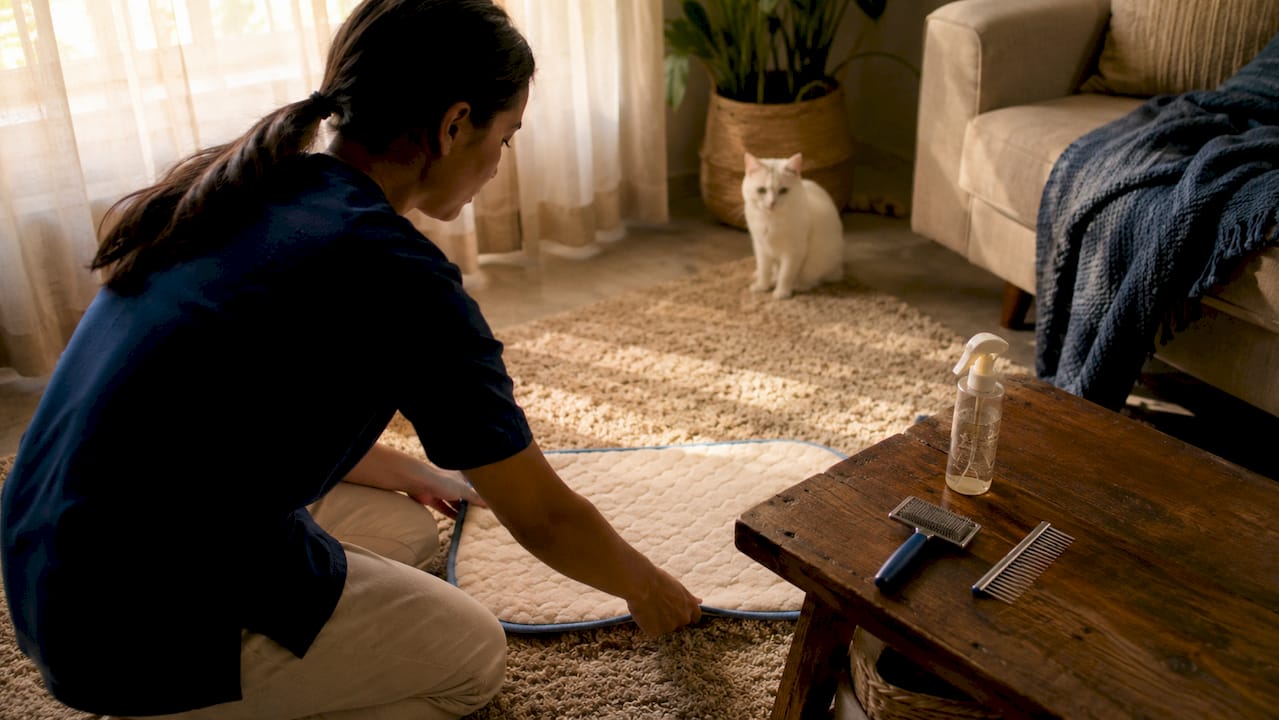
Choose a quiet time of day when your pet is naturally relaxed, ideally after a walk or meal. Keep initial sessions to 5 to 10 minutes so your pet does not become overwhelmed. Short sessions build tolerance over time, and a pet that associates grooming with treats and calm handling will cooperate more with each session.
Before you start, run your fingers through the coat to locate mats. Then use what groomers call the finger test: try to slide one finger under the mat at the skin line. If you cannot insert a finger safely, the mat is too tight and too close to the skin for safe home detangling. Stop there and book a professional appointment. Attempting to force a comb through a skin-level mat risks tearing the skin.
Here is how to set up your grooming station:
- Place a non-slip rubber mat on a table or the floor, depending on your pet’s size.
- Set out your wide-tooth comb, slicker brush, dematting comb, and detangling spray within easy reach.
- Have high-value treats ready, such as small pieces of chicken or commercial training treats.
- Keep a soft towel nearby in case your pet needs a calming wrap.
Stress-free grooming relies on positive reinforcement and giving pets the option to take breaks when they feel overwhelmed. If your pet turns away, licks their lips, or yawns repeatedly, those are stress signals. Pause, offer a treat, and give them a moment before continuing. For pets with significant grooming anxiety, our guide on reducing grooming stress covers cooperative care techniques in more detail.
Step-by-step guide to safely detangle pet fur without causing pain
This is the core of any solid pet fur maintenance guide. Follow these steps in order, and you will remove mats without hurting your pet.
- Apply detangling spray generously. Saturate the mat and surrounding fur, making sure the spray reaches the base of the knot, not just the surface. Surface application does almost nothing for dense mats.
- Wait 5 to 10 minutes. Let the product penetrate and soften the hair shaft. Use this time to give your pet calm attention and a few treats.
- Separate the outer hair with your fingers first. Gently pull apart the outermost strands of the mat before introducing any tool. This reduces the amount of work the comb has to do.
- Hold the fur near the skin. Place your free hand between the mat and your pet’s skin, gripping the fur at the base. Holding fur near the skin prevents the comb from yanking directly on the skin, which is the most common cause of pain during home grooming.
- Start combing from the outer edge of the mat. Never push the comb into the center of a knot. Working from the outer edge loosens the mat gradually without tightening it further.
- Use short, gentle strokes moving from the ends toward the base. Work in small sections. Each stroke should free a few hairs at a time, not attempt to pull through the entire mat at once.
- Switch to a dematting comb for dense mats. If the wide-tooth comb stalls, use a dematting comb with careful, controlled strokes. Never yank or rip through a knot, as yanking causes pain and potential skin injury that may require veterinary care.
- Finish with a slicker brush. Once the mat is gone, smooth the area with a slicker brush to check for remaining tangles and restore the coat’s natural texture.
| Step | Action | Key safety note |
|---|---|---|
| 1 | Apply detangling spray | Reach the base of the knot |
| 2 | Wait 5 to 10 minutes | Do not rush this step |
| 3 | Finger-separate outer hair | Reduces tool stress on coat |
| 4 | Hold fur near skin | Prevents skin pulling |
| 5 | Comb from outer edge inward | Never start at the center |
| 6 | Short strokes, ends to base | Work in small sections |
| 7 | Use dematting comb if needed | No yanking, ever |
| 8 | Finish with slicker brush | Check for remaining tangles |
When to stop: If the mat does not loosen after two rounds of spray and careful combing, or if your pet shows signs of pain such as flinching, vocalizing, or trying to bite, stop the session. A professional groomer or veterinarian can clip the mat safely without risking skin damage.
Pro Tip: Work on one mat at a time and reward your pet after each one. Completing a full coat in a single session is not the goal. Comfort and trust are.
Common mistakes to avoid when detangling pet fur
Even well-meaning pet owners make errors that turn a manageable mat into a painful problem. Knowing what not to do is just as important as knowing the right technique.
- Wetting mats with plain water before brushing. Water causes hair shafts to swell, which tightens knots further. Always use a dry-application detangling spray or oil-based conditioner instead.
- Starting at the center of a mat. Pushing a comb into the middle of a knot compresses it. Always start at the outer edges and work inward gradually.
- Ignoring stress signals. Pets that are panting, trembling, or trying to escape are telling you something important. Pushing through those signals damages trust and makes future sessions harder.
- Attempting mats too close to the skin alone. The finger test exists for a reason. If you cannot slide a finger under the mat, do not proceed without professional help.
- Using scissors to cut out mats without training. Skin tents into mats, making it very easy to cut the skin rather than the fur. Leave scissor work to trained groomers.
- Skipping breaks. Long, uninterrupted sessions trigger stress responses in pets. A five-minute break with a treat resets the experience.
Correcting these habits early protects your pet’s skin and your relationship with them during grooming. If you find yourself regularly dealing with severe mats, that is a signal to increase brushing frequency, not to push harder during detangling sessions.
How to maintain a detangled coat and prevent future mats
Prevention is the most effective pet fur care advice we can offer. Once you have worked through a mat, the goal is to make sure it does not come back.
- Brush according to coat type. Long-haired pets need daily brushing, while short-haired pets do well with one to two sessions per week. Skipping even a few days on a long coat can allow tangles to set into mats.
- Focus on high-friction areas. The spots behind the ears, under the armpits, around the collar line, and between the back legs mat fastest because of constant movement and rubbing. Check these areas first at every session.
- Use a detangling conditioner during baths. Apply a coat-specific conditioner after shampooing and rinse thoroughly. Residue left in the coat can attract dirt and contribute to tangling.
- Dry the coat completely after washing. Damp fur mats faster than dry fur. Use a pet-safe dryer on a low heat setting or a clean towel, and brush through the coat as it dries to keep it separated.
- Schedule regular grooming health checks. Routine detangling supports pet health beyond coat appearance. Running your hands and a comb through the coat regularly helps you spot lumps, skin infections, or parasites early, before they become costly problems.
For long-haired cats specifically, our grooming routine for long-haired cats covers breed-specific brushing schedules and product recommendations. Keeping your grooming supplies organized also makes it easier to stay consistent, because when everything is ready to go, you are far more likely to actually do it.
Key takeaways
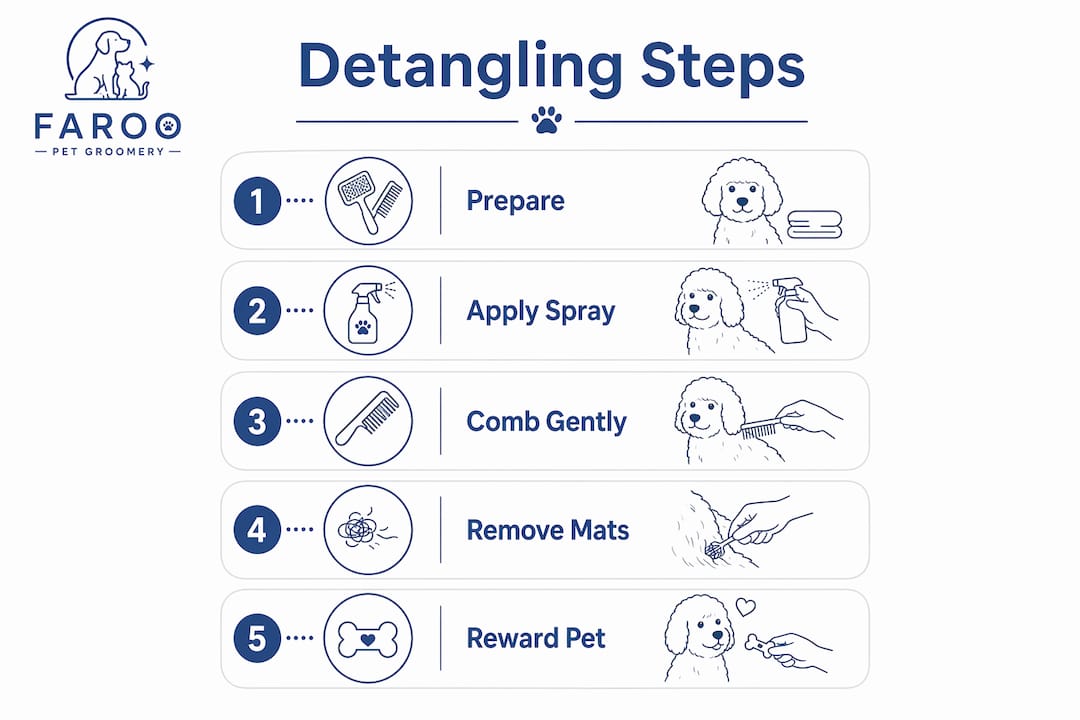
Effective pet fur detangling requires the right tools, a calm environment, and a technique that always works from the outer edge of a mat inward, never from the center.
| Point | Details |
|---|---|
| Use the right tools | A wide-tooth comb, slicker brush, dematting comb, and pH-balanced spray are the core four. |
| Apply spray to the base | Detangling spray must reach the knot’s base, not just the surface, to soften it effectively. |
| Hold fur near the skin | Gripping fur at the base prevents painful tugging and protects your pet’s skin during combing. |
| Know when to stop | If the finger test fails or your pet shows pain signals, stop and contact a professional groomer. |
| Prevent with routine brushing | Daily brushing for long coats and weekly for short coats stops mats from forming in the first place. |
What I have learned from years of watching pets get groomed
Most pet owners come to us after a mat has already become a problem. They tried to push through it at home, the pet got upset, and now grooming feels like a battle. That pattern is completely avoidable, and it starts with one mindset shift: detangling is not a task you complete. It is a relationship you build.
The pets I have seen respond best to grooming are not the ones with the easiest coats. They are the ones whose owners learned to read their signals, kept sessions short, and never forced the issue. A five-minute session that ends on a positive note does more for long-term grooming cooperation than a forty-minute struggle that leaves everyone exhausted.
The other thing I want to say plainly is this: knowing when to call a professional is not giving up. It is good judgment. Mats that sit against the skin, mats that cover large areas, or mats on a pet that is already anxious about grooming are all situations where a trained groomer with the right clippers will get a better outcome than any home technique. We see this at Faroopets regularly. Owners who combine professional sessions with consistent home brushing have pets with the healthiest, most manageable coats. That combination is the actual goal.
— Growth
Ready for a professional touch? Faroopets is here to help
When home detangling reaches its limit, Faroopets brings professional grooming directly to your door in Dubai. Our certified groomers handle everything from routine brushing to severe mat removal, using tools and techniques that keep your pet calm and comfortable throughout.

Whether your dog needs a thorough professional dog grooming session to tackle stubborn mats, or your cat is due for expert coat care through our cat grooming service, we have a package designed for them. Our mobile vans are sanitized before every appointment, and our groomers are trained to work gently with anxious pets. Browse all available options and choose your service to book a session that fits your schedule. Happiness really is just a brush stroke away.
FAQ
What is the best way to detangle severely matted pet fur?
Apply a generous amount of detangling spray to the dry mat and wait 5 to 10 minutes before attempting to comb. If the mat sits against the skin and you cannot slide a finger underneath it safely, stop and contact a professional groomer to avoid skin injury.
Can I use water to loosen mats before brushing?
Plain water tightens mats by causing hair shafts to swell, making the knot harder to remove. Use a dry-application detangling spray or oil-based conditioner instead, which adds slip without compressing the mat further.
How often should I brush my pet to prevent mats?
Long-haired pets require daily brushing to prevent mat formation, while short-haired pets typically need brushing one to two times per week. Pay extra attention to high-friction areas like behind the ears, under the armpits, and around the collar line.
What tools do I need to detangle pet fur at home?
The four core tools are a wide-tooth comb, a slicker brush, a dematting comb, and a pH-balanced detangling spray. Quality matters: seamless metal combs reduce snagging, and alcohol-free sprays protect the coat’s natural moisture.
When should I take my pet to a professional groomer for mat removal?
Take your pet to a professional when the finger test fails, meaning you cannot slide a finger under the mat at the skin line, or when your pet shows clear signs of pain or stress during home detangling attempts. Professional groomers have the clippers and training to remove tight mats safely without risking skin tears.
