


Posted by Faroo Pets Grooming
on May 15, 2026

TL;DR:
- Many pets in Dubai experience grooming anxiety that can be effectively reduced through gentle, structured techniques. Recognizing that stress is learned and can be unlearned, owners should focus on short sessions, positive reinforcement, and staying below their pet’s stress threshold. Consistent practice and a calm mindset help transform grooming from a stressful ordeal into a peaceful, manageable experience.
Many pet owners in Dubai assume that a squirming, trembling dog or a hissing cat during grooming is simply “how it goes.” That belief is one of the most common misconceptions we hear, and it holds a lot of pets back from the comfortable, healthy grooming experiences they deserve. The truth is that grooming anxiety is not a fixed trait in your pet. It is a response that can be gently reshaped with the right approach. In this article, we walk you through everything you need to know, from understanding the root causes to applying proven, step-by-step techniques that genuinely calm anxious pets.
Table of Contents
- Understanding grooming for pet anxiety
- Core principles and techniques for calming grooming
- Measuring progress: How to know if stress is decreasing
- Special cases: What to do when grooming anxiety is severe
- Tailoring your approach: Cats, dogs, and the Dubai context
- The real secret: Why mindset matters as much as methods
- How Faroo Pets supports stress-free grooming for anxious pets
- Frequently asked questions
Key Takeaways
| Point | Details |
|---|---|
| Stress can be reduced | Most pets’ grooming anxiety responds well to short sessions, gentle handling, and positive reinforcement. |
| Behavior measures progress | Track reduced stress signals over multiple sessions for true improvement, not just completion. |
| Severe cases need help | If DIY methods aren’t enough, professional or veterinary support is both safe and effective. |
| Tailor by pet and context | Cats, dogs, and Dubai’s unique environment each require customized strategies for grooming and anxiety. |
Understanding grooming for pet anxiety
Grooming for pet anxiety is not just about making a session more pleasant. It is a specific, intentional approach that prioritizes your pet’s emotional state before, during, and after every grooming interaction. Unlike standard grooming, which focuses mainly on the physical result, anxiety-aware grooming treats stress reduction as the primary goal.
In Dubai, pets face unique challenges. The city’s hot climate means pets often need more frequent grooming, which increases exposure to potential triggers. Add to that the unfamiliar smells of grooming products, the buzz of clippers, and the sensation of being handled in unusual ways, and it becomes clear why so many pets struggle. Urban living, smaller apartment spaces, and limited outdoor socialization also mean some Dubai pets have less exposure to varied handling in their early months.
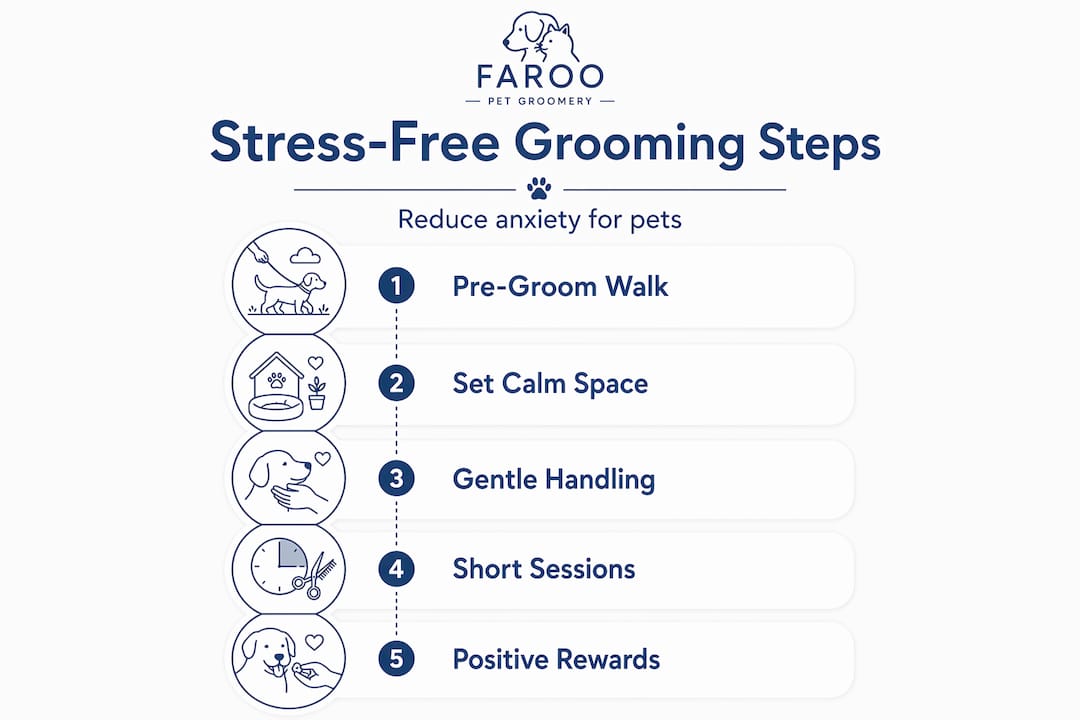
The most important mindset shift here is this: stress during grooming is not normal, and it is not unavoidable. Many owners have simply never seen what a calm grooming session looks like. Gentle handling techniques can transform the entire experience for your pet.
Effective methodology for fearful pets includes staying under the pet’s threshold, using short sessions, and ending on a win before panic escalates. The “threshold” is the point at which your pet shifts from mild discomfort to active fear. Crossing it too often reinforces negative associations. Staying below it allows your pet to learn that grooming is safe.
“Anxiety during grooming is a learned response, not a personality flaw. With patience, it can be unlearned just as powerfully.” — Behavior-informed grooming philosophy
Key components of anxiety-reducing grooming include:
- Short, predictable sessions that never push past your pet’s comfort ceiling
- Positive reinforcement using treats, calm praise, or play immediately after each session
- Consistent handling order so your pet knows what to expect
- Familiar, soothing scents in the grooming environment
- Gradual tool introduction before the actual grooming begins
Core principles and techniques for calming grooming
Now that you understand what grooming for anxiety means, let’s get into the actual tools and principles that make a measurable difference. These are not vague suggestions. They are structured, evidence-backed strategies that work for both home groomers and professional settings.
Fear Free grooming insights show that anxiety-aware grooming reduces fear and sensory overwhelm through careful product choice and, in some protocols, pheromone options. Pheromones are chemical signals that mimic the calming messages pets naturally produce. Products like pheromone sprays or diffusers can be used in the grooming area before your pet arrives.
Here is a table of core low-stress grooming techniques:
| Technique | What it involves | Why it works |
|---|---|---|
| Micro-sessions | 2 to 5 minute grooming periods | Prevents overwhelm and builds tolerance slowly |
| Treat pairing | Giving high-value treats during handling | Creates positive associations with grooming tools |
| Gentle handling | Soft, deliberate strokes and movements | Reduces the startle response and physical tension |
| Environmental prep | Quiet room, non-slip mat, dim lighting | Lowers sensory input for sensitive pets |
| Pheromone use | Sprays or diffusers in the grooming area | Signals safety at a chemical level |
| Positive ending | Stopping before stress peaks, then rewarding | Ensures the last memory of the session is good |
For those using effective techniques for anxious pets, following a reliable sequence matters enormously. Here is an ideal step-by-step approach:
- Let your pet sniff and explore all tools before turning them on or using them.
- Begin with the least sensitive body area, typically the back or shoulders.
- Groom for no more than two to three minutes in the first few sessions.
- Offer a high-value treat immediately after each step.
- Gradually increase the session length over multiple days or weeks.
- Always stop before your pet shows signs of stress escalation.
- End with something your pet loves, like a favorite toy or extra affection.
Pro Tip: The best time to groom an anxious pet is after moderate exercise or a walk. A slightly tired pet is naturally more relaxed and less reactive to new sensations. Avoid grooming right after meals or during peak playfulness.
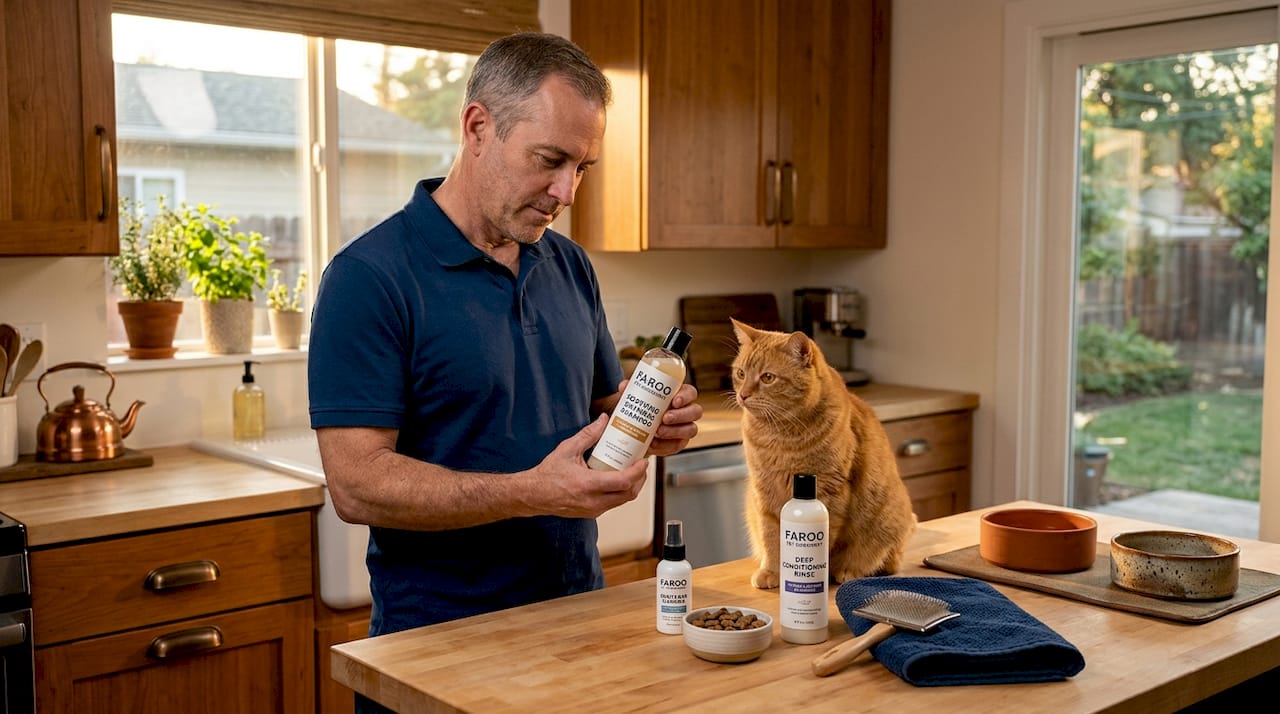
Product choice also matters more than most owners realize. Strongly scented shampoos, harsh sprays, or loud electric dryers can all amplify anxiety in sensitive pets. Opt for fragrance-free or naturally scented products and a quiet handheld dryer. Organizing your grooming space thoughtfully, with tools laid out in advance and a calm atmosphere ready, removes last-minute fumbling that can startle your pet.
Measuring progress: How to know if stress is decreasing
With the right tools in place, the next step is knowing whether your approach is actually working. Many owners give up too early because they expect quick results. Progress in grooming anxiety is measured through behavior, not by how fast your pet tolerates a full grooming session.
Success benchmarks are largely behavioral: the repeated pattern that works is micro-sessions, a predictable sequence, and stopping before escalation. Effectiveness shows up as reduced stress signals over successive exposures, not as a single breakthrough moment.
Here is a comparison of typical anxious signals versus growing comfort signs:
| Anxious signals | Signs of growing comfort |
|---|---|
| Trembling or shaking | Body remains loose and relaxed |
| Lip licking or yawning repeatedly | Normal breathing and calm posture |
| Trying to escape or hide | Staying in place voluntarily |
| Growling, hissing, or snapping | Accepting handling without vocalization |
| Dilated pupils and flattened ears | Soft eyes and neutral ear position |
| Refusing treats | Eating treats calmly during grooming |
Track these behaviors across sessions. Keep a simple journal noting which body parts were groomed, how long the session lasted, and what stress signs (if any) appeared. Over time, you will see a clear pattern of improvement.
Main stress signals to monitor during every grooming session include:
- Excessive panting or open-mouth breathing in cats
- Sudden freezing or going limp
- Repetitive attempts to turn and look at the groomer
- Skin twitching or muscle tension under the coat
- Vocalizing in an unusual or distressed tone
Expert solutions for grooming anxiety consistently emphasize that frequency and consistency produce the most lasting improvements. Short, regular sessions across weeks beat infrequent, longer sessions every time. Think of it like building physical fitness. You cannot rush the process, but you will see results if you show up repeatedly. Understanding Dubai grooming standards also helps you align your home practice with professional expectations.
Special cases: What to do when grooming anxiety is severe
Sometimes, even with your best effort and the most patient approach, anxiety does not reduce on its own. Recognizing when anxiety is beyond what home management can address is an important skill for every pet owner.
In severe cases, some pets may require veterinary guidance and, in some cases, short-term calming medication or sedation plans as a safety bridge alongside behavior work. This is not a failure on your part. It is a responsible acknowledgment that your pet needs more support than behavioral tools alone can provide right now.
Steps a veterinarian may recommend include:
- A full behavioral assessment to rule out underlying medical pain or discomfort.
- A referral to a certified veterinary behaviorist for structured desensitization programs.
- Prescription of short-term anti-anxiety medication for use before grooming sessions.
- Guidance on gradual desensitization protocols tailored to your specific pet.
- A plan to reduce medication over time as behavioral progress takes hold.
Pro Tip: Avoid the temptation to push through severe anxiety with force or restraint. Forced grooming in a panicked pet can cause physical injury and deeply entrench fear, making future sessions far harder. Slow and steady is always the safer path.
Service dog anxiety approaches reinforce the importance of balancing medication with behavioral work. Medication is most effective when used as a tool to lower anxiety enough for learning to occur, not as a permanent solution by itself.
“The goal is not to sedate a pet into compliance, but to create enough calm that they can begin building positive associations with grooming on their own terms.” — Veterinary behavioral guidance principles
Red flags that indicate anxiety is too severe to manage alone include:
- Biting or scratching hard enough to break skin during grooming
- Complete freezing or dissociation where the pet is unresponsive
- Extreme fear that persists for hours after grooming ends
- Self-harming behaviors triggered by grooming tools or sounds
- Panic attacks at the mere sight of grooming equipment
In these situations, gentle handling in severe cases remains part of the plan, but always under professional supervision.
Tailoring your approach: Cats, dogs, and the Dubai context
Beyond the general toolkit, the most effective anxiety-reducing grooming is species-specific and context-aware. Cats and dogs experience and express anxiety differently, and Dubai’s unique environment adds another layer of consideration.
For cats, predictability and slow movements are foundational. Building tolerance for handling at home, especially around sensitive areas like paws, belly, and ears, directly reduces grooming-related fear. Cats rely heavily on routine. Any deviation in the sequence, location, or smell of a grooming session can reset their comfort level.
Dogs tend to respond more readily to positive reinforcement but are highly sensitive to the emotional state of the people around them. A nervous owner transfers anxiety to a nervous dog faster than almost any other trigger.
Contextual factors in Dubai that affect grooming anxiety include:
- Heat and humidity that make grooming sessions physically uncomfortable if not managed well
- Apartment living that limits outdoor socialization and can create pets with lower tolerance for new experiences
- Frequent grooming needs due to the climate, which increases the total number of exposures over a pet’s life
- High-rise environments where unfamiliar elevator sounds and building noises may already have pets on edge before grooming begins
- Seasonal shedding peaks that require more intense grooming sessions at specific times of year
Gradual exposure is especially critical in dense urban settings like Dubai. A pet that has limited exposure to different people, tools, and environments needs more time to build tolerance for new grooming situations. Slow and predictable routines at home, done consistently, create the foundation for successful professional grooming sessions later.
When home efforts are not enough, seeking Dubai-based professional help is the right step. Our cat grooming in Dubai and dog grooming in Dubai services are designed with anxiety-aware principles in mind, so your pet is in caring, knowledgeable hands.
The real secret: Why mindset matters as much as methods
Here is something we rarely see discussed openly: the methods we have covered are only as effective as the mindset you bring to them. We have worked with many pet owners who knew all the right techniques but still struggled because they approached grooming with their own hidden tension, impatience, or frustration.
Your pet reads you constantly. Dogs especially are wired to detect subtle changes in your body language, breathing, and even heart rate. When you approach grooming with anxiety about how it will go, you are already signaling to your pet that there is something to worry about. That is not guilt-tripping. It is just biology.
The biggest breakthroughs we see with pet anxiety challenges come not from a new product or a smarter technique, but from an owner who decided to slow down completely and follow their pet’s lead rather than their own agenda. There is no timeline for grooming progress. There is only your pet’s pace.
No one-size-fits-all method exists. What works beautifully for a Labrador might mean nothing to a Persian cat. Watching your individual pet, adjusting your approach session by session, and celebrating tiny wins builds more progress than any rigid protocol. A pet that once shook through five-minute sessions and now sits calmly for ten is achieving something remarkable, even if it took three months to get there.
Consistent, low-pressure routines are worth far more than any single breakthrough session. That is the quiet truth that transforms even the most anxious grooming cases into peaceful, manageable experiences.
How Faroo Pets supports stress-free grooming for anxious pets
If you are ready to put these methods into practice with professional support, we are here for you.
At Faroo Pets, we understand that every pet comes with their own history, their own sensitivities, and their own pace. Our trained groomers follow anxiety-aware practices, including short sessions, gentle handling, calm environments, and positive reinforcement, so your pet’s comfort is always the first priority. Whether you have a dog that trembles at the sight of clippers or a cat who hides at the word “bath,” we have the experience and patience to make grooming a genuinely positive experience. Choose your service today and explore our luxury cat grooming package or our full range of dog grooming in Dubai options, all delivered to your door with care.
Frequently asked questions
What are the first signs my pet is anxious during grooming?
Early signs include trembling, avoiding eye contact, licking lips, or sudden attempts to escape. Watch for these behaviors before escalation to keep sessions positive and productive.
Is medication always needed for pets with grooming anxiety?
No. Medication is reserved for severe anxiety cases and is always recommended by a veterinarian alongside behavior work, not as a standalone solution.
How can I make home grooming less stressful for my cat?
Stick to predictable routines, use slow and gentle movements, and build tolerance gradually for handling sensitive areas like paws and ears over multiple calm sessions.
Can professional groomers handle pets with anxiety safely?
Yes. Professionals trained in anxiety-aware grooming use low-stress handling frameworks and positive reinforcement to help pets participate more willingly and safely in grooming sessions.
How quickly can I expect anxiety to improve with these methods?
Improvement depends on consistency rather than speed. Look for fewer stress behaviors and more relaxed posture across several sessions, which is a more reliable measure than any fixed timeline.
