


Posted by Faroo Pets Grooming
on March 30, 2026

Grooming day can feel like a small battle for some dog owners in Dubai. Your pup starts trembling the moment you reach for the leash, or worse, turns into a wriggling, whimpering mess the second a groomer reaches for the clippers. Sound familiar? The good news is that a stressed grooming session is not inevitable. With the right preparation, your dog can walk into every appointment calm, cooperative, and even happy. This guide walks you through every step, from daily handling exercises to pre-appointment routines, so both you and your dog can look forward to grooming day.
Table of Contents
- Why preparation is essential for your dog’s grooming success
- What you need before your dog’s grooming appointment
- Step-by-step: Conditioning your dog for professional grooming
- Making grooming day easy: Pre-appointment routines
- Handling nervous, anxious, or reactive dogs
- The first timers and the importance of early grooming exposure
- Book your dog’s next stress-free grooming in Dubai
- Frequently asked questions
Key Takeaways
| Point | Details |
|---|---|
| Start early | Puppies should begin grooming exposure at 8-12 weeks for best results. |
| Use positive reinforcement | Pair every grooming step with treats to build positive associations and reduce stress. |
| Exercise before appointments | A good walk or playtime calms your dog before grooming sessions. |
| Communicate with groomers | Share behavioral notes and concerns with your professional groomer to ensure a safe experience. |
| Adapt for anxious dogs | Gradual desensitization and specialized handlers help nervous pets enjoy grooming. |
Why preparation is essential for your dog’s grooming success
When a dog arrives at a grooming session without any prior preparation, the experience can feel overwhelming. New smells, unfamiliar sounds, and strangers touching sensitive areas can trigger fear, stress, or even defensive behavior. An unprepared dog is harder to groom safely, and repeated negative experiences can make future appointments even more difficult.
Preparation changes everything. Dogs that are gradually introduced to grooming tools, handling, and new environments tend to stay calmer, cooperate better, and actually enjoy the process over time. The grooming benefits go far beyond a clean coat. Regular, stress-free grooming supports skin health, reduces shedding, and helps you catch early signs of health issues.
Here is what proper preparation delivers for your dog:
- Reduced anxiety during handling and bathing
- Safer sessions for both the dog and the groomer
- Faster appointments because your dog stays still and cooperative
- Positive long-term associations with grooming tools and spaces
- Better health outcomes from consistent, thorough grooming
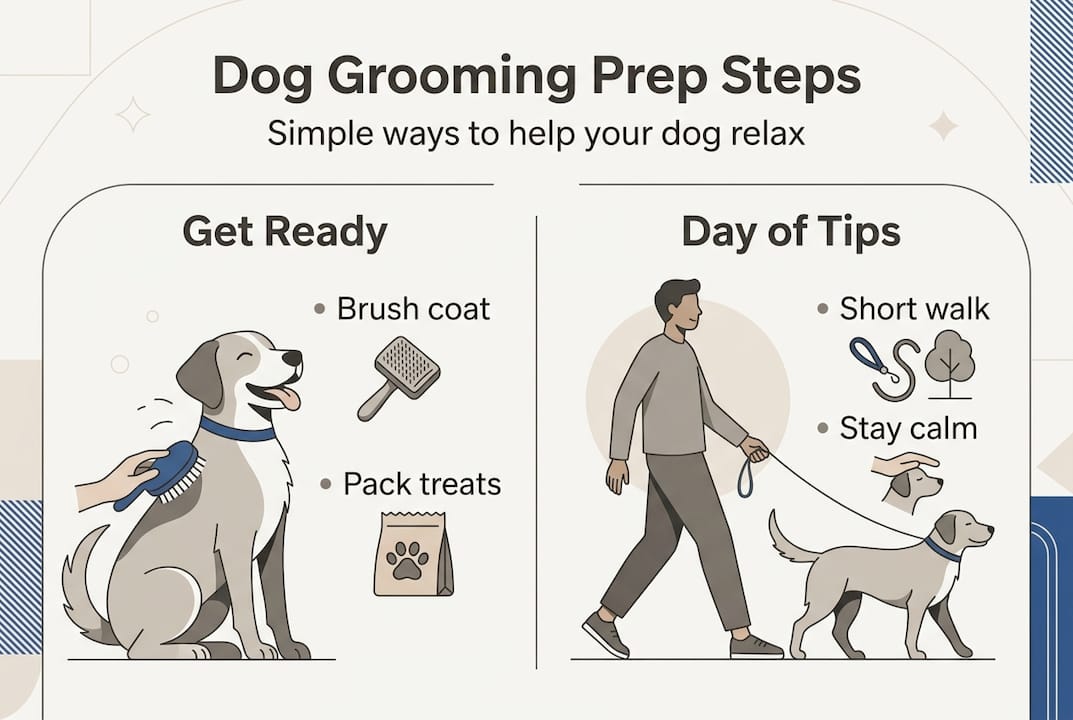
The professional standard for preparation is positive reinforcement combined with desensitization. Handling sensitive areas like paws, ears, mouth, and tail daily for 1 to 3 minutes with treats helps your dog associate touch with good things, not fear.
Now that you know how impactful preparation is, let’s cover what you’ll need.
What you need before your dog’s grooming appointment
Being organized before the appointment saves stress on the day. Think of it as packing a small kit that sets your dog up for success.
| Item | Purpose | Dubai-specific note |
|---|---|---|
| Soft brush or comb | Detangle coat before the session | Choose breed-appropriate tools |
| High-value treats | Reward calm behavior | Keep them small and easy to carry |
| Leash and harness | Safe transport and control | Ensure fit is snug in the heat |
| Comfort toy or blanket | Soothe anxiety in new spaces | Familiar scent helps calm nerves |
| Vaccination records | Required by many groomers | Keep digital copies on your phone |
| Groomer contact details | Confirm appointment and location | Save the number for easy messaging |
Beyond the physical items, review any breed-specific grooming requirements. Some breeds need special blade settings or coat treatments. If your dog has a medical condition, skin sensitivity, or is on medication, let the groomer know in advance.
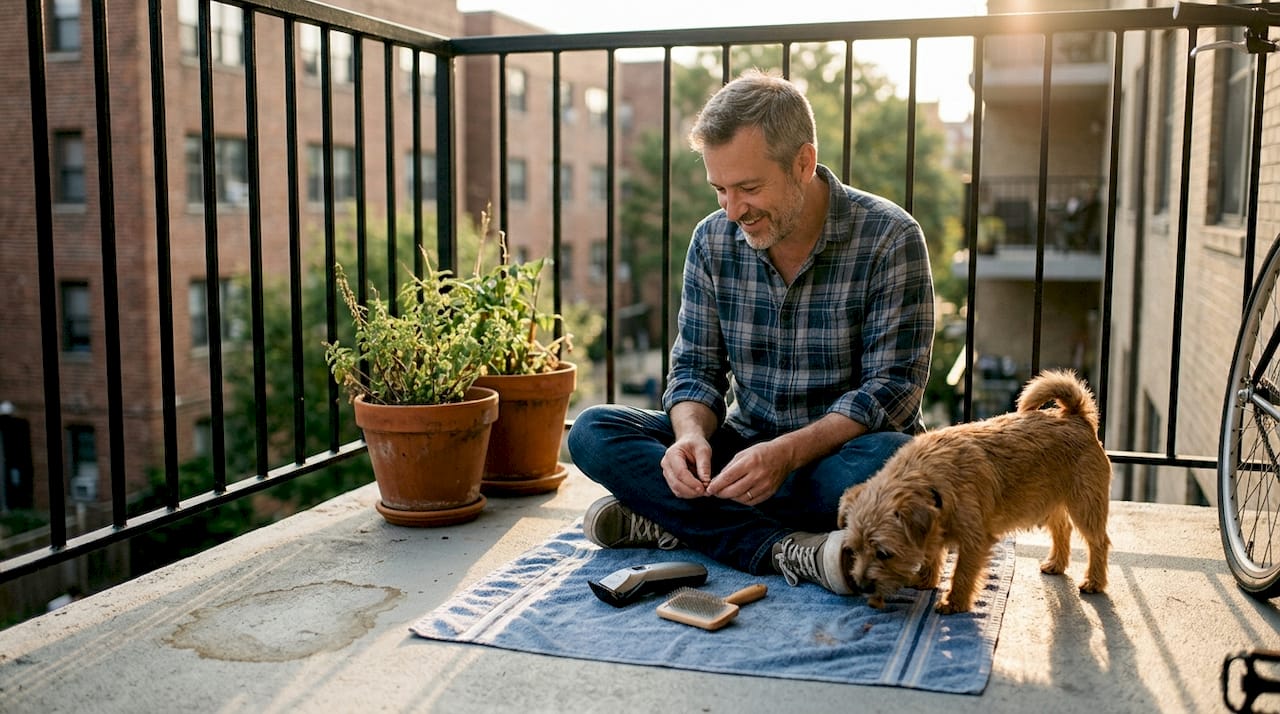
For first-time appointments, grooming safety tips are worth reviewing so you know what to expect and what questions to ask. Also, introduce grooming tools gradually before the appointment. Let your dog sniff brushes and clippers while they are off, and play low-volume recordings of dryer or clipper sounds during mealtimes, pairing the sounds with treats.
Once you have your grooming toolkit ready, it’s time to help your dog get comfortable with the whole process.
Step-by-step: Conditioning your dog for professional grooming
Conditioning is the process of teaching your dog that grooming tools, sounds, and handling are safe and even enjoyable. It takes a few days of short, consistent sessions.
- Day 1 to 2: Gentle handling. Spend 1 to 3 minutes touching your dog’s paws, ears, mouth, and tail. Use treats and calm praise. Daily desensitization with positive reinforcement reduces anxiety during professional grooming significantly.
- Day 3 to 4: Introduce tools. Let your dog sniff the brush, comb, and nail clippers. Do not use them yet. Just let curiosity happen naturally, and reward any calm interaction.
- Day 5: Add sounds. Play low-volume recordings of blow dryers and clippers during a meal or treat session. Gradually increase the volume over the next few days.
- Day 6 to 7: Mock grooming. Gently brush your dog for a minute or two. Reward generously. Keep it short and positive. Check out grooming at home for technique guidance.
- Day 8 onward: Simulate the appointment. Walk your dog on a leash around the block, take a short car ride, and visit the grooming location without a full service. Let them sniff around and meet the groomer casually.
Pro Tip: Keep every session under five minutes at first. Short, positive experiences build trust faster than long, forced ones. Pair every new tool or sound with a reward-based grooming treat to reinforce calm behavior.
| Approach | Outcome |
|---|---|
| Desensitization with treats | Dog stays calm, cooperates with groomer |
| No preparation, direct appointment | Dog may panic, resist, or become aggressive |
| Home grooming only, no pro prep | Dog may still fear unfamiliar groomers and tools |
The counter-conditioning method is the professional consensus for preparing dogs for grooming services. It works by replacing a fearful response with a positive one through consistent reward pairing.
With your dog conditioned and comfortable, let’s discuss how to ensure appointment day goes smoothly.
Making grooming day easy: Pre-appointment routines
The hours before a grooming session matter just as much as the weeks of preparation. A few smart habits on the day itself can make a real difference.
- Exercise first. Take your dog for a 30 to 60 minute walk or play session before leaving. A dog that has burned off energy arrives calmer and more relaxed.
- Skip the big meal. Avoid feeding your dog a full meal 2 to 3 hours before the appointment. This prevents nausea, especially during car rides or if your dog gets anxious.
- Bring comfort items. Pack a favorite toy or a small blanket with your scent. Familiar smells are genuinely soothing for dogs in new environments.
- Stay calm yourself. Dogs read your energy. If you are anxious about the appointment, your dog will pick up on it. Speak in a relaxed, cheerful tone.
- Arrive a few minutes early. Rushing creates stress. Give your dog time to sniff around and settle before the session begins.
Pro Tip: If your dog tends to get carsick or anxious during traveling with pets, consider a short practice drive a day before the appointment. Familiarity with the journey reduces stress on the actual day.
“A calm arrival sets the tone for the entire grooming session. The more relaxed your dog is when they walk in, the smoother and safer the experience will be for everyone involved.”
If you are unsure what to expect during the session itself, reading about grooming appointment expectations can help you feel more confident and prepared.
For dogs with special behavioral or anxiety issues, a bit more care can make a world of difference.
Handling nervous, anxious, or reactive dogs
Some dogs need extra support. If your dog trembles, snaps, or tries to escape at the sight of grooming tools, you are not alone. Anxiety during grooming is one of the most common concerns we hear from Dubai pet owners.
Here is how to approach it:
- Identify your dog’s specific triggers. Is it the sound of clippers? Being lifted onto a table? Strangers touching their paws? Knowing the trigger helps you and the groomer plan around it.
- Communicate openly with your groomer. Share your dog’s energy level, known triggers, and any past negative experiences. A good groomer will adjust their approach.
- Use gradual desensitization. Over one week, slowly expose your dog to the grooming environment, tools, and unfamiliar people. Pair every exposure with treats and praise.
- Consider calming aids. Pheromone diffusers, calming sprays, or anxiety wraps can help take the edge off for particularly nervous dogs.
- Ask about low-stress handlers. For dogs with extreme fear or reactive behavior, request a groomer experienced with fearful pets. Muzzle training in advance is also a kind, safe option.
Pro Tip: Never force a fearful dog through a grooming session. Pushing through fear without preparation can set back months of progress. Patience and consistency always win.
“Informing your groomer about your dog’s anxiety is not a sign of a problem pet. It is a sign of a responsible, caring owner.”
For more guidance on keeping your pet safe throughout the process, our safe pet grooming guide covers everything you need to know.
Making your dog’s first grooming appointments positive can set the tone for a lifetime of stress-free care.
The first timers and the importance of early grooming exposure
If you have a puppy or a newly adopted dog, you have a golden opportunity. Early exposure to grooming is one of the best investments you can make in your pet’s long-term wellbeing.
- Start between 8 and 12 weeks. Early grooming exposure at this age builds lifelong positive associations. Puppies are naturally curious and less fearful, making this the ideal window.
- Visit the salon before the first full service. Bring your puppy in just to say hello. Let them sniff the space, meet the groomer, and leave with a treat. No clippers, no bath. Just a positive visit.
- Make car rides fun. Drive to fun places, not just the groomer. This way, your dog does not associate the car with stress or appointments alone.
- Keep early sessions short. A 10 to 15 minute introductory groom is far more valuable than a rushed full service that overwhelms a young dog.
Dogs that start grooming early are significantly more likely to remain calm and cooperative throughout their lives. For a solid foundation, our dog grooming basics guide is a great starting point for new pet owners.
Now you are ready for a smooth grooming journey. Here is how to connect with trusted grooming professionals in Dubai.
Book your dog’s next stress-free grooming in Dubai
You have done the hard work of preparing your dog. Now let our team take care of the rest. At Faroo Pet Groomery, we bring professional, certified grooming directly to your door across Dubai, so your dog never has to deal with the stress of a busy salon environment.
Our dog grooming Dubai service is designed with your pet’s comfort in mind. From our sanitized mobile vans to our trained groomers who understand anxious and first-time pets, every detail is handled with care. You can explore our basic grooming options or browse the full range and choose a service that fits your dog’s needs. Booking is simple and fast, either online or by sending us your preferred time. Happiness really is just a brush stroke away.
Frequently asked questions
How early should I start preparing my puppy for grooming?
Begin grooming exposure at 8 to 12 weeks old for the best long-term results. Early positive experiences build lasting comfort with grooming tools and handlers.
What if my dog is extremely anxious or aggressive at the groomer?
Use gradual desensitization over one week, notify the groomer about your dog’s triggers, and ask for a low-stress or specialized handler if needed. Muzzle training in advance is also a safe, humane option.
Is it necessary to walk my dog before a grooming session?
Yes. A 30 to 60 minute walk before the appointment helps your dog burn off energy and arrive in a calmer, more relaxed state.
Should I feed my dog before bringing them to the groomer?
Avoid a full meal 2 to 3 hours before the appointment. This reduces the risk of nausea, especially during car rides or if your dog gets nervous during the session.
How can I help my dog get used to grooming tools and sounds?
Let your dog sniff brushes and clippers while they are off, and play grooming sounds at low volume during mealtimes. Reward calm behavior with treats to build positive associations gradually.
