


Posted by Faroo Pets Grooming
on March 24, 2026

Many Dubai pet owners believe that safe pet grooming simply means avoiding nicks and cuts, but true grooming safety encompasses far more than surface-level precautions. Professional grooming safety integrates proper handling techniques, stress management, strict hygiene protocols, and breed-specific care considerations that protect your pet’s physical and emotional wellbeing. Whether you’re considering mobile grooming services or evaluating traditional salon options, understanding these comprehensive safety standards empowers you to make informed decisions that prioritize your pet’s health and comfort throughout every grooming session.
Table of Contents
- Key takeaways
- Understanding the principles of safe pet grooming
- Handling special cases: fearful pets and breed-specific safety
- Hygiene standards: ensuring safe and clean grooming
- Mobile grooming in Dubai: combining safety, convenience, and compliance
- Choose safe and premium mobile pet grooming in Dubai
- Frequently asked questions about safe pet grooming
Key Takeaways
| Point | Details |
|---|---|
| Proper positioning | Groomers secure pets on non slip surfaces with gentle but firm control to prevent injuries. |
| Stress reduction | Slow pacing, soothing talk, treats, and shorter sessions minimize fear and prevent self injury. |
| Hygiene and safety gear | Strict hygiene protocols and ready first aid resources protect pets and staff during grooming. |
| Restraint and tools | Use appropriate tools for coat and skin, and employ restraint systems to reduce bite risk. |
| Fearful and breed safety | Groomers tailor approaches to fearful pets and prioritize breed specific needs with no force and potential referrals when necessary. |
Understanding the principles of safe pet grooming
Safe pet grooming prioritizes pet welfare through proper positioning, stress reduction, hygiene protocols, and appropriate tools to prevent injuries, bites, scratches, and stress-related harm. This foundation separates amateur attempts from professional pet grooming that consistently delivers safe outcomes. Every grooming session should begin with a calm environment where your pet feels secure rather than threatened.
Proper positioning forms the cornerstone of injury prevention during grooming. Groomers must secure pets on non-slip surfaces while maintaining gentle but firm control that prevents sudden movements without causing distress. For nail trimming, correct paw positioning allows clear visibility of the quick, the sensitive blood vessel inside each nail that causes pain and bleeding when cut. Bathing requires stable footing to prevent slips that could lead to sprains or fractures, particularly for older pets with reduced mobility.
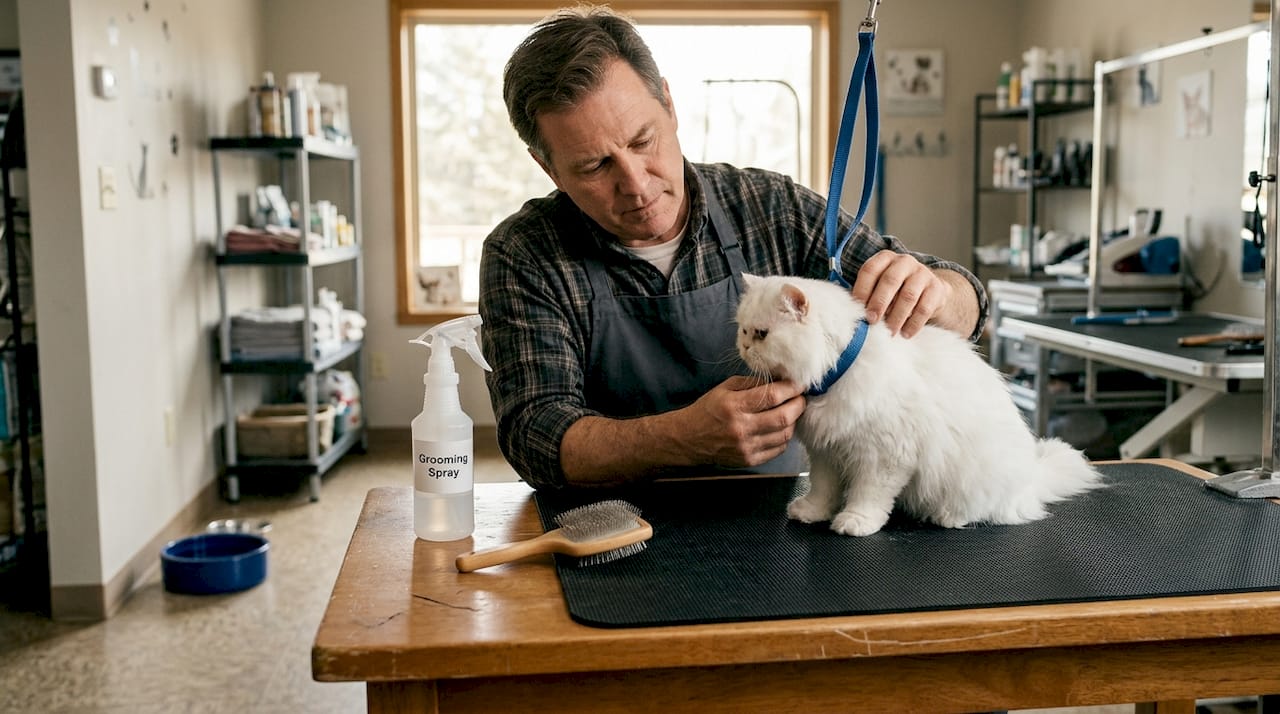
Stress reduction techniques directly impact grooming safety because anxious pets are far more likely to bite, scratch, or injure themselves trying to escape. Professional groomers read body language signals like pinned ears, tucked tails, dilated pupils, and tense muscles that indicate rising fear levels. They respond by slowing the pace, offering treats, speaking in soothing tones, and sometimes splitting sessions into shorter appointments. Forcing a terrified pet through a full grooming increases injury risk for everyone involved.
Tool selection must match your pet’s specific coat type, skin sensitivity, and the grooming task at hand. Using clippers with blades that are too short on sensitive areas causes razor burn and skin irritation. Slicker brushes work beautifully on long coats but can scratch skin when used too aggressively on short-haired breeds. Sharp scissors prevent pulling and tugging that distresses pets, while dull blades require excessive pressure that increases slip risks.
Safety equipment like Groomers Helper restraint systems reduce bite risks by 90% compared to hand-holding alone, allowing groomers to work with both hands free while keeping pets secure. These tools distribute pressure evenly across the body rather than concentrating force on a single point like traditional neck loops. First aid readiness is non-negotiable, with styptic powder for nail bleeding, antiseptic wipes for minor scratches, and emergency contact numbers for veterinary clinics posted visibly.
Pro Tip: Ask your groomer about their restraint methods before the first appointment. Ethical professionals explain their safety equipment and demonstrate how it protects your pet without causing discomfort.
Handling special cases: fearful pets and breed-specific safety
Fearful pets require trust-building approaches with no force, possible service refusal when stress levels become dangerous, and specialized techniques that prioritize emotional safety alongside physical protection. Some pets arrive at grooming appointments with trauma histories from previous negative experiences, medical procedures, or inadequate socialization. These animals need groomers who recognize when pushing forward would cause psychological harm that outweighs grooming benefits.
Identifying fear versus aggression changes the handling approach entirely. Fearful pets typically display defensive body language with attempts to retreat or hide, while truly aggressive animals show offensive postures with forward movement and sustained eye contact. Groomers trained in animal behavior can distinguish between a dog snapping out of terror versus one displaying predatory aggression. The fearful pet needs desensitization and counter-conditioning over multiple sessions, while the aggressive animal may require muzzling, sedation consultation with a veterinarian, or service declination.
Matted coats present a critical decision point where certified pet groomers must choose between painful detangling and humane clipping. Severe mats pull tight against skin, restricting blood flow and creating painful tension with every movement. Attempting to brush out these mats causes extreme discomfort that can turn even gentle pets defensive. Professional groomers clip matted areas short rather than subjecting pets to prolonged suffering, then educate owners about preventing future matting through regular brushing.
Blade size selection for sensitive body areas directly impacts safety outcomes. Using a #7 blade on delicate areas like the groin, armpits, or face increases the risk of cuts and irritation compared to a #10 blade that leaves slightly more hair for protection. The shorter the blade number, the closer the cut and the higher the injury risk on thin-skinned areas. Experienced groomers automatically adjust blade selection based on the body region they’re working on.
Professional groomers know that sometimes the safest decision is refusing service when a pet’s stress level indicates that continuing would cause harm rather than help.
Brachycephalic breeds like Pugs, Bulldogs, Persian cats, and Shih Tzus require extra airway monitoring because their shortened facial structure already compromises breathing. These pets overheat quickly and can experience respiratory distress during stressful grooming procedures. Groomers must watch for excessive panting, blue-tinged gums, or labored breathing that signals the need for immediate cooling breaks. Sessions for flat-faced breeds should be scheduled during cooler parts of the day and kept shorter than standard appointments.
Hygiene standards: ensuring safe and clean grooming
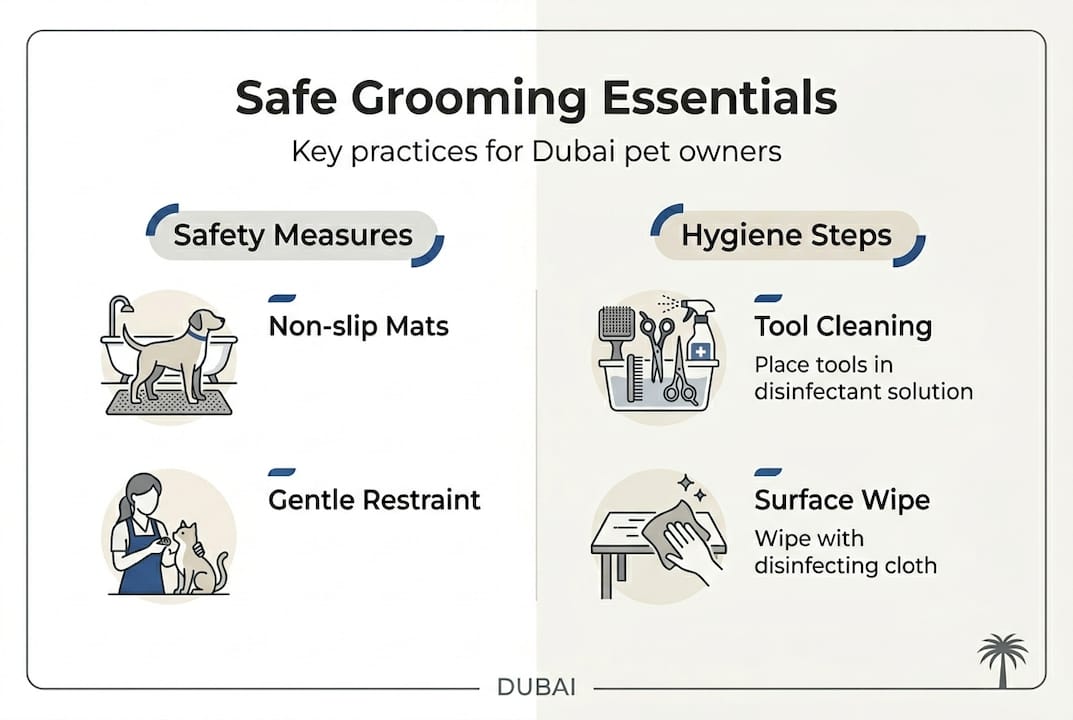
Daily cleaning and disinfection protocols, pet-safe antiseptics, sterilized tools between clients, non-slip mats, and pest control measures form the hygiene foundation that prevents infections and cross-contamination. These standards aren’t optional extras but essential requirements that separate professional operations from amateur setups. Every surface your pet contacts during grooming should meet the same cleanliness standards you’d expect in a medical facility.
Pet grooming hygiene begins before the first pet arrives and continues throughout the day with specific protocols:
- Morning preparation includes disinfecting all work surfaces, grooming tables, and floor areas with veterinary-grade cleaners that kill common pathogens without leaving toxic residues
- Tool sterilization happens between every single pet using barbicide solution or autoclave sterilization for metal implements like scissors and clippers
- Fresh towels and capes for each appointment prevent transferring parasites, skin conditions, or infections from one pet to another
- Bathing tubs receive thorough scrubbing and disinfection after each use, with special attention to drain areas where bacteria and fungi accumulate
- End of day deep cleaning addresses areas that accumulate hair, dander, and moisture throughout operating hours
Pet-safe antiseptics like dilute chlorhexidine solution provide effective disinfection without the harsh chemical burns that human-grade products can cause on animal skin. Groomers apply these solutions to minor nicks immediately, preventing bacterial entry that could lead to infections. The concentration matters enormously because full-strength antiseptics designed for hard surfaces will damage delicate pet skin and mucous membranes.
| Hygiene Task | Frequency | Purpose |
|---|---|---|
| Surface disinfection | After each pet | Prevents pathogen transfer between animals |
| Tool sterilization | Between every client | Eliminates bacteria, viruses, and fungi |
| Towel replacement | Every appointment | Stops parasite and skin condition spread |
| Deep cleaning | Daily | Removes accumulated contaminants |
| Equipment inspection | Weekly | Identifies worn items needing replacement |
Non-slip surfaces protect pets from falls and injuries during grooming procedures when surfaces become wet and slippery. Rubber matting on grooming tables and bathing areas provides secure footing that reduces anxiety and prevents the leg splays and tumbles that cause muscle strains or fractures. These mats require daily cleaning because hair and product buildup reduces their grip effectiveness.
First aid kits must be fully stocked and regularly inspected, containing styptic powder, gauze pads, antiseptic wipes, bandages, tweezers for removing foreign objects, and emergency contact numbers for local veterinary clinics. Groomers should inventory these supplies weekly, replacing expired items and restocking depleted materials before they run out during an emergency.
Pro Tip: When touring a grooming facility or mobile van, look for visible cleaning supplies, organized tool storage, and the smell of cleanliness rather than strong perfumes masking odors. These signs indicate genuine hygiene commitment.
Mobile grooming in Dubai: combining safety, convenience, and compliance
Fully-equipped climate-controlled vans with approved products and Dubai Municipality licenses ensure safe, convenient mobile grooming that reduces pet stress compared to traditional salon visits. The mobile grooming model eliminates the anxiety many pets experience during car rides, waiting in kennels with unfamiliar animals, and navigating busy salon environments. Your pet receives one-on-one attention in a controlled setting right outside your home.
Climate control becomes critical in Dubai’s desert environment where summer temperatures regularly exceed 40°C. Mobile grooming vans maintain comfortable interior temperatures that prevent heat stress during grooming procedures. This controlled environment allows groomers to work at a safe pace without rushing through services to get overheated pets back to air conditioning. The temperature stability particularly benefits brachycephalic breeds and thick-coated dogs that struggle with heat regulation.
| Feature | Mobile Grooming | Traditional Salon |
|---|---|---|
| Travel stress | Minimal, service at home | High, car ride plus waiting |
| Climate control | Consistent van temperature | Variable during transport |
| Disease exposure | Single pet appointment | Multiple animals in facility |
| Licensing requirements | Pet Salon License plus vehicle permits | Standard business license |
| Convenience factor | No owner travel needed | Owner must transport pet |
Regulatory compliance in Dubai requires mobile pet grooming services to obtain specific licenses that verify safety standards. The Pet Salon License from Dubai Municipality confirms that the business meets health and safety requirements for animal care services. Additional permits cover vehicle operation, waste disposal, and water usage. These regulatory layers protect consumers by ensuring that mobile groomers maintain the same standards as fixed-location salons.
Licensed mobile operations use veterinary-approved products specifically formulated for animal skin pH levels and safety if ingested during grooming. Human shampoos and conditioners can cause skin irritation, allergic reactions, and digestive upset when pets lick their coats after bathing. Professional pet products clean effectively while maintaining the natural oil balance that protects skin and coat health.
Heat-responsive grooming adjustments help Dubai pets stay comfortable in the local climate. Groomers recommend shorter trim lengths during summer months to improve air circulation and cooling, while leaving slightly more coat during the mild winter season. This seasonal approach balances the natural protection that coat provides against sun exposure with the cooling benefits of reduced fur bulk. Breed-specific considerations guide these decisions because double-coated breeds like Huskies should never be shaved despite the heat.
The mobile model delivers premium care expectations that Dubai pet owners value, combining professional expertise with personalized service and maximum convenience. Mobile groomer products are carefully selected for effectiveness in the compact van environment while meeting international safety standards. This attention to detail reflects the broader commitment to pet welfare that defines quality mobile grooming services.
- Reduced exposure to other animals minimizes disease transmission risks
- One-on-one attention throughout the entire appointment
- Flexible scheduling that accommodates your daily routine
- Immediate access to your home if your pet needs comfort during grooming
- Elimination of pre and post-grooming travel stress
Choose safe and premium mobile pet grooming in Dubai
Now that you understand the comprehensive safety standards that protect your pet during grooming, you can confidently select services that prioritize these essential practices. Licensed mobile grooming eliminates the stress and safety risks associated with transporting your pet while delivering professional care that meets Dubai’s strict regulatory requirements. The combination of certified groomers, sanitized equipment, and climate-controlled mobile vans creates the ideal environment for safe, comfortable grooming.
Explore premium dog grooming in Dubai and cat grooming in Dubai packages designed specifically for your pet’s needs. Professional mobile groomers bring expertise, proper equipment, and genuine care for animal welfare directly to your location. Choose your grooming service today and experience the difference that safety-focused, convenient pet care makes for both you and your beloved companion.
Frequently asked questions about safe pet grooming
What defines safe pet grooming practices?
Safe pet grooming combines proper handling techniques, stress management, appropriate tool selection, and strict hygiene protocols to protect your pet’s physical and emotional wellbeing. Professional groomers use restraint systems that prevent injuries without causing discomfort, recognize when stress levels require session modification, and maintain sterilized equipment between every client to prevent disease transmission.
How is mobile grooming in Dubai regulated for safety?
Mobile grooming services in Dubai must obtain Pet Salon Licenses from Dubai Municipality plus additional permits for vehicle operation and waste disposal. These regulations ensure that mobile groomers maintain the same health, safety, and animal welfare standards as traditional salon facilities, including proper equipment sterilization, approved product usage, and certified groomer qualifications.
Why is hygiene critical in pet grooming and how is it maintained?
Hygiene protocols prevent infections, parasite transmission, and cross-contamination between pets during grooming appointments. Professional groomers sterilize tools between every client, use fresh towels for each appointment, disinfect all surfaces after each pet, and employ pet-safe antiseptics that clean effectively without causing chemical burns or toxic reactions.
Can fearful or aggressive pets be safely groomed?
Fearful pets can be safely groomed using trust-building techniques, slower pacing, and sometimes splitting services across multiple shorter sessions that reduce stress accumulation. However, ethical groomers will refuse service when a pet’s anxiety level indicates that continuing would cause psychological harm, recommending behavioral consultation or veterinary sedation options instead.
What should I check when choosing a grooming service?
Verify that groomers hold proper licenses, use sterilization protocols between clients, maintain clean facilities or vans, and demonstrate knowledge of breed-specific safety requirements. Ask about their handling methods for fearful pets, emergency procedures for injuries, and whether they recognize when medical issues require veterinary referral rather than grooming services.
