


Posted by Faroo Pets Grooming
on May 27, 2026

TL;DR:
- Managing indoor pet hair requires a layered approach that emphasizes regular grooming, effective tools, and consistent cleaning routines. Brushing pets outdoors three to five times weekly significantly reduces loose hair, while high-quality vacuums and air purifiers help control airborne dander and hair particles. Building simple, sustainable habits and using washable textiles minimize pet hair buildup and keep your home cleaner and healthier.
If you share your home with a dog or cat, you already know the feeling. Pet hair on the couch, in your coffee, and somehow inside your refrigerator. Learning how to manage pet hair indoors is less about finding one magic solution and more about building a layered approach that combines grooming at the source, smart cleaning tools, and consistent daily habits. We at Faroopets have put together this guide to give you exactly that, with practical strategies that actually hold up in real life.
Table of Contents
- Key takeaways
- How to manage pet hair indoors: start at the source
- Effective tools and techniques for indoor cleaning
- Managing fabrics and pet textiles
- Air quality and environmental control
- Daily and weekly maintenance routines
- My honest perspective on pet hair management
- How Faroopets can make hair management easier
- FAQ
Key takeaways
| Point | Details |
|---|---|
| Groom at the source | Brushing your pet outdoors 3 to 5 times weekly prevents most hair from ever reaching your floors or furniture. |
| Match tools to the task | Use reusable rollers for daily touch-ups and motorized vacuums with HEPA filters for weekly deep cleaning. |
| Treat textiles as traps | Washable covers and pet blankets contain hair in one spot, cutting your whole-home cleaning time significantly. |
| Control the air | A HEPA air purifier in high-traffic rooms captures airborne dander and fine hair particles you cannot see. |
| Build a sustainable routine | Combining short daily tasks with one weekly deep clean keeps hair manageable without exhausting yourself. |
How to manage pet hair indoors: start at the source
Before you reach for the vacuum, consider this. Source control through grooming and diet reduces indoor pet hair far more effectively than reactive cleaning alone. You will always be one step behind if you only clean and never address why so much hair is shedding in the first place.
Brushing routines that actually work
Brushing your pet outdoors three to five times per week in five-minute sessions is more effective for indoor hair control than any cleaning product. Short, outdoor sessions remove loose fur before it falls off naturally inside your home. For dogs with double coats like Golden Retrievers or Huskies, an undercoat rake paired with a slicker brush tackles both layers. For shorthaired cats, a rubber grooming mitt works beautifully and most cats find it soothing rather than stressful. You can find brushing techniques for multiple pets tailored to different coat types if you have more than one animal at home.
Nutrition matters here too. A coat that lacks omega fatty acids sheds more than a well-nourished one. Talk to your vet about diet adjustments if you notice excessive shedding beyond the usual seasonal cycles.
Grooming tool comparison
| Tool | Best for | Pros | Cons |
|---|---|---|---|
| Slicker brush | Long or double coats | Reaches undercoat effectively | Can scratch skin if used too firmly |
| Rubber grooming mitt | Short coats, cats | Gentle, doubles as massage | Less effective on thick coats |
| Undercoat rake | Heavy shedders | Removes bulk shedding fast | Not suitable for fine or thin coats |
| ChomChom roller | Quick furniture passes | Reusable, no refills | Requires manual rolling pressure |
| Rubber gloves | Any coat type | Affordable, multi-surface use | Less efficient on large areas |
Pro Tip: Set a specific brushing spot in your yard or on your balcony and keep your tools there. When the tools live outside, the habit sticks and the hair stays outside.
Effective tools and techniques for indoor cleaning
Once hair is already indoors, the right tools make all the difference. The key is knowing which tool belongs to which job.
Vacuums with HEPA filtration capture 99.97% of particles 0.3 microns or larger, including pet dander that is far smaller than visible hair. If allergies are a concern in your household, this feature is non-negotiable. Look for a motorized pet tool attachment, strong suction, and a sealed design that does not exhaust fine particles back into the room. Robot vacuums with self-emptying bins and tangle-free brush rolls are excellent for daily maintenance on hard floors and low-pile carpets, though they are not a replacement for a full weekly vacuum session.
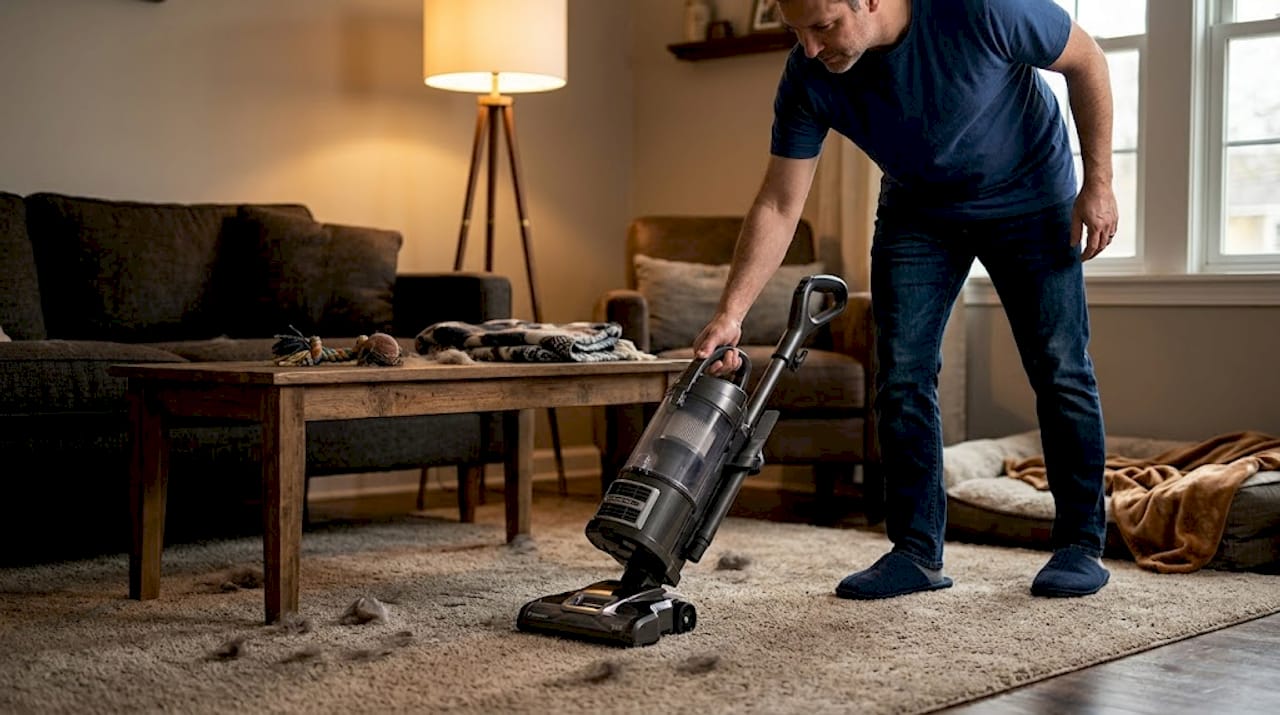
Here is something most pet owners overlook. Rubber brooms generate static friction that clumps hair on hard floors far better than a standard broom, which just pushes hair around. For hard floors like tile or wood, a rubber broom followed by a microfiber dust mop picks up almost everything before you even need the vacuum.
Pro Tip: Use a workflow-based cleaning approach: reusable lint rollers for quick daily visibility passes on furniture, and the motorized vacuum for thorough weekly sessions. Doing both jobs with one tool means neither gets done well.
Here are the best practices for different surfaces:
- Hardwood and tile floors: Rubber broom first, then microfiber mop, then vacuum. This order prevents hair from escaping back into the air.
- Carpets and rugs: Vacuum in two directions to lift embedded hair. A squeegee dragged across carpet before vacuuming pulls up stubborn fur.
- Upholstered furniture: Rubber gloves or a slightly damp microfiber cloth work better than a dry cloth for pulling hair off fabric.
- Curtains and drapes: Lint roller or rubber glove wipe first, then launder according to fabric care instructions monthly.
- High surfaces and shelves: Always dust high surfaces first before vacuuming floors. Hair knocked from shelves will resettle on floors that were already cleaned otherwise.
Managing fabrics and pet textiles
Pet bedding, throw blankets, and sofa covers are your best allies when it comes to ways to keep pet hair manageable throughout your home. Think of them as containment layers rather than just comfort items.
Using washable furniture covers and designated pet textiles as containment layers limits how much hair reaches your upholstery and flooring. When a blanket on the couch collects a week’s worth of fur, you wash the blanket. Without it, you spend an hour cleaning the couch itself.
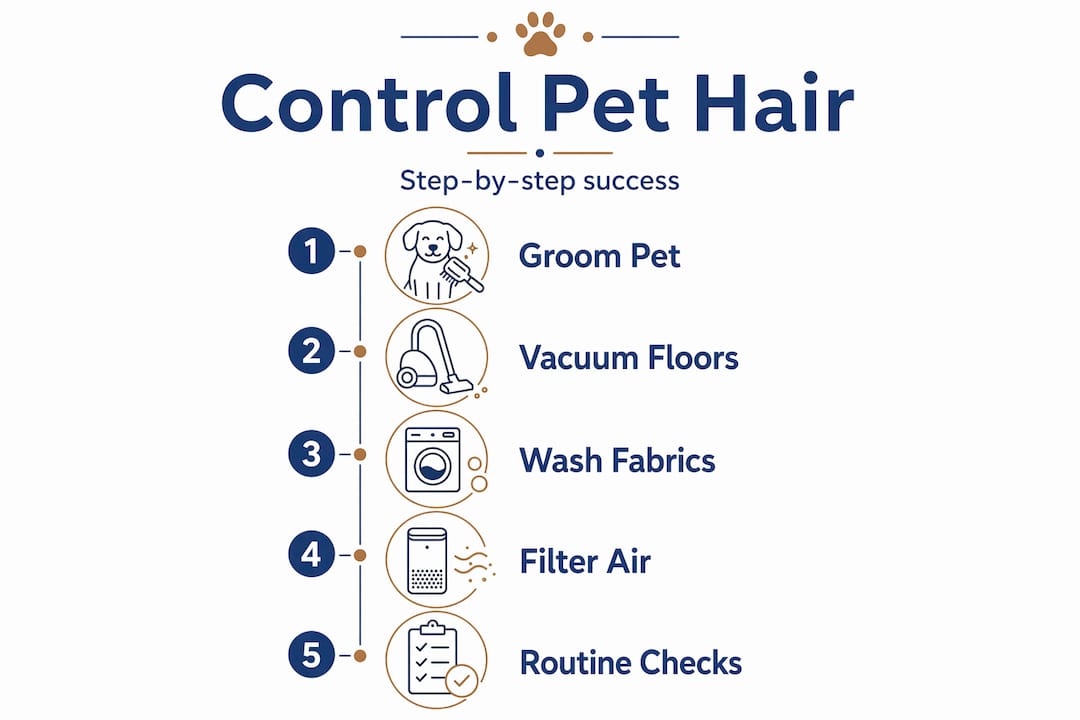
Follow this weekly laundry routine for pet textiles:
- Shake out blankets and covers outdoors before placing them in the washing machine.
- Run pet items through a short dryer cycle with dryer balls before washing. Drying with dryer balls first loosens and collects hair in the lint trap before water causes it to clump onto fabric.
- Wash in hot water to remove remaining hair, dander, and bacteria.
- Clean your washing machine’s filter after every pet laundry load. Washing machine filters accumulate hair and if neglected, they redeposit it onto your next load of regular laundry.
- Rotate pet bedding every two weeks and replace aging covers that have developed permanent fur weaves in the fabric.
Pro Tip: Keep two sets of pet covers in rotation. While one is in the wash, the other is in use. You will never have an excuse to skip washing day.
| Textile item | Wash frequency | Notes |
|---|---|---|
| Pet bedding | Weekly | Hot water, dryer ball pre-treatment |
| Furniture covers | Weekly | Shake outdoors first |
| Throw blankets | Weekly | Check washing machine filter after |
| Curtains and drapes | Monthly | Lint roll before washing |
| Pet carrier padding | Bi-weekly | Air dry to prevent shrinking |
Air quality and environmental control
Hair you can see is only part of the problem. Airborne pet dander, which is microscopic skin flakes, circulates constantly through your home and settles back onto surfaces minutes after you clean.
An air purifier placed in high-traffic pet areas significantly reduces airborne dander and hair, easing allergy symptoms for sensitive household members. Place one in the room where your pet spends the most time, and a second unit in your bedroom if allergies are a serious concern. Run it on a low continuous setting rather than only during cleaning sessions.
Here are quick environmental tips that support effective pet hair and dander control:
- Designate at least one pet-free room in your home, ideally a bedroom, to give allergy sufferers a clean refuge.
- Keep indoor humidity between 40 and 50 percent. Very dry air causes more dander to become airborne and float longer before settling.
- Open windows for cross-ventilation during grooming sessions, even indoor ones, to move loosened hair and particles outside.
- Replace HVAC filters with a MERV 11 or higher rated filter and change them every 60 days if you have pets.
- Wash human bedding weekly in addition to pet textiles to remove dander that transfers from your pet or your own clothing.
Daily and weekly maintenance routines
Even the best tools fail without consistency. The goal is not a perfect home every single day. It is a routine short enough that you will actually stick to it.
| Task | Frequency | Notes |
|---|---|---|
| Quick lint roll of furniture | Daily | 2 minutes per room, keeps visible hair at bay |
| Robot vacuum run | Daily | Set on a timer for overnight maintenance |
| Damp microfiber wipe of hard surfaces | Daily | Catches dander before it becomes airborne |
| Full vacuum of pet-traffic areas | 2 to 3 times weekly | Include under furniture and along baseboards |
| Full home vacuum and mop | Weekly | Start from high surfaces down to floors |
| Wash pet textiles and bedding | Weekly | Follow the five-step laundry routine |
| Clean vacuum filter or empty bin | Weekly | A clogged filter cuts suction by up to 50 percent |
| Replace HVAC filter | Every 60 days | Higher urgency with heavy-shedding breeds |
The most common mistake pet owners make is skipping high surfaces. Hair settles on shelves, TV stands, and curtain rods just as readily as on floors, and those spots rarely get included in a casual clean. A quick wipe from top to bottom takes less than ten minutes and prevents the cycle of cleaning the floor and watching it get dusty again within hours.
My honest perspective on pet hair management
I’ve worked around pet care long enough to have a clear opinion on this. Most people buy gadgets first and build habits last, and that is exactly backwards. I’ve seen households with the most expensive robotic vacuums on the market still buried in fur because nobody was brushing the dog. The cleaning tools are not the solution. They are the safety net.
What I’ve found actually works is treating grooming as a non-negotiable, like feeding. Five minutes outside with a good brush three times a week does more for indoor cleanliness than an hour of vacuuming each Sunday. Once that is in place, the cleaning routine becomes almost effortless.
I’ve also learned not to over-complicate the tool kit. A rubber broom, a good reusable roller, one solid vacuum with a HEPA filter, and washable covers are genuinely all you need. The rest is marketing. The homes I’ve seen that manage pet hair well are not the ones with the most products. They are the ones with the most consistent routines.
Start small. Pick one habit this week, whether that is brushing outdoors or throwing a cover on the couch. Build from there. Your home will not look perfect overnight, but in two weeks, you will notice the difference.
— Growth
How Faroopets can make hair management easier
If keeping up with at-home grooming feels like too much, you are not alone. Busy schedules and reluctant pets make consistent brushing genuinely difficult, and that is exactly where professional grooming makes a lasting difference.

At Faroopets, our certified groomers come directly to your door in Dubai, equipped with professional de-shedding treatments that go far deeper than a home brush session. A luxury full dog grooming session or a professional cat grooming appointment removes the bulk of loose undercoat that daily brushing simply cannot reach. Less undercoat means less hair on your floors, furniture, and clothing for weeks afterward. We also carry a range of pet hair management products including grooming brushes and cleaning tools to support your routine between appointments. Book a session with us and feel the difference a professional de-shed makes.
FAQ
How often should I brush my pet to reduce indoor hair?
Brush your pet three to five times per week for about five minutes per session, ideally outdoors, to significantly reduce the amount of loose hair that ends up inside your home.
What is the best vacuum for pet hair?
Look for a vacuum with a HEPA filter, strong suction, and a motorized pet tool attachment. HEPA filters capture 99.97% of particles down to 0.3 microns, including pet dander that standard vacuums miss.
How do I get pet hair off furniture quickly?
A rubber glove or slightly damp microfiber cloth dragged across upholstery collects hair more effectively than a dry cloth or standard lint roller, especially on textured fabrics.
Does washing pet bedding really make a difference?
Yes. Weekly hot water washes of pet blankets and covers remove embedded hair, dander, and bacteria, and they prevent those materials from spreading to the rest of your home.
Can air purifiers help with pet hair?
Air purifiers with HEPA filters reduce airborne pet dander and fine hair particles, which is especially helpful in rooms where your pet spends the most time. They work best when run continuously on a low setting rather than only during cleaning.
