


Posted by Faroo Pets Grooming
on May 29, 2026

TL;DR:
- Pet deshedding targets the undercoat, removing dead hairs that cause household shedding and discomfort.
- Using the appropriate tools and techniques, especially during peak seasons, can significantly reduce shedding for double-coated pets.
If you brush your dog or cat regularly and still find fur on every surface in your home, you are not alone. Regular brushing removes surface tangles and loose topcoat hair, but it barely touches the real culprit: the dense undercoat sitting close to your pet’s skin. Pet deshedding is the process of removing dead undercoat hair that a standard brush simply cannot reach. At Faroopets, we hear this concern from pet owners in Dubai every single day, and this guide will give you everything you need to understand what deshedding is, why it matters, and how to do it right.
Table of Contents
- Key Takeaways
- What is pet deshedding: the science behind shedding and the undercoat
- Deshedding tools and how to choose the right one
- Step-by-step deshedding techniques and when to deshed
- Benefits and limitations of pet deshedding
- What I’ve learned from watching pet owners navigate deshedding
- Caring for your pet’s coat starts with the right support
- FAQ
Key Takeaways
| Point | Details |
|---|---|
| Deshedding targets the undercoat | It removes dead undercoat hair, not surface fur, which is the primary source of household shedding. |
| Tool choice matters by coat type | Double-coated pets benefit most; using the wrong tool can damage the topcoat or irritate skin. |
| Timing and technique prevent harm | Work on clean, dry fur and follow the direction of hair growth to avoid irritation. |
| Professional sessions offer lasting results | One professional deshedding treatment can reduce household fur accumulation for 4 to 8 weeks. |
| Deshedding has realistic limits | It reduces shedding significantly but does not stop natural shedding entirely or cure pet allergies. |
What is pet deshedding: the science behind shedding and the undercoat
To truly understand pet de-shedding, you need to understand what your pet’s coat is actually made of. Most dogs and many cats have a two-layer coat system. The outer layer, called the guard coat, consists of coarser, longer hairs that protect against the elements, dirt, and moisture. Directly beneath it sits the undercoat: a soft, dense layer of fine hairs that regulates your pet’s body temperature in both hot and cold weather.
How the undercoat causes most shedding
When pets shed, the guard coat hairs fall out gradually and somewhat evenly. The undercoat, however, sheds in larger volumes and in cycles tied to the seasons. Twice a year, typically in spring and fall, many pets “blow” their undercoat. During this process, enormous amounts of dead undercoat hair loosen from the skin. If those loose hairs are not removed, they stay trapped beneath the guard coat rather than falling away cleanly.
That trapped fur is the real problem. Trapped loose undercoat can cause matting, moisture retention, skin irritation, and genuine discomfort for your pet. In Dubai’s warm, humid climate, trapped undercoat can also create the conditions for bacterial skin issues. Regular brushing moves topcoat hair but cannot extract that deep, dense layer effectively.
Double-coated vs single-coated pets
Not every pet benefits equally from deshedding, and knowing the difference helps you set the right expectations.
| Coat Type | Examples | Shedding Behavior | Deshedding Need |
|---|---|---|---|
| Double coat (heavy shedder) | Golden Retriever, Husky, Maine Coon | Heavy seasonal blowing, dense undercoat | High |
| Double coat (moderate) | Labrador, domestic shorthair cat | Moderate year-round shedding | Moderate to high |
| Single coat (low undercoat) | Poodle, Maltese, Greyhound | Minimal seasonal blowing | Low |
| Wire or curly coat | Border Terrier, Portuguese Water Dog | Minimal shedding, different texture | Not typically needed |
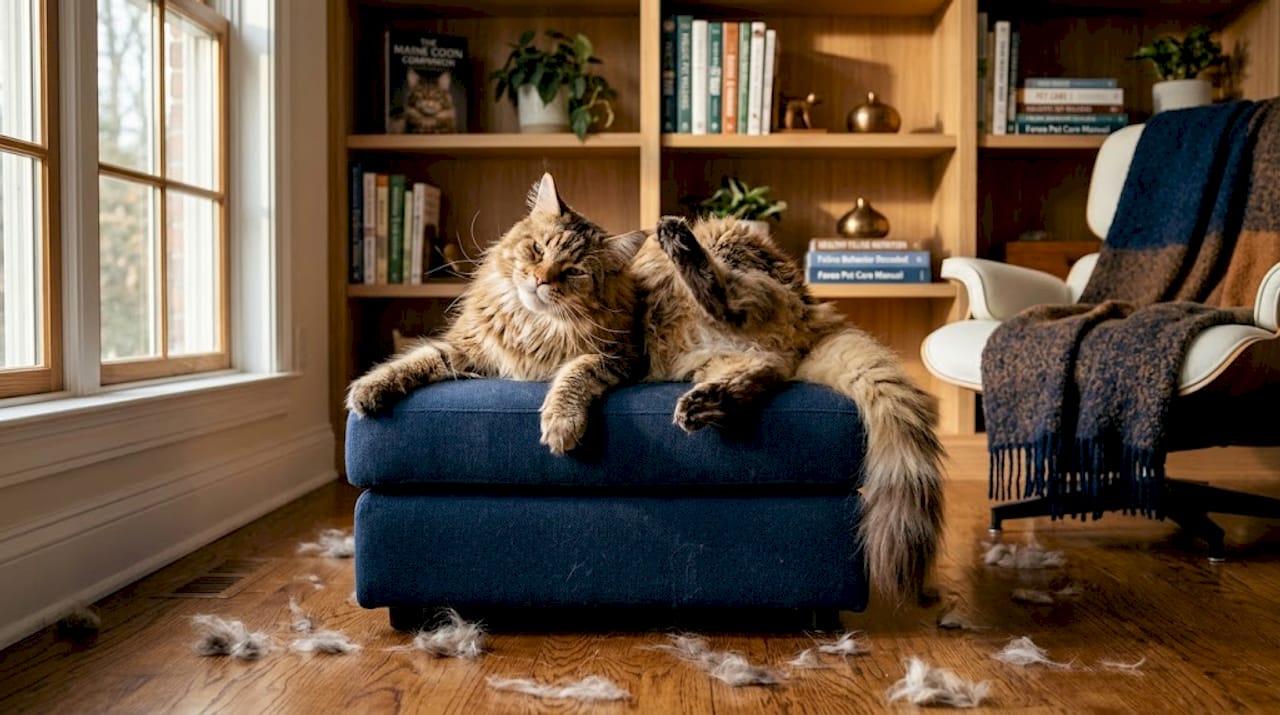
Pets with a heavy double coat, like Huskies or Maine Coons, will show the most dramatic results from deshedding. Short-haired single-coated dogs rarely need specialized deshedding tools at all.
Deshedding tools and how to choose the right one
Knowing how to deshed a pet means nothing without the right tool in your hand. Deshedding tools are purpose-built to reach past the guard coat and pull out loose undercoat hair. They look superficially similar to brushes, but their tooth spacing, blade angles, and depths are engineered specifically for undercoat access. A standard slicker brush, by contrast, works mainly on the surface.
Common tool types for pet deshedding
Undercoat rakes are long-toothed metal combs designed to pass through the topcoat and pull out clumps of loose undercoat. They work best on long to medium coats. Shedding blades feature a looped metal strip with fine teeth and are particularly effective on short, dense coats. Specialized deshedding combs with fine, closely spaced teeth target fine undercoat fibers and suit cats extremely well. Grooming gloves fit over your hand and collect fur as you stroke your pet, making them ideal for sensitive or anxious animals that resist traditional tools.
The design of the tool’s teeth matters significantly. Proper tools have blades or teeth specifically shaped to pull dead undercoat without catching or cutting the guard hairs. Horizontal blade tools work across the coat’s width, while vertical toothed tools work with the coat’s natural grain.
Matching the tool to your pet
Short-coated dogs may not need deshedding tools at all, while double-coated breeds benefit the most from them. For cats, a fine-toothed deshedding comb or a grooming glove tends to feel less invasive and produces excellent results. For long-haired dogs like a Golden Retriever, an undercoat rake followed by a finishing comb gives the most thorough result.
One tool worth knowing about is the FURminator, which removes 80 to 90% of loose undercoat fur compared to just 30 to 40% for regular brushes. That number reflects how much dead undercoat a standard brush leaves behind. It is also safe for use one to two times per week when applied correctly.
Pro Tip: Never use a deshedding tool on a matted coat. Break up mats with a detangling spray and a wide-tooth comb first. Using a deshedding tool on a mat will pull painfully at the skin and can cause your pet to associate grooming with discomfort.
Step-by-step deshedding techniques and when to deshed
Knowing the steps separates a productive deshedding session from one that causes more frustration than fur removal. Here is how to do it properly, whether you are working at home or preparing your pet for a professional visit.
-
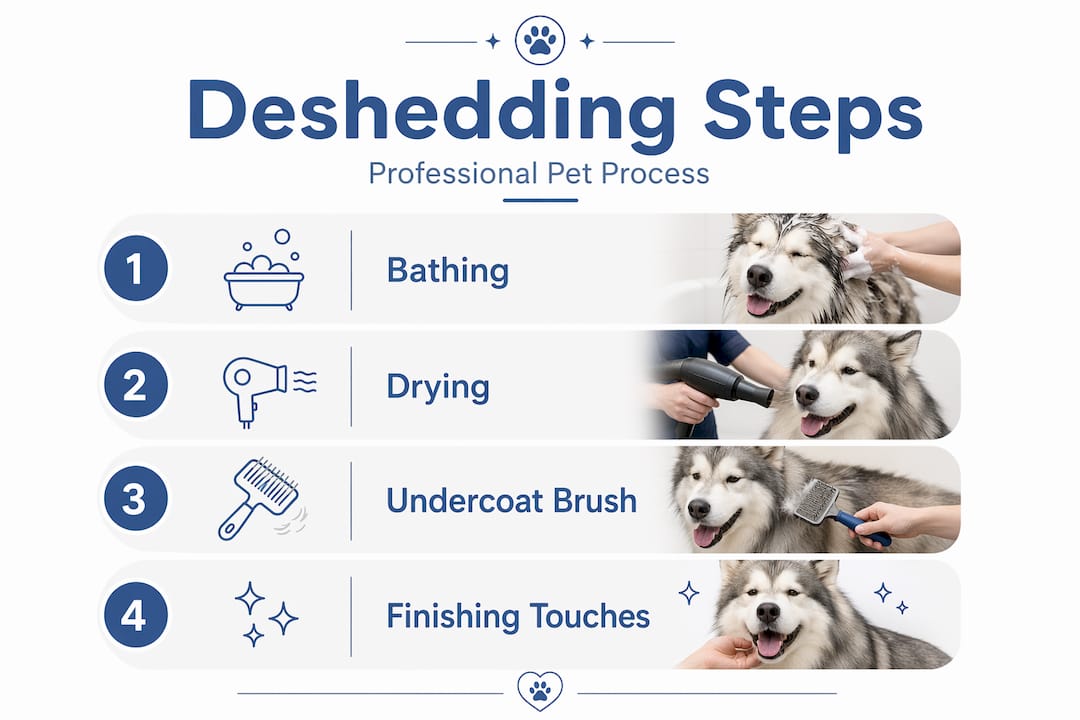
Bathe your pet with a deshedding shampoo. Deshedding products work best on clean fur. A dedicated deshedding shampoo loosens the bond between dead undercoat hairs and the skin, making removal far easier. Check out the types of pet shampoos available to match the right formula to your pet’s coat and skin type.
-
Dry thoroughly before brushing. Brushing wet fur can cause irritation and can stretch the hair shaft, weakening it. Use a pet-safe blow dryer on a low heat setting or allow your pet to air dry completely. Professional groomers use high-velocity dryers that also blow loose undercoat out of the coat before any brushing begins, which is a genuine advantage.
-
Brush in the direction of hair growth. Light pressure in the direction of hair growth produces the fastest and least stressful results. Work in sections, starting from the neck and moving toward the tail. Do not scrub back and forth; one directional strokes are much more effective and comfortable.
-
Work in short sessions for sensitive pets. If your cat or dog becomes restless, stop. A 10-minute calm session is more productive than a 30-minute stressful one. Build up the time gradually over multiple sessions.
-
Finish with a fine-toothed comb. This captures any remaining loose hairs and smooths the coat, leaving it looking healthy and tidy.
When to deshed your pet
Seasonal timing makes a real difference. Spring and fall are peak shedding periods for most double-coated breeds. Scheduling deshedding sessions every two to four weeks during these periods keeps shedding under control. Outside of peak season, once a month is usually sufficient for heavy shedders and every six to eight weeks for moderate shedders.
Pro Tip: If your pet is shedding heavily despite regular home deshedding, or if you notice skin redness, bald patches, or a coat that feels unusually dense and matted, those are signs that a professional deshedding service would be more appropriate. Professionals have the tools and technique to handle extreme cases safely.
The professional deshedding process includes bathing, high-velocity drying, and a full brush-out with specialized tools. One session can significantly reduce household shedding for four to eight weeks, which is a meaningful improvement over home brushing alone. Understanding how professional pet care works can also help you decide what level of service fits your pet’s needs.
Benefits and limitations of pet deshedding
Pet deshedding done right delivers real, noticeable improvements for your pet and your home. But it helps to know what to expect, and what not to.
What deshedding does for your pet and home
- Reduces household fur accumulation significantly. After a professional deshedding session, many pet owners notice far less fur on furniture, clothing, and floors for weeks afterward.
- Prevents matting. Removing loose undercoat before it tangles with the guard coat prevents painful mats from forming, especially in long-haired breeds and cats.
- Improves skin health. Trapped loose undercoat retains heat and moisture close to the skin, which can lead to irritation and bacterial buildup. Removing it allows air circulation and keeps the skin comfortable.
- Makes your pet more comfortable. A dense, trapped undercoat acts like a heavy blanket your pet cannot take off. Regular deshedding literally lightens the load, which matters enormously in a warm climate like Dubai’s.
- Gives you an early warning system. Running a deshedding tool through your pet’s coat regularly means you will notice lumps, skin changes, or parasites far earlier than you would otherwise.
You can also combine deshedding with good habits at home. Our guide on pet hair removal hacks shares practical ways to keep your space cleaner between grooming sessions.
Realistic expectations: what deshedding cannot do
Deshedding is not a cure-all, and we want to be honest with you about that. It does not stop your pet from shedding permanently. Shedding is a natural biological process, and no grooming technique changes that. It also does not cure pet allergies, since most pet allergies are triggered by dander (skin flakes) and saliva proteins rather than the fur itself.
Overdoing it carries real risk too. Using a deshedding tool too frequently or with excessive pressure can irritate the skin and even thin out the topcoat over time. Stick to the recommended frequency and always use gentle, deliberate strokes.
What I’ve learned from watching pet owners navigate deshedding
Over time, the pattern I see most often is this: a pet owner invests in a good deshedding tool, uses it enthusiastically for a week, and then stops because the fur keeps coming back. They feel like it is not working. What is actually happening is that they are getting results, but they underestimated how much undercoat their pet carries and how continuous the shedding cycle is.
The undercoat is not a one-time problem. It regenerates. That is not a failure of the tool or the technique. It is just how your pet’s biology works.
I’ve also seen well-meaning owners use a deshedding tool on every pet in the house regardless of coat type. That can cause real harm. A Poodle or a Shih Tzu does not need a heavy deshedding rake. Those coats grow continuously rather than cycling through a blow phase, and aggressive tool use can damage them.
The other thing I would tell any pet owner is this: do not wait until your pet is shedding heavily to start deshedding. Build it into the regular grooming routine before the peak season hits. When you start early, each session is shorter, the coat stays manageable, and your pet stays comfortable throughout. Happiness really is just a brush stroke away, but only if you are using the right brush at the right time.
— Growth
Caring for your pet’s coat starts with the right support
At Faroopets, we offer professional mobile grooming services across Dubai that include deshedding treatments as part of our grooming packages for both dogs and cats. Our certified groomers use the right tools for each coat type and follow a bathing, drying, and brush-out process that gets real results.

Whether your dog needs a thorough seasonal deshed or your cat’s coat has been getting a little unruly, our team brings everything to your door in a sanitized, well-equipped van. Explore our dog grooming packages or our cat grooming services to find the right treatment for your furry family member. Booking is simple and can be done online in just a few minutes. Your pet’s most comfortable coat is closer than you think.
FAQ
What is pet deshedding exactly?
Pet deshedding is the process of removing loose, dead undercoat hair from a pet’s coat using specialized tools or professional grooming techniques. It goes deeper than regular brushing, which only addresses the topcoat surface.
Is deshedding necessary for all pets?
No. Deshedding is most beneficial for double-coated breeds like Huskies, Golden Retrievers, and Maine Coons. Single-coated or non-shedding breeds typically do not require dedicated deshedding tools or treatments.
How often should I deshed my pet?
During peak shedding seasons in spring and fall, every two to four weeks is ideal for heavy shedders. Outside of those periods, once a month is sufficient for most double-coated dogs and cats.
Can deshedding hurt my pet?
Deshedding done correctly with light pressure and proper tools is safe and comfortable. However, using a deshedding tool too aggressively, on wet fur, or on a matted coat can irritate the skin and cause discomfort.
How long do professional deshedding results last?
A professional deshedding session that includes bathing, high-velocity drying, and a full brush-out can reduce household shedding noticeably for four to eight weeks, depending on the pet’s coat type and shedding cycle.
