


Posted by Faroo Pets Grooming
on April 14, 2026

TL;DR:
- Understanding grooming terminology helps pet owners ask informed questions and choose appropriate services.
- Welfare-focused grooming emphasizes humane techniques, separate spaces, and stress management for pets.
- Proper knowledge enables owners to advocate for their pets’ health and prevent harmful shortcuts.
Many Dubai pet owners believe grooming is just a bath and a brush. That assumption is understandable, but the professional vocabulary used by certified groomers reveals a much richer picture. From carding and de-shedding to allopreening and blood feathers, each term carries real meaning for your pet’s health and comfort. When you understand the language, you can ask better questions, choose the right services, and protect your pet from shortcuts that look harmless on a price list but aren’t. This guide walks you through the essential terminology for dogs, cats, and birds, so you can walk into any grooming appointment in Dubai feeling confident and informed.
Table of Contents
- Essential dog grooming terminology and meanings
- Cat grooming terminology: specialist techniques explained
- Bird grooming terminology and best practices
- Expert nuances and welfare-focused terminology in grooming
- Our expert perspective: industry terminology as your grooming toolkit
- Find your ideal grooming service in Dubai
- Frequently asked questions
Key Takeaways
| Point | Details |
|---|---|
| Dog grooming terms matter | Knowing professional dog grooming terms helps you choose the right service and avoid unnecessary costs. |
| Cat grooming routines are specialized | Specialist cuts and daily maintenance are essential for cats, especially long-haired breeds. |
| Bird grooming requires expert care | Professional wing trims and basic hygiene for birds protect their health and prevent accidents. |
| Welfare-focused vocabulary is vital | Understanding welfare-first terminology empowers you to ensure humane, stress-free grooming for your pet. |
Essential dog grooming terminology and meanings
Now that we’ve set the stage for why vocabulary matters, let’s decode the most common dog grooming terms. Knowing these will help you read service menus clearly and avoid paying for something you didn’t expect or missing something your dog genuinely needs.
Here are the core terms every dog owner should recognize:
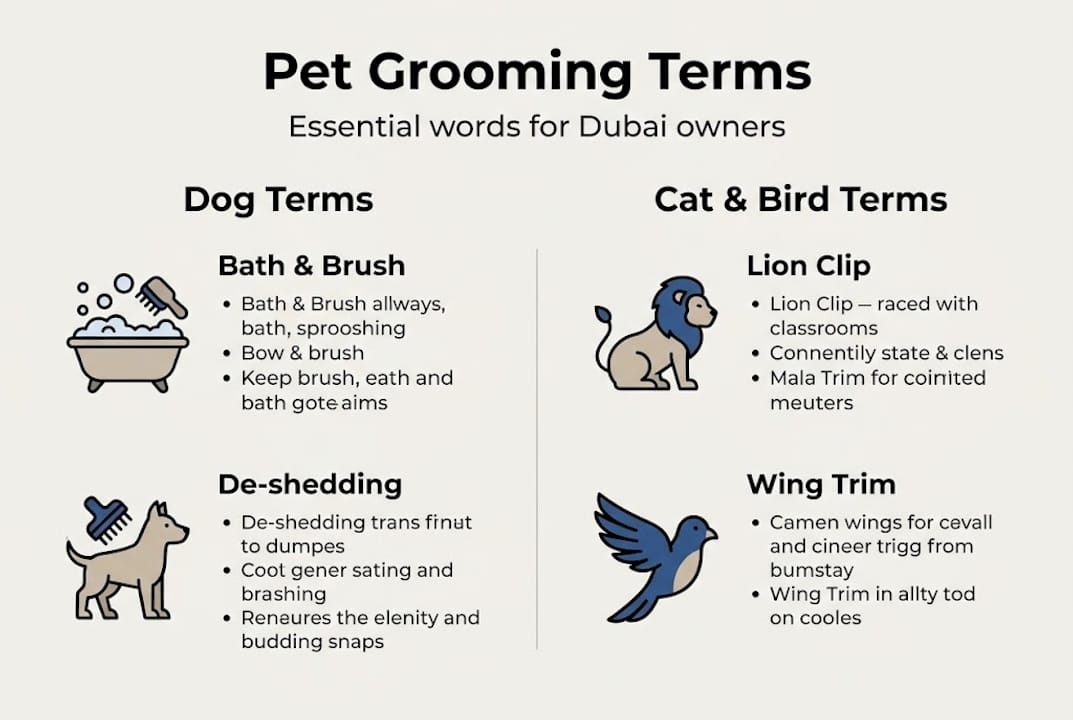
- Bath and brush: A full wash with pet-safe shampoo followed by blow-drying and brushing. This is the foundation of most grooming packages.
- De-shedding: A targeted treatment using special tools to remove loose undercoat fur. Ideal for heavy shedders like Huskies and Golden Retrievers.
- Carding: A technique that pulls dead undercoat from double-coated breeds using a carding knife or stripping tool. It preserves the coat’s natural insulation rather than destroying it.
- Clipping: Using electric clippers to trim fur to a uniform length. Common for Poodles, Shih Tzus, and other single-coated breeds.
- Sanitary trim: Trimming the fur around sensitive areas like the groin, belly, and rear to maintain hygiene between full grooms.
- Nail trim: Clipping or grinding the nails to a safe length. Overgrown nails affect posture and joint health over time.
| Service term | What it actually includes |
|---|---|
| Bath and brush | Wash, dry, brush, light detangle |
| De-shedding treatment | Undercoat removal, specialized tools |
| Carding | Dead coat removal for double-coated breeds |
| Full clip | All-over length reduction with clippers |
| Sanitary trim | Hygiene trim around sensitive areas |
| Nail trim | Clip or grind to safe length |
One of the most important professional nuances involves double-coated breeds. Shaving a double coat can permanently damage the coat’s ability to regulate temperature, which is especially risky in Dubai’s heat. Carding or de-shedding is the correct approach for these breeds. Always ask your groomer which method they use before booking.
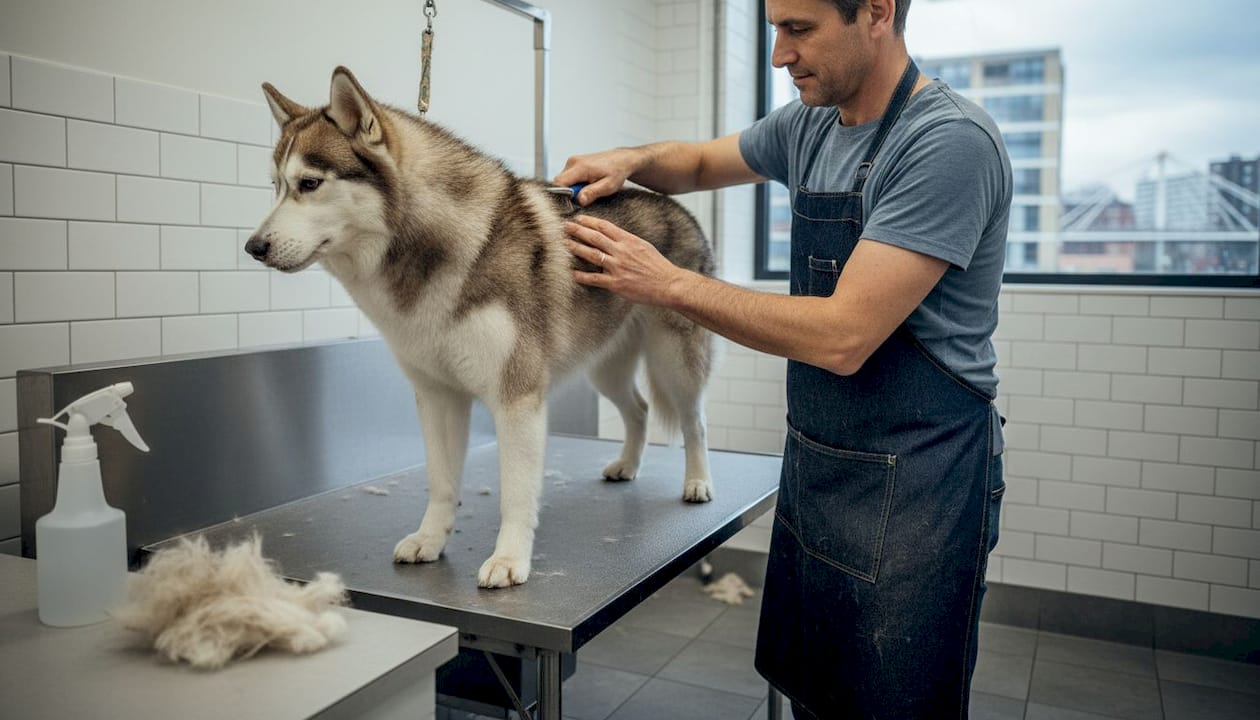
Pricing often varies by coat type and condition. Dog grooming costs range widely depending on breed size, coat density, and service complexity. Matted coats typically cost more to treat because humane dematting takes extra time and skill. If matting is severe, a groomer may recommend shaving as the kindest option rather than forcing painful detangling.
For a smooth first appointment, reviewing dog grooming preparation steps beforehand makes a real difference. You can also explore our full range of dog grooming essentials to understand what a professional session covers.
Pro Tip: Always ask your groomer to explain each line item before the session begins. A reputable groomer will welcome the question and give you a clear answer.
Cat grooming terminology: specialist techniques explained
With dogs covered, let’s turn to the nuanced terminology found in professional cat grooming. Cats are famously self-sufficient groomers, but long-haired breeds and senior cats often need professional support to stay healthy and mat-free.
Three specialty cuts come up most often in professional cat grooming:
- Lion cut: The body fur is shaved short while the head, paws, and tail tip are left fluffy. It dramatically reduces shedding and matting for long-haired breeds.
- Teddy bear cut: A rounded, plush trim that keeps the coat at a uniform medium length. It’s softer in appearance than the lion cut and suits cats who tolerate moderate trimming.
- Sanitary trim: Just like dogs, cats benefit from hygiene trims around sensitive areas, especially long-haired breeds prone to fecal matter buildup.
| Grooming term | Technique used | Best for |
|---|---|---|
| Lion cut | Full body shave, selective areas left long | Persian, Maine Coon, Ragdoll |
| Teddy bear cut | Uniform medium-length trim | Most long-haired breeds |
| Sanitary trim | Targeted hygiene clip | All long-haired cats |
| De-shedding | Undercoat removal with specialist tools | Seasonal shedders |
| Brushing session | Detangle and smooth with appropriate brush | All coat types |
For long-haired cats, daily brushing is strongly recommended to prevent painful matting. Here’s a simple routine to follow at home:
- Choose the right tool: a wide-tooth comb for initial detangling, a slicker brush for smoothing.
- Start at the head and work toward the tail in short, gentle strokes.
- Pay extra attention to behind the ears, under the armpits, and around the collar area.
- Finish with a fine-tooth comb to check for any remaining tangles.
- Reward your cat immediately to build a positive association.
You can find the right tools for this routine through our selection of basic cat grooming tools.
“Cats should always be groomed separately from dogs. The stress of proximity to another species can trigger anxiety, making the session unsafe and counterproductive.” — Professional grooming welfare standard
Pro Tip: If your cat resists brushing, try shorter two-minute sessions twice daily rather than one long session. Gradual exposure works far better than forcing it. For breed-specific advice, our breed-specific cat grooming guide is a great next step.
Bird grooming terminology and best practices
After dogs and cats, bird grooming terms deserve attention, as their vocabulary is often overlooked yet vital for Dubai pet owners. Birds are unique because most of their grooming happens naturally through self-care behaviors. Understanding the terminology helps you know when to step in and when to leave well enough alone.
Key terms to know:
- Preening: The natural behavior where a bird uses its beak to clean, align, and waterproof its feathers. Preening is the primary way birds maintain feather health and is completely normal.
- Uropygial gland: Also called the preen gland, this small oil-producing gland near the tail supplies the oils a bird spreads during preening. Not all species have it, but for those that do, it’s essential for feather condition.
- Allopreening: Social grooming between birds, where one bird preens another. It strengthens bonds and reaches areas a bird can’t access alone. In single-bird households, gentle owner interaction can partially replicate this.
- Blood feathers: New feathers still actively growing with a blood supply inside the shaft. Cutting or damaging these causes pain and bleeding. Identifying blood feathers before any trim is a non-negotiable professional skill.
- Wing trim: Clipping the primary flight feathers to limit flight distance for safety. This is a welfare decision, not a cosmetic one.
- Nail trim: Birds’ nails can overgrow and curl, causing discomfort or injury. Regular trimming keeps them at a safe length.
- Beak trim: Only needed when the beak is overgrown or misaligned. Healthy beaks are maintained naturally through chewing and foraging.
“Most pet birds need very little professional grooming. Their natural preening and feather care handles the bulk of maintenance. Professional intervention is reserved for nail, beak, and wing trims when genuinely necessary.”
Pro Tip: Never attempt a wing trim at home. Blood feathers are not always visible to the untrained eye, and a nick can cause significant blood loss. Always trust a certified professional for this task. For a broader view of what bird grooming involves, our guide on full pet grooming for birds covers everything in detail.
Expert nuances and welfare-focused terminology in grooming
With the main species covered, it’s crucial to understand expert and welfare-focused terminology that shapes modern grooming standards. These terms separate groomers who truly care about your pet from those who simply move pets through as fast as possible.
Humane dematting refers to the careful, patient removal of tangles using detangling sprays and appropriate tools, working from the tips inward. When mats are too severe, humane shaving is considered the kindest resolution rather than forcing painful removal.
Stress-free handling describes a grooming approach that prioritizes the pet’s emotional state throughout the session. This includes using non-slip surfaces, speaking calmly, taking breaks, and never restraining a pet in a way that causes panic.
Anxiety management goes further, using techniques like low-stimulation environments, familiar scents, and gradual desensitization over multiple sessions. Short sessions are especially important for anxious pets.
Here’s how to identify a grooming service that genuinely follows welfare standards:
- Groomers hold recognized certifications (OFQUAL Level 2 or equivalent)
- Dogs and cats are kept in separate areas
- Sedation is never used unless prescribed by a veterinarian
- Groomers explain their tools and techniques when asked
- Session length is adjusted based on the pet’s stress signals
- Dematting is never forced; shaving is offered as an alternative
“Never force painful mat removal. Humane shaving is always the better choice when mats are close to the skin. A pet’s comfort comes before any aesthetic outcome.” — Professional grooming welfare guideline
Pro Tip: When booking, ask whether your groomer holds a formal certification. Certified professionals understand both technique and animal welfare, which directly affects your pet’s safety. For a full breakdown of what safe grooming looks like in practice, our safe grooming practices guide is essential reading.
If you’re preparing a dog for their first session, our preparing pets for grooming guide walks you through every step.
Our expert perspective: industry terminology as your grooming toolkit
Most grooming guides stop at definitions. We think that misses the point entirely. Knowing what “de-shedding” means is useful, but knowing why it matters for your Husky in Dubai’s summer heat is what actually protects your pet. Terminology is not just vocabulary. It’s a toolkit for holding groomers accountable.
We’ve seen owners pay for a full clip on a double-coated dog because they didn’t know to ask about carding. We’ve seen cats returned home stressed because no one thought to ask whether they’d be separated from dogs. These are not rare mistakes. They happen when language stays one-sided.
The real value of learning grooming terminology is that it shifts the dynamic. You stop being a passive customer and start being an advocate. You can cite welfare standards, ask about certifications, and recognize when a groomer is cutting corners. That’s what pet safety in grooming actually looks like in practice. It’s not just about the tools or the shampoo. It starts with the conversation you have before the session even begins.
Find your ideal grooming service in Dubai
If you’re ready to turn new knowledge into pet care action, these Dubai grooming options make choosing easy and rewarding. Now that you understand the terminology, you can have a real conversation with your groomer about what your pet actually needs.
At Faroo Pet Groomery, our certified groomers explain every service in plain language before they begin. Whether you’re booking dog grooming in Dubai for a double-coated breed or scheduling cat grooming in Dubai for a long-haired Persian, we match the right technique to your pet’s coat and temperament. Our mobile vans come fully sanitized and stocked with welfare-first tools. Ready to book? Choose your grooming service and let’s give your pet the care they deserve.
Frequently asked questions
What are the most important terms to know for dog grooming?
The most important terms are bath and brush, de-shedding, carding, clipping, sanitary trim, and nail trim. These define most dog grooming service packages and help you compare options accurately.
How often should cats be professionally groomed in Dubai?
Long-haired cats need daily brushing at home and professional grooming every 4 to 8 weeks to prevent matting and maintain hygiene in Dubai’s warm climate.
Is it safe to trim my pet bird’s wings at home?
Wing trimming should only be done by a professional because blood feather injuries can cause significant bleeding and distress if the trim is done incorrectly.
What are welfare-focused grooming practices for anxious pets?
Welfare practices include short sessions, coat-appropriate tools, calm handling, and never sedating pets unless a veterinarian has prescribed it for a medical reason.
