


Posted by Faroo Pets Grooming
on April 03, 2026

TL;DR:
- Different breeds have unique grooming needs based on coat type and activity level.
- Building a structured grooming schedule helps prevent health issues and reduces stress for pets.
- Professional grooming complements home routines, especially for high-maintenance breeds requiring specialized care.
Most pet owners in Dubai treat grooming as a single, uniform task. Brush the dog, bathe the cat, done. But if you share your home with a Husky, a Persian cat, and a Poodle, you already know that approach falls apart fast. Each pet has completely different coat needs, stress triggers, and grooming schedules. For busy professionals and families managing multiple pets, getting this wrong means more matting, more vet visits, and more frustrated animals. This guide breaks down exactly what each breed needs, how to organize it efficiently, and when to call in the pros.
Table of Contents
- Why grooming needs differ by breed
- Breed-specific grooming routines: The essentials
- The grooming process: Tools, techniques, and order
- Home care vs. professional grooming: What’s best for your pet?
- Time-saving strategies for multi-pet households
- What most guides miss about breed-specific grooming
- Tailored pet grooming services for every Dubai breed
- Frequently asked questions
Key Takeaways
| Point | Details |
|---|---|
| Breed-specific care | Each breed’s coat and needs demand a unique grooming routine for best results. |
| Routine matters | Consistent grooming prevents health issues and keeps pets comfortable and happy. |
| Home vs. pro | Mix home care with professional grooming for cost-effective, thorough pet maintenance. |
| Efficiency for families | Batching grooming tasks saves time for busy, multi-pet Dubai households. |
Why grooming needs differ by breed
Grooming is not just about keeping your pet looking good. It is about maintaining their skin health, regulating body temperature, and catching early signs of illness. The reason routines differ so dramatically comes down to three factors: coat type, breed genetics, and activity level.
A Siberian Husky has a thick double coat designed for Arctic winters. In Dubai’s heat, that coat needs frequent brushing to prevent matting and allow airflow to the skin. A Labrador Retriever, by contrast, has a short, dense coat that sheds heavily but needs far less brushing. A Poodle’s curly coat does not shed much, but it grows continuously and mats quickly without regular trimming. These are not minor differences. They represent entirely different grooming systems.
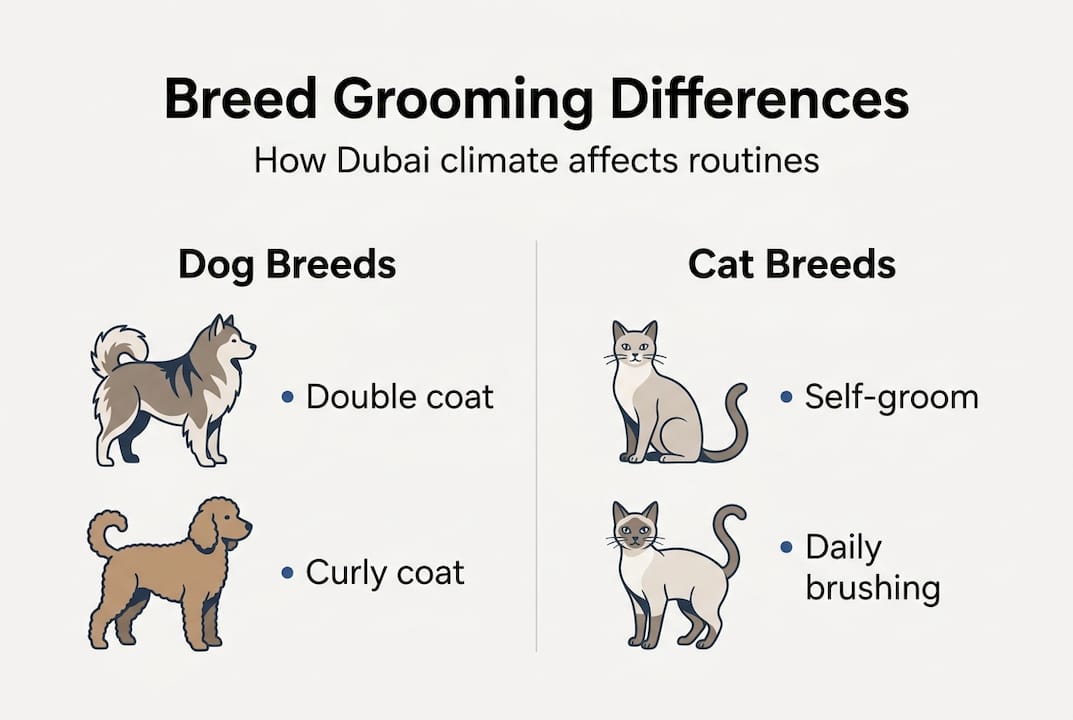
As noted in coat type guides, brushing frequencies vary widely depending on the dog’s coat, meaning what works for one breed can actively harm another. Skipping brushing on a long-haired breed causes painful matting. Over-bathing a double-coated dog strips natural oils. Both outcomes stress the pet and cost you more in professional corrections.
Our professional pet grooming guide covers how Dubai’s climate adds another layer of complexity, since heat and humidity accelerate skin issues for certain breeds.
Here are the most common Dubai pet breeds and the unique grooming challenges each faces:
- Siberian Husky: Heavy shedding, double coat, needs daily brushing during blow-out seasons
- Poodle: Continuous coat growth, mats easily, requires professional trimming every 4 to 6 weeks
- Golden Retriever: Feathering on legs and tail tangles quickly, needs brushing 3 to 4 times per week
- Shih Tzu: Long silky coat prone to facial staining and eye debris buildup
- Persian cat: Dense undercoat mats without daily brushing, prone to hairballs
- British Shorthair: Low maintenance coat but needs regular nail and ear checks
- Labrador Retriever: Minimal brushing but heavy seasonal shedding requires de-shedding tools
Ignoring breed-specific needs does not just affect appearance. It can cause skin infections, ear problems, and anxiety in pets that associate grooming with discomfort.
Now that you understand why one-size-fits-all fails, let’s break down the grooming frameworks by breed and coat type.
Breed-specific grooming routines: The essentials
Armed with an understanding of breed differences, let’s detail what each routine looks like in practice. The key is building a schedule that fits your pet’s coat type, not just your convenience.
According to coat-based grooming research, brushing, bathing, and professional grooming frequencies all depend heavily on coat category. Here is a practical comparison table for the most popular breeds in Dubai homes:
| Breed or coat type | Brushing frequency | Bathing frequency | Pro trim interval |
|---|---|---|---|
| Poodle (curly coat) | Daily | Every 3 weeks | Every 4 to 6 weeks |
| Husky (double coat) | 3 to 4x per week | Every 6 to 8 weeks | Seasonal de-shed |
| Golden Retriever (long coat) | 3 to 4x per week | Every 4 weeks | Every 8 weeks |
| Labrador (short coat) | Once per week | Every 4 to 6 weeks | Rarely needed |
| Persian cat (long coat) | Daily | Every 4 to 6 weeks | Every 6 to 8 weeks |
| British Shorthair (short coat) | Once per week | Every 6 to 8 weeks | Rarely needed |
For cat owners, the approach is different. Most cats self-groom effectively, but long-haired breeds like Persians need daily brushing to prevent painful mats. Our guide on grooming routines for long-haired cats walks through exactly how to handle this without stressing your cat.
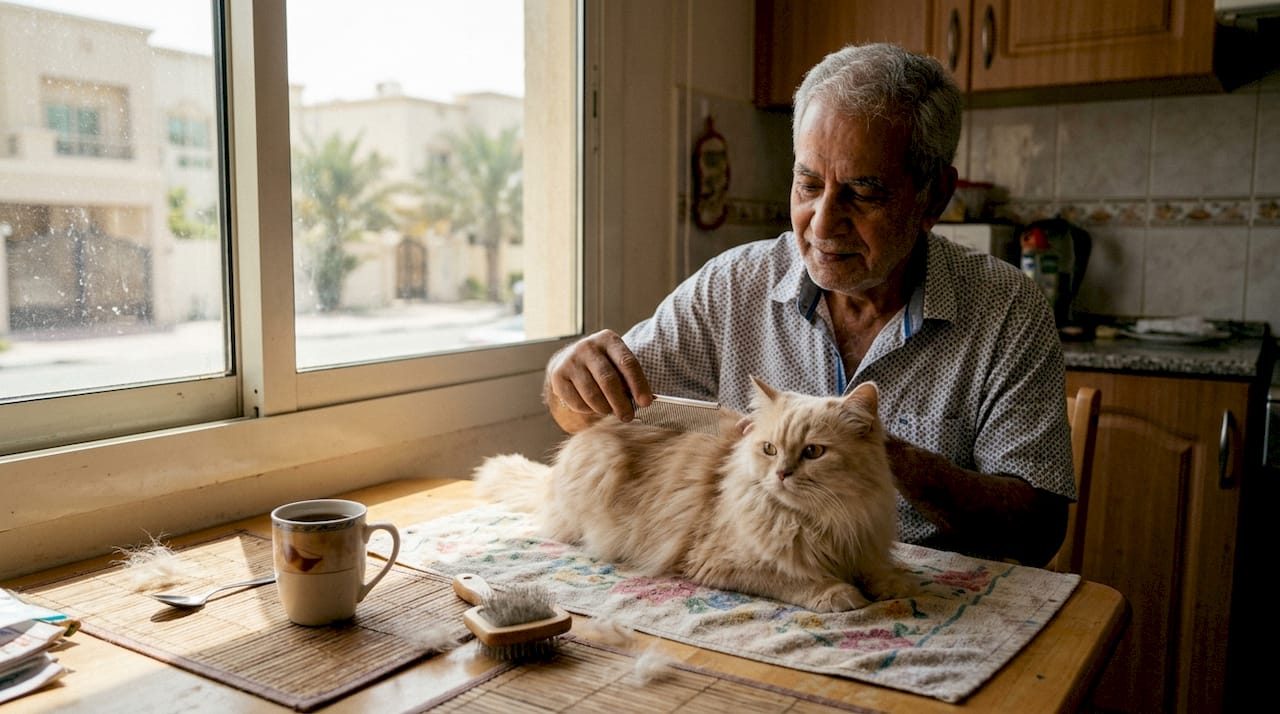
If you have both dogs and cats at home, keep their grooming tools separate to avoid cross-contamination and to respect each pet’s scent boundaries. You can also explore our cat grooming services for professional support tailored to feline needs.
Here is a quick checklist to build your multi-pet grooming calendar:
- Assign each pet a color-coded grooming day
- List each pet’s coat type and required tools
- Set digital calendar reminders for brushing, bathing, and pro visits
- Keep a simple log noting any skin changes or behavioral reactions
Pro Tip: Set recurring reminders on your phone for each pet’s grooming tasks. Even a 5-minute daily brush on your Persian cat prevents hours of detangling later.
The grooming process: Tools, techniques, and order
Knowing what to do and when is crucial, but how you do it is equally important. The order of your grooming session directly affects your pet’s comfort and the quality of the result.
The recommended grooming sequence is: brush first, then bathe, dry, trim, clean ears, clip nails, and finish with teeth care. This order matters because brushing before bathing removes loose fur and prevents wet mats from tightening. Trimming after drying ensures even cuts. Ears and nails at the end keep the session calm, since these are often the most sensitive steps.
Here is a numbered home grooming session you can follow for most breeds:
- Brush thoroughly to remove tangles, loose fur, and debris before any water contact
- Bathe with a breed-appropriate shampoo, keeping water temperature lukewarm
- Dry completely using a towel and, if needed, a low-heat dryer, especially for double-coated breeds
- Trim fur around eyes, paws, and sanitary areas using blunt-tipped scissors
- Clean ears gently with a vet-approved solution and cotton pads
- Clip nails carefully, avoiding the quick (the pink blood vessel inside the nail)
- Brush teeth using pet-safe toothpaste to prevent tartar buildup
For tools, our list of must-have grooming tools covers everything from slicker brushes to de-shedding rakes. You can also find cat grooming expert tips for feline-specific techniques that differ from dog care.
Pro Tip: Use a slicker brush for curly or long-haired breeds, a rubber brush for short-haired dogs and cats, and an undercoat rake for double-coated breeds like Huskies. Using the wrong brush can cause skin irritation or simply miss the job entirely.
Home care vs. professional grooming: What’s best for your pet?
While most routines can be managed at home, there’s a time and place for professional expertise. The honest answer is that both have a role, and the smartest pet owners use them together.
Professional grooming is thorough and consistent but comes at a higher cost, while home care is more affordable yet prone to gaps and inconsistency. Here is a side-by-side comparison to help you decide:
| Factor | Home grooming | Professional grooming |
|---|---|---|
| Cost | Low (tools only) | Moderate to high per session |
| Thoroughness | Varies by skill | High, trained hands |
| Time investment | 30 to 90 minutes | Minimal for owner |
| Common mistakes | Missed mats, wrong tools | Overbooking, infrequent visits |
| Best for | Maintenance between visits | High-maintenance breeds, full grooms |
For families managing multiple pets, the most efficient approach is scheduling professional visits for high-maintenance breeds and handling weekly maintenance at home. Our guide on multi-pet grooming in Dubai offers a practical framework for coordinating this across different species.
Watch for these red flags that signal it is time to book a professional groom:
- Visible mats that cannot be brushed out without pain
- Fur growing over your dog’s eyes or blocking their vision
- Nails so long they click loudly on hard floors
- Persistent ear odor or head shaking
- Your pet showing signs of anxiety or aggression during home sessions
Time-saving strategies for multi-pet households
With options for both home and pro grooming, the final piece is organizing routines for pet-filled households. The goal is efficiency without cutting corners on care.
The biggest time drain for multi-pet families is treating each grooming session as a separate event. Instead, batch tasks by type. Brush all pets on the same day. Schedule professional appointments back to back. Keep one grooming station stocked with all tools so you are not hunting for supplies mid-session.
Regular checks during grooming spot skin issues and parasites early, and using positive reinforcement makes the routine genuinely enjoyable for your pet. Both habits save you time and money in the long run.
Here are the top three organization fixes for chaotic multi-pet grooming:
- Create a shared grooming calendar listing every pet’s schedule, coat type, and next professional visit
- Build a dedicated grooming kit per pet so tools are always ready and cross-contamination is avoided
- Use treat-based positive reinforcement during every session to reduce resistance and build trust over time
For a deeper look at coordinating care across species, our resource on coordinating multi-pet grooming is a great starting point.
Pro Tip: Turn grooming into bonding time by pairing each session with calm praise and a small treat. Pets that associate grooming with positive experiences are far easier to handle, which saves you real time every single week.
What most guides miss about breed-specific grooming
Most grooming articles hand you a checklist and call it done. We have seen enough pets and enough households in Dubai to know that checklists are just the starting point.
The real work is observation. A Poodle who suddenly resists ear cleaning may have an early infection. A Persian cat who stops self-grooming may be in pain. These signals only appear if you are paying attention during sessions, not rushing through a list.
Dubai’s climate also shifts what “best practice” means. Heat and humidity accelerate skin issues, especially in double-coated and flat-faced breeds. What works in a cooler climate may need adjustment here. Age matters too. A senior Labrador needs gentler handling and shorter sessions than a young, energetic one.
Our perspective is that grooming is a health check first and a beauty ritual second. The coat, skin, ears, nails, and teeth tell you everything about your pet’s wellbeing. If you approach each session with curiosity rather than obligation, you will catch problems early and build a deeper bond with your pet. For those with less common pets, our exotic pet grooming insights offer a similarly thoughtful approach.
Tailored pet grooming services for every Dubai breed
Keeping up with every pet’s unique grooming needs is a lot, especially when you are managing a busy schedule alongside a household full of different breeds. That is exactly where we come in.

At Faroo Pet Groomery, our certified mobile groomers come directly to your door with sanitized equipment and breed-specific expertise. Whether you need dog grooming Dubai for your Husky or Golden Retriever, or specialized cat grooming Dubai for your Persian, we have a service built for your pet’s exact needs. Not sure where to start? Our easy choose your service page makes booking simple and stress-free. Happiness really is just a brush stroke away.
Frequently asked questions
How can I tell what brush type is best for my pet’s coat?
Slicker brushes suit curly or long-haired pets, while rubber brushes work best for short-haired breeds based on coat texture. When in doubt, ask your groomer to recommend the right tool at your next visit.
How often should I schedule professional grooming for my Poodle or Persian cat?
Both Poodles and Persian cats benefit from professional grooming every 4 to 6 weeks for optimal coat health and overall appearance. Skipping sessions leads to painful matting that often requires shaving rather than brushing out.
What’s the order of a full grooming session at home?
The correct grooming session order is brushing, bathing, drying, trimming, nail clipping, ear cleaning, and then teeth care. Following this sequence protects your pet’s comfort and produces better results.
Is cat grooming as frequent as for dogs?
Cats need bathing far less often than dogs, but long-haired breeds like Persians require daily brushing to prevent mats. Short-haired cats typically manage well with weekly brushing and occasional professional checks.
Why is regular grooming important besides looks?
Regular grooming helps you spot skin problems early and builds a positive association with handling over time. It is one of the most effective ways to monitor your pet’s health between vet visits.
