


Posted by Faroo Pets Grooming
on May 24, 2026

TL;DR:
- Starting gentle handling at 8 weeks helps build trust before formal grooming begins.
- Using proper tools like slicker brushes and metal combs ensures comfortable, effective coat care for puppies.
- Early, positive grooming experiences foster lifelong habits, reducing anxiety and promoting healthy coat maintenance.
Bringing a new puppy home is one of the most joyful experiences you can have as a pet owner. But when it comes to grooming, many new owners feel genuinely lost. How early do you start? What brush do you use? When is the first bath safe? Puppy coat care step by step is exactly what you need to figure out, and the good news is that it is far simpler than it looks. This guide walks you through every stage, from your puppy’s first week home through building a lifelong grooming routine that keeps their coat healthy, their skin happy, and their tail wagging.
Table of Contents
- Key takeaways
- The right tools for puppy coat care step by step
- Step by step puppy grooming from week one
- Brushing and bathing by coat type
- Monitoring coat health and getting professional help
- My honest take on building a grooming routine
- Ready to make grooming easier for your puppy?
- FAQ
Key takeaways
| Point | Details |
|---|---|
| Start grooming early | Begin gentle handling at 8 weeks to build comfort before formal brushing begins. |
| Match tools to coat type | Using the right brush for your puppy’s coat prevents skin irritation and missed tangles. |
| Line brushing beats surface brushing | Brushing from the skin outward reaches mats where they actually form, not just the top layer. |
| First professional groom at 12 to 16 weeks | Early salon visits prioritize trust over a perfect trim, setting lifelong grooming behavior. |
| Use puppy-safe products only | Human shampoos and adult dog products can irritate a puppy’s sensitive skin and coat. |
The right tools for puppy coat care step by step
Before you touch a single fur strand, you need the right supplies in your hands. Using the wrong brush on a puppy coat does not just skip tangles. It can cause discomfort that makes your puppy dread every grooming session for years. A good toolkit does not have to be expensive, but it does have to be appropriate.
Here is a quick reference for the tools every new puppy owner needs:
| Tool | Purpose |
|---|---|
| Slicker brush | Removes loose fur and light tangles from most coat types |
| Metal comb | Verifies thorough brushing and detects hidden mats |
| Bristle brush | Adds shine and distributes oils in short or smooth coats |
| Deshedding tool | Reduces shedding in double-coated breeds during seasonal changes |
| Puppy shampoo | Cleanses without stripping natural oils from sensitive skin |
| Nail clippers (small size) | Trims puppy nails safely without splitting |
| Ear cleaning solution | Keeps ear canals clean and free of buildup |
| Non-slip bath mat | Prevents slipping during baths, reducing anxiety |
| Microfiber towel | Absorbs water quickly with minimal friction on puppy coat |
When selecting shampoos and conditioners, only dog-appropriate products are safe for puppies. Human shampoos have a different pH balance and can strip the natural protective layer from your puppy’s skin, leading to dryness and irritation. Look for formulas labeled specifically for puppies, since these are milder than regular dog shampoos.
For a curated selection of puppy-safe grooming tools suited to Dubai’s climate and coat conditions, Faroopets has a detailed breakdown worth reading before you shop.
Pro Tip: Buy a metal comb alongside your slicker brush from day one. Many new owners skip the comb, but it is the single best tool for confirming your brushing actually reached the base of the coat.
Step by step puppy grooming from week one
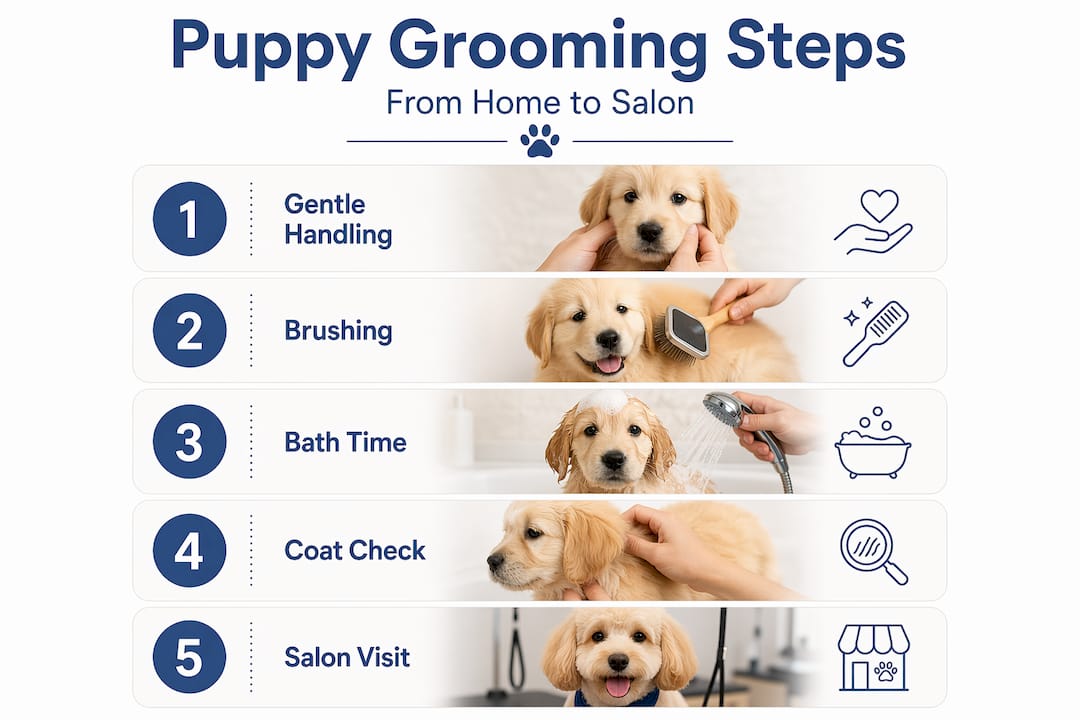
The biggest mistake new puppy owners make is waiting too long to start. You do not need to give your puppy a full grooming session the day they arrive. But you do need to start touching them in grooming-relevant ways immediately. Most puppies can start basic grooming between 8 and 12 weeks, with a practical timeline that moves in three clear stages.
Here is how to progress through those early weeks:
-
Weeks 8 to 10: Gentle handling only. Pick up paws, touch ears, open the mouth gently, and run your hands along the body. Use soft praise and small treats for every calm response. This is not grooming yet. It is early socialization that makes grooming possible later. Keep sessions to two or three minutes.
-
Weeks 10 to 12: Introduce brushing. Start with a soft bristle brush or a gentle slicker brush and do short passes along the back and sides. Your goal is familiarity, not thoroughness. Let your puppy sniff the brush first. Brush for 30 seconds, reward, stop. Gradually extend the time as they relax into it.
-
Weeks 12 to 14: First bath and nail trim. By now your puppy should be comfortable being handled and brushed. Introduce the bath with warm water at a comfortable temperature, a non-slip mat in the tub, and plenty of reassurance. Use a gentle puppy shampoo, rinse thoroughly, and dry with a microfiber towel. Follow with a calm nail trim on just one or two nails if your puppy seems anxious.
-
Ongoing: Build consistency. Once your puppy has been through all three stages, your routine is set. Short, positive sessions carried out regularly do far more good than occasional long grooming marathons.
Grooming should always be a gentle, positive experience that reduces anxiety around handling for the rest of your puppy’s life. The reward system you build in these early weeks becomes the foundation for every professional groom they will ever have.
Pro Tip: End every grooming session on a win. If your puppy gets wiggly and you stop the moment they calm down, even briefly, they learn that calm behavior ends the session. That lesson sticks.
Brushing and bathing by coat type
Not every puppy coat behaves the same way. A Golden Retriever puppy and a French Bulldog puppy need completely different brushing routines. Getting this wrong means either over-grooming sensitive skin or under-brushing a coat that needs daily attention.
| Coat Type | Brushing Frequency | Recommended Tool |
|---|---|---|
| Short and smooth | 1 to 2 times per week | Bristle brush or rubber curry |
| Long and silky | Daily or every other day | Slicker brush and metal comb |
| Curly or wavy | 2 to 3 times per week | Slicker brush with metal comb check |
| Double coat | 2 to 3 times per week, more when shedding | Deshedding tool and slicker brush |
Brushing frequency varies widely by coat type, and adjusting your schedule to match your puppy’s specific coat is one of the most practical puppy grooming tips you can act on right now.
The technique matters just as much as the frequency. Surface brushing is the most common mistake new owners make. You move the brush over the top of the coat, everything looks smooth, and you think the job is done. But mats do not form at the surface. They form at the base, where skin meets fur. Line brushing reaches the base layer near the skin where mats actually start, while surface brushing only moves the upper coat and leaves the base untouched.
To line brush correctly, part the coat horizontally with your free hand or a comb and hold back the top section. Brush the exposed section from skin outward, then release a thin new section and repeat. Work your way up the body systematically. After each section, run a metal comb from skin to tip to confirm the area is tangle-free. If the comb catches, go back with the brush before moving on.
For bathing, puppies need baths every 4 to 8 weeks. Bathing too frequently strips natural oils and irritates sensitive skin. Between baths, a damp cloth wipe-down handles everyday dirt without the full bath routine.
- Always use warm, not hot water
- Rinse twice to remove all shampoo residue, which can cause itching
- Dry gently with a towel, then finish with a low-heat dryer on the lowest setting if your puppy tolerates it
- Never leave your puppy damp, especially in cooler indoor temperatures
Pro Tip: For curly-coated puppies like Poodle mixes, never let the coat air dry without brushing through it while damp. Curly coats tighten as they dry, turning small tangles into full mats within hours.
Monitoring coat health and getting professional help
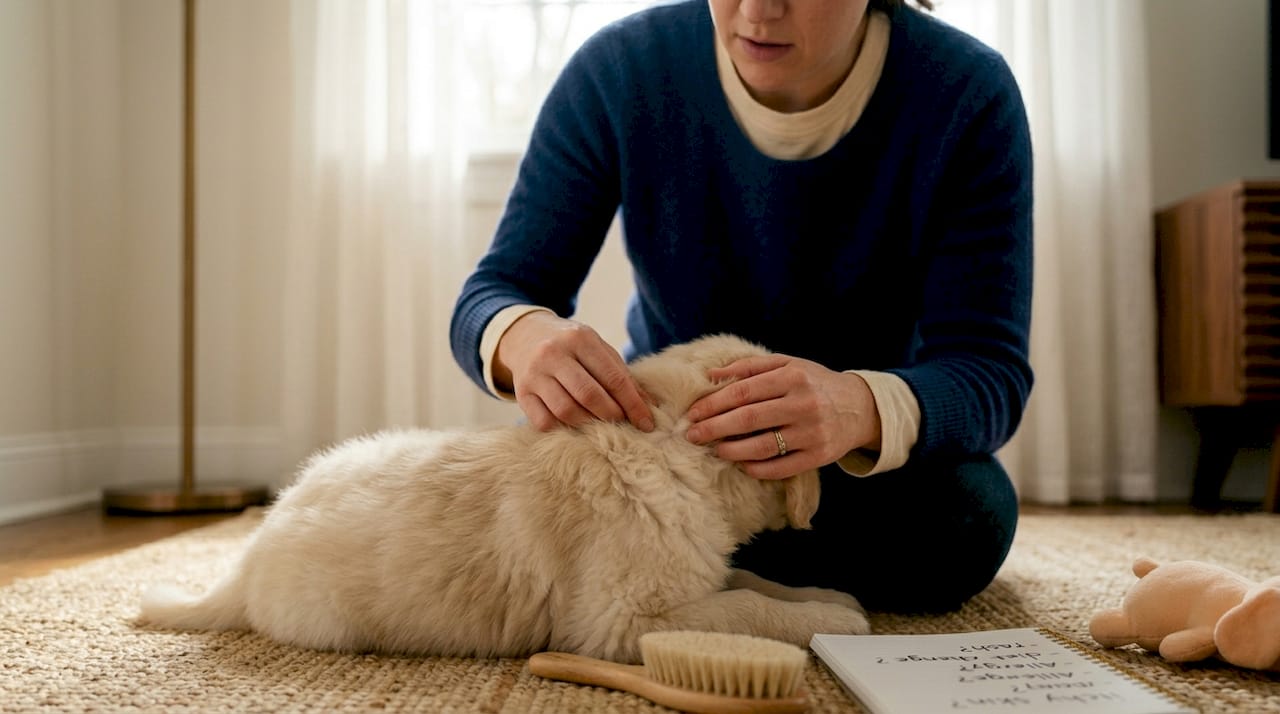
Regular grooming aids coat health and also serves as a diagnostic check you perform every week. While you brush, you are doing something more important than detangling. You are looking at the skin, feeling for lumps, and spotting early problems before they escalate.
Watch for these signs during every grooming session:
- Red or flaky skin under the fur, which can indicate dryness, allergies, or a reaction to a product
- Mats forming at armpits, behind ears, or under the collar, the three highest-friction zones on any dog
- Excessive scratching or biting at the coat, which often signals hidden skin irritation or parasites
- Unusual odor even after bathing, which may point to a skin infection or ear issue
If you find cuts, sores, or wounds during grooming, contact your vet before continuing any grooming around that area. Grooming over broken skin risks infection, and even gentle brushing near a sore spot can cause pain that damages your puppy’s trust in the process.
The first professional grooming visit should happen between 12 and 16 weeks, typically after your puppy’s second round of vaccinations. The goal of that first visit is not a perfect haircut. It is building trust with a professional groomer. Expect a gentle introduction to dryers, clippers, and the grooming table rather than a full transformation. Groomers who specialize in puppies understand this and will prioritize comfort over style.
After that first visit, early appointments repeat every 3 to 4 weeks to reinforce positive associations before spacing out to every 4 to 8 weeks based on your puppy’s coat type and growth rate. Keeping up with home brushing between these visits is what makes every professional session easier for your puppy and for the groomer. When you book a professional session through dog grooming in Dubai, Faroopets connects you with certified groomers who are experienced in first-time puppy visits and know exactly how to make the experience calm and comfortable.
My honest take on building a grooming routine
I have seen hundreds of puppy grooming routines go sideways, and almost always for the same reason. Owners skip the early handling phase because the puppy seems too young, then try to introduce a brush at four months to a puppy who has never had their paws touched. That puppy wiggles, nips, and makes the whole session stressful. The owner backs off. The mat forms. The cycle continues.
What I have learned is this: the grooming routine is not really about grooming at first. It is about trust. A puppy who trusts that being touched means good things will sit through anything later in life. A puppy who first experiences a brush as something threatening will spend years making every groom a battle.
Start slow. Accept that the first ten sessions might last less than two minutes each. Celebrate calm behavior loudly with treats and affection. Consistency beats intensity every single time. A two-minute brush every other day will do far more for your puppy’s coat and your relationship than a 20-minute session once a month.
One more thing. Do not measure success by how perfect the coat looks after a session. Measure it by how your puppy responds when you pick up the brush. Relaxed? Good. Tail wagging? Even better. That is the real goal.
— Growth
Ready to make grooming easier for your puppy?
Home grooming is something every puppy owner can learn, and combining it with professional care gives your puppy the best of both worlds. At Faroopets, our certified mobile groomers come directly to your door in Dubai, bringing a fully sanitized grooming van and all the right tools for your puppy’s specific coat type.

Whether you are booking your puppy’s first professional groom or looking for the right products to build your home routine, we are here to help. Our puppy grooming packages are designed with young coats and sensitive skin in mind, and our groomers understand how to keep first visits calm, gentle, and positive. Happiness is just a brush stroke away, and we would love to be part of your puppy’s grooming story from day one.
FAQ
When should I start grooming my puppy?
Puppies can begin basic grooming between 8 and 12 weeks, starting with gentle handling of paws, ears, and mouth before introducing a brush around weeks 10 to 12.
How often should I bathe my puppy?
Puppies need baths every 4 to 8 weeks, depending on how dirty they get. Bathing more often than that can dry out their sensitive skin.
What is line brushing and why does it matter?
Line brushing parts the coat in sections and brushes from the skin outward, reaching the base layer where mats form. Surface brushing alone misses these hidden tangles completely.
When should my puppy have their first professional groom?
The first professional groom happens between 12 and 16 weeks, usually after their second vaccinations. The focus is on building trust and familiarity with grooming tools, not on a specific style or cut.
Can I use my own shampoo on my puppy?
No. Only dog-appropriate grooming products are safe for puppies. Human shampoos have a different pH level that can strip skin oils and cause irritation or dryness.
