


Posted by Faroo Pets Grooming
on June 10, 2026

TL;DR:
- Maintenance grooming involves regular at-home care activities like brushing, nail trimming, and ear cleaning that preserve pet health and comfort between professional visits. Consistent grooming allows early detection of issues such as mats, parasites, and skin irritations, reducing costly treatments and enhancing emotional well-being. Establishing short, positive routines with breed-appropriate tools fosters calmer pets and stronger owner-pet bonds, making grooming a stress-free and vital health practice.
Maintenance grooming is defined as the routine, at-home care practices pet owners perform between professional appointments to keep their pets clean, healthy, and comfortable. Think of it as the daily and weekly upkeep that prevents small problems from becoming expensive ones. Unlike a full professional groom, which typically happens every 6 to 8 weeks for high-maintenance breeds, maintenance grooming covers brushing, nail trimming, ear cleaning, and light hygiene trims that you handle at home. Done consistently, it protects your pet’s coat, skin, and overall well-being in ways that a monthly salon visit simply cannot.
What is maintenance grooming and why does it matter?
Maintenance grooming is the ongoing care routine that sits between professional grooming appointments. The industry also calls it “at-home grooming” or “routine pet hygiene,” and understanding the definition of maintenance grooming helps you see it as a health practice, not just a cosmetic one.
The benefits go well beyond a shiny coat. Regular grooming contact allows you to detect lumps, ticks, skin irritation, and early infections before they require veterinary intervention. Severe matting restricts blood flow and traps moisture against the skin, creating painful conditions that often need professional shaving to resolve. Catching a mat early with a slicker brush takes two minutes. Removing it at a salon after it has tightened takes much longer and costs significantly more.
There is also a behavioral dimension. Pets groomed regularly in familiar environments with familiar people show lower stress than those handled only in salon settings with loud equipment and strangers. Starting maintenance grooming early in a pet’s life builds tolerance and trust that pays off for years.
What are the core maintenance grooming techniques and tools?
The right tools make every maintenance grooming session faster and more effective. Choosing breed-appropriate equipment is not optional. Using the wrong brush on a double-coated breed like a Golden Retriever or a Siberian Husky can damage the undercoat and miss the mats forming closest to the skin.
Here are the core tools and techniques every pet owner should know:
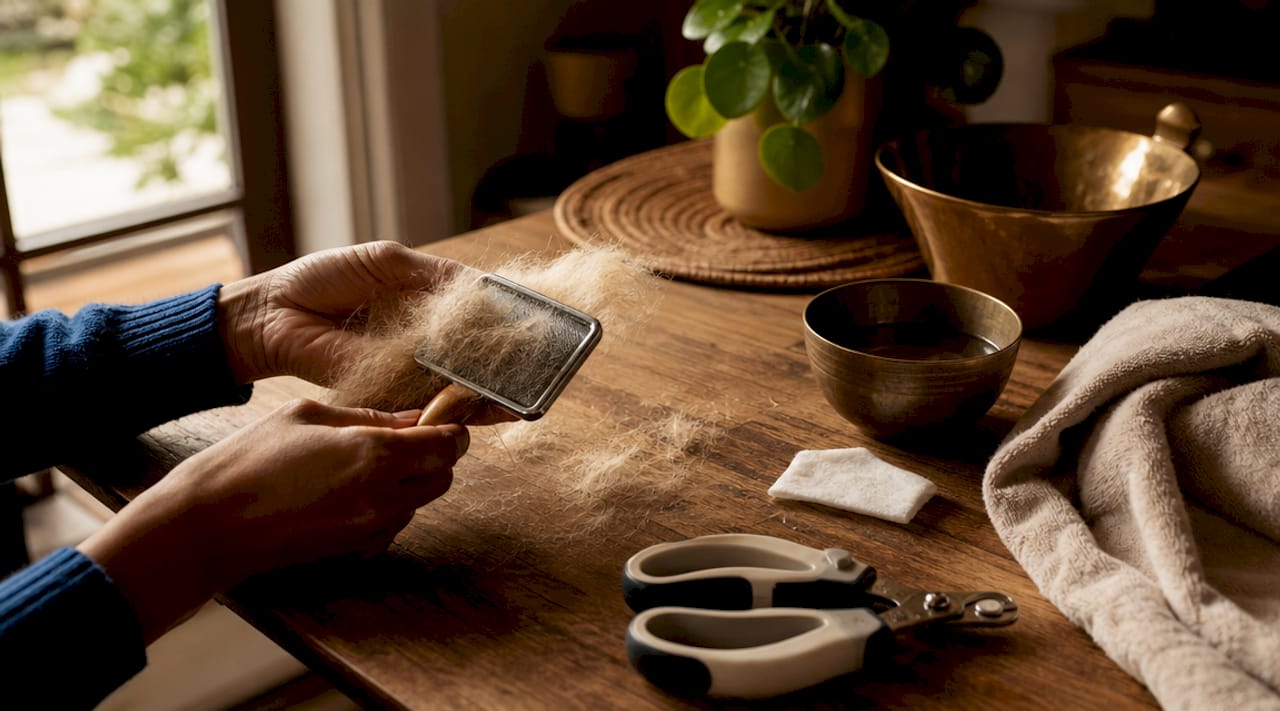
- Slicker brush: Ideal for most coat types. Use it in short, gentle strokes to remove loose hair and surface tangles. Work in sections, not long sweeping passes.
- Metal comb: Follow up the slicker brush with a metal comb to confirm you have reached the skin. If the comb snags, a mat is still present.
- Deshedding tool (e.g., Furminator): Designed for double-coated breeds during shedding season. Use sparingly to avoid coat damage.
- Nail clippers or grinder: A nail grinder removes material in tiny increments and shows a visible dark dot before you reach the quick, reducing bleeding incidents significantly. Keep styptic powder nearby regardless.
- Blunt-tip scissors: For light sanitary trims around paws, ears, and hygiene areas. Never use human scissors on pet fur.
- Dog-specific shampoo: Human shampoo disrupts a dog’s skin pH balance. Always use a pet-formulated product to protect the skin barrier.
- Veterinarian-approved ear cleaner: Applied on a cotton pad, never a Q-tip inserted into the ear canal. Dogs with floppy ears are especially prone to otitis externa due to trapped heat and moisture.
Pro Tip: Most owners brush only the surface layer of the coat. Always work the brush down to the skin in small sections. Hidden mats form closest to the skin and are invisible until they have already become painful.
For breed-specific tool recommendations, the grooming guide by breed from Faroopets is a practical starting point.
How often should maintenance grooming be done for different coat types?
Grooming frequency is not one-size-fits-all. Coat type, lifestyle, and the Dubai climate all influence how often your pet needs attention. A Poodle living in humidity needs more frequent brushing than a Beagle spending time indoors with air conditioning.
| Coat type | Brushing frequency | Nail trimming | Ear cleaning | Bath frequency |
|---|---|---|---|---|
| Short coat (Beagle, Boxer) | Once weekly | Every 3 to 4 weeks | Monthly check | Every 4 to 6 weeks |
| Long coat (Maltese, Persian) | Daily | Every 3 to 4 weeks | Weekly check | Every 2 to 4 weeks |
| Double coat (Husky, Golden) | 3 to 5 times weekly | Every 3 to 4 weeks | Bi-weekly check | Every 4 to 6 weeks |
| Curly coat (Poodle, Bichon) | Daily | Every 3 to 4 weeks | Weekly check | Every 2 to 3 weeks |
| Wire coat (Schnauzer, Terrier) | 2 to 3 times weekly | Every 3 to 4 weeks | Bi-weekly check | Every 4 to 6 weeks |
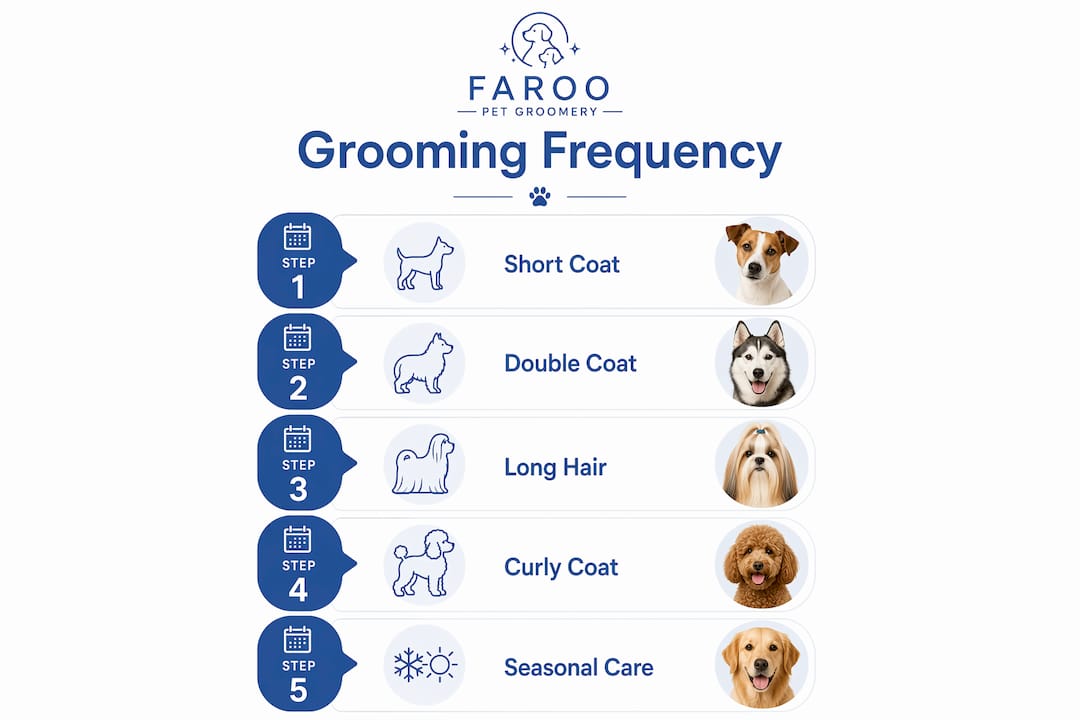
Standard maintenance schedules for double-coated breeds call for 3 to 5 brushing sessions per week, while long-haired breeds require daily brushing to prevent tangles. That frequency may feel like a lot, but each session only needs to last 10 minutes to be effective.
Seasonality matters too. During Dubai’s hotter months, pets shed more and sweat accumulates around skin folds and ears. Increasing brushing frequency by one session per week during peak shedding season prevents the backlog of loose hair that leads to matting.
Pro Tip: Short, consistent sessions produce better coat condition than infrequent marathon grooming. A 10-minute session three times a week is far more effective than a 45-minute session once a month, and your pet will cooperate much more willingly.
What are the health and wellness benefits of maintenance grooming?
The importance of maintenance grooming extends well beyond appearance. Each session is a hands-on health check that no vet visit fully replicates because you are observing your pet in a relaxed, familiar setting over time.
Here is what consistent grooming protects against:
- Matting complications: Mats that form close to the skin restrict blood flow and trap moisture, creating conditions for bacterial and fungal infections. Preventing severe matting through regular brushing avoids costly mat removal procedures.
- Parasite detection: Running a comb through the coat weekly makes ticks and flea dirt visible before an infestation takes hold.
- Skin and coat health: Brushing distributes natural oils from the skin through the coat, improving shine and reducing dryness. It also removes debris, dead skin cells, and environmental allergens.
- Early detection of lumps and lesions: Weekly grooming contact gives you close observation of changes in coat and skin quality that might otherwise go unnoticed for months.
- Stress reduction: Pets handled gently and consistently from a young age develop a calm association with grooming. This makes professional appointments less traumatic and reduces the risk of grooming-related anxiety.
“Maintenance grooming is best understood as a partnership between the owner and a professional groomer. Owners handle the routine upkeep; professionals handle the technical work. Together, they keep the pet in the best possible condition.” — Lemmikkihotelli Tassu & Tassu
When you notice something unusual during a session, such as a new lump, persistent redness, or a foul smell from the ears, that is the signal to contact your vet or a professional groomer. Maintenance grooming does not replace veterinary care. It makes veterinary care more targeted and timely. You can also explore routine grooming assessments to understand what professionals look for during each visit.
How can you make maintenance grooming less stressful?
Stress is the number one reason pet owners skip grooming sessions. The good news is that stress during grooming is largely a product of inconsistency and technique, not your pet’s personality.
Follow these steps to build a grooming routine your pet actually tolerates:
- Start with short sessions. Begin with just 5 minutes of brushing and gradually extend as your pet relaxes. Consistent short sessions build positive associations far faster than forcing a full groom on an unprepared pet.
- Use positive reinforcement. Pair every grooming session with treats and calm praise. Your pet learns that the brush predicts good things.
- Dry gently after baths. Loud dryers are a major source of grooming anxiety. Microfiber towels absorb moisture quickly and maintain a calm, quiet environment, improving long-term compliance with bathing routines.
- Always brush before bathing. Wet mats tighten and often become irreversible, requiring professional shaving. Brush completely before bathing to prevent a manageable tangle from becoming a serious problem.
- Get a professional demonstration for nail and pad trimming. These are the two areas where owners most often cause accidental injury. Professional groomers advise owners to request a hands-on demonstration before attempting these tasks independently.
- Never shave a double coat at home. Shaving breeds like Huskies or Samoyeds disrupts the insulating layer that protects them from both heat and cold. This is a task for a certified groomer.
For pets with existing anxiety around grooming, the Faroopets guide on reducing grooming stress offers targeted techniques that work well alongside a home routine.
Pro Tip: If your pet resists a specific tool, introduce it separately outside of grooming time. Let them sniff the nail grinder while it is off, then turn it on near them without touching. This desensitization process takes days, not hours, but it works.
Key takeaways
Maintenance grooming is the single most effective thing a pet owner can do between professional appointments to protect their pet’s health, coat condition, and emotional well-being.
| Point | Details |
|---|---|
| Core definition | Maintenance grooming covers brushing, nail trimming, ear cleaning, and light hygiene trims done at home. |
| Frequency by coat type | Long and curly coats need daily brushing; double coats need 3 to 5 sessions weekly; short coats need once weekly. |
| Health detection | Weekly grooming sessions allow early identification of lumps, parasites, skin irritation, and infections. |
| Stress reduction | Short, consistent sessions with positive reinforcement build grooming tolerance and reduce pet anxiety over time. |
| Common mistake | Bathing before brushing tightens mats and can make them irreversible. Always brush first. |
Why consistency changed everything for us
We have worked with hundreds of pet owners in Dubai, and the pattern is always the same. Owners who groom their pets for 10 minutes three times a week report calmer dogs, healthier coats, and far fewer emergency grooming visits than those who rely entirely on monthly professional appointments.
What surprises most new pet owners is how quickly their pet adapts. A puppy or kitten introduced to brushing and gentle handling in the first few months of life becomes a cooperative adult. The grooming session stops being a battle and starts being a bonding moment. We have seen this shift happen in as little as two weeks of consistent practice.
The other thing we have noticed is that owners who combine home maintenance with occasional professional visits get the best outcomes. Home grooming handles the day-to-day coat health. Professional grooming handles the technical work, breed-specific cuts, and deep cleaning that requires trained hands and proper equipment. Neither replaces the other. They work together.
If you are just starting out, do not try to do everything at once. Pick one task, brushing is the easiest, and do it every other day for two weeks. Once that feels natural, add nail checks. Build the habit in layers, and both you and your pet will be more confident for it.
— Growth
How Faroopets supports your grooming routine
At Faroopets, we believe home maintenance grooming and professional care work best as a team. Our certified groomers come directly to your door in Dubai, handling the technical grooming work so your at-home routine stays simple and stress-free.

Whether your dog needs a basic maintenance groom to stay fresh between full appointments or your cat is due for a professional session, we have packages designed around your pet’s specific coat type and needs. Our mobile vans are fully sanitized, our groomers are trained and certified, and booking takes minutes. Visit our dog grooming services page or choose your service to find the right fit for your pet today.
FAQ
What is the definition of maintenance grooming for pets?
Maintenance grooming is the routine at-home care that includes brushing, nail trimming, ear cleaning, and light hygiene trims performed between professional grooming appointments. Its purpose is to keep pets clean, comfortable, and healthy on an ongoing basis.
How often should I brush my dog as part of maintenance grooming?
Brushing frequency depends on coat type. Long-haired and curly-coated breeds need daily brushing, double-coated breeds need 3 to 5 sessions weekly, and short-coated breeds need brushing once a week.
What is the biggest mistake pet owners make during maintenance grooming?
Bathing before brushing is the most common and costly mistake. Wet mats tighten and often become irreversible, requiring professional shaving to remove. Always brush the coat fully before introducing water.
Can maintenance grooming replace professional grooming?
No. Maintenance grooming handles daily and weekly upkeep, while professional grooming provides breed-specific cuts, deep cleaning, and technical tasks like pad trimming that require trained expertise. Professional grooming is recommended every 6 to 8 weeks for high-maintenance breeds.
At what age should I start maintenance grooming with my pet?
Start as early as possible, ideally within the first few weeks of bringing a puppy or kitten home. Early, gentle handling builds grooming tolerance and makes every future session, both at home and with a professional, significantly easier.
