


Posted by Faroo Pets Grooming
on May 30, 2026

TL;DR:
- Routine grooming provides essential preventive care by detecting skin, coat, and health issues early. Regular professional assessments handle tasks like nail trimming, ear cleaning, and identifying conditions owners might overlook. Consistent grooming appointments, combined with at-home care, significantly promote long-term pet health and comfort.
Most pet owners associate grooming with a clean coat and a fresh smell. That view misses something much more significant. Understanding why pets need routine grooming assessments goes far beyond aesthetics. A proper grooming session is really a hands-on health evaluation, what many veterinary professionals call a preventive care check. It catches problems your pet cannot describe and your eye might not catch at home. At Faroopets, we see this difference every single day, and we want you to see it too.
Table of Contents
- Key takeaways
- Why routine grooming assessments matter for pet health
- Early detection: what groomers find during hands-on assessments
- Grooming frequency: what works for your pet
- Specific grooming tasks and why each one matters
- Our perspective: grooming is care, not a luxury
- Give your pet the care they deserve with Faroopets
- FAQ
Key takeaways
| Point | Details |
|---|---|
| Grooming is preventive care | Regular sessions remove irritants, distribute skin oils, and protect against infection and matting. |
| Early detection saves lives | Groomers spot lumps, parasites, and skin changes before they become serious health issues. |
| Frequency depends on your pet | Most dogs need grooming every 4 to 8 weeks, while long-coated breeds and active pets may need more. |
| Specific tasks protect specific systems | Nail trimming, ear cleaning, and dental care each guard a different aspect of your pet’s health. |
| Home care complements professionals | Daily brushing and at-home checks between appointments keep your pet in better shape overall. |
Why routine grooming assessments matter for pet health
Grooming that truly supports your pet’s health starts with understanding what it actually does to the body. Preventive grooming removes dirt, loose hair, allergens, and debris that accumulate in the coat and irritate the skin underneath. Left unchecked, that buildup creates the conditions for bacterial infections, hot spots, and chronic itching.
There is a mechanical benefit happening during brushing as well. The action distributes your pet’s natural sebaceous oils along the hair shaft, reinforcing the skin’s protective barrier. Think of it as moisturizing from the inside out. A coat that receives regular attention stays more supple, sheds less, and resists environmental damage better than a neglected one.
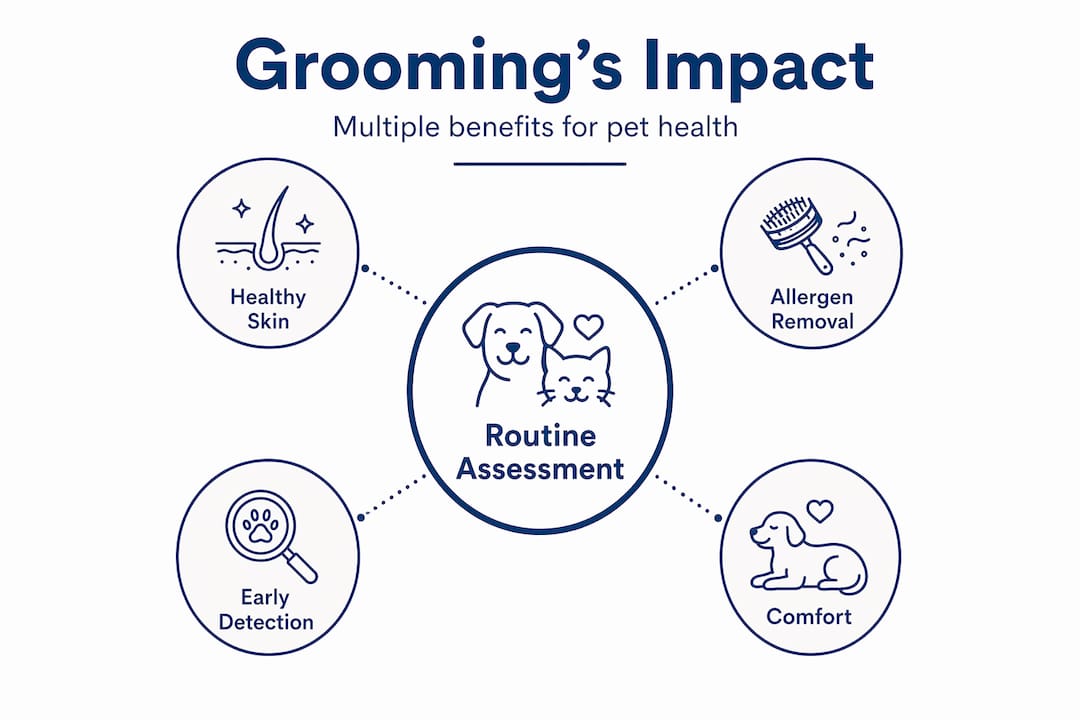
Pollen, dust mites, and other airborne allergens settle into fur quickly, especially for pets that spend time outdoors in Dubai’s climate. Allergen buildup in coats directly triggers skin inflammation and persistent itching, making regular grooming one of the most practical ways to manage allergy symptoms without medication.
Matting is another concern that goes far deeper than appearance. Matted coats restrict movement, trap moisture against the skin, and create an environment where bacteria and fungi thrive. Many owners discover mats only once they have already caused pain or secondary skin infections. By that point, the solution is more invasive and stressful for the pet than prevention ever would have been.
Here is what a grooming session actively does for skin and coat health:
- Removes shed hair and debris before it tangles and mats
- Exfoliates dead skin cells, supporting healthy cell turnover
- Reduces odor by eliminating bacteria-feeding residue in the coat
- Bathing with skin-appropriate shampoos protects pets with sensitivities and reduces parasite attraction
- Allows early spotting of redness, rashes, or dry patches before they worsen
Pro Tip: Brush your pet between professional appointments, ideally every two to three days for medium or long coats. This keeps tangles from forming and makes your groomer’s job easier, reducing session time and stress for your pet.
Early detection: what groomers find during hands-on assessments
Here is the part most pet owners do not fully appreciate. Your pet cannot tell you about the lump forming near their shoulder or the ear that has started to smell off. Since pets cannot verbally communicate discomfort, a trained groomer relies on tactile and behavioral cues, things like heat in a joint, tenderness when touching a specific area, or an unusual resistance to being handled.
Professional groomers spend more hands-on time with your pet than most people realize. That repeated, close-contact work means they often catch changes that develop gradually and would go unnoticed at home. Groomers are positioned as the first line of observation between veterinary visits, especially for detecting skin and coat changes while they are still minor.
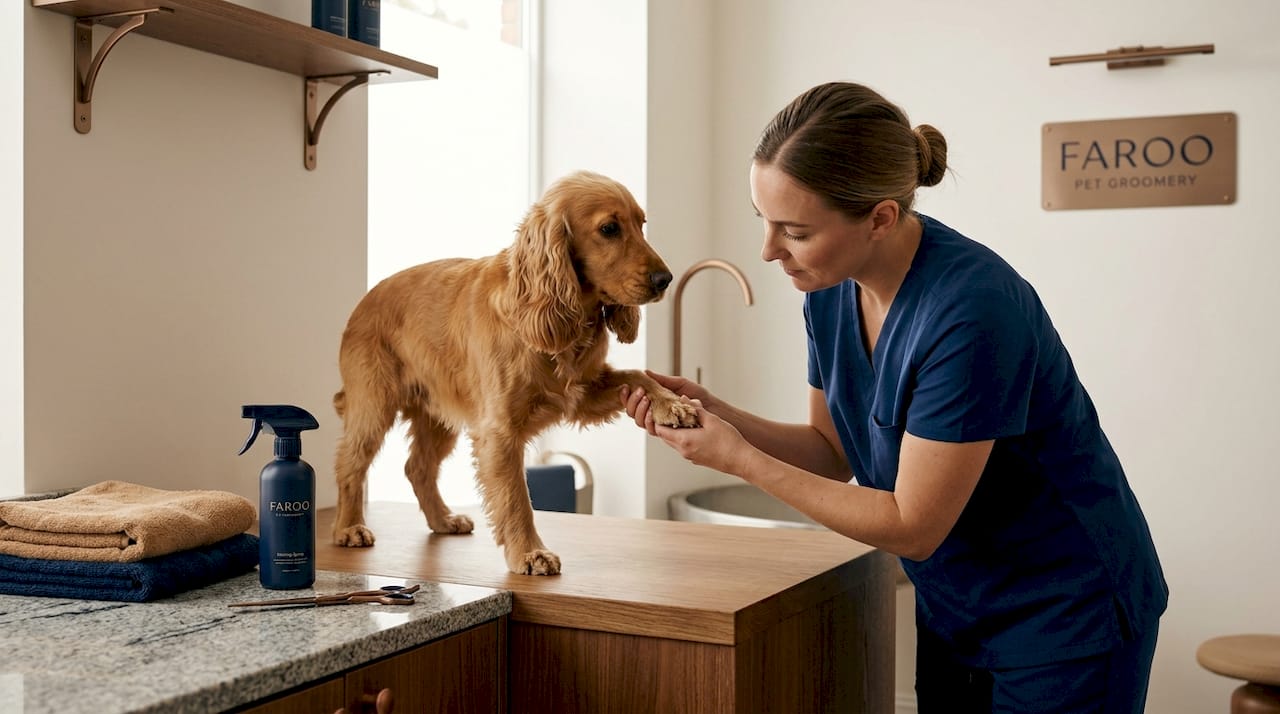
Think of a grooming session as a mini physical exam. The groomer works through every major external area of the body, and each one can reveal something about what is happening internally or locally.
What a thorough grooming assessment covers:
- Skin and coat: Redness, scaling, hair loss, unusual odor, or changes in coat texture
- Lumps and bumps: New growths under or on the skin, swelling, or asymmetry
- Ears: Discharge, strong odor, redness, or excessive wax buildup that suggests infection or ear mites
- Paws and nails: Cracking, swelling between toes, broken nails, or overgrown pads
- Eyes and mouth: Discharge, cloudiness, pale gums, or inflamed tissue
- Parasites: Fleas, ticks, or flea dirt visible in the coat or around the skin
Early intervention by groomers allows veterinarians to address issues while they are still manageable. A small cyst found at a grooming appointment is a far different situation than the same cyst found months later.
“Early skin changes often go unnoticed by owners but get caught during grooming. That is why building a consistent grooming schedule is one of the most practical health decisions you can make for your pet.” — Central Kentucky Veterinary Center
You can also find guidance on spotting grooming warning signs between appointments to stay one step ahead.
Grooming frequency: what works for your pet
One of the most common questions we hear is: how often should I actually bring my pet in? The honest answer is that it depends on your individual pet, but there are clear frameworks to work from.
Most dogs need grooming every four to eight weeks, depending on coat type and activity level. That range exists because a short-coated Labrador and a long-coated Maltese have genuinely different needs. Below is a practical guide:
| Pet Type | Coat or Breed Characteristics | Recommended Frequency |
|---|---|---|
| Short-coated dogs | Labrador, Beagle, Boxer | Every 6 to 8 weeks |
| Medium-coated dogs | Golden Retriever, Cocker Spaniel | Every 4 to 6 weeks |
| Long-coated dogs | Maltese, Shih Tzu, Afghan Hound | Every 3 to 4 weeks |
| Cats (short-haired) | Most domestic shorthairs | Every 6 to 8 weeks |
| Cats (long-haired) | Persian, Maine Coon | Every 4 to 6 weeks |
| Active or outdoor pets | Any breed with outdoor exposure | More frequently within each range |
Lifestyle matters just as much as coat length. A dog that swims regularly, runs on dirt trails, or spends hours outdoors in Dubai’s sandy environment will accumulate more debris and may need care at the shorter end of these intervals. Our guide on choosing your grooming frequency covers this in more detail.
There is also a behavioral benefit worth mentioning. Pets groomed consistently from a young age become comfortable with handling, which directly reduces stress during veterinary exams and makes examinations more accurate. A pet that flinches from touch is harder to assess properly.
Pro Tip: Set a calendar reminder for your next appointment before you leave your current one. Consistent scheduling prevents the gaps where mats form and minor issues escalate.
Specific grooming tasks and why each one matters
Regular grooming is not one single action. It is a set of targeted practices, each protecting a different part of your pet’s health.
Nail trimming
Overgrown nails affect posture and mobility by forcing the paw into an unnatural position with each step. Over time, this creates joint discomfort, altered gait, and even spinal stress in smaller breeds. Nails that curve too far can also snag on surfaces and break painfully at the quick.
For most dogs, nail trimming every three to four weeks is appropriate. Cats that do not use scratching posts actively may need the same schedule.
Ear cleaning
Floppy-eared breeds like Cocker Spaniels and Basset Hounds trap moisture and debris more easily than upright-eared dogs. That moisture becomes a breeding ground for yeast and bacteria. Regular ear cleaning during a grooming session removes waxy buildup, checks for the early signs of infection, and prevents the kind of chronic ear disease that becomes painful and expensive to treat.
Pets with environmental allergies are particularly vulnerable to ear problems. A grooming visit is the right moment to catch those issues early.
Dental care
Dental care during grooming reduces oral disease that, if left untreated, affects the heart, kidneys, and liver through bacterial spread via the bloodstream. Tartar buildup is not just a cosmetic issue. It is a systemic health risk. Groomers can inspect the gum line, identify inflammation or unusual growths, and flag anything that needs a vet’s attention.
You can learn more about dental care during grooming and what to look for at home.
Here is a quick reference for the specific tasks and what they protect:
- Nail trimming: Protects joint health, posture, and prevents painful nail breaks
- Ear cleaning: Prevents yeast and bacterial infections, especially in allergy-prone pets
- Teeth brushing and inspection: Guards against periodontal disease and systemic organ damage
- Paw pad care: Checks for cracking, foreign bodies, and growths between toes
- Coat trimming around eyes: Prevents corneal irritation and infection from fur contact
Each of these is a reason the words “just a grooming appointment” do not really apply. The session is doing much more than tidying your pet up.
Our perspective: grooming is care, not a luxury
I have spoken with many pet owners who waited too long. Not out of neglect but because grooming felt like a nice-to-have rather than a health necessity. What I have seen in practice changes that view quickly.
I have come across cases where a long-overdue grooming visit revealed a lump that had been present for weeks, hidden under a matted coat. I have seen nail overgrowth so severe it had already changed the way a dog walked. These are not extreme cases. They are what happens when grooming falls off the calendar for a few months.
What strikes me most is that grooming neglect carries real medical consequences, including parasite infestations, painful infections, and gait problems. None of those outcomes are inevitable. They are almost entirely preventable with a consistent schedule and a groomer who knows what to look for.
My honest take: treat grooming the way you treat any other health appointment. Put it in the calendar. Keep it even when your pet seems fine. The whole point of preventive care is that it catches problems before your pet shows obvious signs of discomfort. By the time they are visibly struggling, the issue has already been present for a while.
The combination of professional grooming sessions and daily at-home attention is what actually protects a pet’s health long term. Neither alone is as effective as both together.
— Growth
Give your pet the care they deserve with Faroopets
At Faroopets, we designed our mobile grooming service around one idea: your pet’s health and comfort come first, every session. Our certified groomers bring fully sanitized vans directly to your door in Dubai, making the experience as calm and stress-free as possible for your pet.

Whether your dog is due for a thorough health-focused session or your cat needs expert handling, we have a service built for them. Our luxury full dog grooming and luxury full cat grooming packages include coat care, nail trimming, ear cleaning, and a complete assessment by trained hands. If you are ready to find the right fit, choose your service and book directly online. Happiness really is just a brush stroke away.
FAQ
What does a routine grooming assessment actually include?
A routine grooming assessment covers the skin, coat, ears, paws, nails, eyes, and mouth. Trained groomers check for lumps, parasites, infections, and changes in skin condition during every session.
How often do pets need professional grooming?
Most dogs need grooming every 4 to 8 weeks, with longer-coated breeds needing care every 3 to 4 weeks. Cats typically benefit from professional grooming every 4 to 8 weeks depending on coat type.
Can grooming really detect health problems early?
Yes. Professional groomers are often the first to spot lumps, skin changes, ear infections, and parasites between vet visits, since they have repeated hands-on contact with your pet’s entire body.
What happens if I skip grooming for too long?
Skipping grooming leads to matting, which can cause pain, restrict circulation, and trap infections. Overgrown nails affect joint health, and undetected ear or skin issues can progress significantly.
Is professional grooming necessary if I brush my pet at home?
At-home brushing is valuable but does not replace professional grooming. Professionals use specialized tools, check health indicators that most owners miss, and perform tasks like ear cleaning and nail trimming safely.
