


Posted by Faroo Pets Grooming
on May 23, 2026

TL;DR:
- Pet grooming offers a vital opportunity for early detection of dental issues often hidden beneath the surface. Regular brushing, veterinary exams, and visual checks during grooming are essential to prevent painful, systemic health problems caused by dental disease. Groomers can identify warning signs early, but only veterinarians can treat the underlying conditions with proper cleaning and diagnostics.
Most pet owners assume grooming is about a clean coat, trimmed nails, and a fresh smell. But understanding why pets need dental care during grooming could be the difference between catching a serious health problem early and facing a costly, painful situation down the road. Plaque can harden into tartar in as little as 24 to 48 hours, meaning the window between grooming sessions is more than enough time for dental disease to take root. Your pet’s mouth tells a story their coat never could.
Table of Contents
- Key takeaways
- Why pets need dental care during grooming
- How dental disease develops in pets
- Grooming dental checks vs. veterinary dental treatment
- Practical steps to support dental health at home and during grooming
- Common misconceptions about pet dental care in grooming
- My take on dental care during grooming
- Grooming with dental care at Faroopets
- FAQ
Key takeaways
| Point | Details |
|---|---|
| Tartar forms fast | Plaque hardens within 24 to 48 hours, making regular dental checks at every grooming session genuinely important. |
| Dental disease goes deeper | Periodontal disease develops below the gumline, where grooming cannot reach and where pain quietly builds. |
| Groomers spot, vets treat | Groomers can identify early warning signs, but only a licensed vet can clean below the gumline and diagnose hidden disease. |
| Home care fills the gap | Brushing your pet’s teeth two to three times a week between visits reduces plaque before it hardens into tartar. |
| Misconceptions cost health | Dental treats and sprays alone do not replace brushing or professional veterinary dental care. |
Why pets need dental care during grooming
Most people think about grooming as a cosmetic service. A bath, a blowout, some trimming and your pet walks out looking wonderful. What gets overlooked is that each grooming session is also one of the few moments where someone gets a close, hands-on look at your pet’s entire body, including their mouth.
Most dogs have some dental disease by age 3, and the early signs are subtle enough that many owners miss them entirely at home. A groomer who checks the mouth during a session can spot red gums, unusual odor, or visible tartar buildup before those signs progress into something more serious.
The pet grooming dental health connection goes beyond appearances. Dental disease causes chronic pain and infection that can spread from the mouth to affect the heart, kidneys, and liver. A mouth that looks a little rough today can become a systemic health problem in months if no one acts on it.
This is also why routine grooming plays such a central role in your pet’s overall wellness. Grooming sessions that include a dental check are not a luxury. They are a practical part of responsible pet care.
How dental disease develops in pets
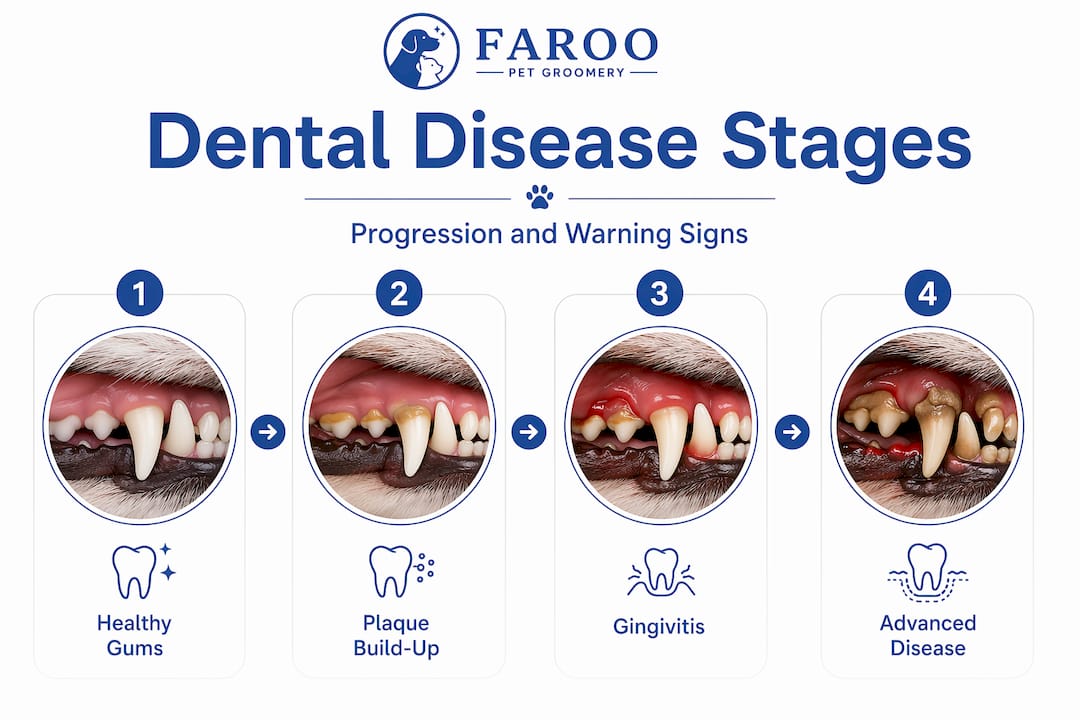
Dental disease does not announce itself loudly. It builds quietly, layer by layer, until your pet is in real discomfort. Here is how that progression typically looks:
- Plaque to tartar: Bacteria in the mouth form plaque on teeth within hours of eating. If that plaque is not removed by brushing or chewing, it hardens into tartar within 24 to 48 hours. Once tartar forms, brushing at home cannot remove it.
- Gum inflammation: Tartar irritates the gums, causing gingivitis. You may notice redness, swelling, or bleeding when the gums are touched during grooming.
- Periodontal disease: Without intervention, bacteria move below the gumline. This is where the real damage happens. Bone and tissue that support the teeth start to break down.
- Systemic spread: Dental inflammation can affect the whole body, contributing to heart, kidney, and liver complications over time.
- Hidden pain: Pets are wired to hide discomfort. A dog with significant dental disease may still eat, play, and behave normally on the surface.
“Pets may appear normal while suffering significant pain below the gumline. Grooming observations should prompt vet visits rather than reassurance.” — NCVMA Position on Dental Care
The most important thing to understand is that dental disease starts below or at the gumline and progresses silently. Even a coat that gets cleaned and brushed regularly does nothing to slow that process. Dental hygiene for pets requires its own deliberate attention, separate from every other grooming task.
Common warning signs to watch for during grooming sessions include bad breath that goes beyond normal pet smell, red or bleeding gums when touched, visible yellow or brown buildup on teeth, and changes in how your pet chews or holds their mouth. These signs call for a veterinary evaluation, not just a note on the grooming chart.
Grooming dental checks vs. veterinary dental treatment
This is where many pet owners get confused, and the confusion can have real consequences. Knowing what a groomer can and cannot do for your pet’s teeth is critical.
| Grooming dental check | Veterinary dental treatment | |
|---|---|---|
| What it covers | Visual inspection of teeth and gums | Full mouth examination with probing and X-rays |
| Below the gumline | Not accessible | Cleaned and treated under anesthesia |
| Who performs it | Certified groomer | Licensed veterinarian |
| Outcome | Early warning and referral | Diagnosis, cleaning, extractions if needed |
| Frequency | Every grooming session | Annually or as recommended by your vet |
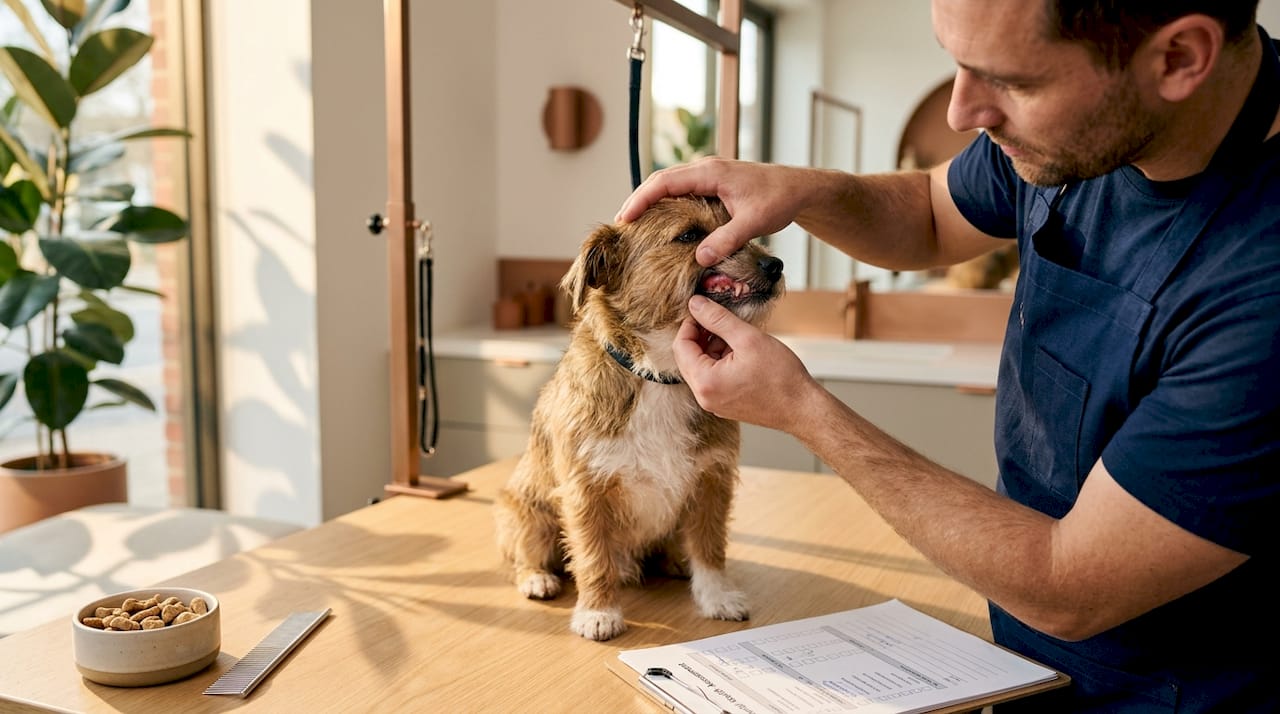
A groomer’s role in dental health is observation and early detection. A skilled groomer can notice bad breath, gum redness, or tartar accumulation and flag it for the owner. That flag can prompt a timely vet visit that catches periodontal disease before it becomes deeply entrenched.
What a groomer cannot do is treat the problem. Veterinary dental care requires anesthesia to safely access the full mouth, clean below the gumline, and take X-rays. Without those steps, a significant portion of dental disease gets missed. The tooth may look cleaner on the surface while infection continues below.
Professional vet dental care includes probing, scaling, polishing, and extractions that simply are not possible without anesthesia. Groomers who attempt anything beyond a visual check are stepping outside their scope, and that creates risk for the pet.
Pro Tip: Ask your groomer to do a quick visual check of your pet’s mouth at each session and share their observations with you. Then bring those notes to your next vet visit. That communication loop is one of the most practical things you can do for your pet’s dental health.
Practical steps to support dental health at home and during grooming
Good dental hygiene for pets does not require a medical degree. It does require consistency. Here are the steps that actually make a difference when woven into your regular routine:
- Brush two to three times a week. Regular brushing at this frequency removes plaque before it hardens. Daily is ideal, but even a few sessions per week dramatically reduces tartar buildup over time.
- Use pet-safe toothpaste. Human toothpaste contains fluoride and xylitol, both toxic to pets. Use a paste formulated specifically for dogs or cats. Many come in flavors pets actually enjoy, which makes brushing far easier.
- Choose an appropriate toothbrush. Finger brushes work well for pets new to brushing. Longer-handled brushes give better reach to the back teeth. Either option is fine as long as you use it regularly.
- Watch for warning signs during grooming. Every time you brush your pet’s coat, take a moment to check their mouth. Look for bad breath, red gums, or tartar buildup. These are not things to wait on.
- Support dental health through diet. Diet plays a meaningful role in how quickly plaque develops. Certain dry kibble formulations and dental chews are designed to mechanically clean teeth as pets eat. Ask your vet which options make sense for your pet’s size and breed.
- Schedule professional dental exams. Pair consistent grooming frequency with annual veterinary dental checkups. The two routines work together, not in competition.
Pro Tip: If your pet resists having their mouth touched, start slowly. Let them smell the toothbrush for a few days before you try brushing. Reward every positive interaction. Patience here pays off in years of better dental health.
Common misconceptions about pet dental care in grooming
There are a few widely held beliefs about how grooming affects pet teeth that, in practice, do more harm than good.
- “Grooming handles dental health.” Grooming sessions clean the exterior. They do not treat what is happening below the gumline. Removing visible tartar does not halt periodontal disease that has already taken hold beneath the surface.
- “Dental treats are enough.” Dental chews and sprays support oral health but they do not replace brushing. They reduce plaque somewhat, but not enough to prevent disease progression on their own.
- “Anesthesia-free cleanings are a safe alternative.” This is one of the most dangerous misconceptions. Anesthesia-free procedures miss subgingival disease and risk injury. The American Veterinary Dental College opposes them because they create a false sense of security while real disease continues to develop.
- “My pet would act differently if something was wrong.” Pets are remarkably good at masking pain. A dog or cat can have significant dental disease and still eat, play, and cuddle without obvious signs.
- “We can wait until the next grooming session.” Because plaque hardens so quickly, delaying care risks accelerating disease below the gumline. If you or your groomer notices something, act on it sooner rather than later.
The common thread here is that grooming and veterinary care need to work together. Neither one alone is sufficient for true dental health.
My take on dental care during grooming
I’ve spent years watching pet owners light up when their furry companions come home from a grooming session looking fresh and happy. What strikes me most, though, is how rarely dental health comes up in those conversations. People celebrate the shiny coat and miss the one thing the groomer spotted but hesitated to mention.
What I’ve learned from working in this space is that early detection is everything. A groomer who notices foul breath or inflamed gums and says something to the owner has potentially saved that pet months of silent pain. That simple observation, passed on at the right moment, triggers the vet visit that catches disease before it spreads systemically.
The other thing I’ve seen overlooked consistently is the connection between recognizing grooming warning signs and acting on them promptly. Most owners wait. They note it mentally, think they’ll mention it at the next appointment, and life moves on. Meanwhile, the disease progresses.
My honest view is that dental care is the most underrated part of the grooming conversation. It belongs on the agenda at every single session. Not as a replacement for veterinary care, but as the consistent front line that makes veterinary care more effective and less urgent.
— Growth
Grooming with dental care at Faroopets
At Faroopets, we believe every grooming session is an opportunity to look after your pet’s whole health, not just their appearance. Our certified groomers in Dubai are trained to check for early dental warning signs during every visit, noting what they see and communicating it clearly to you.

Whether you have a dog who needs a professional grooming session in Dubai or a cat who is due for a full cat grooming service, our mobile grooming vans come to your door, fully sanitized and stocked with pet-safe products. We also share practical tips for a healthy pet so you can support your pet’s dental health between visits. Book your next grooming session with us and let’s take care of the full picture together.
FAQ
Why does dental care matter during grooming?
Grooming sessions provide a close-up look at your pet’s mouth, making them a practical opportunity to catch early signs of dental disease like bad breath, red gums, or tartar buildup before they become serious health problems.
Can a groomer treat my pet’s dental disease?
No. Groomers can perform visual checks and flag concerns for your veterinarian, but treating dental disease requires a licensed vet who can clean below the gumline using anesthesia and take X-rays to assess hidden damage.
How often should I brush my pet’s teeth?
Brushing two to three times per week is the recommended minimum for preventing plaque from hardening into tartar. Daily brushing is ideal and reduces the risk of gum infection and periodontal disease significantly.
Are anesthesia-free dental cleanings safe for pets?
No. Anesthesia-free cleanings miss the subgingival disease that causes the most harm and can injure pets who move unexpectedly. The American Veterinary Dental College strongly advises against them as they create a false sense that dental health is being addressed.
Should pets have dental care in grooming even if they seem fine?
Yes. Pets are skilled at hiding pain, and dental disease often progresses silently. Regular dental observation during grooming, combined with annual veterinary dental exams, catches problems long before visible symptoms or behavioral changes appear.
