


Posted by Faroo Pets Grooming
on June 03, 2026

TL;DR:
- Grooming requirements are primarily determined by a dog’s coat type rather than its size, with high-maintenance coats needing frequent professional care and daily brushing. Low-maintenance breeds like Labradors and French Bulldogs require less frequent grooming but still need regular home care to manage shedding and skin health. Choosing a breed that aligns with your grooming routine and budget ensures a healthier coat and a happier owner-dog relationship.
Grooming burden is driven more by coat type than breed size, meaning a tiny Poodle and a large Husky can both demand serious grooming commitments for entirely different reasons. The top dog breeds for grooming span a wide spectrum, from Poodles and Bichon Frises that need professional salon visits every four to six weeks, to Labrador Retrievers that get by with weekly brushing and the occasional bath. Knowing where your chosen breed lands on that spectrum before you bring them home saves you time, money, and a lot of tangled fur. We put this guide together to help you match the right breed to your real grooming lifestyle.
1. Top dog breeds for grooming: the highest-maintenance coats
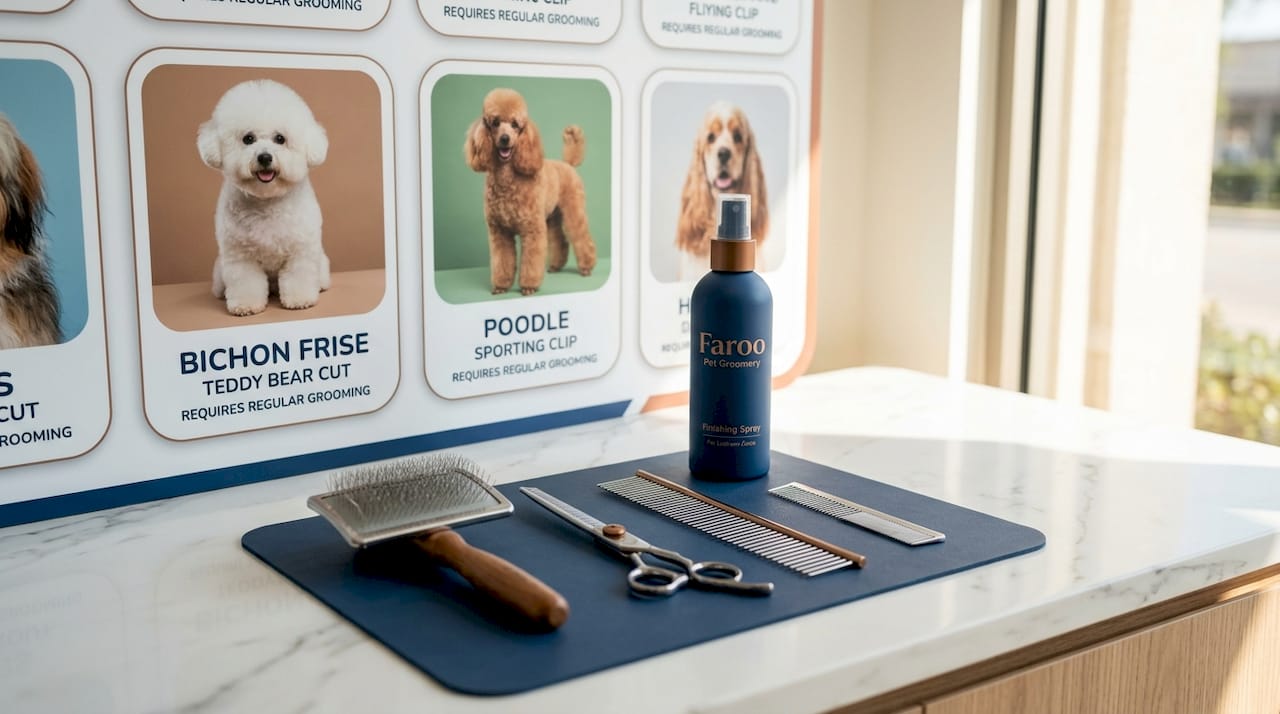
The breeds that demand the most grooming attention share one trait: coats that grow continuously or trap loose hairs instead of shedding them naturally. Poodles, Bichon Frises, and Portuguese Water Dogs all fall into this category, and skipping appointments with any of them leads to painful matting fast.
Here is a breakdown of the highest-maintenance breeds and what their coats actually require:
- Poodle (all sizes): Professional grooming every 4 to 6 weeks, plus daily brushing at home. Poodle coats do not shed in the traditional sense. Loose hairs stay trapped in the curl, which means mats form quickly without consistent care.
- Bichon Frise: Soft, dense double coat that curls tightly and mats at friction points. Professional grooming every four to six weeks is standard, with daily brushing between visits.
- Shih Tzu: Long, silky coat that grows continuously and drags on the ground if left untrimmed. Most owners opt for a shorter “puppy cut” to reduce daily brushing to once every two days.
- Yorkshire Terrier: Fine, human-like hair that tangles easily. Weekly brushing at minimum, with professional trims every six to eight weeks to keep the coat manageable.
- Maltese: White, floor-length coat that shows every speck of dirt and mats behind the ears and collar line within days of missed brushing.
Pro Tip: Rebook your next grooming appointment before you leave the salon. Waiting until mats appear means your groomer may need to shave the coat down entirely, which costs more and sets the coat back weeks.
2. How coat type determines your grooming schedule
Coat type is the single most reliable predictor of grooming frequency, and understanding the three main categories helps you plan your routine before a single brush stroke.
Curly and wavy single-layer coats trap loose hairs inside the curl. Breeds like Poodles and Labradoodles need daily brushing because there is nowhere for shed hair to go except deeper into the coat. Without that daily pass, you get dense mats that a brush cannot penetrate.
Double coats work differently. Breeds like Siberian Huskies and Golden Retrievers carry a dense undercoat beneath a protective outer layer. Double-coated dogs need brushing two to three times weekly, increasing to daily during shedding seasons, with professional grooming every four to eight weeks. The risk here is not matting in the same way as curly coats. It is undercoat buildup that traps heat and causes skin irritation, especially in Dubai’s climate.
Short and smooth coats are the most forgiving. French Bulldogs and Labrador Retrievers shed steadily but do not mat. Weekly brushing with a rubber curry brush or a bristle brush keeps shedding manageable without professional intervention more than once every eight to twelve weeks.
| Coat Type | Brushing Frequency | Professional Grooming | Example Breeds |
|---|---|---|---|
| Curly / Wavy | Daily | Every 4 to 6 weeks | Poodle, Bichon Frise, Labradoodle |
| Double coat | 2 to 3x weekly, daily in shedding season | Every 4 to 8 weeks | Husky, Golden Retriever, Corgi |
| Short / Smooth | Weekly | Every 8 to 12 weeks | Labrador, French Bulldog, Beagle |
| Long / Silky | Daily to every other day | Every 6 to 8 weeks | Shih Tzu, Maltese, Yorkshire Terrier |
Understanding double-coat pet grooming is especially relevant for owners in Dubai, where seasonal shedding combined with heat can turn a manageable coat into a serious skin problem.
3. Best dogs for grooming: low-maintenance breeds for busy owners
Not every dog owner has time for daily brushing sessions, and that is completely fine. Several breeds are genuinely easy to groom, and choosing one of them does not mean settling for a less rewarding companion.
Short-coated breeds like French Bulldogs and Labrador Retrievers are recommended for busy owners because they need less brushing and fewer professional grooming visits than curly or long-coated breeds. Here is what low-maintenance grooming actually looks like in practice:
- Labrador Retriever: Weekly brushing with a slicker brush or rubber mitt. Baths every four to six weeks. Professional grooming is optional but useful during heavy shedding seasons in spring and fall.
- French Bulldog: Smooth coat needs only a weekly wipe-down with a damp cloth or rubber brush. Attention to skin folds is more important than coat care for this breed.
- Beagle: Short, dense coat sheds moderately. A weekly brush and monthly bath keeps a Beagle looking clean without salon visits.
- Basset Hound: Smooth, low-maintenance coat, though the long ears need regular cleaning to prevent infections.
- Vizsla: Single-layer short coat that requires almost no brushing. A monthly bath and occasional nail trim covers the full grooming routine.
- Whippet: Ultra-short coat with minimal shedding. Grooming needs are among the lowest of any breed.
The key insight here is that lifestyle compatibility goes both ways. A Labrador is easy to groom but sheds heavily year-round, which matters if you have allergies or light-colored furniture. A Poodle demands more grooming time but is a low-shedding dog breed that works well for allergy-sensitive households.
4. Grooming styles and professional appointment types explained
Professional grooming is not one-size-fits-all. The cut your groomer uses directly affects how often your dog needs to return and how much home maintenance you take on between visits.
For Poodles, the two most common styles are the puppy cut and the continental clip. The puppy cut is the practical choice for maintenance, keeping the coat at a uniform short length all over the body. It reduces daily brushing time and extends the window between salon visits slightly. The continental clip, with its shaved hindquarters and rounded pom-poms, is a show-ring style that requires a skilled groomer and more frequent touch-ups. For most pet owners, the puppy cut is the smarter call.
For double-coated breeds like Huskies and Golden Retrievers, professional grooming focuses on deshedding rather than trimming. A groomer uses an undercoat rake and high-velocity dryer to remove the dead undercoat that a home brush cannot fully reach. This is especially useful twice a year during “coat blow” season, when these breeds shed their entire undercoat over two to four weeks.
- Book a full groom for high-maintenance breeds every four to six weeks. This covers bath, blow-dry, brush-out, trim, nail clip, and ear cleaning.
- Schedule a deshedding treatment for double-coated breeds at the start of each shedding season. It dramatically reduces the volume of hair in your home.
- Use a basic bath and brush appointment for short-coated breeds every eight to twelve weeks to keep skin healthy and coat shiny.
- Maintain at home between visits by focusing on friction zones. Areas like behind the ears, the collar line, and armpits are where mats build up first, regardless of coat type.
Pro Tip: During heavy shedding seasons, add short five-minute brushing sessions daily rather than brushing harder or longer in one sitting. Gentle, frequent passes protect the coat and reduce breakage for double-coated breeds.
Comparing home vs. salon grooming helps you decide which tasks belong at home and which are worth paying a professional for. The honest answer is that both matter, and neither replaces the other.
5. Matching breed grooming needs to your lifestyle
Choosing a breed based on looks alone is one of the most common mistakes new dog owners make. Grooming commitment is a real, recurring time and financial cost that deserves honest evaluation before adoption.
Here is how to think through the match:
- Assess your weekly availability honestly. Daily brushing for a Poodle or Maltese takes ten to fifteen minutes per session. Over a week, that is over an hour of grooming time. If that does not fit your schedule, a short-coated breed is the better choice.
- Factor in professional grooming costs. High-maintenance breeds like Bichon Frises and Yorkshire Terriers need salon visits every four to six weeks. In Dubai, that adds up to a meaningful annual expense. Budget for it before you commit.
- Consider hypoallergenic dog breeds if allergies are a concern. Poodles, Bichon Frises, and Portuguese Water Dogs are among the most popular hypoallergenic dog breeds because their low-shedding coats release fewer allergens into the air. They still require significant grooming, but they are a strong option for allergy-sensitive households.
- Think about shedding tolerance. Double-coated breeds like Huskies and Golden Retrievers are moderate groomers in terms of salon visits, but they shed heavily at home. If dog hair on furniture and clothing bothers you, a low-shedding breed is worth the extra grooming investment.
- Work with a breed-specialist groomer. Groomers who specialize in specific breeds maintain style integrity and catch coat or skin issues early. This is especially true for Poodles, Bichons, and other breeds with breed-standard cuts.
Matching a breed’s grooming needs to your time availability produces better coat health and a more satisfied owner. The breeds that get neglected most are not the difficult ones. They are the ones whose owners underestimated the commitment.
Key takeaways
The right dog breed for your lifestyle is the one whose grooming needs you can realistically meet every single week, not just when it is convenient.
| Point | Details |
|---|---|
| Coat type drives grooming needs | Curly and long coats require daily brushing and salon visits every 4 to 6 weeks regardless of dog size. |
| High-maintenance breeds need consistency | Skipping grooming on Poodles or Bichon Frises beyond 6 weeks risks mats that require a full shave-down. |
| Low-maintenance breeds still need care | French Bulldogs and Labradors need weekly brushing and monthly baths to manage shedding and skin health. |
| Home care and professional grooming work together | Focusing home brushing on friction zones extends the life of professional grooms and prevents mat buildup. |
| Lifestyle match prevents regret | Evaluating grooming time and cost before adoption leads to better outcomes for both owner and dog. |
What we have learned from years of grooming every coat type
The most common thing we hear from new dog owners is some version of “I had no idea it would be this much work.” That is almost never about the dog. It is about the coat. A Goldendoodle and a Beagle are both wonderful companions, but they live in completely different grooming universes.
One misconception worth addressing directly: small dogs are not automatically easy to groom. A Maltese or a Shih Tzu will demand more of your time than a Labrador twice its size. Grooming difficulty scales with coat complexity, not body weight.
What we find genuinely rewarding about working with high-maintenance breeds is that the grooming process itself becomes a bonding ritual. Poodle owners who commit to daily brushing often describe it as one of their favorite parts of the day. The dog learns to trust the handling, the owner learns to read the coat, and the relationship deepens in a way that a quick weekly wipe-down simply does not produce.
Our honest advice: if you are drawn to a high-grooming breed, do not talk yourself out of it because of the maintenance. Do the math on time and cost, find a groomer you trust, and build the routine early. The breeds that require the most care often give back the most in return.
— Growth
Let Faroopets handle the hard part

Whether you have a curly-coated Poodle that needs a precise puppy cut or a double-coated Husky heading into shedding season, Faroopets has a grooming package built for your dog’s specific needs. Our certified groomers in Dubai are experienced with high-maintenance breeds like Poodles, Bichon Frises, and Yorkshire Terriers, and we bring the salon to your door in a sanitized, fully equipped mobile van. Browse our luxury full dog grooming service for breeds that need the full treatment, or explore our basic grooming package for dogs with moderate coat needs. Book your appointment through Faroopets dog grooming Dubai and give your dog the care their coat deserves.
FAQ
Which dog breeds require the most grooming?
Poodles, Bichon Frises, Shih Tzus, Maltese, and Yorkshire Terriers require the most frequent grooming, with professional salon visits every four to six weeks and daily brushing at home due to their continuously growing or long coats.
What are the easiest dog breeds to groom?
Labrador Retrievers, French Bulldogs, Beagles, Vizslas, and Whippets are among the easiest breeds to groom, needing only weekly brushing and occasional baths with no regular professional trimming required.
Are hypoallergenic dog breeds easier to groom?
Not necessarily. Hypoallergenic dog breeds like Poodles and Bichon Frises shed less, which benefits allergy sufferers, but their low-shedding coats trap loose hairs and require more frequent brushing and professional grooming than many shedding breeds.
How often should I take my dog to a professional groomer?
Grooming frequency depends on coat type. Curly and long-coated breeds need professional grooming every four to six weeks, double-coated breeds every four to eight weeks, and short-coated breeds every eight to twelve weeks.
Does coat type matter more than breed size for grooming needs?
Yes. Grooming burden scales with coat type, not body size. A small Poodle requires more grooming than a large Labrador because curly coats trap shed hairs and mat without daily attention, regardless of the dog’s weight.
