


Posted by Faroo Pets Grooming
on May 22, 2026

TL;DR:
- Home grooming effectively maintains basic cleanliness and safety tasks but lacks the advanced tools and training needed for haircuts, de-shedding, and health checks that professionals provide. Salon groomers are better equipped to identify underlying health issues such as skin irritations and parasites during specialized treatments and inspections. Combining regular home brushing with professional visits every few weeks ensures optimal pet health, comfort, and hygiene while reducing the risk of severe matting and unnoticed medical conditions.
Most pet owners assume that a quick brush and occasional bath at home covers everything their pet needs. That belief feels reasonable until a groomer discovers a hidden skin infection, a mat so tight it’s pulling the skin, or nails curled far enough to affect how your dog walks. Understanding the real difference between home and salon grooming is not just about where the bath happens. It’s about knowing which tasks each setting handles best, what your pet actually needs, and how to combine both approaches for genuinely healthy, happy results.
Table of Contents
- Key takeaways
- The real difference between home and salon grooming
- Cost, convenience, and pet comfort compared
- How grooming affects your pet’s health
- Building a grooming routine that actually works
- My honest take on the home vs. salon question
- Give your pet the best of both worlds with Faroopets
- FAQ
Key takeaways
| Point | Details |
|---|---|
| Home grooming has real limits | Bathing and brushing are manageable at home, but haircuts, de-shedding, and health checks need professional tools. |
| Salons catch health problems | Groomers identify health issues in 30% or more of pets per visit, including parasites and skin irritations. |
| Cost comparison matters | Home grooming saves money short-term but requires an upfront tool investment of $150 to $250. |
| Frequency depends on breed | Short-coated breeds need professional grooming every 8 to 12 weeks; long-coated breeds need it every 4 to 6 weeks. |
| Consistency beats method | Neglecting regular grooming causes 90% of severe matting in medium-to-long-coated pets, regardless of setting. |
The real difference between home and salon grooming
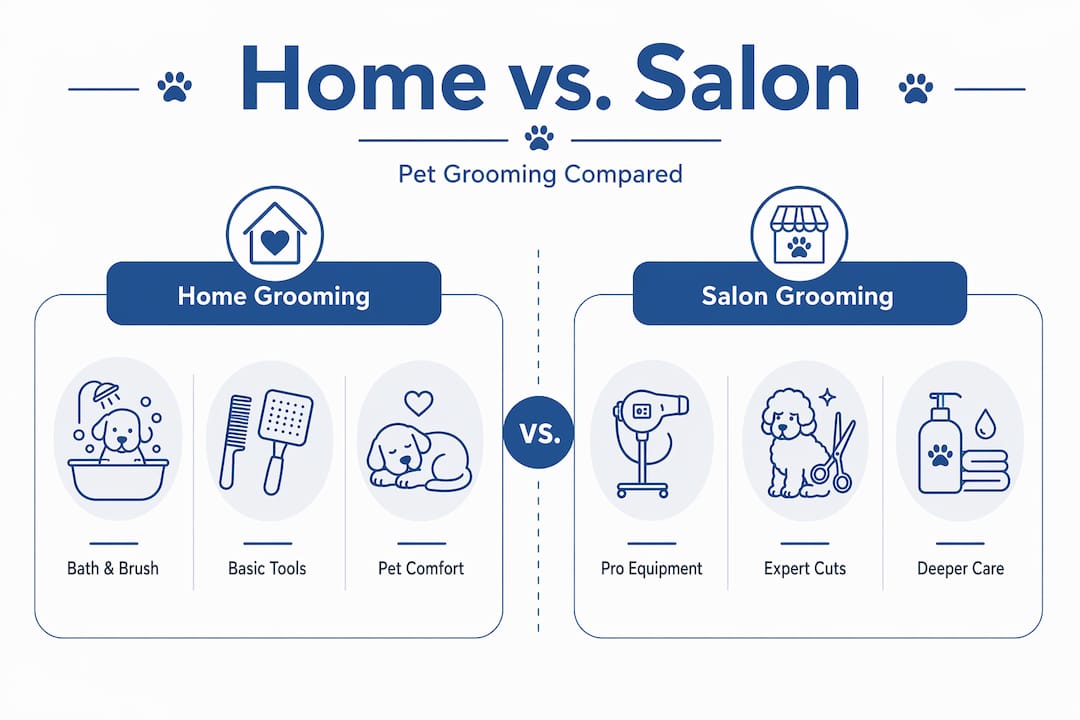
At first glance, home grooming vs salon grooming looks like a question of budget. Look closer, and you realize it’s really about scope, skill, and the right tools for the job.
What you can handle at home:
- Brushing and detangling between appointments
- Light bathing with pet-safe shampoo
- Wiping ears and cleaning around the eyes
- Basic nail trimming for cooperative pets
- Checking for visible ticks, fleas, or unusual lumps
What professional salons handle better:
- Breed-specific haircuts and styling
- De-shedding treatments that reduce shedding up to 80%
- Anal gland expression
- Deep cleaning of ears, paws, and skin folds
- Mat removal that would cause pain if attempted without training
- Teeth brushing with proper pet-safe tools
The equipment gap is significant. Professional groomers use high-velocity dryers, grooming tables with safety restraints, and professional-grade clippers that cost hundreds of dollars. These are not tools most households keep on hand, and using consumer-grade versions without training can cause uneven cuts, skin nicks, or a very stressed pet.
Mobile grooming services, like those offered by Faroopets in Dubai, add another layer to your grooming options for pets. They deliver professional-quality tools and trained groomers directly to your door, which helps pets who get anxious during car rides or unfamiliar environments. If you are curious how this compares to traditional salon visits, mobile grooming myths are worth reading before you decide.
Cost, convenience, and pet comfort compared
This is where the home grooming vs salon debate gets genuinely nuanced. Neither option wins across every category, and the right choice often depends on your pet’s breed, temperament, and coat type.
| Factor | Home grooming | Salon grooming |
|---|---|---|
| Upfront cost | $150–$250 for tools | Minimal setup cost |
| Per session cost | Low after initial investment | $60–$120 per session |
| Annual cost estimate | Depends on tool maintenance | $312–$375 based on visit frequency |
| Convenience | No travel, flexible timing | Fixed appointment, travel required |
| Skill requirement | Moderate to high for quality results | Handled by certified professionals |
| Pet stress potential | Low for calm pets at home | Varies; can be high for anxious pets |
| Health check quality | Limited to visible issues | Groomers trained to spot deeper signs |
Salon grooming is typically 20 to 30% more cost-effective than mobile grooming per session, though mobile services offer convenience that easily justifies the difference for many pet owners.
One thing most cost comparisons overlook: the price of fixing a mistake. A home grooming session that results in a skin cut, an infected ear, or nails trimmed too short can generate vet bills that dwarf several months of professional grooming fees. Quality at-home grooming requires practice, patience, and honest self-assessment about your skill level.
Pro Tip: Start with low-stakes home grooming tasks like brushing and eye cleaning before attempting nail trims. Build your pet’s comfort with handling gradually, and you will both feel more confident when it counts.
Pet behavior also shifts depending on the environment. Some pets are calmer at home because the sounds and smells are familiar. Others become more relaxed at a salon because they associate the professional setting with focused, expert handling. Knowing your individual pet matters more than following a general rule.
How grooming affects your pet’s health
Here is where many pet owners miss something important. Grooming is not just cosmetic. It is a form of preventive healthcare, and the difference between home and salon grooming becomes most visible in this area.
Professional groomers identify health issues including skin irritations, lumps, and parasite problems in more than 30% of animals they see during each session. They are handling the entire coat, including areas that owners rarely inspect closely, like underneath the belly, between the toes, and behind the ears. These are exactly the places where early-stage skin conditions, cysts, and flea infestations tend to hide.
“Veterinarians emphasize grooming as preventive healthcare, with grooming visits identifying underlying health problems beyond cosmetic care.” — Ask A Vet
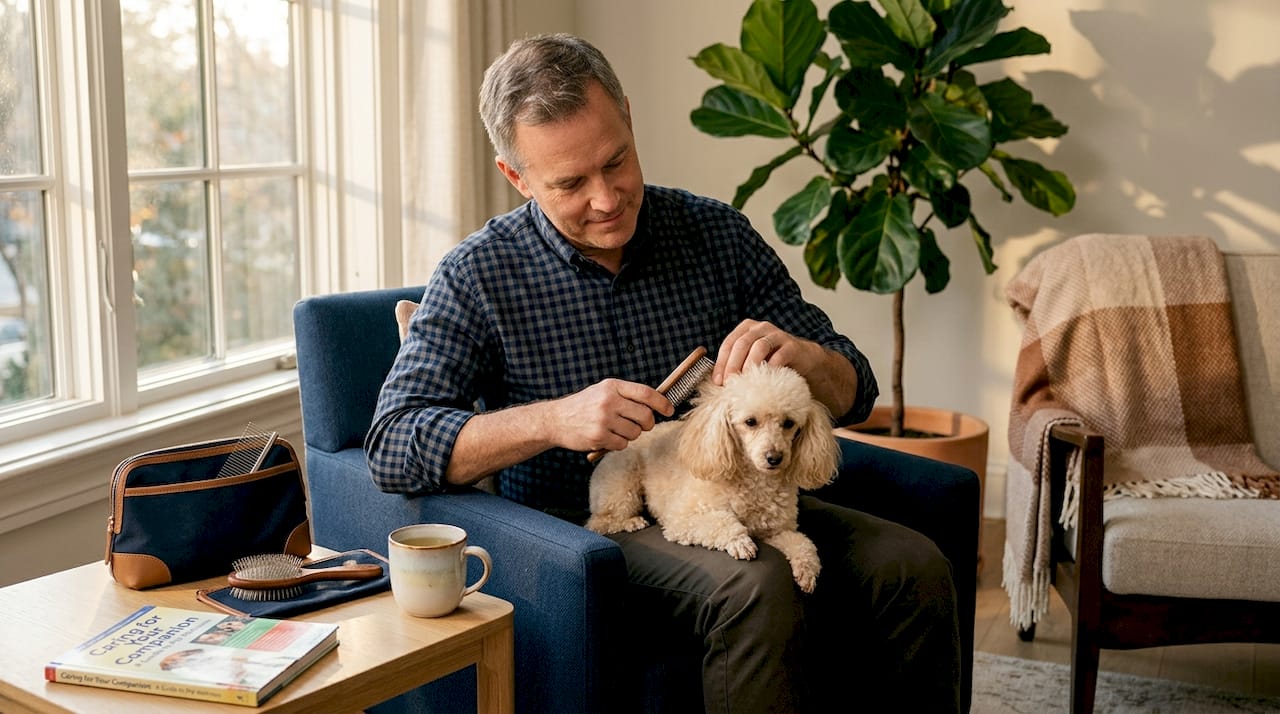
Regular at-home brushing still plays a real role. It keeps the coat free of debris, stimulates circulation, and lets you notice changes in your pet’s skin texture or weight. Nail trims every 3 to 4 weeks prevent discomfort and protect your dog’s gait. Overgrown nails can cause joint strain over time because they force the foot into an unnatural position during walking.
Matting is the health risk most pet owners underestimate. Severe mats pull constantly on the skin, trap moisture, and create ideal conditions for bacterial growth. When mats reach a critical point, brushing them out can take 5 to 20 hours and often causes injury. Professional groomers follow the principle of “humanity over vanity,” meaning they will shave the coat when brushing becomes painful, which takes 30 to 60 minutes and prioritizes the animal’s comfort over appearance. You can learn more about grooming’s preventive role in your pet’s overall wellbeing on the Faroopets blog.
Building a grooming routine that actually works
The most effective approach is not choosing home or salon. It is knowing how to use both well. A combined grooming approach of daily or weekly home brushing alongside professional salon visits every 4 to 12 weeks, depending on breed, is widely considered the best practice.
Here is a practical framework to get started:
- Assess your pet’s coat type. Short-coated breeds like Beagles or Boxers need professional grooming every 8 to 12 weeks. Long-coated or double-coated breeds like Golden Retrievers or Maine Coon cats need professional sessions every 4 to 6 weeks.
- Establish a home brushing schedule. Brush short coats once or twice a week. Brush long or curly coats at least every other day to prevent the kind of matting that causes 90% of severe skin issues in medium-to-long-coated pets.
- Learn safe nail trimming technique. Use the cross-section trimming method for dark nails. Trim small slivers until a dark dot appears at the center, which signals you are approaching the quick. Stop there. A bright LED flashlight held beneath the nail helps reveal quick position before you cut.
- Choose the right tool for your pet. Grinders and clippers are both effective for nails but suit different pets. Grinders are slower and safer for dark nails but louder, which can stress sound-sensitive pets. Many owners use both.
- Book professional sessions for complex tasks. Haircuts, de-shedding treatments, anal gland expression, and ear cleaning are tasks that genuinely require training. Attempting them without experience risks injury and distress for your pet.
- Watch for signs your pet needs attention sooner. Scratching, skin odor, excessive licking at paws, or visible lumps are signals to book a grooming and vet check without waiting for the scheduled appointment. The Faroopets guide on signs your pet needs grooming is a helpful reference to keep bookmarked.
Pro Tip: Support your grooming routine from the inside out. A diet rich in omega-3 fatty acids helps maintain coat health and reduces excessive shedding between professional sessions. Learn more about coat health through diet from a pet nutrition perspective.
My honest take on the home vs. salon question
I’ve worked with pet owners across all experience levels, and the pattern I see most often is not people choosing the wrong option. It’s people choosing one option and neglecting the other entirely.
Owners who only groom at home often do a beautiful job with brushing and bathing, but they miss the subtle signs that a trained groomer would catch in the first five minutes. A slightly thickened patch of skin near the ear. A faint smell that suggests a yeast overgrowth starting in a skin fold. These are things you only notice when you’ve handled hundreds of different animals.
On the flip side, owners who rely entirely on salon visits and do nothing at home between appointments often come in with a tangled, matted pet and feel genuinely confused about how it happened so fast. Grooming in a salon cannot compensate for six weeks of zero brushing at home on a long-coated breed.
What I’ve found works best is thinking of home grooming and professional grooming as partners rather than alternatives. Your at-home sessions keep the coat manageable and build trust between you and your pet. The professional visits handle what you genuinely cannot do safely or effectively on your own. Neither replaces the other.
One more thing I’d add from experience: pet personality matters more than most guides acknowledge. Some animals love the salon environment. Others find it genuinely stressful, and for those pets, mobile grooming at home is worth every extra dollar. Forcing a highly anxious pet through repeated stressful salon visits creates a negative association with handling that makes future grooming harder, not easier. Prioritize your pet’s emotional experience alongside the quality of the groom.
— Growth
Give your pet the best of both worlds with Faroopets
At Faroopets, we believe every pet deserves grooming that feels as good as it looks. Whether your dog needs a full luxury session or your cat is due for a thorough clean and style, our certified groomers bring professional-grade care directly to your door across Dubai.

Our mobile grooming vans are sanitized between every appointment, fully equipped with professional tools, and staffed by trained, caring groomers who know how to handle pets of all temperaments. Explore our dog grooming services and cat grooming services to find the right fit for your pet, or browse our full range of packages to choose your service and book at a time that works for you. Let us take care of what’s best handled by the professionals, so you can focus on the joy of having a healthy, happy pet at home.
FAQ
What is the main difference between home and salon grooming?
Home grooming covers routine maintenance like brushing, bathing, and basic nail trims. Salon grooming adds professional haircuts, de-shedding treatments, and health checks that require specialized training and equipment.
Is salon grooming worth it for short-haired pets?
Yes. Even short-coated breeds benefit from professional de-shedding treatments and health assessments every 8 to 12 weeks, catching skin or parasite issues that are easy to miss at home.
How often should I combine home and professional grooming?
Daily or weekly brushing at home, combined with professional salon visits every 4 to 12 weeks depending on your pet’s breed and coat type, is the most effective approach for overall pet health.
Can I trim my pet’s nails safely at home?
You can, with the right technique. For dark nails, use the cross-section trimming method and trim small slivers until a dark dot appears at the center, which means you’re close to the quick and should stop.
What grooming tasks should I never skip between salon visits?
Brushing is the most critical home task. Skipping it is linked to 90% of severe matting cases in medium-to-long-coated pets and can create painful skin conditions that require professional shaving to resolve.
