


Posted by Faroo Pets Grooming
on July 01, 2026

TL;DR:
- Proper pet drying involves completely removing moisture from the coat, skin folds, paws, and ears after bathing. Using microfiber towels and high-velocity dryers safely within recommended temperature ranges protects the pet’s skin and coat health. Rushing or skipping steps, especially around paws and skin folds, increases the risk of infections, hot spots, and skin irritation.
Proper pet drying is defined as the complete removal of moisture from your pet’s coat, skin folds, paws, and ears after bathing or outdoor exposure. This pet drying techniques guide covers the methods professional groomers rely on, from the press-and-pat towel approach to safe dryer operation within the 85–105°F temperature range. Skipping or rushing the drying process creates warm, damp conditions where bacteria and yeast thrive, leading to hot spots, ear infections, and skin irritation. Microfiber towels are the professional standard for absorbency, and high-velocity pet dryers are the recommended tool for thick or double coats. Getting this right protects your pet’s skin and keeps their coat healthy between grooming sessions.
What tools and materials do you need for effective pet drying?
The right tools make the difference between a thorough dry and a damp coat that causes problems later. Choosing the correct equipment before bath time saves time and protects your pet’s skin.
Towels
Microfiber towels absorb up to 7 times their weight in water. That absorbency means fewer towel changes and less time with a wet pet. They are also gentler on the coat than cotton towels, which can snag and cause friction. Keep two or three on hand for larger breeds or thick coats.
Dryers
High-velocity pet dryers use powerful airflow rather than heat to push water out of the coat. This makes them far safer and more effective than human hair dryers, which lack the airflow needed for thick undercoats and can burn skin. For most pet owners, a mid-range pet dryer with adjustable speed settings covers both short and long coats well.
Drying accessories
| Tool | Best use | Key benefit |
|---|---|---|
| Microfiber towel | All coat types, first step | High absorbency, gentle on skin |
| High-velocity pet dryer | Thick, double, or long coats | Airflow penetrates undercoat safely |
| Drying coat or wrap | Post-towel drying, calm pets | Hands-free moisture absorption |
| Quick-dry spray | Short coats, finishing step | Speeds surface evaporation |
| Slicker brush | Used during blow drying | Lifts coat for even airflow |
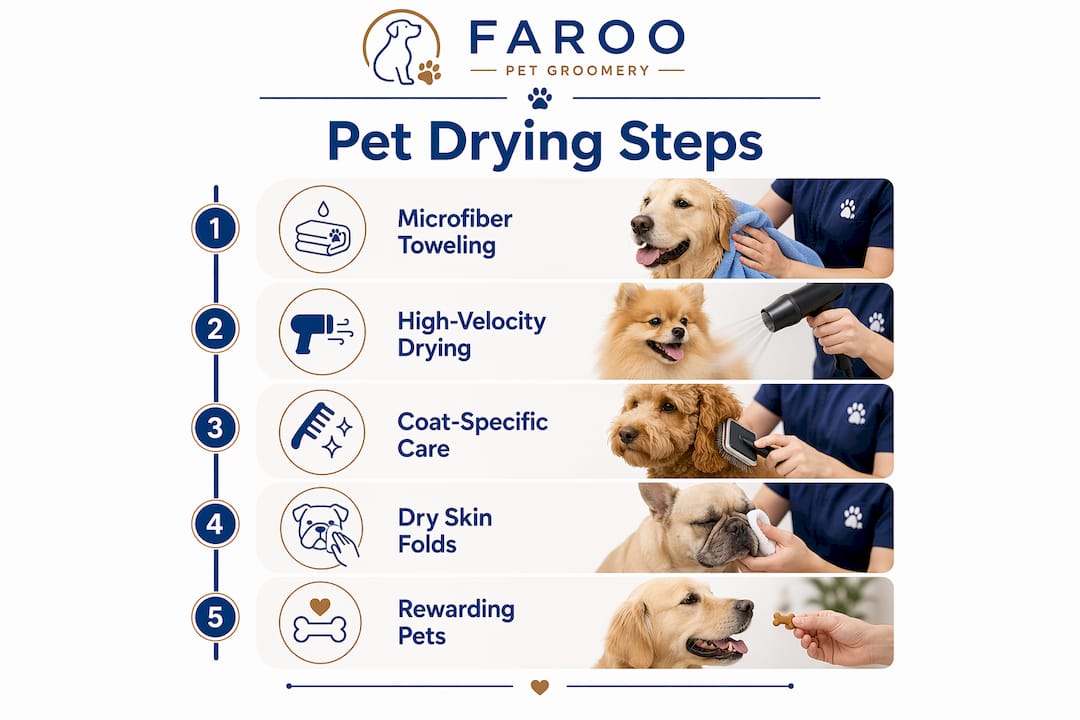
Drying coats are a practical option for pets that dislike the noise of a dryer. You wrap the coat around your pet after toweling, and the fabric continues absorbing moisture while your pet relaxes. Quick-dry sprays work best on short-coated breeds as a finishing step, not a replacement for thorough drying.
Pro Tip: Always have at least two microfiber towels ready before the bath. Swapping to a dry towel halfway through keeps absorption high and cuts total drying time.
How should you towel dry your pet correctly?
Towel drying is the first and most important step in any drying routine. Done correctly, it removes the bulk of moisture before a dryer is ever needed.
- Start at the head. Gently press the towel against your pet’s face and ears. Never rub the face. Use a corner of the towel to blot around the eyes and muzzle.
- Work section by section toward the tail. Press the towel firmly against the coat and lift away. This squeeze-and-pat technique absorbs moisture without tangling the fur or irritating the skin.
- Pay extra attention to the paws. Press each paw between the towel and squeeze gently. Moisture between the toes is a common cause of yeast infections, especially in humid climates like Dubai.
- Dry the ears carefully. Use a dry corner of the towel to blot the outer ear flap. Do not push the towel into the ear canal. If water entered the ears during bathing, a cotton ball placed gently at the entrance helps absorb it.
- Check skin folds. Breeds with facial folds, such as Bulldogs or Persian cats, trap moisture in creases. Press the towel into each fold and lift away. Repeat until the fold feels dry to the touch.
- Switch towels when saturated. A wet towel stops absorbing. Swapping to a fresh one keeps the process efficient and effective.
Vigorous rubbing is the most common mistake pet owners make. It tangles the coat, causes frizz, and irritates the skin. Pressing and patting always outperforms rubbing.
Pro Tip: Warm your microfiber towel in a dryer for two minutes before use. A warm towel is more comfortable for your pet and slightly speeds up moisture absorption.
What are best practices for using pet dryers safely and effectively?
A pet dryer used correctly is one of the best grooming tools you own. Used incorrectly, it causes burns, anxiety, and coat damage. Follow these practices every time.
- Introduce the dryer gradually. Desensitization means letting your pet hear and smell the dryer while it is off, then running it at a distance before bringing it close. This reduces fear and makes future drying sessions easier. Pair each step with a treat to build a positive association.
- Keep the temperature between 85–105°F (29–40°C). This is the safe operating range for pet-specific dryers. Anything above this risks skin burns, especially on thin-skinned or short-coated breeds.
- Maintain a 6–12 inch distance from the coat. Holding the dryer too close concentrates heat and airflow on one spot. Keep it moving constantly to distribute airflow evenly across the coat.
- Use low heat or cool settings for sensitive pets. Puppies, senior pets, and pets with skin conditions do best on cool airflow. Heat is rarely necessary when airflow is strong.
- Never aim the dryer at the face or genitals. These areas are too sensitive for direct airflow. Towel dry them instead and let residual warmth from the rest of the body finish the job.
- Use the fluff drying technique for double-coated breeds. Fluff drying means brushing the coat while drying, lifting sections with a slicker brush so the airflow reaches the undercoat. Without this, the surface dries while the undercoat stays damp, creating conditions for hot spots and matting. For more on managing dense fur, the double coat grooming guide covers the full process.
- Plan for 30–60+ minutes on dense coats. Thick or double coats take significantly longer to dry than short coats. Rushing leads to a damp undercoat, which is the primary cause of hot spots in breeds like Golden Retrievers, Huskies, and Maine Coon cats.
Pro Tip: Test the dryer’s heat output on the inside of your wrist before pointing it at your pet. If it feels hot on your skin after five seconds, it is too hot for your pet’s coat.
How do drying techniques differ based on coat type and skin conditions?
The best pet drying methods are not one-size-fits-all. Coat type and skin health determine which approach protects your pet and which causes harm.
Short-coated breeds
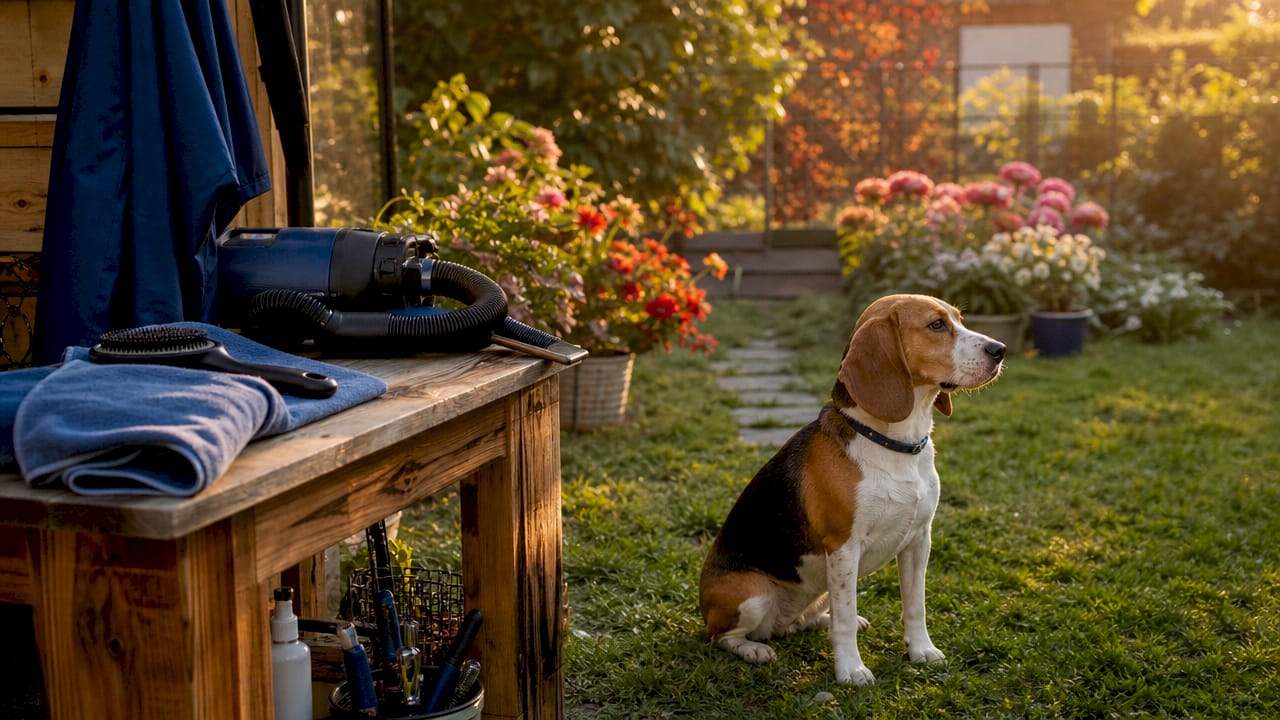
Short coats dry quickly and respond well to thorough towel drying alone. Breeds like Beagles, Boxers, and Siamese cats rarely need a dryer after a proper towel session. A quick-dry spray can speed up the final stage. The main risk with short coats is skipping the paws and skin folds, where moisture lingers even when the visible coat looks dry.
Long and double-coated breeds
Long and double coats require a layered approach. Start with microfiber towel drying to remove surface water, then move to a high-velocity dryer using the fluff drying technique. The fur detangling guide explains how to work through knots that form during drying without breaking the coat. Air drying is not a safe option for these breeds. Slow evaporation in a thick undercoat creates the warm, moist environment where bacteria multiply.
Pets with skin conditions
Pets with dermatological issues need the most careful drying routine. Air drying is unsafe for these pets because slow moisture evaporation promotes bacterial and yeast growth in skin folds, ears, and between the toes. The correct approach combines gentle towel pressing on all body sections with cool blow drying targeted at problem areas.
| Coat type | Recommended method | Key risk to avoid |
|---|---|---|
| Short coat | Microfiber towel, optional quick-dry spray | Skipping paws and folds |
| Long coat | Towel then low-heat blow dry | Matting from incomplete drying |
| Double coat | Towel then fluff drying with brush | Damp undercoat causing hot spots |
| Sensitive/skin issues | Gentle towel press plus cool airflow | Air drying worsening infections |
- Place cotton balls at the entrance of the ear canal before bathing to reduce water ingress. This makes post-bath ear drying faster and lowers the risk of ear infections.
- For pets with recurring yeast infections, target the paws, ears, and skin folds with cool airflow after every bath, even when the rest of the coat feels dry.
- Avoid hot air on pets with dry or flaky skin. Cool airflow dries without stripping the skin’s natural moisture barrier.
What common mistakes should you avoid when drying your pet?
Most drying problems come from a small set of repeatable errors. Recognizing them is the first step to fixing them.
- Rubbing with the towel. This is the most widespread mistake. Rubbing creates tangles, causes frizz, and irritates the skin. Always press and pat instead.
- Using a human hair dryer. Human dryers lack the airflow of pet-specific dryers and run at temperatures that can burn your pet’s skin. The risk is not worth it when pet dryers are widely available.
- Skipping paws, ears, and skin folds. These areas retain moisture long after the visible coat feels dry. Infections that develop in these spots are painful and often require veterinary treatment.
- Introducing the dryer too fast. Turning on a high-velocity dryer near a pet that has never experienced one causes lasting fear of grooming tools. Take three to five short sessions to build comfort before using the dryer at full speed. The grooming anxiety guide walks through the full desensitization process.
- Stopping before the coat is fully dry. A coat that feels dry on the surface can still be damp at the skin. Run your fingers through the coat down to the skin level. If it feels cool or damp, keep drying.
Thorough drying is not optional for thick-coated breeds. A damp undercoat left for even a few hours can develop into a hot spot that takes weeks to heal.
Pro Tip: Use treats throughout the drying session, not just at the end. Rewarding your pet every two to three minutes keeps them calm and builds a positive connection with the whole process.
Key Takeaways
Thorough drying with microfiber towels, a high-velocity pet dryer, and coat-type-specific techniques is the most effective way to protect your pet’s skin health after every bath.
| Point | Details |
|---|---|
| Use microfiber towels first | They absorb up to 7 times their weight in water and are gentler than cotton on the coat. |
| Press and pat, never rub | The squeeze-and-pat method removes moisture without tangling the coat or irritating skin. |
| Match the method to the coat | Short coats need towel drying; double coats need fluff drying with a brush and dryer. |
| Target paws, ears, and folds | These areas retain moisture longest and are the most common sites for infections. |
| Introduce dryers gradually | Desensitization with treats reduces anxiety and makes every future drying session easier. |
What I have learned about drying pets the right way
The part most pet owners skip is the beginning. They rush through the towel step because the dryer feels more powerful and efficient. The truth is that a thorough towel session cuts dryer time in half and reduces the stress your pet experiences from prolonged noise and airflow.
I have seen this pattern repeatedly. A pet owner brings in a dog with a recurring hot spot on the lower back. The coat looks fine on the surface. The problem is always the same: the undercoat was never fully dried. The owner toweled the surface, called it done, and the moisture sat against the skin for hours. In Dubai’s heat and humidity, that is all it takes.
The other thing I want to be direct about is dryer anxiety. Many pet owners give up on dryers entirely after one bad session. That is the wrong response. A pet that panics at a dryer has simply been introduced to it too fast. Three calm, treat-filled sessions at low speed and distance will change the experience completely. Patience at the start saves years of difficult grooming.
Routine matters too. Pets that are dried consistently after every bath accept the process as normal. Pets that are only dried occasionally treat it as a threat. Build the routine early, especially with puppies and kittens, and drying becomes one of the easiest parts of grooming. Pairing drying with brushing, as the grooming results guide explains, also keeps the coat in better condition between professional sessions.
— Growth
Professional grooming and drying care at Faroopets
Keeping your pet’s coat properly dried and healthy at home is a skill that takes practice. Sometimes, the most caring thing you can do is hand it over to professionals who have the right tools and training.

Faroopets provides professional dog grooming in Dubai with certified groomers who use high-velocity dryers, microfiber towels, and coat-specific techniques on every visit. Cat owners can explore dedicated cat grooming services that include specialized drying suited for feline coats. For pet owners who prefer to handle drying at home, Faroopets also carries grooming tools and products including drying accessories. Booking is simple and flexible through the Faroopets platform, so your pet’s coat stays healthy without the guesswork.
FAQ
What is the safest temperature for drying a pet with a dryer?
The safe operating range for pet dryers is 85–105°F (29–40°C), held 6–12 inches from the coat. Always keep the dryer moving to prevent heat buildup on any one spot.
Can I use a human hair dryer on my dog or cat?
Human hair dryers are not recommended for pets. They lack the airflow of high-velocity pet dryers and run at temperatures that can burn your pet’s skin.
How long does it take to dry a thick or double coat?
Dense and double coats typically require 30–60 minutes or more of active drying. Air drying these breeds is discouraged because a damp undercoat promotes hot spots and bacterial growth.
Why does my pet get skin infections after baths?
Moisture left in paws, ears, and skin folds after bathing creates the warm, damp conditions where bacteria and yeast grow. Thorough drying of these specific areas after every bath prevents most post-bath infections.
What is the fluff drying technique?
Fluff drying means brushing the coat while blow drying to lift sections of fur so airflow reaches the undercoat. This technique is the standard method for double-coated breeds and prevents matting and hot spots.
