


Posted by Faroo Pets Grooming
on August 01, 2026

TL;DR:
- Regular brushing and seasonal baths effectively control dog shedding and keep loose fur off furniture.
- Consistent routines tailored to coat type and professional grooming help prevent excessive hair loss.
You can’t stop your dog from shedding, but you can control where that hair ends up. The most effective dog shedding control workflow is simple: a daily short brushing session plus a weekly longer deep-deshed session, a monthly bath with a de-shedding shampoo, and a seasonal intensification during spring and fall. That rhythm, done consistently, keeps loose fur off your furniture and on the grooming table where it belongs.
Your quick-start checklist:
- Daily: Light brushing or grooming-glove stroking along the neck, flanks, and hindquarters
- Weekly: Full deshed with an undercoat rake or deshedding tool, following the brush-to-detangle → deshed → comb → reward order
- Monthly: De-shedding shampoo bath, full blow-dry, quick nail and ear check
- Seasonally (April–May and September–October): Increase weekly sessions to multiple times per week for several weeks
Two safety rules before you start: Always check your dog’s skin for redness, bumps, or irritation before brushing. And never shave a double-coated breed — it damages the insulating undercoat and raises the risk of sunburn and overheating. If you notice patchy hair loss, inflamed skin, or sudden heavy shedding, contact your vet before continuing.
Table of Contents
- What does a complete dog shedding control workflow look like?
- Which tools do groomers actually use, and what should you buy?
- How do you bathe and deshed your dog safely at home?
- How do diet and health affect your dog’s shedding?
- How do you keep your home clean during heavy shedding?
- What do groomers and vets say about shedding myths?
- Your monthly shedding control schedule and checklist
- Key Takeaways
- Why the routine matters more than the tools
- Faroopets brings professional deshedding to your door
- Useful sources and further reading
What does a complete dog shedding control workflow look like?
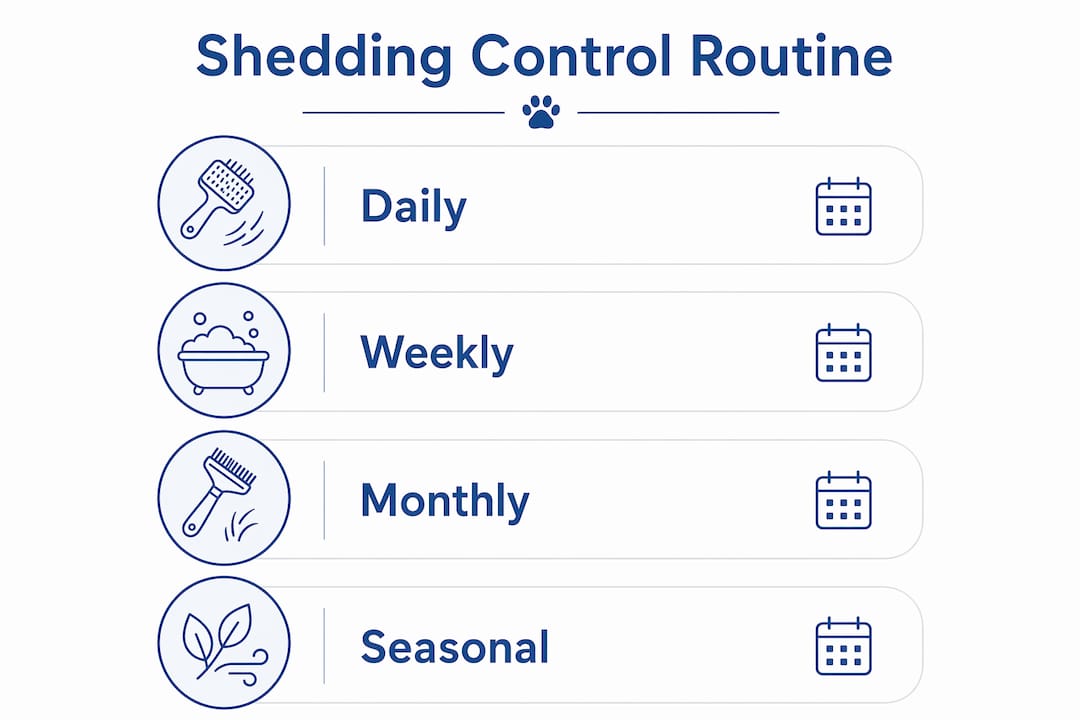
A great routine has four time horizons: daily, weekly, monthly, and seasonal. Each one builds on the last, and together they shift loose hair from your living room to the trash, which is exactly the goal.
Daily micro-sessions (3–5 minutes)
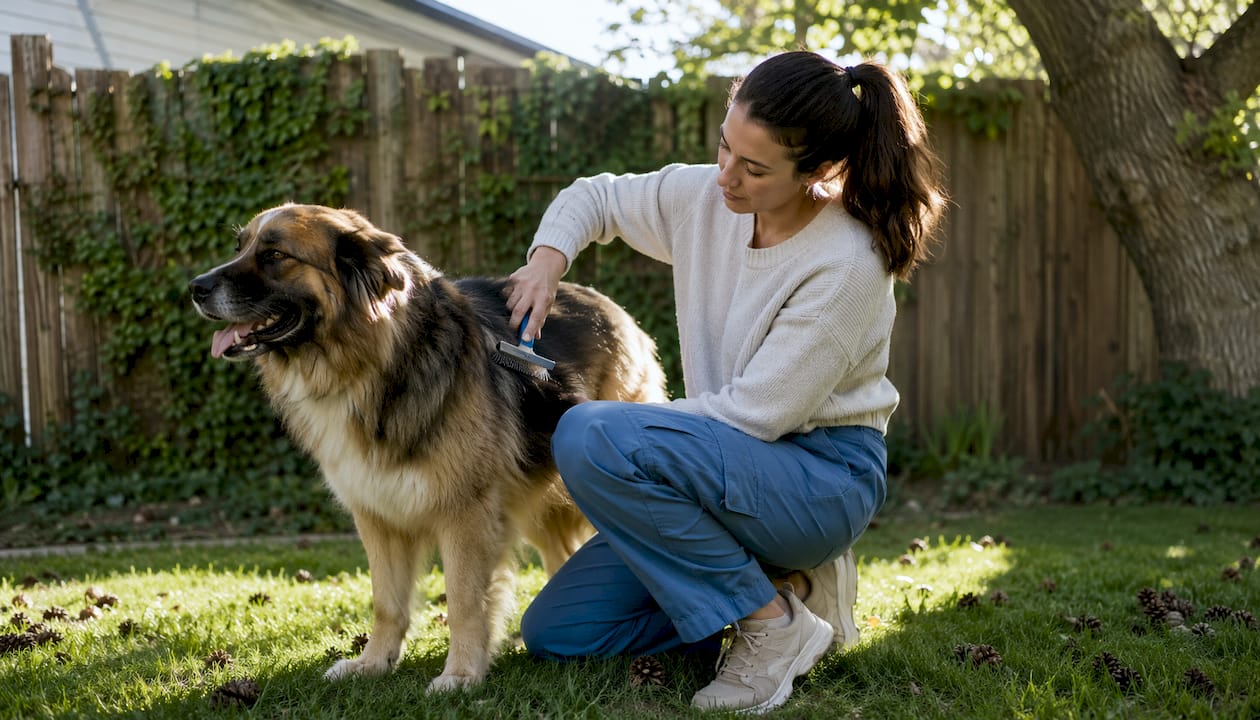
Think of daily brushing as maintenance, not grooming. A quick pass with a slicker brush or rubber grooming glove removes the surface hair that would otherwise drift onto your sofa by evening. Focus on the neck, flanks, and hindquarters — these areas accumulate the most loose fur. Short-coated dogs do well with a rubber curry comb; medium-to-long coats benefit from a soft slicker brush. Micro-session grooming reduces both owner and dog stress compared to infrequent marathon sessions, and it keeps household hair accumulation noticeably lower week over week.
Weekly deep-deshed session (15–30 minutes)
Once a week, set aside real time. Follow this order every time:
- Detangle first (5–10 min): Run a slicker brush through the entire coat in the direction of hair growth to clear surface tangles and small mats.
- Deshed (10–20 min): Switch to an undercoat rake or deshedding tool. Work from neck to tail with short, gentle strokes. Focus on the neck ruff, shoulders, back, hindquarters, and base of the tail.
- Finish with a comb (2–3 min): A finishing comb catches anything the deshedding tool missed and smooths the topcoat.
- Reward your dog: A treat at the end makes next week’s session easier.
Monthly maintenance (30–75 minutes)
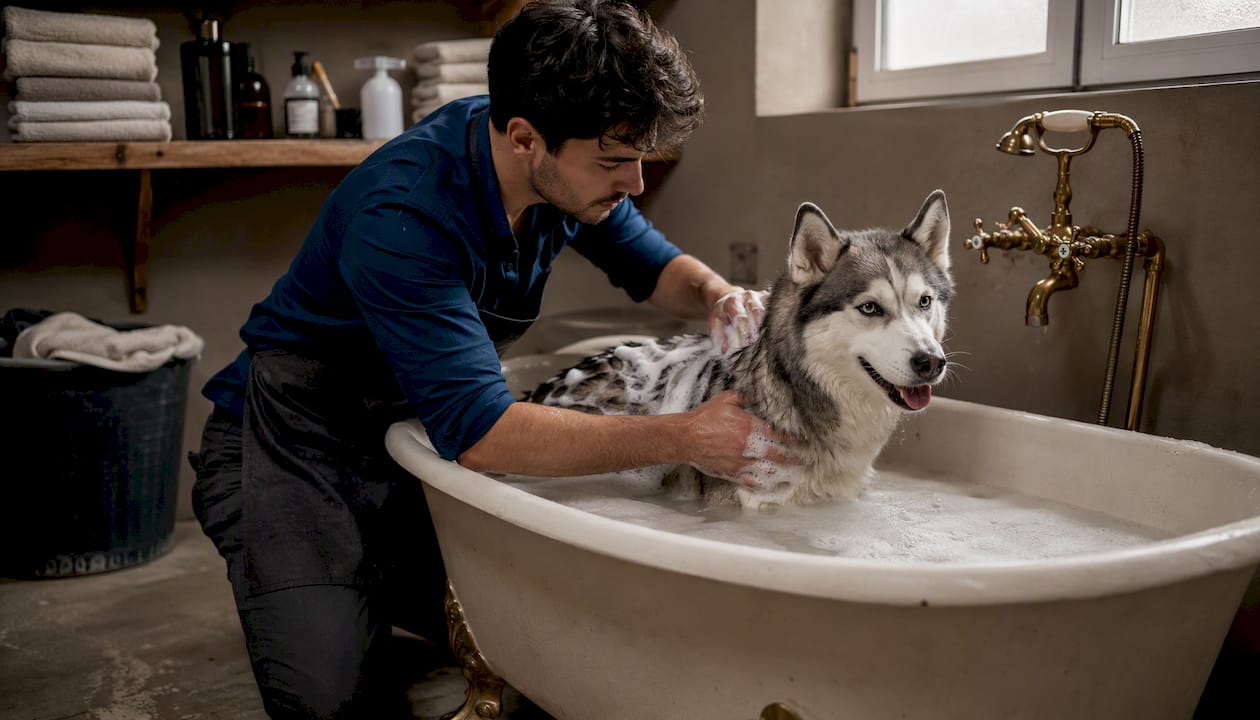
Once a month, add a full bath to the routine. Apply a de-shedding shampoo, let it sit for 5–10 minutes, rinse thoroughly, and follow with a conditioner if your dog’s coat is prone to dryness. Blow-dry on low heat, working against the direction of hair growth to separate the undercoat. Finish with a full brush-out. While you’re at it, do a quick nail and ear check — these are easy to overlook when you’re focused on the coat.
Seasonal intensification
Seasonal shedding in many dogs peaks twice a year, typically April–May and September–October, with the heavy phase lasting around six weeks. During those windows, increase your deep-deshed sessions to 2–3 times per week. Add a second short daily session if your dog is a heavy shedder. Dogs kept indoors with consistent climate control often shed more evenly year-round at a lower level, which weekly maintenance handles well.
Coat-type variations
| Coat type | Daily tool | Weekly tool | Bath frequency |
|---|---|---|---|
| Short, single coat | Rubber curry comb | Rubber curry + soft bristle brush | Every 4–6 weeks |
| Double coat | Slicker brush | Undercoat rake + deshedding tool | Monthly during shed season; every 6–8 weeks off-season |
| Long/silky coat | Pin brush | Slicker + finishing comb | Every 3–4 weeks |
| Curly/woolly coat | Wire-pin brush | Slicker + wide-tooth comb | Every 3–4 weeks |
Which tools do groomers actually use, and what should you buy?
The right tool for your dog’s coat type makes the entire routine faster and safer. Here’s what professional groomers reach for, and why each one earns its place in your kit.
Core tool categories
- Slicker brush: Dense wire pins that work through tangles and surface loose hair. Good for medium-to-long coats and curly/woolly coats.
- Undercoat rake: Reaches through the topcoat to pull out loose undercoat. The go-to tool for double-coated breeds like Huskies, Golden Retrievers, and German Shepherds.
- Deshedding blade/tool: Stainless steel tines designed to remove dead undercoat without cutting guard hairs. Brushing and deshedding tools are the primary methods groomers use to reduce visible household hair.
- Rubber curry comb: Massages the skin and lifts dead hair on short-coated dogs. Gentle enough for sensitive skin.
- Finishing comb: A wide-tooth or fine-tooth comb for the final pass. Catches anything the other tools missed.
- Grooming gloves: Fit over your hand and work well for daily micro-sessions, especially on dogs who are sensitive about brushes.
- High-lint vacuum: A pet-hair vacuum with a tangle-resistant brushroll and HEPA filtration. Not a grooming tool, but essential for the home-cleaning half of the workflow.
- Lint rollers: For quick clothing and furniture touch-ups between vacuuming sessions.
Matching tools to coat types
Double-coated dogs need an undercoat rake and a deshedding tool as their weekly workhorses. Short-coated dogs get the most from a rubber curry comb. Long, silky coats do best with a pin brush for daily work and a slicker plus finishing comb for weekly sessions. Curly or woolly coats need a wire-pin brush to prevent matting, paired with a wide-tooth comb. You can find a solid selection of deshedding brushes that cover most coat types if you’re building your kit from scratch.
Safety callouts: Always control pressure — the deshedding blade should glide, not scrape. Overuse or heavy pressure with a deshedding tool can scratch skin or thin the coat. Never use clippers as a substitute for a deshedding tool unless you have professional training.
Pro Tip: Build a “micro-session kit” — a small pouch or basket with just a rubber curry comb or grooming glove, a slicker brush, and a lint roller. Keep it in the room where your dog spends the most time. When it’s right there, the daily 3–5 minute session actually happens.
How do you bathe and deshed your dog safely at home?
Bathing is the step most owners skip or rush, but it’s what makes the weekly deshed session dramatically more effective. Done right, a bath loosens the undercoat from the follicles before you ever pick up a brush.
Step-by-step bath and deshed workflow
- Pre-brush (5–10 min): Brush out tangles before the bath. Wet hair mats faster, so clearing knots first protects your dog’s skin and makes rinsing easier.
- Wet the coat completely: Use warm water and work from the neck back.
- Apply de-shedding shampoo: Lather over the entire body. Let it sit for 5–10 minutes — this contact time is what loosens the undercoat from the follicles. Never use human shampoo; the pH is wrong for dog skin and can cause dryness and irritation.
- Rinse thoroughly: Leftover shampoo residue irritates skin and increases shedding.
- Apply conditioner if needed: Especially useful for long, silky, or dry coats. Rinse after 2 minutes.
- Towel dry: Press, don’t rub, to avoid creating tangles.
- Blow-dry on low heat (10–20 min): Work against the direction of hair growth to separate the undercoat. The coat must be completely dry before you use a deshedding tool — wet hair clumps together and the tool can’t do its job. For a full guide on drying technique by coat type, the pet drying techniques guide covers each coat in detail.
- Full brush-out and deshed: Now the deshedding tool works at its best.
When to skip the bath and book a professional
Some situations call for a professional groomer rather than a home session. If your dog has skin sores, a rash, or a fungal infection, bathing at home can spread the irritation. Severe matting — tight clumps you can feel behind the ears, in the armpits, or along the groin — should be handled by a groomer with de-matting tools. Veterinary guidance recommends using the finger test to detect mats before grooming: run your fingers through the coat and feel for tight, resistant clumps. If scissors seem like the only option, stop — scissors near the skin carry a real laceration risk. Anxious dogs who resist bathing also do better with a calm, trained groomer. For practical tips on making bath time less stressful before you get to that point, this bathing guide has useful prep steps.
Safety note on frequency: Bathing more than once a week can strip natural skin oils and cause dry skin, which actually increases shedding. During heavy shed season, once a week for a few weeks is the upper limit. Off-season, every 6–8 weeks is plenty for most dogs.
How do diet and health affect your dog’s shedding?
Grooming removes the hair that’s already loose. Nutrition determines how much loose hair your dog produces in the first place.
What your dog eats shows up in their coat
A complete, balanced diet with high-quality animal protein gives hair follicles the building blocks they need to stay strong and resist breakage. Omega-3 fatty acids, specifically EPA and DHA from fish oil, support the skin barrier and coat quality. Many vets recommend omega-3 supplementation to improve coat condition, but dosing should be guided by your veterinarian, and you should allow 6–8 weeks to judge improvement. Hydration matters just as much. A dog who isn’t drinking enough water develops dry skin, and dry skin sheds more. The general guideline is roughly one ounce of water per pound of body weight per day.
Medical causes of excessive shedding
Normal seasonal shedding is gradual and affects the whole coat evenly. Abnormal shedding looks different. The ASPCA lists several medical causes of excessive hair loss, including parasites (fleas, lice, mites), fungal or bacterial infections, food or inhalant allergies, and hormonal disorders like hypothyroidism or Cushing’s disease.
Red flags: when to call your vet
Contact your vet promptly if you notice any of these:
- Patchy hair loss or bald spots
- Skin redness, bumps, rashes, or scabs
- Sudden, heavy shedding across the whole body over a few days (not gradual seasonal thinning)
- Dull, dry hair that pulls out easily
- Constant scratching, foot licking, or face rubbing
- Lethargy or changes in appetite alongside increased shedding
Seasonal thinning develops over weeks and resolves on its own. A sudden, severe change over days is a medical signal, not a grooming problem.
How do you keep your home clean during heavy shedding?
A solid grooming routine cuts the volume of loose hair at the source. A matching home-cleaning routine captures what still falls.
Daily quick-clean (10 minutes)
Run a lint roller over furniture and clothing right after your dog’s daily grooming session — this is when loose hair is most concentrated. A rubber-gloved hand or a damp microfiber cloth lifts hair off fabric surfaces faster than a dry cloth. Focus your vacuum on the two or three spots your dog uses most: their bed, their favorite sofa corner, and the path they walk most often. For more home-specific tips, the pet hair removal hacks guide covers quick daily strategies in detail.
Weekly deeper clean (30–45 minutes)
| Task | Tool | Time |
|---|---|---|
| Vacuum all pet paths and furniture | Pet-hair vacuum with HEPA filter | 15–20 min |
| Wash dog bedding and throws | Washing machine (hot cycle) | 10 min active |
| Pre-tumble bedding before washing | Dryer on no-heat, 10–15 min | 10–15 min |
| Wipe down hard floors | Rubber broom or microfiber mop | 5–10 min |
Pre-tumbling bedding in the dryer on no-heat before washing pulls loose hair into the lint trap rather than clogging your washing machine filter. Washable throws over furniture are one of the most practical investments during peak shedding season — they take the hit so your sofa doesn’t.
Tools that make the cleaning workflow stick
- Pet-hair vacuum with sealed HEPA capture: The tangle-resistant brushroll matters; standard vacuums clog quickly with dog hair.
- Rubber broom: Pulls hair off hard floors and low-pile rugs better than a standard broom.
- Reusable lint rollers: More economical than disposable sheets for daily use.
- Washable throws: Cover high-traffic furniture spots and toss them in the wash weekly.
What do groomers and vets say about shedding myths?
A lot of well-meaning advice about dog shedding is either incomplete or outright wrong. Here’s what the evidence actually says.
That framing changes how you think about the whole routine. You’re not fighting shedding. You’re redirecting it.
Myth vs. fact
-
Myth: Shaving a double-coated dog reduces shedding. Fact: Shaving double-coated breeds can permanently alter coat texture, impair the dog’s ability to regulate body temperature, and expose the skin to sunburn. The undercoat often grows back denser than before, crowding out the protective guard hairs. Proper deshedding with the right tools is the correct solution. For a deeper look at double-coat care, the double-coat grooming guide explains the biology clearly.
-
Myth: More baths mean less shedding. Fact: Bathing more than once a week strips skin oils, causes dryness, and can increase shedding. Frequency matters less than technique and product choice.
-
Myth: Deshedding tools are safe to use as often as you like. Fact: Overuse or heavy pressure with a deshedding blade can scratch skin or thin the coat. Stick to the recommended frequency for your dog’s coat type and always use gentle, short strokes.
Safety checks before every grooming session
Before you pick up any tool, run your hands through your dog’s coat. Feel for tight mat clumps, especially behind the ears, in the armpits, and along the groin. Check for skin redness, sores, or unusual flaking. If you find a tight mat, use a de-matting tool or consult a professional groomer — never scissors near the skin. If the skin looks irritated or broken, stop and contact your vet before grooming.
Your monthly shedding control schedule and checklist
A template removes the planning overhead. Here’s a simple monthly structure you can adapt to your dog’s coat type and your own schedule.
Monthly template
Every day:
- 3–5 minute micro-session (brushing or grooming glove)
- Quick skin check with your hands
- 10-minute home quick-clean (lint roller, spot vacuum)
Every week:
- 15–30 minute deep-deshed session (detangle → deshed → comb → reward)
- 30–45 minute home deep-clean (vacuum all surfaces, wash bedding and throws)
- Check and clean grooming tools (remove trapped hair, wipe blades)
Every month:
- Full bath with de-shedding shampoo (30–75 minutes depending on coat size)
- Nail and ear check
- Assess coat condition: is the coat thinning, dull, or unusually dry? Note any changes.
Seasonally (April–May and September–October):
- Increase deep-deshed sessions to 2–3 times per week for 2–4 weeks
- Add a second short daily session for heavy shedders
- Add a HEPA air purifier to the main pet room during peak weeks
Checklist to tick each session
- [ ] Skin check before brushing (redness, bumps, mats)
- [ ] Correct tool selected for coat type
- [ ] Brushing in direction of hair growth
- [ ] Deshedding tool pressure kept light
- [ ] Dog rewarded after session
- [ ] Loose hair disposed of (not left on the floor)
- [ ] Tools cleaned after use
Adapting for your dog’s coat
Short-coated dogs can shorten weekly sessions to 10–15 minutes and skip the undercoat rake entirely. Double-coated dogs should never skip the weekly session, especially during seasonal blows. Curly or woolly coats need mat checks at every session, not just monthly. For puppies, shorter and gentler sessions build tolerance — the puppy coat care guide has age-specific guidance.
Key Takeaways
A consistent dog shedding control workflow built on daily micro-sessions, weekly deep deshedding, and monthly baths keeps loose hair off your furniture and your dog’s coat healthy year-round.
| Point | Details |
|---|---|
| Daily micro-sessions | 3–5 minutes of brushing or grooming-glove stroking each day prevents hair from accumulating on household surfaces. |
| Weekly deep deshed | A 15–30 minute session following the detangle → deshed → comb → reward order removes the bulk of loose undercoat before it falls. |
| Never shave double coats | Shaving damages the insulating undercoat, impairs thermoregulation, and does not reduce shedding — use a deshedding tool instead. |
| Vet escalation signs | Patchy hair loss, inflamed skin, sudden onset shedding, or behavioral changes alongside hair loss all warrant a vet visit. |
| Faroopets professional sessions | When matting, skin issues, or seasonal overload exceed DIY capacity, Faroopets offers professional deshedding services delivered to your door. |
Why the routine matters more than the tools
Here’s something groomers see constantly: owners invest in the best deshedding tools on the market, use them twice, and then wonder why their home still looks like a fur factory. The tools aren’t the problem. The consistency is.
Short daily sessions work better than occasional marathon grooming for one simple reason: loose hair accumulates in cycles. When you remove it every day, there’s never enough to overwhelm your home. When you skip a week and try to compensate with an hour-long session, you stress your dog, tire yourself out, and still don’t catch everything. The micro-session model isn’t a compromise — it’s the more effective approach.
The other pitfall groomers see regularly is the wrong tool for the coat. A deshedding blade on a short-coated dog does very little. A rubber curry comb on a double-coated Husky barely scratches the surface. Matching the tool to the coat type is the single fastest way to improve your results without adding any time to the routine.
When should you stop DIYing and book a professional session? When you find tight mats you can’t safely remove, when your dog’s skin looks irritated or broken, or when seasonal shedding is so heavy that your weekly sessions aren’t keeping up. A professional deep-deshedding session resets the coat and gives you a clean baseline to maintain. Think of it as the monthly bath’s bigger sibling — something you do a few times a year, not every week.
Faroopets brings professional deshedding to your door
If your dog’s shedding has reached the point where the at-home routine isn’t keeping up, or you simply want a professional reset before starting your own workflow, Faroopets is the convenient next step.

Faroopets’ certified groomers come to your location in a sanitized, fully equipped mobile van — no stressful car rides, no waiting rooms, no loose fur scattered across your home. The Luxury Full Dog Grooming package includes a full deshedding session, de-shedding shampoo bath, blow-dry, and coat finishing. For owners who want a scheduled professional plan alongside their at-home routine, the 3-session package spaces professional deep-deshedding sessions across the season. Ready to book? Visit the dog grooming services page to check availability and schedule your first appointment.
Useful sources and further reading
Here are the authoritative sources behind this article, along with a note on what each one covers best.
- ASPCA — Dog Grooming Tips: Covers normal vs. excessive shedding, medical causes of hair loss, and when to consult a vet. The most authoritative general reference for escalation criteria.
- VCA Hospitals — Grooming and Coat Care for Your Dog: Veterinary guidance on mat detection, safe tool use, and when to seek professional help.
- Wahl USA — 5 Tips to Reduce and Control Dog Shedding: Practical grooming technique from a professional grooming brand; good for tool use and the “control where hair lands” framing.
- WebMD Pets — Dog Shedding: Accessible overview of brushing frequency, tool safety, and deshedding technique.
- AKC Pet Insurance — 6 Tips to Control Dog Shedding: Covers diet, omega-3 supplementation, and hydration as shedding factors.
- Dogster — How to Reduce Dog Shedding: Vet-approved tips covering brush selection by coat type, parasite control, and bathing frequency.
- Pawwellcare — How to Deshed a Dog at Home: Detailed step-by-step deshedding method with timing, tool guidance, and the case against shaving double coats.
- DogsLove.com — Dog Shedding: Seasonal shedding timelines and how indoor living affects shedding cycles.
- Zevapet — Reduce Dog Shedding Naturally: Explains the harm of shaving double-coated breeds and the correct deshedding alternative.
- Dogmotive — How to Stop Dog Shedding at Home: The source for the micro-session model and the case for short daily sessions over infrequent long ones.
- Faroopets — Professional Dog Grooming in Dubai: For owners who need professional deshedding, mat removal, or a seasonal deep-clean session delivered to their door.
This article is general information for educational purposes. For medical causes of shedding, skin conditions, or significant coat changes, consult your veterinarian. For severe matting or behavioral grooming issues, book a session with a certified professional groomer.
