


Posted by Faroo Pets Grooming
on May 11, 2026

TL;DR:
- A thorough van hygiene routine is essential to prevent bacteria and fungi buildup, especially in Dubai’s warm climate. It involves proper supplies, systematic cleaning steps, and adherence to contact times to ensure pet safety and hygiene. Following certified protocols and documentation builds trust and maintains high sanitation standards in mobile grooming.
One missed sanitation step inside a mobile grooming van can expose your beloved pet to bacteria, fungi, or cross-contamination from the previous furry client. In Dubai’s warm climate, where heat accelerates germ growth inside closed spaces, that risk is even more real. We put together this complete guide to walk you through every practical step of a van hygiene routine, from the right supplies to a foolproof workflow, so you can feel confident your pet is groomed in a space that is truly clean, safe, and healthy every single time.
Table of Contents
- What you need for a flawless hygiene routine
- The essential step-by-step van hygiene workflow
- Sanitizing tools and high-touch surfaces
- Common mistakes and troubleshooting your routine
- Our perspective: Why hygiene routines beat ad-hoc cleaning for Dubai’s pets
- Keep your pet safe with Dubai’s best mobile grooming
- Frequently asked questions
Key Takeaways
| Point | Details |
|---|---|
| Clean before you disinfect | Always remove visible dirt and hair first so disinfectants work as intended. |
| Use the full contact time | Let disinfectant stay wet on surfaces for the time stated on the label for maximum germ-killing. |
| Don’t skip air-drying | Dry tools and surfaces completely to prevent mold and bacteria growth. |
| Document your hygiene routine | Using a checklist or log ensures every cleaning step is followed, every time. |
| Right van systems matter | Fresh water and functional drainage are crucial for effective pet van cleanliness. |
What you need for a flawless hygiene routine
Now that you appreciate the need for a thorough routine, let’s detail exactly what gear, cleaners, and van features every mobile pet hygiene routine requires.
A clean van does not happen by accident. It starts with having the right supplies stocked, organized, and within arm’s reach before the first pet ever steps inside. Missing even one item, such as fresh gloves or a proper disinfectant, can turn a well-intentioned clean into a half-finished job that still leaves germs behind.
Here is a complete list of what every mobile grooming van should have on hand:
- Pet-safe disinfectant spray or wipes (look for products labeled safe for animals after drying)
- Mild dish soap or pet-safe liquid soap for the initial wash step
- Bleach solution (diluted per label instructions for hard, non-porous surfaces only)
- Disposable gloves in multiple sizes, replaced after every single pet
- Microfiber cloths and disposable paper towels for wiping and drying surfaces
- A dedicated scrub brush for tubs, floors, and drains
- Clean, clearly labeled containers to separate dirty tools from sanitized ones
- Trash bags for immediate hair and debris removal
- A supply of fresh, potable water stored separately from grey water
The must-have grooming supplies go beyond just shampoos and brushes. You need a complete cleaning kit that matches the demands of a working mobile space.
The CDC guidance on cleaning pet supplies is clear: use soapy water first to clean, then apply a disinfectant following the product label exactly, and never mix bleach with other cleaners. That last point is critical. Mixing bleach with ammonia-based products or acidic cleaners creates toxic fumes that are dangerous for groomers and pets alike.
One area that is often overlooked is the van’s water system itself. According to mobile van setup principles, key hygiene design elements include a potable fresh water tank, a grey water or waste collection system, and properly functioning drainage. If the drain backs up or the grey water tank overflows, sanitation breaks down fast. Checking these systems before every session is not optional. It is essential.
| Supply | Purpose | Pet-safe note |
|---|---|---|
| Pet-safe disinfectant spray | Surface and tub disinfection | Safe once dry; follow label |
| Diluted bleach solution | Hard floor and drain disinfection | Never mix with other cleaners |
| Mild soap | Pre-wash for tools and surfaces | Safe; rinse thoroughly |
| Disposable gloves | Barrier protection for groomer | Replace after every pet |
| Labeled tool containers | Separate clean from used tools | Prevents cross-contamination |
| Microfiber cloths | Wiping and drying | Wash between sessions |
The essential step-by-step van hygiene workflow
Once your supplies are ready, follow this foolproof cleaning and sanitizing routine from first sweep to final air-dry.
Understanding why the order of steps matters is as important as knowing the steps themselves. Disinfectants work on clean surfaces. If hair, skin cells, or soap residue sits underneath, the disinfectant cannot reach the germs hiding beneath. Skipping to disinfection without cleaning first is one of the most common and costly mistakes in mobile grooming hygiene.
Here is the complete workflow your grooming team should follow after every single pet:
- Remove all loose hair and debris from the grooming table, tub, floor, and dryer area using a brush or vacuum. Dispose of it immediately in a sealed trash bag.
- Wash all surfaces with soap and water, scrubbing the tub, table, walls, and any tools that touched the pet. Rinse thoroughly.
- Apply disinfectant to all cleaned surfaces, keeping them visibly wet for the full contact time listed on the product label. This step is non-negotiable.
- Wipe down or let air-dry completely before the next pet enters the van.
This four-step process mirrors expert-recommended workflows for sanitizing pet grooming areas. The contact time in step three is the detail most people rush. If a label says the surface must stay wet for three minutes, then three minutes is the minimum. Wiping it off in 30 seconds defeats the purpose entirely.
Between each client, grooming tools must be sanitized through the full sequence of hair removal, washing, disinfecting or soaking, and complete air-drying. This is not a step you can shorten on a busy day.
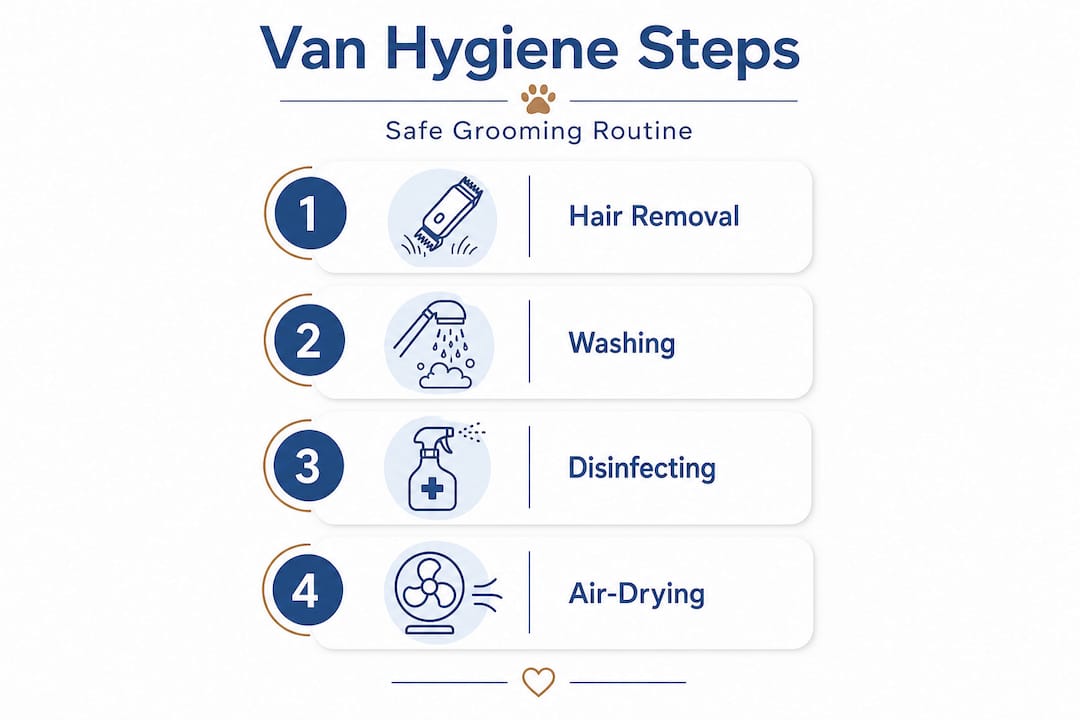
Here is a quick comparison of incomplete versus complete hygiene practices:
| Step | Incomplete process | Complete process |
|---|---|---|
| Hair removal | Skipped or partial | Full removal before any washing |
| Washing | Spray and wipe only | Soap, scrub, and full rinse |
| Disinfecting | Brief spray | Full contact time per label |
| Drying | Tools stored while still damp | Complete air-dry before storage |
| Documentation | No record kept | Logged after every session |
For more on van disinfection and what certified routines look like in practice, we have a deeper guide that walks you through the most effective protocols used by professional groomers in Dubai.
Pro Tip: Set a phone timer or use a printed checklist after every session. A timed checklist ensures that the disinfectant contact time is never cut short and that no step gets skipped during a busy grooming day.
Strong pet hygiene habits are not just about cleanliness in the moment. They build a pattern of safety that protects every pet, every time.
Sanitizing tools and high-touch surfaces
Having cleaned the van surfaces, focus on the grooming tools and high-contact areas where germs most easily spread.
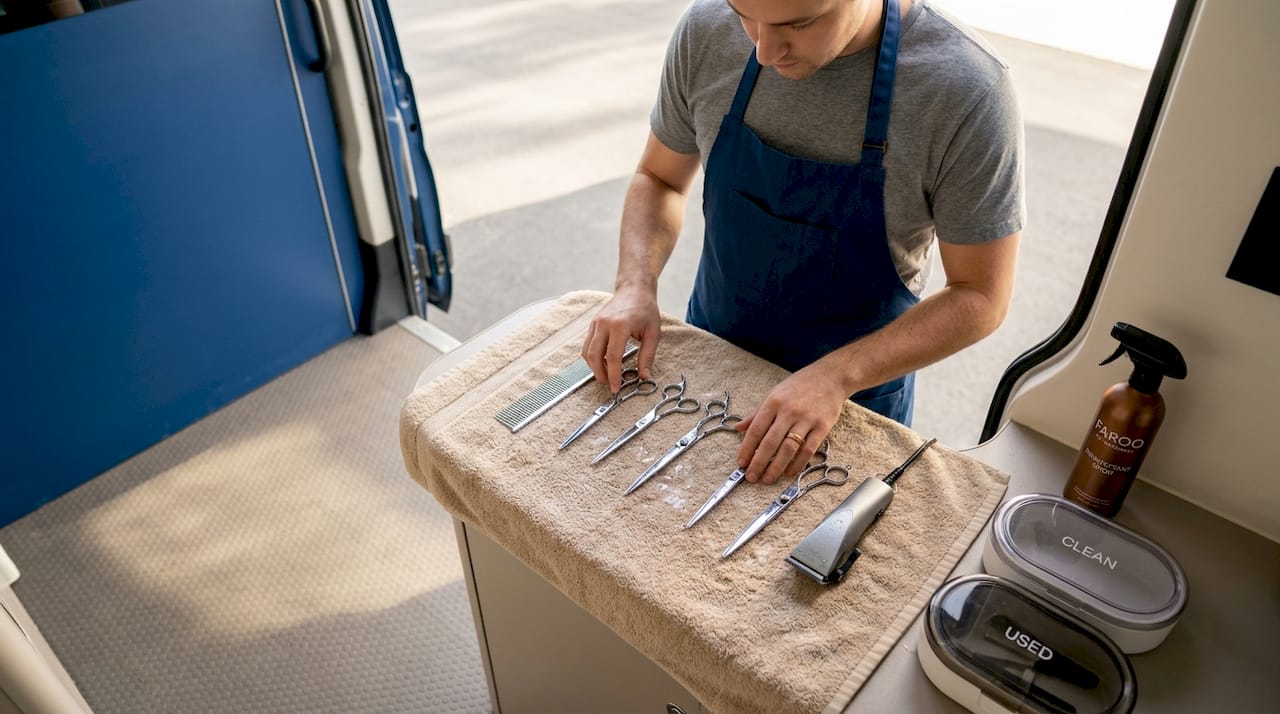
Think about what actually touches your pet during a grooming session. Clippers run along their skin. Brushes pull through their coat. Nail tools press against their paws. Every one of these items becomes a potential carrier of bacteria, fungi, or skin parasites if they are not fully sanitized between uses. High-contact surfaces like the tub exterior, dryer handles, and table edges are just as important.
Here is the correct tool sanitation sequence:
- Remove all visible hair and debris from the tool using a comb, brush cleaner, or fine-tooth tool. Do not skip this even if the tool looks clean.
- Wash the tool with soap and water, scrubbing all grooves, hinges, and contact points where debris hides.
- Soak or spray with a pet-safe disinfectant for the full contact time specified on the label.
- Rinse if required by the disinfectant’s instructions, then lay flat or hang to air-dry completely.
- Store in a labeled, clean container only after the tool is fully dry to the touch.
Remember: The highest cross-contamination risks are found at shared contact surfaces like tables, tubs, and dryer exteriors, and at tool interfaces that directly touch a pet’s skin. This means clippers, brushes, combs, and nail tools all require the full multi-step sanitation process, not just a quick wipe.
One detail that surprises many groomers is how much risk lives in incomplete drying. Moisture left on tools or inside tool cases can support mold and bacteria growth, essentially undoing all the sanitation work you just completed. In Dubai’s warm temperatures, damp tools stored in a closed van can develop issues within hours.
A practical example: a standard clipper blade should soak in disinfectant solution for the labeled contact time, which is typically between one and ten minutes depending on the product. After soaking, it should air-dry on a clean cloth for at least 20 to 30 minutes before being placed in a storage case. That might feel slow on a busy day, but it is the only way to guarantee safety.
Checking out best van features is a great way to understand what physical design elements support this kind of thorough tool management inside a mobile setting.
Pro Tip: Use clearly labeled tool cases with two sections: one marked “clean” and one marked “used.” This simple habit prevents any accidental grabbing of an unsanitized tool mid-session, especially during busy back-to-back appointments.
Common mistakes and troubleshooting your routine
Even the best plans go awry, so here’s how to spot and fix the frequent slipups in van cleaning routines.
No grooming team is perfect, and pressure from a full schedule can make it tempting to cut corners. Knowing the most common hygiene breakdowns before they happen is your best defense. Here are the pitfalls we see most often:
- Skipping the debris removal step before washing. Hair and organic matter block disinfectants from reaching surfaces. This single shortcut is responsible for a large percentage of sanitation failures.
- Not giving disinfectants enough contact time. Spraying and immediately wiping is not disinfection. Every product has a labeled contact time requirement that must be respected for the disinfectant to kill pathogens effectively.
- Using grey water or reusing rinse water for washing. Fresh, potable water must be used throughout. According to mobile van water system design, the fresh water tank and grey water tank must remain separate at all times.
- Storing damp tools. As discussed, this creates a breeding environment for bacteria and mold.
- Mixing cleaning chemicals without checking labels. This is both ineffective and potentially dangerous.
Troubleshooting your van’s plumbing or drainage should be part of your regular maintenance routine, not something you deal with when it fails mid-appointment. Check that water drains cleanly into the grey water tank and not onto the floor or back into the fresh water system. A slow drain is often the first sign of a blockage that will compound your hygiene challenges quickly.
For a broader view of how the van fits into the full grooming picture, our pet grooming van guide covers the complete setup from a Dubai pet owner’s perspective.
Pro Tip: Keep a simple hygiene log in the van. After each session, note the time, the products used, and confirm each step was completed. Sharing this log with clients on request builds enormous trust and shows you take their pet’s safety seriously.
Always follow disinfectant label instructions to avoid harmful chemical residues. Some disinfectants require a water rinse after the contact time to prevent skin irritation on pets who then contact the surface. Reading the label is not optional. It is a safety responsibility.
Our perspective: Why hygiene routines beat ad-hoc cleaning for Dubai’s pets
With common mistakes addressed, let’s consider why following a certified routine every time makes all the difference for Dubai pets and their people.
We have seen groomers with years of experience get complacent. They have cleaned so many vans that the routine feels automatic, and that is exactly when corners get cut. The problem with memory-based cleaning is that memory is selective. Under pressure, the brain skips steps it considers “obvious,” and those skipped steps are exactly where cross-contamination happens.
A documented, step-by-step hygiene routine removes human judgment from the equation. You do not need to remember whether you disinfected the tub because the checklist confirms it. You do not need to estimate the contact time because the timer tells you. This kind of systematic accountability is what separates truly safe grooming from grooming that just looks clean.
Dubai’s mobile grooming scene has unique pressures. The heat inside a parked van can climb rapidly, which accelerates bacterial growth on any surface that is not properly sanitized. Back-to-back bookings in busy neighborhoods mean there is little time between sessions if you do not have a fast, efficient, well-practiced routine. And the compact space of a mobile van means germs have nowhere to hide but also nowhere to disperse. Every touch point matters.
We also believe transparency is a form of care. When a grooming team can show a client their hygiene log or walk them through exactly what happens between appointments, trust is built instantly. That kind of trust is what turns a first-time booking into a loyal, long-term relationship. Evaluating grooming quality standards is something more pet owners in Dubai are starting to do, and we think that is a wonderful development for the entire industry.
Following a routine is not a sign of inexperience. It is a sign of professionalism, care, and a genuine commitment to every pet that walks through that van door.
Keep your pet safe with Dubai’s best mobile grooming
Understanding hygiene routines is one thing. Having a professional team that actually follows them, every session, every time, is what truly protects your pet.
At Faroo Pet Groomery, every one of our mobile vans operates on the exact step-by-step hygiene protocol we have outlined in this guide. Our certified groomers are trained to follow documented cleaning checklists between every pet, use only pet-safe disinfectants at correct contact times, and maintain fresh water and waste systems to the highest standards. We are proud to make safety and cleanliness as central to our service as the grooming itself. Ready to experience the difference? You can book a pet grooming session today or take a moment to choose a grooming package that fits your pet’s exact needs. Your pet deserves nothing less.
Frequently asked questions
How often should a pet van be sanitized during mobile grooming sessions?
A pet van should be thoroughly cleaned and disinfected after every pet client to prevent cross-contamination between animals. This includes both surface cleaning and full tool sanitation before the next appointment begins.
What’s the difference between cleaning and disinfecting in pet grooming vans?
Cleaning removes visible dirt and debris using soap and water, while disinfecting uses an approved disinfectant product to kill germs on already-cleaned surfaces. Both steps are required and neither can replace the other.
Why is air-drying after disinfecting grooming tools important?
Moisture left on tools or inside storage cases can support the growth of mold and bacteria, undoing the sanitation work. Tools must be completely dry before being stored or reused.
What van features are most important for maintaining hygiene?
A reliable fresh water supply, a functioning grey water and waste collection system, and effective drainage are the three most essential structural features for keeping a mobile grooming van truly sanitary.
Is it safe to use bleach for disinfecting all pet van surfaces?
Only use bleach on surfaces where the product label approves it, and never mix bleach with other cleaning chemicals. Some surfaces and materials can be damaged by bleach, so always check before applying.
