


Posted by Faroo Pets Grooming
on July 17, 2026

TL;DR:
- Starting grooming early improves a puppy’s comfort, trust, and cooperation during grooming and veterinary visits.
- Performing handling exercises daily from 8 to 16 weeks fosters long-term calmness and tool acceptance.
Early grooming introduction is the process of acclimating your pet to handling and grooming routines during their earliest developmental weeks, building comfort, trust, and lifelong cooperation. The socialization window between 8 and 16 weeks is the single most important period for shaping how your puppy responds to touch, tools, and strangers for the rest of their life. Miss that window, and you are not just dealing with a messy coat. You are managing fear, resistance, and sometimes costly veterinary procedures. We put together this guide to help you understand why starting early matters and exactly how to do it well.
Why early grooming introduction changes everything
Early grooming introduction is defined by veterinary and grooming professionals as the deliberate, positive exposure of a puppy or kitten to handling, grooming tools, and bathing routines before fear responses become fixed. The goal is not a perfect haircut. The goal is a pet that stays calm on the grooming table for life.
The critical socialization window closes around 16 weeks. After that point, new experiences become harder to accept without stress. Grooming professionals recommend scheduling the first introductory session between 12 and 16 weeks, after core vaccinations are complete. That timing gives your puppy the protection they need while still catching the tail end of their most receptive developmental phase.
Delaying professional grooming beyond 6 months often results in severe anxiety, resistance to tools, and behavioral challenges that require long rehabilitation. That is not a scare tactic. It is a pattern groomers see constantly. A puppy that first meets clippers at eight months has already formed opinions about loud, vibrating objects near their face, and those opinions are rarely positive.
What is the ideal age to start grooming a puppy?
The ideal age to begin grooming habituation is 8–12 weeks at home and 12–16 weeks for the first professional visit. This two-phase approach respects both vaccination timelines and the socialization window.
| Age Range | Recommended Activity | Typical Behavioral Outcome |
|---|---|---|
| 8–12 weeks | Daily home handling: paws, ears, coat | Builds baseline comfort with touch |
| 12–16 weeks | First professional introductory session | Calm acceptance of tools and strangers |
| 4–6 months | Regular short grooming visits | Consistent cooperation and reduced stress |
| 6+ months (no prior grooming) | Rehabilitation grooming approach | Higher anxiety, longer adjustment period |
| 12+ months (no prior grooming) | Extended desensitization required | Risk of sedation or medical clipping |
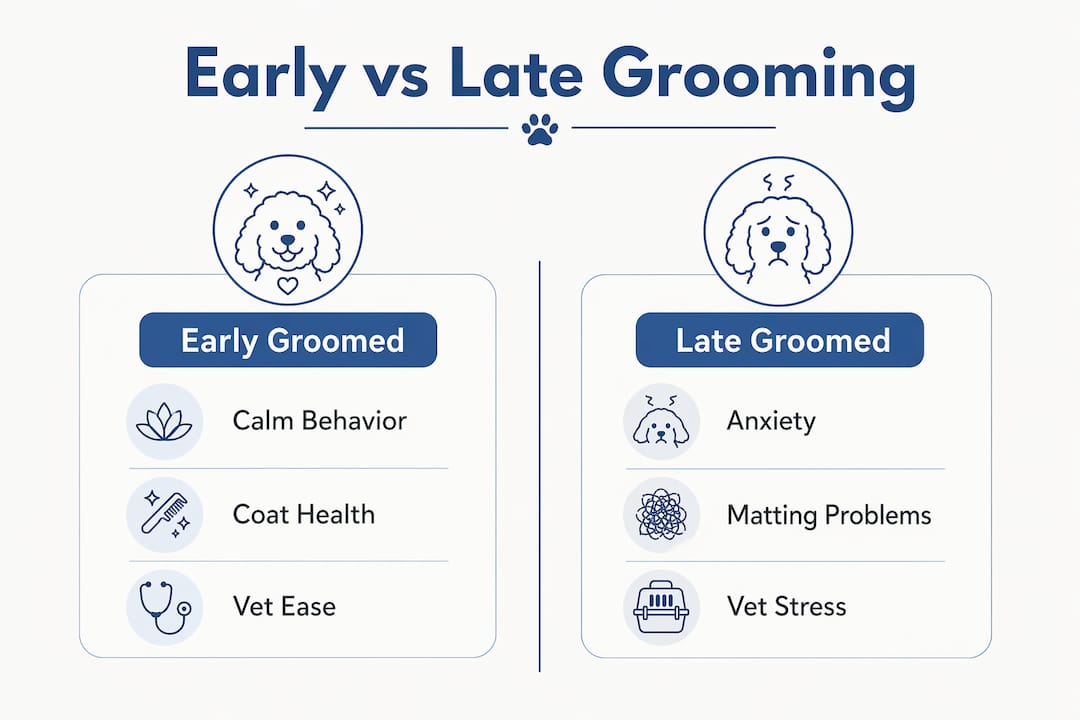
The table tells a clear story. Every month you wait past 16 weeks adds friction to the process. Puppies introduced late to grooming sometimes require sedation during grooming or veterinary clipping due to phobia and matting complications. That is a medical risk and an unnecessary expense that early introduction prevents entirely.
Pro Tip: Book your puppy’s first grooming appointment before they look like they need one. The purpose of that first visit is exposure, not styling.
How to prepare your puppy at home before the first visit
Home preparation is not optional. It is the foundation that makes professional grooming sessions work. A puppy that has never had their paws touched will panic the moment a groomer lifts their foot. Daily practice at home changes that completely.
Follow these progressive steps to build your puppy’s confidence at home:
- Days 1–3: Touch practice. Gently handle your puppy’s paws, ears, tail, and muzzle for 1–2 minutes each day. Use a calm voice and reward with small treats after each session.
- Days 4–7: Tool introduction by scent and sound. Let your puppy sniff a brush or comb before using it. Turn on a small handheld dryer at a distance so they hear the sound without feeling the air.
- Week 2: Gentle brushing. Begin short 2–3 minute brushing sessions on the coat. Keep strokes slow and reward generously. Stop before your puppy shows any sign of stress.
- Week 3: Stand-still practice. Teach your puppy to stand calmly on a non-slip surface for 30–60 seconds. This mimics the grooming table and builds patience.
- Week 4: Bath introduction. Use lukewarm water and a gentle pet shampoo for a brief rinse. Keep the experience positive with treats and a calm tone throughout.
- Ongoing: Ear and paw checks. Lift each paw and look inside each ear briefly every day. Daily home handling routines of 2–5 minutes are crucial to complement professional grooming for excellent long-term outcomes.
Daily low-stress practice sessions familiarizing puppies with grooming tools and handling significantly increase cooperation during future groomer visits. The key word is “daily.” Sporadic handling does not build the same confidence as a consistent routine.
Pro Tip: Always end every home session on a positive note. If your puppy gets anxious, scale back and finish with something easy they can succeed at. Confidence builds on small wins.
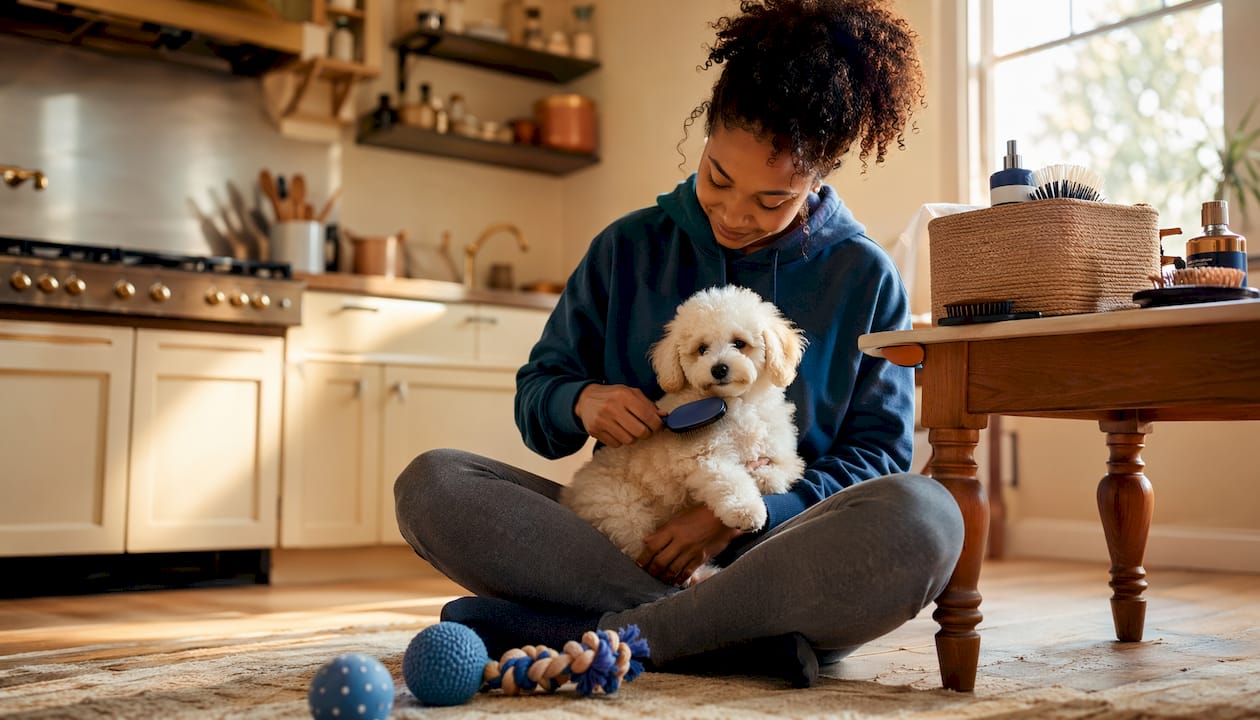
For a detailed walkthrough, the Faroopets guide on preparing your dog for grooming covers each step with practical examples tailored to new pet owners.
What to expect at your pet’s first professional grooming appointment
The first professional grooming session lasts approximately 30–45 minutes and focuses entirely on positive exposure, not styling. A true first grooming session includes no cutting, focusing instead on habituation to sounds, touch, and handling. Success means your puppy tolerates the table, the dryer sound, and a stranger’s touch without fear.
Here is what a well-structured first appointment typically includes:
- A calm greeting and gentle introduction to the grooming table
- Light brushing to assess coat condition and gauge comfort
- Paw handling and nail inspection (trimming only if the puppy is relaxed)
- Brief exposure to the sound of clippers or a dryer at low intensity
- A gentle rinse or wipe-down if the puppy is comfortable
- Positive reinforcement throughout with treats and calm praise
Success in puppy grooming is defined not by haircut quality but by the puppy remaining calm, curious, and comfortable during the session. If your puppy leaves the salon wagging their tail, that appointment was a complete success regardless of how their coat looks.
When choosing a groomer for your puppy’s first visit, ask these questions directly: How do you handle a puppy that shows fear? Do you use force-free techniques? How are your tools sanitized between appointments? A groomer who answers these questions confidently and specifically is one you can trust with your young pet.
Behavioral and health benefits of starting grooming early
Early grooming introduction builds a form of trust that extends well beyond the grooming table. Early grooming sets the foundation for a lifetime of stress-free handling and veterinary visits by building essential behavioral trust. A puppy that accepts a groomer’s hands also accepts a vet’s hands. That connection is direct and measurable.
The behavioral and health differences between early-groomed and late-groomed pets are significant:
| Outcome Area | Early Groomed Pet | Late Groomed Pet |
|---|---|---|
| Grooming table behavior | Calm, cooperative | Anxious, resistant |
| Tool tolerance | Accepts clippers and dryers | Fear response, possible aggression |
| Coat condition | Well-maintained, mat-free | Higher risk of matting and skin issues |
| Vet exam cooperation | Relaxed during handling | Stressed, may require sedation |
| Long-term grooming cost | Lower, routine sessions | Higher, rehabilitation or medical care |
Consistency in home handling combined with professional sessions produces the best outcomes. The two reinforce each other. Home practice keeps the pet comfortable between visits, and professional sessions build on that comfort with more complex tools and environments.
Coat health is another direct benefit. Pets groomed regularly from a young age develop better coat condition because matting never gets a chance to form. Severe matting causes skin irritation, traps moisture, and can hide infections. Catching these issues early through regular grooming is far less painful and expensive than treating them later. The Faroopets resource on grooming and vet visits explains this connection in practical terms for pet owners.
My honest take on why most pet owners wait too long
The most common mistake I see is pet owners waiting until their puppy “looks like it needs a groom.” That logic makes sense on the surface, but it misses the entire point of early introduction. By the time a coat needs attention, the window for easy habituation has often already closed.
The most common mistake is waiting until a puppy looks like it needs grooming, which causes anxiety and fear of tools that could have been prevented entirely. I have seen this play out repeatedly. A six-month-old doodle arrives at a grooming session for the first time, matted and terrified, and the groomer spends the entire appointment just trying to build enough trust to brush one side. That is not grooming. That is damage control.
The other mistake is attempting a full groom too early at home before the puppy is ready. Rushing the process creates the same fear response you were trying to prevent. Patience and small, consistent steps are what actually work.
What I find most encouraging is how quickly puppies respond when the process is done right. A puppy that has had two weeks of gentle home handling and one positive professional session is a completely different animal from one that has had none. The change in confidence is visible and it lasts. Start early, keep sessions short and positive, and trust the process.
— Growth
Professional grooming for your puppy starts here with Faroopets
Starting your puppy’s grooming journey with a trusted professional makes all the difference in building lasting comfort and confidence.

Faroopets offers puppy-friendly dog grooming in Dubai with certified groomers trained in gentle, force-free handling techniques. Our mobile grooming vans come to your door with sanitized equipment and a calm environment designed to keep young pets at ease. We also offer cat grooming services with the same gentle approach for kittens and adult cats. Whether your pet is eight weeks into their world or just starting their grooming routine, our team is ready to make every session a positive one. Book a session and give your pet the calm, caring start they deserve.
FAQ
When should I start grooming my puppy?
The ideal time to begin home handling is 8–12 weeks, with the first professional introductory session scheduled between 12 and 16 weeks after core vaccinations are complete.
What happens if I wait too long to groom my puppy?
Delaying grooming beyond 6 months often leads to severe anxiety, resistance to tools, and in some cases the need for sedation during grooming or veterinary clipping due to matting.
What does a first puppy grooming session include?
A first session lasts 30–45 minutes and focuses on exposure rather than styling, covering gentle brushing, paw handling, and brief tool sounds with no cutting required.
How do I prepare my puppy for grooming at home?
Practice daily 1–5 minute sessions that include touching paws, ears, and the muzzle, introducing grooming tools by scent and sound, and rewarding calm behavior with treats consistently.
Does early grooming help at the vet too?
Yes. Early grooming builds handling trust that directly reduces stress during veterinary exams, making your pet easier and safer to examine throughout their life.
Key takeaways
Early grooming introduction, started between 8 and 16 weeks, is the most effective way to build a calm, cooperative pet that accepts handling for life.
| Point | Details |
|---|---|
| Start during the socialization window | Begin home handling at 8–12 weeks and schedule the first professional visit by 16 weeks. |
| First sessions focus on exposure | A true first groom involves no cutting; success means the puppy stays calm and curious. |
| Daily home practice is non-negotiable | Short 1–5 minute handling routines at home build the confidence that makes professional sessions work. |
| Delaying creates lasting problems | Waiting past 6 months significantly raises the risk of anxiety, matting, and costly rehabilitation. |
| Benefits extend beyond grooming | Pets groomed early accept vet handling more easily, reducing stress and medical risk throughout their life. |
