


Posted by Faroo Pets Grooming
on June 19, 2026

TL;DR:
- Multi-species grooming requires tailored care for each animal’s unique coat, skin, and behavioral needs. Proper hygiene, species-specific routines, and stress management are essential to ensure safe and effective grooming in shared households. When in doubt, professionals like Faroopets can provide specialized grooming services to maintain pet health and comfort.
Tips for multi-species grooming are defined as the specialized care practices that keep dogs, cats, birds, small mammals, and reptiles healthy and comfortable when they share the same home. The industry term for this discipline is “multi-species pet care,” and it demands more than a single brush and a bottle of shampoo. Each animal in your household carries different coat types, skin sensitivities, behavioral triggers, and hygiene needs. Getting this right means tailoring your tools, your schedule, and your technique to every species under your roof. We put this guide together to help you do exactly that, with practical grooming advice for diverse pets that actually works in real households.
1. Tips for multi-species grooming: start with species-specific needs
The single most important rule in grooming multi-pet households is this: what works for your Labrador will not work for your cockatiel or your guinea pig. Each species has a distinct coat structure, skin pH, and tolerance for handling.
Here is a quick breakdown of grooming frequency by species, based on 2026 grooming standards:
- Dogs (long-haired breeds): Brush 3–4 times per week; nail trims every 3–6 weeks
- Dogs (short-haired breeds): Brush 1–2 times per week
- Cats: Brush 2–3 times per week for long-haired; once weekly for short-haired
- Small mammals (rabbits, guinea pigs): Brush 3–4 times per week for long-haired varieties
- Birds: Misting or bathing 1–2 times per week; feather checks monthly
- Reptiles: Spot cleaning as needed; shedding support baths when required
Pro Tip: Listen for a clicking sound when your dog walks on hard floors. That sound means nails are overdue for a trim, regardless of your scheduled grooming day.
For dogs with double coats, never shave them down to the skin. Shaving disrupts the coat’s natural insulation and heat regulation. Instead, use weekly deep grooming sessions with an undercoat rake, and follow up with a softer slicker brush for maintenance. Cats benefit from a fine-toothed comb near friction zones like behind the ears and under the armpits, where mats form fastest.
2. Always brush before you bathe
Bathing without brushing first tightens tangles and turns a minor mat into a painful knot that takes three times as long to remove. This applies to dogs, cats, and long-haired small animals equally.
Work through the coat section by section before any water touches your pet. For curly-coated dogs like Poodles or Bichon Frises, use a wide-tooth comb first, then a slicker brush. For double-coated breeds like Huskies or Golden Retrievers, an undercoat rake before bathing removes the bulk of loose fur and prevents drain clogs. Birds do not need traditional bathing. A gentle misting bottle or a shallow dish of lukewarm water is all most species require.
3. Never share grooming tools between species
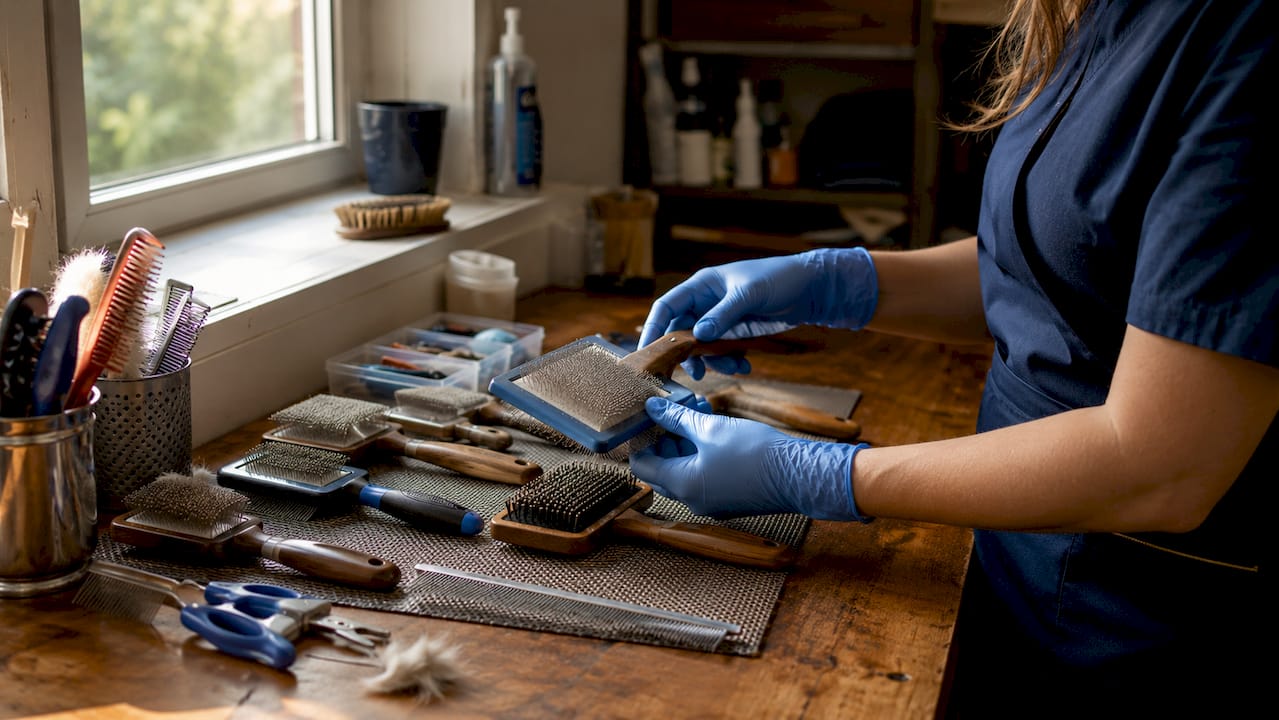
Separate labeled kits per species are the foundation of safe multi-species pet grooming. Sharing tools transfers parasites, bacteria, allergens, and odors between animals that have no natural immunity to each other’s microbiomes.
Keep a dedicated kit for each species. Label them clearly and store them in separate bags or bins. Your dog’s slicker brush should never touch your cat, and your reptile’s cleaning cloth should never come near your bird’s perch. Cross-contamination also affects skin conditions. A fungal issue on one pet can spread to another through a shared brush before you even notice symptoms.
- Use color-coded storage bags per species
- Disinfect tools after every grooming session with pet-safe disinfectant
- Wash your hands thoroughly between handling different animals
- Wear gloves when grooming reptiles to prevent salmonella transfer
Pro Tip: Set up a simple cleaning station near your grooming area with a spray bottle of pet-safe disinfectant and a roll of paper towels. A 30-second wipe-down between pets takes almost no time and prevents serious health risks.
4. Separate feeding and grooming areas
Mixing feeding and grooming spaces creates hygiene risks that are easy to overlook. Reptile habitats, in particular, carry salmonella bacteria that can transfer to food surfaces and then to other pets or humans.
Designate one area of your home strictly for grooming. Keep it away from food bowls, water dishes, and sleeping areas. After grooming, wipe down the surface with a pet-safe disinfectant before any pet eats nearby. This is especially critical in Dubai’s warm climate, where bacteria multiply faster in heat. A clean, dedicated grooming space also helps your pets associate that spot with calm handling over time.
5. How to reduce stress and avoid trigger stacking
Trigger stacking is defined as the accumulation of small stressors that push a pet past its threshold for calm behavior. A dog that is already anxious from a car ride, a loud noise, and the smell of another species being groomed nearby is far more likely to snap or shut down when you pick up the brush.
Signs of stress vary by species but share common patterns:
- Dogs: Yawning, lip licking, whale eye, pulling away, low tail
- Cats: Flattened ears, tail lashing, skin rippling, dilated pupils
- Birds: Feather fluffing, biting, screaming, or freezing
- Small mammals: Thumping, freezing, rapid breathing, hiding
“Grooming is not a one-size-fits-all marathon. Ending sessions early when pets show stress prevents long-term fear.” — Training Tips: Grooming at Home
For dogs, stop after 3 failed attempts to complete a grooming step and reassess your approach. For cats, two signs of resistance mean it is time to pause. Never push through visible stress. You will create a grooming-averse pet that becomes harder to handle every session.
Use treats, a calm voice, and slow movements throughout every session. For pets new to grooming, read our guide on reducing grooming anxiety before you start.
Pro Tip: Watch your pet’s body language, not the clock. A 5-minute session that ends on a calm note is worth more than a 30-minute session that ends in panic.
6. Use no-tool conditioning sessions to build trust
No-tool conditioning sessions reduce grooming anxiety by letting pets experience gentle handling without the pressure of actual grooming. Spend 2–5 minutes simply touching your pet’s paws, ears, and coat while offering treats and praise.
This technique works especially well for rescue animals, young pets, and any species that has had a negative grooming experience. Introduce the brush or comb only after the pet is relaxed and accepting touch without pulling away. For birds, start by letting them step onto your hand repeatedly before attempting any feather inspection. For reptiles, short, calm handling sessions before grooming reduce defensive responses significantly. You can find more on gentle handling techniques in our dedicated guide.
7. Manage your environment for each species
Environmental differences in temperature, humidity, and scent matter critically in multi-species homes. A reptile needs warmth to stay calm during handling. A rabbit needs a cool, quiet space to avoid heat stress. A bird needs to be away from drafts and strong scents.
Before grooming, adjust the room to suit the species you are working with. For reptiles, groom in a warm room (around 75–80°F) so they stay relaxed. For rabbits and guinea pigs, keep the space cool and quiet. Always groom prey animals like rabbits away from predator species like dogs and cats. Even the scent of a dog on your hands can spike a rabbit’s stress hormones before you touch it. Washing hands between handling different species prevents both bites and infection spread.
8. Build a weekly grooming schedule by species
Scheduling grooming by workload and species keeps sessions manageable and reduces stress for both you and your pets. An assembly-line approach, where you groom one species fully before moving to the next, also prevents accidental tool sharing.
Here is a sample weekly schedule for a household with a dog, a cat, a bird, and a rabbit:
| Day | Pet | Task |
|---|---|---|
| Monday | Dog (double coat) | Full brush, undercoat rake, ear check |
| Tuesday | Cat (long-haired) | Comb, mat check, nail trim |
| Wednesday | Bird | Misting, feather inspection |
| Thursday | Rabbit | Brush, nail check, eye and ear wipe |
| Friday | Dog | Quick brush, paw check |
| Weekend | All pets | Rest, no-tool handling and bonding |
This structure spreads the workload evenly and gives each pet focused attention. It also prevents the exhaustion that comes from trying to groom every animal in one sitting.
9. Prioritize friction zones and high-risk areas
Friction zones like behind the ears, under the collar, and in the armpits are where mats form fastest in dogs and cats. These areas need attention at every brushing session, not just during full grooming days.
For small mammals like rabbits, the dewlap (the fold of skin under the chin) and the hindquarters are prone to soiling and matting. Check these areas at every session. For birds, inspect the base of the feathers near the vent and under the wings for signs of mites or feather damage. For reptiles, check under scales near the limbs and tail base during shedding periods. Catching problems in these zones early prevents infections, pain, and costly vet visits.
10. Know when to call a professional groomer
Some grooming tasks are safer in professional hands, especially in a multi-species household where your time and energy are already stretched. Anal gland expression in dogs, feather trimming in birds, and full coat dematting in long-haired cats all carry real injury risk when done incorrectly at home.
Professional groomers trained in grooming techniques for various species bring the right tools, the right restraint techniques, and the experience to read animal behavior accurately. In Dubai’s heat, mobile grooming services also remove the stress of transporting multiple pets to a salon. A calm, familiar environment makes every grooming session safer and more positive for your animals.
Key takeaways
Successful multi-species grooming requires species-specific tools, strict hygiene separation, and stress-aware handling to protect every pet’s health and comfort.
| Point | Details |
|---|---|
| Species-specific frequency | Dogs and long-haired small animals need brushing 3–4 times weekly; short-haired pets need 1–2 sessions. |
| Brush before bathing | Always brush out tangles before water contact to prevent mats from tightening. |
| Separate labeled toolkits | Never share grooming tools between species to prevent parasite and bacteria transfer. |
| Stress signals matter | Stop grooming at the first clear signs of anxiety to prevent long-term grooming aversion. |
| Schedule by species | Grooming one species per session reduces cross-contamination and keeps workloads manageable. |
What I have learned from watching multi-species households up close
Most pet owners I talk to underestimate how much the order of grooming matters. They groom whoever is easiest first, then move to the harder animals when their own patience is already thin. That is exactly backward. Start with the most anxious or reactive pet when you are fresh, calm, and fully present. Save the easygoing pets for when you are tired.
The other thing I see overlooked constantly is scent management. Owners wash their dog, then immediately pick up their rabbit without washing their hands. The rabbit smells predator and spends the entire grooming session in a stress response. No amount of treats fixes that. A simple hand wash takes 20 seconds and changes the entire experience for the prey animal.
Flexibility is the real skill in multi-species care. Your schedule will not survive contact with a molting bird or a dog in a shedding cycle. Build buffer days into your weekly plan. Accept that some sessions will be two minutes long because your cat decided today is not the day. That is not failure. That is good grooming practice.
The owners who do this well are not the ones with the most expensive tools. They are the ones who pay attention, adapt quickly, and never prioritize finishing a session over their pet’s emotional state.
— Growth
Let Faroopets handle the hard sessions
Managing grooming across multiple species is genuinely demanding work. When the sessions pile up or a pet needs professional-level care, Faroopets is here to help.

Our certified groomers in Dubai specialize in dog grooming services and luxury cat grooming packages, with bird pampering services available for your feathered family members too. Every session takes place in a sanitized, climate-controlled mobile van that comes directly to your door, so your pets stay in a familiar environment throughout. We use species-appropriate tools, follow strict hygiene protocols between animals, and treat every pet with the patience they deserve. Ready to give your whole crew a great grooming day? Book your service with Faroopets today.
FAQ
How often should I groom different pets in the same household?
Grooming frequency depends on species and coat type. Long-haired dogs and small mammals need brushing 3–4 times per week, while short-haired pets need 1–2 sessions weekly.
Can I use the same brush on my dog and my cat?
No. Sharing grooming tools transfers parasites, bacteria, and allergens between species. Keep a separate labeled kit for each pet.
How do I know when to stop a grooming session?
Stop grooming when your pet shows clear stress signals like pulling away, vocalizing, or flattened ears. For dogs, stop after 3 failed attempts at a task; for cats, stop after 2 signs of resistance.
What is trigger stacking and why does it matter for grooming?
Trigger stacking is the buildup of small stressors that push a pet past its calm threshold. A pet already stressed by noise, new smells, or nearby animals will react much more strongly to grooming than one that starts the session relaxed.
Is it safe to groom reptiles and other pets in the same space?
It is not recommended. Reptiles carry salmonella and require separate grooming areas, dedicated tools, and gloves during handling. Always wash hands thoroughly before touching any other animal after handling a reptile.
