


Posted by Faroo Pets Grooming
on June 23, 2026

TL;DR:
- Regular grooming helps prevent skin infections, hot spots, parasites, and painful nail conditions. It also facilitates early detection of health issues, reducing the need for veterinary visits. Consistent grooming builds pet tolerance, easing stress during vet exams and promoting overall health.
Regular grooming maintenance is a preventive care practice that directly reduces how often your dog or cat needs veterinary attention. Most pet owners think of grooming as a cosmetic routine. In reality, it functions as a hands-on health check that catches skin infections, parasites, lumps, and nail problems before they escalate into expensive treatments. Sources including the Central Kentucky Veterinary Center, the AKC, and World of Animals Veterinary Hospital all confirm that consistent grooming prevents the conditions most likely to send pets to the clinic. Understanding why grooming maintenance reduces vet visits starts with recognizing that a brush and a bath do far more than keep your pet looking good.
How regular grooming prevents common health issues
Grooming removes the dirt, loose hair, and debris that trap moisture against your pet’s skin. When that moisture sits too long, it creates the warm, damp environment where bacteria and yeast thrive. The Central Kentucky Veterinary Center notes that regular grooming distributes natural skin oils, strengthening the skin barrier and reducing the risk of infections and hot spots.
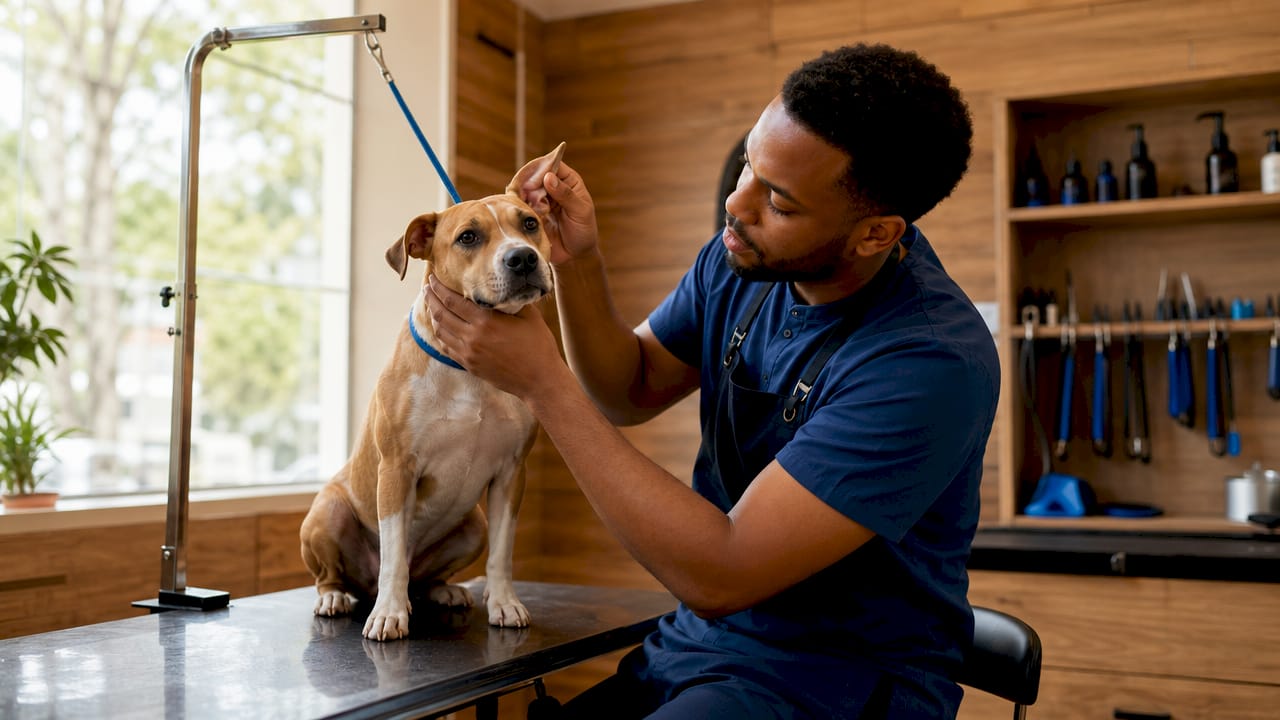
Matting is one of the most underestimated grooming problems. According to World of Animals Veterinary Hospital, mats trap heat and debris, causing bacterial and yeast infections, painful sores, and even restricted blood flow. Preventing mats before they form is far less stressful for your pet than dematting a severely matted coat, which often requires urgent veterinary care.
Nail health is another area where grooming directly prevents vet visits. Overgrown nails force a pet’s toes into unnatural positions, altering their gait and causing joint pain over time. Routine nail trimming, whether done at home or by a professional, eliminates this risk entirely.
Grooming also gives you a front-row view of parasite activity. Fleas, ticks, and mites are far easier to spot and treat when you are brushing your pet regularly. The RSPCA confirms that routine brushing removes dead hair, dirt, and seeds while helping owners spot early signs of irritation, parasites, and injuries.
Here are the most common health problems that consistent grooming helps prevent:
- Skin infections and hot spots caused by trapped moisture and matted fur
- Ear infections from debris and moisture buildup in the ear canal
- Parasite infestations including fleas, ticks, and mites
- Nail-related joint pain from overgrown or improperly trimmed nails
- Allergic reactions worsened by coat irritants that regular brushing removes
Pro Tip: Check your cat’s coat for small black specks after brushing. Those specks, called flea dirt, dissolve red when placed on a damp paper towel. Catching this early saves your cat from a full infestation and you from a costly vet visit.
Why grooming aids early detection of health problems
Grooming functions as a mini physical exam every time you do it. Running your hands through your pet’s coat lets you feel lumps, tender spots, and skin changes that you would never notice from across the room. The Central Kentucky Veterinary Center describes this as early intervention through grooming, where small problems are caught before they become painful or infected, avoiding complex and costly treatments.
Well Groomed Pets reports that hidden issues including matting, ear problems, and lumps are frequently found during grooming sessions before pet owners notice any symptoms at all. That gap between “problem exists” and “owner notices” is exactly where conditions worsen and treatment costs rise.
Structured grooming checks make early detection reliable rather than accidental. The Central Kentucky Veterinary Center recommends systematically checking high-risk areas including ears, groin, paws, and the base of the tail for lumps, tenderness, or parasites during every session.
Pro Tip: Use a consistent order every time you groom. Start at the head, move to the ears, neck, chest, belly, paws, and tail. A fixed routine means you are less likely to skip an area where a problem is hiding.
The table below shows the difference between catching a problem early versus finding it late.
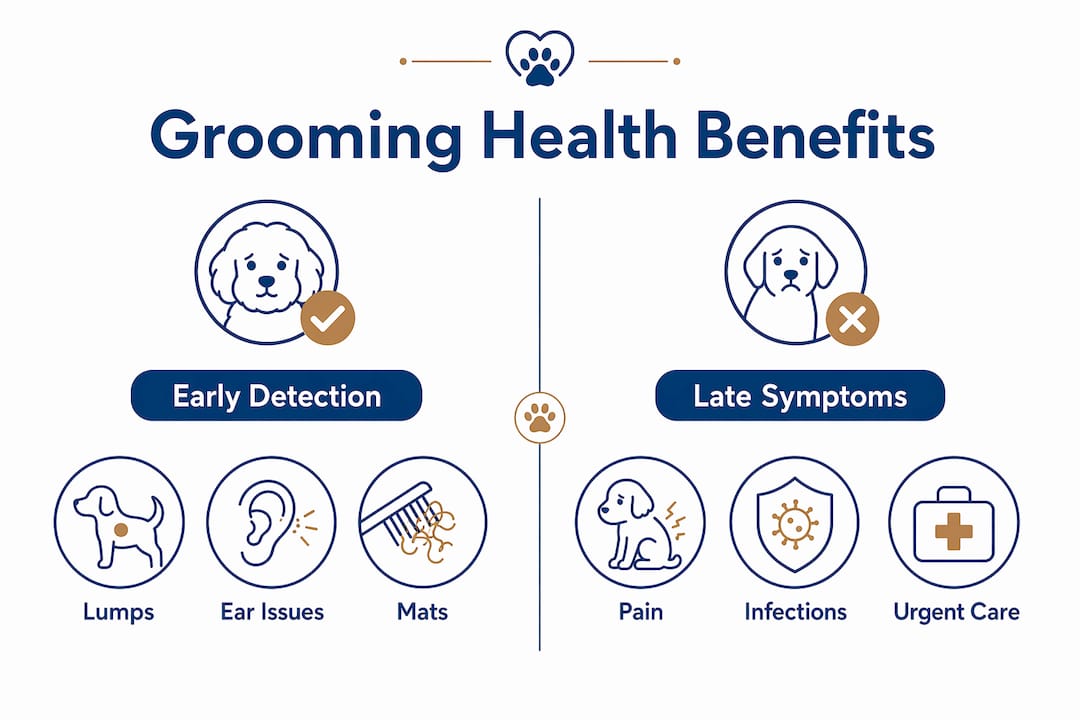
| Health issue | Early signs found during grooming | Advanced symptoms requiring urgent vet care |
|---|---|---|
| Skin infection | Small red patch, mild odor | Open sore, fever, spreading inflammation |
| Ear infection | Slight wax buildup, mild scratching | Head shaking, discharge, severe pain |
| Parasite infestation | A few fleas or ticks visible | Anemia, skin trauma, secondary infections |
| Lump or growth | Small, movable, painless bump | Large, attached, or ulcerated mass |
| Nail overgrowth | Nails clicking on floor | Curled nails piercing paw pads |
How grooming builds pet comfort and reduces stress at the vet
Pets that are handled regularly from a young age tolerate vet exams far better than those that are not. World of Animals Veterinary Hospital confirms that grooming builds handling tolerance, reducing stress during vet visits and improving examination ease. A pet that flinches at every touch makes a thorough exam nearly impossible. A pet that is calm and accustomed to being handled gives the vet a much clearer picture of what is actually going on.
Stress during vet visits has real consequences beyond the appointment itself. When exams are difficult, owners sometimes postpone them. Postponed care allows problems to worsen. The connection between grooming comfort and timely vet care is direct and practical.
“Pets groomed regularly from a young age are more comfortable with handling, easing stress at vet visits and improving exam efficacy.” — World of Animals Veterinary Hospital
Building this comfort does not require a professional groomer every week. Daily brushing, gentle paw handling, and regular ear checks at home all contribute to a pet that accepts touch calmly. A personalized grooming routine tailored to your pet’s breed and temperament makes this process much easier to maintain. You can also read more about grooming for pet anxiety to understand how regular handling reduces fear responses over time.
Professional grooming vs. at-home grooming: which one matters more?
Both matter, and neither replaces the other. The AKC is clear that professional grooming maintains coat health through regular baths, detangling, proper brushing, and nail trimming, with frequency depending on breed, coat type, and environment. But the AKC also states that at-home maintenance is essential because professional grooming alone is not enough to keep a pet’s coat and skin in good health between appointments.
Professional groomers do more than wash and trim. They clean ears, express anal glands, check for skin abnormalities, and trim nails to a safe length. Trained groomers often spot problems that owners miss because they work with dozens of pets and recognize what normal looks like. Learning why trained groomers matter for your pet’s health gives you a clearer picture of what professional sessions actually cover.
At-home grooming fills the gaps between professional visits. Daily or weekly brushing removes the debris and loose hair that accumulate fast, especially in Dubai’s climate where heat and dust accelerate coat and skin problems.
| Feature | Professional grooming | At-home grooming |
|---|---|---|
| Ear cleaning | Yes, thorough | Basic, surface level |
| Nail trimming | Precise, safe length | Possible with proper tools |
| Skin and coat check | Expert eye, experienced | Owner familiarity, daily access |
| Frequency | Every 4–8 weeks typically | Daily to weekly |
| Parasite detection | High, trained observation | Moderate, depends on owner skill |
| Cost | Paid service | Low ongoing cost |
At-home grooming tips that make the biggest difference:
- Brush your dog or cat at least three times per week, daily for long-haired breeds
- Check ears weekly for odor, redness, or unusual discharge
- Wipe paws after outdoor walks to remove allergens and debris
- Trim nails every 3–4 weeks or when you hear them clicking on hard floors
- Inspect the skin under the coat, not just the surface, during every brushing session
For cats with allergic skin conditions, the Merck Veterinary Manual notes that self-trauma from itching leads to secondary infections. Regular grooming reduces coat irritants and supports early detection of skin changes before they spiral into a vet-level problem.
Key takeaways
Regular grooming maintenance reduces vet visits by preventing infections, enabling early detection of health problems, and building the handling tolerance that makes veterinary exams productive and timely.
| Point | Details |
|---|---|
| Grooming is preventive care | Brushing and bathing prevent skin infections, hot spots, and parasite infestations before they need treatment. |
| Early detection saves money | Catching lumps, ear problems, and skin changes during grooming avoids complex and costly vet procedures. |
| Handling comfort matters | Pets groomed regularly tolerate vet exams better, reducing postponed care and incomplete diagnoses. |
| Home and professional care work together | At-home brushing fills the gaps between professional sessions and keeps problems from developing unnoticed. |
| Structured checks are more effective | Checking ears, paws, groin, and tail base in a fixed order every session makes early detection reliable. |
What consistent grooming taught me about pet health
I have watched the same pattern repeat itself across hundreds of pet owners. The ones who groom consistently almost never come to us in a panic. The ones who groom occasionally are the ones calling about a mat so severe it has broken the skin, or a lump that has been growing for months without anyone noticing.
The insight that changed how I think about grooming is this: the grooming session itself is not the point. The point is the repeated, close contact with your pet’s body. That contact is what catches the small things. A tiny lump. A patch of dry skin. A flea egg cluster near the base of the tail. None of these announce themselves. They get found by hands that are paying attention.
The other thing I have seen is how much calmer groomed pets are at the vet. A dog that gets brushed three times a week does not panic when a stranger touches its paws. A cat that has its ears checked regularly does not fight when a vet looks inside them. That calm is not a personality trait. It is a trained response built through repetition.
My honest advice: treat grooming like a health appointment, not a beauty appointment. Set a schedule, follow a consistent body check routine, and book professional sessions based on your pet’s coat type. The vet visits you avoid will be the ones you never even knew were coming.
— Growth
Faroopets grooming services that support your pet’s health
Keeping your pet’s coat, skin, and nails in good shape between vet visits is exactly what Faroopets is built for. Our mobile grooming service comes directly to your door in Dubai, handled by trained, certified groomers who know how to spot the early signs of skin problems, ear issues, and coat conditions that owners often miss.

Whether your dog needs a full grooming session or your cat is due for a professional cat grooming appointment, we offer packages designed around your pet’s specific coat type and health needs. Every session includes a thorough coat and skin check, nail trimming, and ear cleaning. Booking is simple through our online system, and our sanitized mobile vans mean your pet stays comfortable in a familiar environment. Reach out today to find the right grooming plan for your pet.
FAQ
What health problems does regular grooming prevent?
Regular grooming prevents skin infections, hot spots, ear infections, parasite infestations, and nail-related joint pain. It also reduces the risk of matting, which traps bacteria and causes painful sores.
How does grooming reduce vet visits specifically?
Grooming removes the conditions that cause most common pet health problems and allows early detection of issues like lumps, skin changes, and parasites before they require veterinary treatment.
Is at-home grooming enough, or do pets need professional sessions?
At-home grooming is necessary but not sufficient on its own. The AKC confirms that professional grooming provides thorough ear cleaning, precise nail trimming, and expert skin checks that at-home care cannot fully replicate.
How does grooming help cats with skin allergies?
The Merck Veterinary Manual notes that allergic cats scratch and bite at their skin, causing secondary infections. Regular grooming reduces coat irritants and helps owners catch early skin changes before they worsen.
At what age should I start grooming my pet to reduce vet stress?
Starting grooming from a young age is most effective. World of Animals Veterinary Hospital confirms that pets groomed regularly early in life are significantly more comfortable with handling during veterinary exams.
