


Posted by Faroo Pets Grooming
on June 01, 2026

TL;DR:
- Trained groomers play a crucial role in safeguarding pets’ health through early issue detection, proper handling, and preventive care. They conduct health checks, safe bathing, and parasite detection, reducing risks of injuries and long-term health problems. Regular professional grooming ensures comprehensive wellness and minimizes suffering caused by neglect or untrained care.
Trained groomers are vital health professionals who protect your pet’s well-being through expert care that goes far beyond a clean coat. Understanding why trained groomers matter means recognizing that grooming is a core part of preventive pet care, not a cosmetic luxury. A skilled groomer checks for lumps, skin irritations, and parasites during every session. They use coat-specific techniques, correct bathing frequencies, and safe handling methods that an untrained person simply cannot replicate. At Faroopets, we see this difference every single day in the health outcomes of the pets we care for.
Why trained groomers matter for your pet’s health
Professional grooming combines correct tools, health-focused tasks, and early issue detection, making it far more than cosmetic care. This combination is what separates a trained groomer from someone who simply knows how to hold a pair of scissors. Every bath, brush, and nail trim is an opportunity to catch a health problem before it becomes serious.
Here is what a trained groomer does during a standard session that directly benefits your pet’s health:
- Hands-on health checks: Groomers feel along the skin and coat for unusual lumps, swelling, or tender spots. These checks catch early signs of cysts, infections, or tumors that owners often miss between vet visits.
- Correct bathing technique: Bathing too often strips natural oils and causes dry, flaky skin. Bathing too rarely allows bacteria and yeast to build up. Trained groomers know the right frequency for each breed and coat type.
- Coat-specific brushing and detangling: A double-coated Husky needs a completely different brush and technique than a curly-coated Poodle. Using the wrong tool causes coat damage, skin abrasion, and unnecessary pain.
- Nail trimming: Overgrown nails force a dog or cat to shift their weight unnaturally, which strains joints over time. Regular, correct trimming prevents this entirely.
- Parasite detection: Fleas, ticks, and mite infestations are far easier to spot when a groomer parts the coat systematically. Catching an infestation early saves your pet weeks of discomfort.
Pro Tip: Ask your groomer to give you a brief verbal report after each session. Trained groomers notice changes between visits, and that running commentary is one of the most underused benefits of regular professional grooming.
The importance of professional groomers becomes especially clear when you consider that most owners see their pets every day and stop noticing gradual changes. A groomer who sees your dog every four to six weeks brings fresh eyes and trained hands to every appointment.
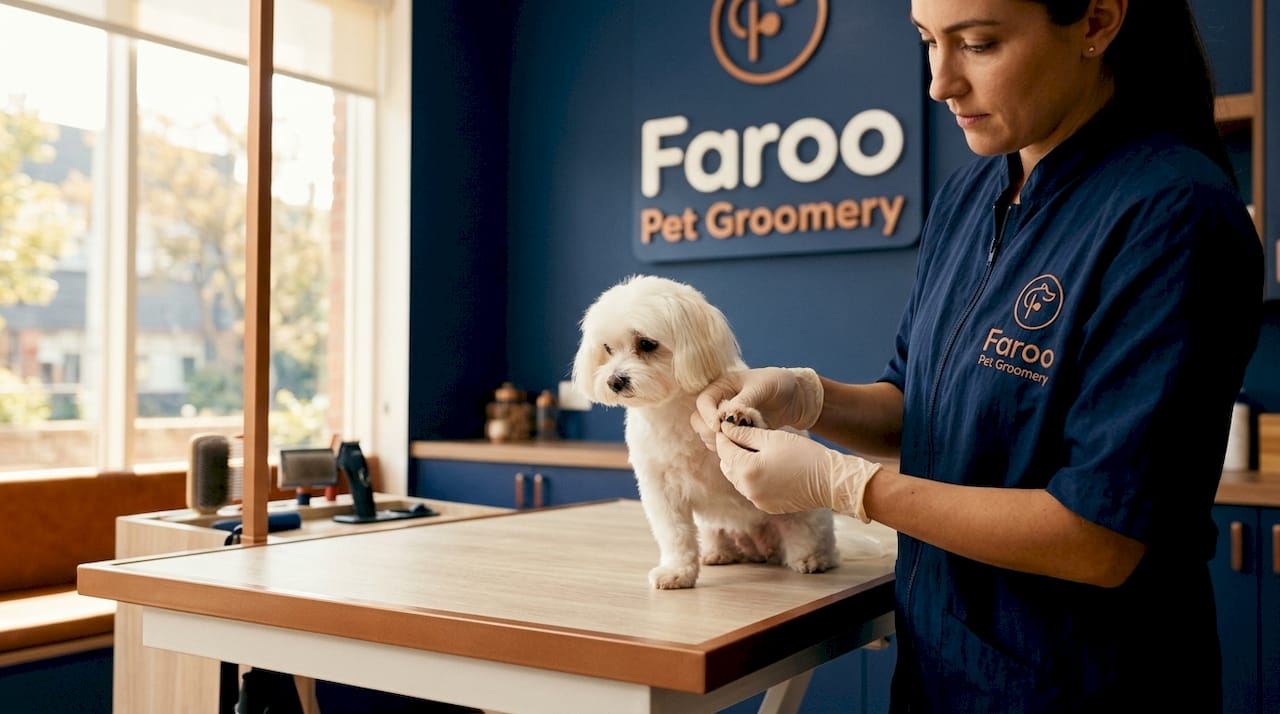
How do trained groomers keep pets safe during sessions?
Safety during grooming depends entirely on the handler’s skill. Trained groomers handle anxious or elderly pets using gentle, confident techniques that reduce stress and prevent injury. An untrained handler who grips too tightly, moves too fast, or misreads a dog’s body language can cause physical injury or lasting behavioral trauma.
Here is how professional expertise in pet grooming translates directly into safer sessions:
- Reading stress signals: A trained groomer recognizes whale eye, tucked tails, lip licking, and freezing as early stress signals. They slow down or pause the session before the animal escalates to snapping or biting.
- Appropriate muzzle use: Knowing when to muzzle is a professional skill, not a punishment. Used correctly, a muzzle protects both the groomer and the pet, allowing the session to continue safely without force.
- Adjusted pacing for elderly pets: Senior dogs and cats have thinner skin, sore joints, and lower tolerance for prolonged standing. Trained groomers break sessions into shorter segments and use supportive positioning to prevent fatigue and pain.
- Safe equipment handling: Clippers, scissors, and dryers can all cause burns, cuts, or hearing stress if misused. Professionals know the correct settings, distances, and techniques for every tool.
Pro Tip: If your pet has had a bad grooming experience in the past, tell your groomer before the session starts. A trained professional will adjust their approach from the first minute, not after a problem occurs.
The benefits of trained pet groomers extend to you as the owner, too. Lifting a large or wriggling dog into a tub at home is a genuine injury risk. Handing that task to a professional protects your back and your pet’s joints at the same time.
Why is grooming fundamental to your pet’s wellness routine?
Grooming is a nose-to-tail wellness practice, and treating it as anything less leaves gaps in your pet’s preventive care. Routine professional grooming keeps pets on a consistent health schedule by detecting issues early and delivering preventive services that owners rarely perform at home. Think of it as a monthly health check that happens to leave your pet looking great.
A complete grooming session by a trained professional covers far more than most owners realize:
- Ear cleaning removes wax buildup and checks for redness or odor, which are early signs of infection. Ear infections are among the most common and painful conditions in dogs, and they are largely preventable with regular cleaning.
- Teeth brushing reduces plaque accumulation between dental cleanings. Dental disease affects the majority of adult dogs and cats, and it contributes to heart, kidney, and liver problems when left untreated.
- Anal gland expression is uncomfortable for pets and messy for owners. Trained groomers handle this routinely, preventing the impaction and infection that result from neglect.
- Coat condition assessment tells a groomer a great deal about a pet’s internal health. A dull, brittle coat can signal nutritional deficiencies, thyroid issues, or allergies that warrant a vet visit.
Grooming sessions that include bathing, nail trimming, ear cleaning, and teeth brushing represent a holistic wellness model that requires trained groomers for quality and consistency. This is why grooming skills matter as much as any other aspect of pet care. Professional groomers and veterinarians work best as partners, with groomers flagging concerns and vets following up on them.
What are the real risks of skipping professional grooming?
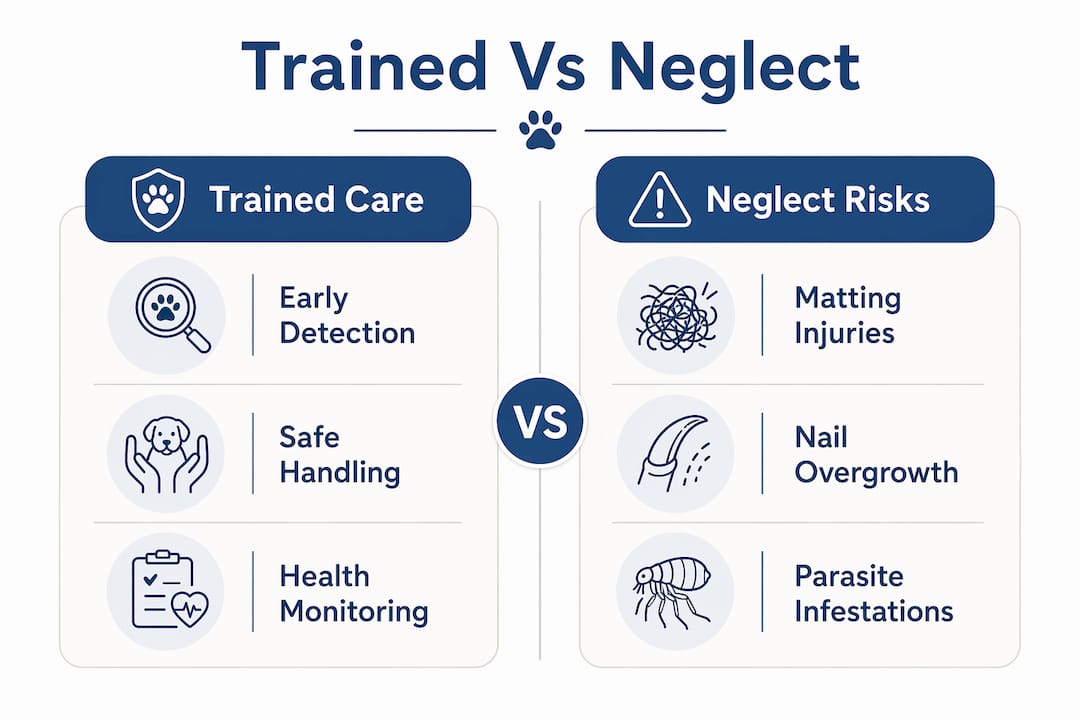
Grooming neglect is a welfare issue that causes genuine suffering, and it is more common than most pet owners recognize. Neglect causes painful matting, overgrown nails, and hidden wounds or parasites that worsen without intervention. The effects of untrained groomers, or no grooming at all, accumulate quietly until they become serious medical problems.
The table below shows the direct comparison between what trained professional care prevents and what neglect or unskilled grooming produces.
| Grooming situation | Outcome for your pet |
|---|---|
| Regular nail trimming by a trained groomer | Normal gait, healthy joint alignment, no nail-related injuries |
| Overgrown nails from neglect | Altered posture, joint strain, nails curling into paw pads |
| Coat brushed correctly by coat type | Healthy skin, good air circulation, no matting |
| Matted coat left untreated | Trapped moisture, skin infections, hidden wounds, and parasite colonies |
| Ear cleaning at each grooming session | Low infection risk, early detection of problems |
| Ears never cleaned | Chronic infections, pain, potential hearing loss |
| Trained groomer recognizing a skin lesion | Early referral to vet, faster treatment, better outcome |
| Untrained handler missing the same lesion | Delayed diagnosis, more advanced condition at treatment |
Heavy matting removal can cause skin injuries if underlying conditions are not recognized first. Trained groomers know when to stop and refer to veterinary care rather than push through and risk harm. This judgment is not instinctive. It comes from training, experience, and a genuine understanding of animal welfare.
Veterinary nurses view grooming neglect as a core welfare issue and emphasize collaborative care between groomers and vets to prevent suffering. Early intervention through coaching and referrals improves outcomes significantly. That collaboration only works when the groomer is trained well enough to recognize what they are seeing.
It is also worth noting that professional groomers manage their own product exposure risks by selecting skin-safe ingredients. The International Grooming Society recommends avoiding MIT/MCIT in frequently used products to protect both groomers and pets. This level of product awareness is a direct result of professional training, and it protects your pet from unnecessary chemical exposure during every session.
Key takeaways
Trained groomers protect your pet’s health, safety, and long-term wellness through expert handling, early detection, and preventive care that untrained grooming cannot replicate.
| Point | Details |
|---|---|
| Health checks at every session | Trained groomers spot lumps, parasites, and skin issues owners regularly miss. |
| Safe handling reduces injury and stress | Professionals read stress signals and adjust technique to protect anxious or elderly pets. |
| Grooming is preventive care | Ear cleaning, nail trimming, and teeth brushing prevent infections, joint strain, and dental disease. |
| Neglect causes real suffering | Matting, overgrown nails, and hidden wounds worsen quickly without skilled, regular grooming. |
| Product safety requires training | Certified groomers select skin-safe products, reducing chemical exposure risks for pets and staff. |
What I’ve learned from watching trained groomers work
I have spent a lot of time around grooming sessions, and the thing that strikes me most is how much happens in the first two minutes. A trained groomer runs their hands over the entire animal before picking up a single tool. They are already gathering information. They are already building trust. An untrained person picks up the clippers first.
The most common mistake I see pet owners make is choosing a groomer based on price or proximity alone. Grooming skill is not visible in a price list. Ask about training credentials, ask which certification bodies they follow, and ask how they handle an anxious dog. The answers tell you everything.
I also think we underestimate how much a bad grooming experience shapes a pet’s behavior long term. A dog that was handled roughly at age one can become a grooming-avoidant animal for life. That is not a personality quirk. That is a consequence of poor professional practice. Choosing a trained groomer from the start is genuinely easier than rehabilitating a pet who has learned to fear the grooming table.
My honest advice: treat grooming appointments the way you treat vet appointments. They are not optional, they are not purely cosmetic, and the person performing them should be qualified to do so. Happiness really is just a brush stroke away when the right hands are holding the brush.
— Growth
Give your pet the care they deserve with Faroopets
At Faroopets, we believe every grooming session should feel safe, gentle, and genuinely good for your pet. Our certified groomers bring trained hands and caring hearts to every appointment, whether your companion is a dog, cat, or bird.

Our mobile grooming vans come to your door in Dubai, fully sanitized and stocked with veterinary-grade products. Every session covers the full wellness checklist, from coat care to nail trimming to ear cleaning. If you are ready to give your dog the expert attention they deserve, explore our dog grooming services or browse our cat grooming packages to find the right fit for your pet. Your pet’s health is worth it.
FAQ
What makes a groomer “trained” vs. untrained?
A trained groomer holds recognized certifications, understands breed-specific coat care, and knows how to handle anxious or elderly animals safely. Untrained groomers lack the skills to detect health issues or adjust their technique when a pet shows stress.
How often should my pet see a professional groomer?
Most dogs benefit from professional grooming every four to six weeks, while cats with longer coats need sessions every six to eight weeks. Frequency depends on breed, coat type, and individual health needs.
Can a groomer really detect health problems?
Yes. Trained groomers perform hands-on checks for lumps, skin irritations, and parasites during every session, often catching issues before they become serious enough to require emergency veterinary care.
What happens if grooming neglect goes unaddressed?
Grooming neglect causes painful matting, overgrown nails that alter gait, hidden wounds, and parasite infestations. Veterinary nurses classify it as a core animal welfare issue requiring professional intervention.
Is mobile grooming as safe as salon grooming?
Mobile grooming by certified professionals in sanitized vans is equally safe and often less stressful for pets, since it removes the anxiety of traveling to an unfamiliar location surrounded by other animals.
