


Posted by Faroo Pets Grooming
on July 30, 2026

TL;DR:
- Fear-free grooming reduces pet stress during grooming by using behavioral cues and gentle techniques. It emphasizes training, environment adjustments, and rewarding positive behavior to improve long-term health and bonding. Verifying credentials and preparing pets at home support effective, stress-free grooming experiences.
Fear-free grooming is a science-based approach designed to prevent and reduce Fear, Anxiety, and Stress (FAS) in pets during grooming sessions, using behavioral observation tools like the FAS Scale to guide every decision a groomer makes. Rather than pushing through a groom at any cost, this method puts your pet’s emotional comfort first.
Here’s what the approach is built on:
- Fear Free® certification: A structured training program that teaches groomers to read subtle distress signals, such as whale eyes, lip licking, and avoidance, and to adjust their technique accordingly.
- The FAS Scale: A standardized tool groomers use to assess your pet’s stress level in real time and decide whether to pause, redirect, or stop.
- Gentle handling and positive reinforcement: Treats, calm voices, and deliberate pacing replace forced restraint.
- Environment adjustments: Quieter equipment, soft lighting, and private appointments reduce sensory overload before it starts.
At Faroopets, we believe every pet deserves to feel safe during grooming, not just clean afterward.
Table of Contents
- What does fear-free grooming actually look like?
- Why fear-free grooming benefits your pet far beyond the appointment
- How do you verify a groomer’s fear-free credentials?
- How to find a genuine fear-free groomer and what to ask
- How to prepare your pet and what to expect from the process
- When should you involve a vet or behaviorist?
- Key Takeaways
- The part most owners don’t hear about
- Faroopets brings calm, professional grooming to your door
- Useful sources and further reading
What does fear-free grooming actually look like?
A genuine fear-free session starts before your pet even steps onto the table. The groomer will ask you about your pet’s history: known triggers, past grooming reactions, any medications, and what rewards your pet responds to best. That intake conversation is not small talk. It shapes every decision made during the appointment.
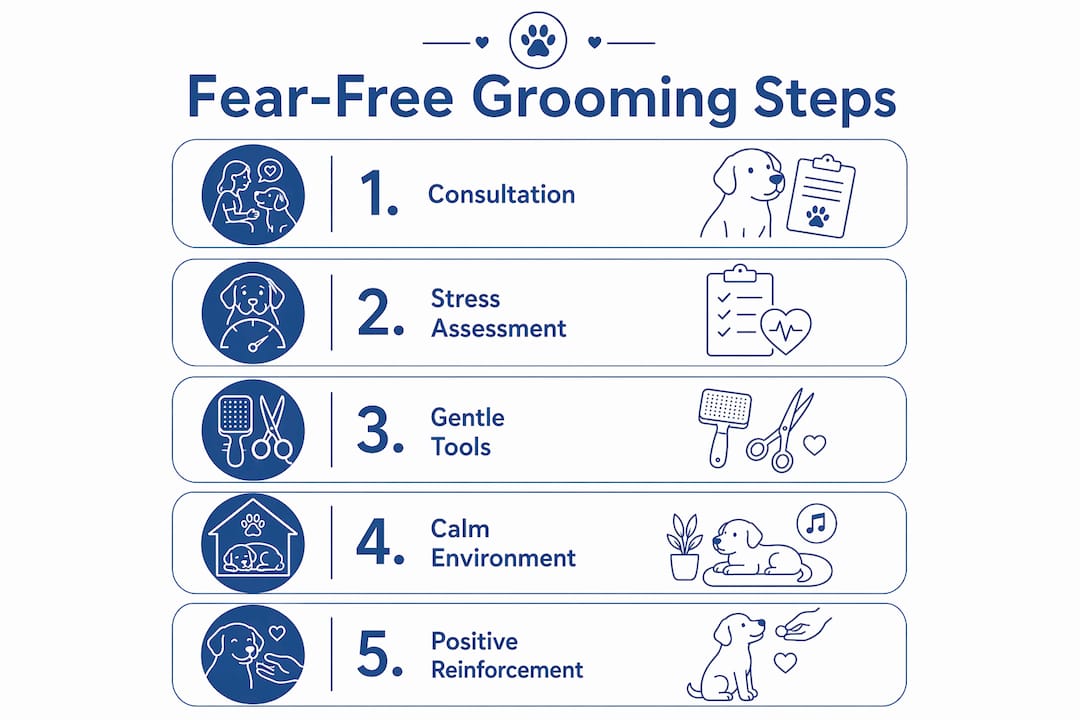
Arrival and first contact set the tone. A good groomer greets your pet quietly, lets them sniff the space, and avoids looming over them. Tools are introduced gradually. Letting a dog sniff the clippers before they turn on, for example, changes the animal’s perception of the equipment from threat to familiar object.
Session flow in a fear-free appointment typically looks like this:
- Arrival and calm greeting, no rushing to the table.
- Brief behavioral assessment: reading posture, eye contact, and movement.
- Short bath using warm water and a gentle touch, with pauses if needed.
- Rest break with a treat or calm praise before moving to drying.
- Trim or style at a deliberate pace, stopping if stress signals appear.
- Reward and release, followed by owner feedback on how the session went.
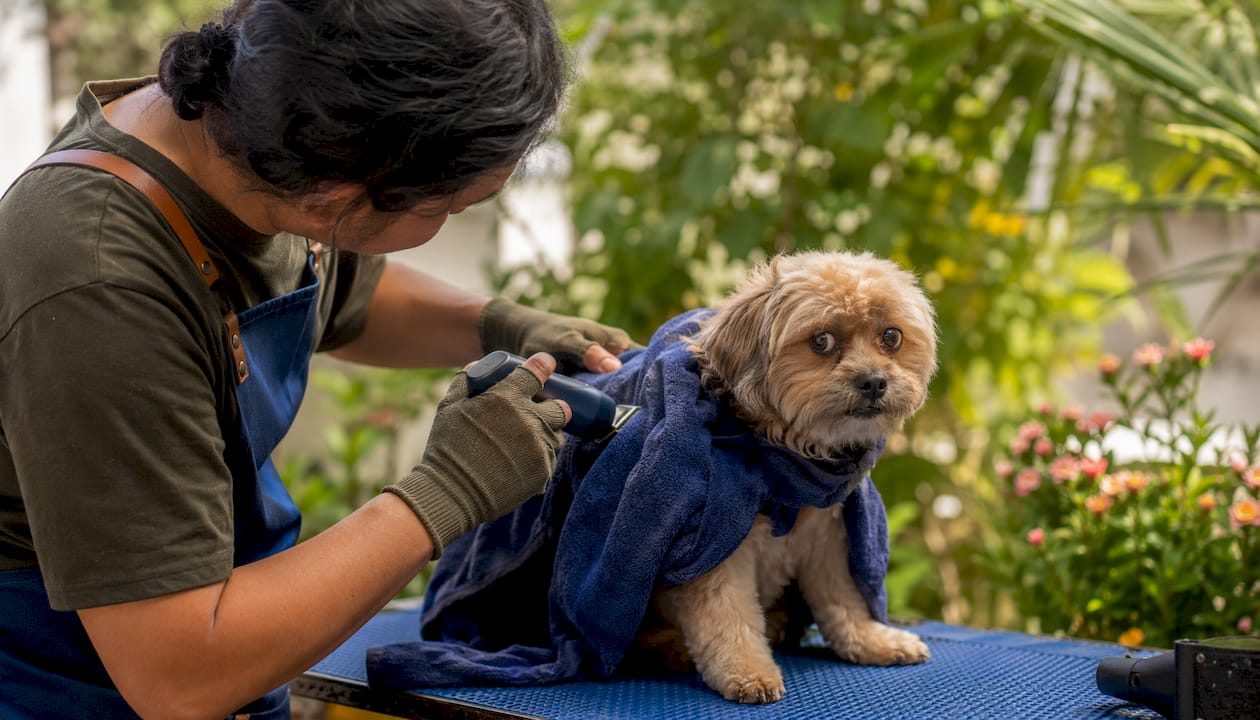
Tools and environment matter more than most owners realize. Low-noise clippers, towel or hand drying instead of high-velocity dryers, soft lighting, and one-on-one private appointments all help pets form new, positive associations with grooming. A pet-focused dryer like the Petkit AirSalon Max Pro is one example of quieter equipment that reduces the sensory stress of the drying step.
Pro Tip: Ask your groomer if they scent the drying towels with something familiar, like a cloth you’ve handled at home. That small olfactory cue can calm an anxious pet faster than almost any other single adjustment.
Why fear-free grooming benefits your pet far beyond the appointment
The immediate payoff is obvious: a calmer pet, fewer struggles, and safer nail trims and ear care. But the long-term gains are where this approach really earns its place.
Regular low-stress grooming reduces the chance of grooming-related phobias developing over time. A pet who associates the grooming table with treats and calm handling is far more likely to tolerate, and eventually welcome, routine maintenance. That translates directly into fewer matting emergencies, less skin irritation, and healthier nails without the drama.
The research is clear: Pets who experience low-stress grooming show fewer secondary health issues over time, including reduced vet visits for problems like matting-related skin infections and nail overgrowth injuries.
There’s a bond benefit, too. When your pet stops dreading grooming, your relationship with them shifts. At-home brushing becomes easier. Ear checks stop being a battle. The grooming and bonding connection is real and measurable in day-to-day interactions.
For owners, the practical ROI is straightforward: fewer canceled appointments, lower risk of groomer-related injuries, and a pet who actually comes back from the salon in a good mood.
How do you verify a groomer’s fear-free credentials?
The Fear Free® Groomer Certification Program is the most recognized credential in this space. It covers FAS Scale use, behavioral recognition, environment setup, and step-by-step techniques for teaching pets to accept the table, clippers, bathtub, and dryer. Membership is renewed annually, so a certified groomer is actively keeping their knowledge current.
What Fear Free® certification tells you: A groomer who holds this credential has completed structured coursework in reading subtle stress signals, adjusting grooming criteria based on behavioral cues, and setting up the salon environment to prevent FAS escalation from the moment your pet arrives.
Other trust signals worth asking about:
- Documented animal-handling training beyond basic grooming school.
- Veterinary or behaviorist collaboration, especially for pets with medical or behavioral histories.
- Willingness to share specific training modules they’ve completed, not just a general “yes, we’re fear-free.”
- Client case notes or progress tracking for pets who need desensitization across multiple visits.
A groomer who can speak specifically about what they do when a pet shows stress, rather than just saying “we’re gentle,” is demonstrating real training.
How to find a genuine fear-free groomer and what to ask
Not every groomer who uses the phrase “fear-free” has the training to back it up. Here’s a practical checklist for your first call or visit:
- “Are you Fear Free certified?” Ask for the certification level and when it was last renewed.
- “How do you handle a pet who shows stress mid-groom?” A credible answer describes pausing, offering a treat, and reassessing, not pushing through.
- “Do you offer private, one-on-one appointments?” This is especially important for anxious pets who are overwhelmed by other animals nearby.
- “How do you reward pets during the session?” Listen for specific answers: high-value treats, verbal praise, or owner-provided rewards.
- “Can I share my pet’s behavioral history before the appointment?” A fear-free groomer will welcome this, not dismiss it.
Red flags to watch for:
- No intake conversation at drop-off.
- Cage drying as the default method.
- Dismissive responses to questions about breaks or pacing.
- Rushing through the appointment regardless of the pet’s signals.
- Forced restraint described as “standard procedure.”
Understanding why pets resist grooming can also help you interpret a groomer’s answers more clearly. If they can’t explain what triggers your pet’s resistance or how they’d address it, that’s a meaningful gap.
How to prepare your pet and what to expect from the process
The work starts at home. Pets who arrive at the salon already familiar with carrier travel, tool sounds, and brief handling sessions tend to have far more successful appointments. Owner conditioning at home is one of the most effective ways to accelerate progress in the salon.
Practical steps to take before the first appointment:
- Let your pet sniff and investigate grooming tools, including a multi-tool grooming kit, while they’re relaxed at home.
- Practice short, positive handling sessions: gently touch paws, ears, and the muzzle area, then reward immediately.
- Acclimate your pet to their carrier with meals or treats inside it, so transport isn’t a stressor before the groom even begins.
- Run a clipper or dryer nearby at low volume while your pet eats, so the sound becomes background noise rather than a threat.
Timeline and frequency: Maintenance grooms for most dogs and cats run at intervals depending on coat type. For a pet with significant grooming anxiety, a groomer may recommend a separate desensitization visit first, a session focused entirely on tool introductions and positive associations, with no actual grooming. That kind of behavioral groundwork across two or three visits can make every subsequent groom dramatically easier.
On cost: Fear-free appointments often run higher than standard grooming because they take more time and require one-on-one attention. That’s not a markup for its own sake. It reflects the care and skill involved in reading and responding to your pet’s signals throughout the session.
When should you involve a vet or behaviorist?
Fear-free grooming is not a substitute for veterinary or behavioral care when a pet’s needs go beyond what a grooming session can safely address.
Medical red flags that require a vet visit before grooming:
- Visible pain, limping, or sensitivity when touched.
- Open wounds, skin infections, or undiagnosed lumps.
- Seizure history or recent neurological changes.
- Mobility issues that make table positioning unsafe.
Behavioral red flags that call for a behaviorist:
- Escalation to snapping or biting despite calm handling and breaks.
- Extreme reactivity that doesn’t reduce with standard fear-free techniques.
- A history of trauma that requires a structured desensitization program before grooming resumes.
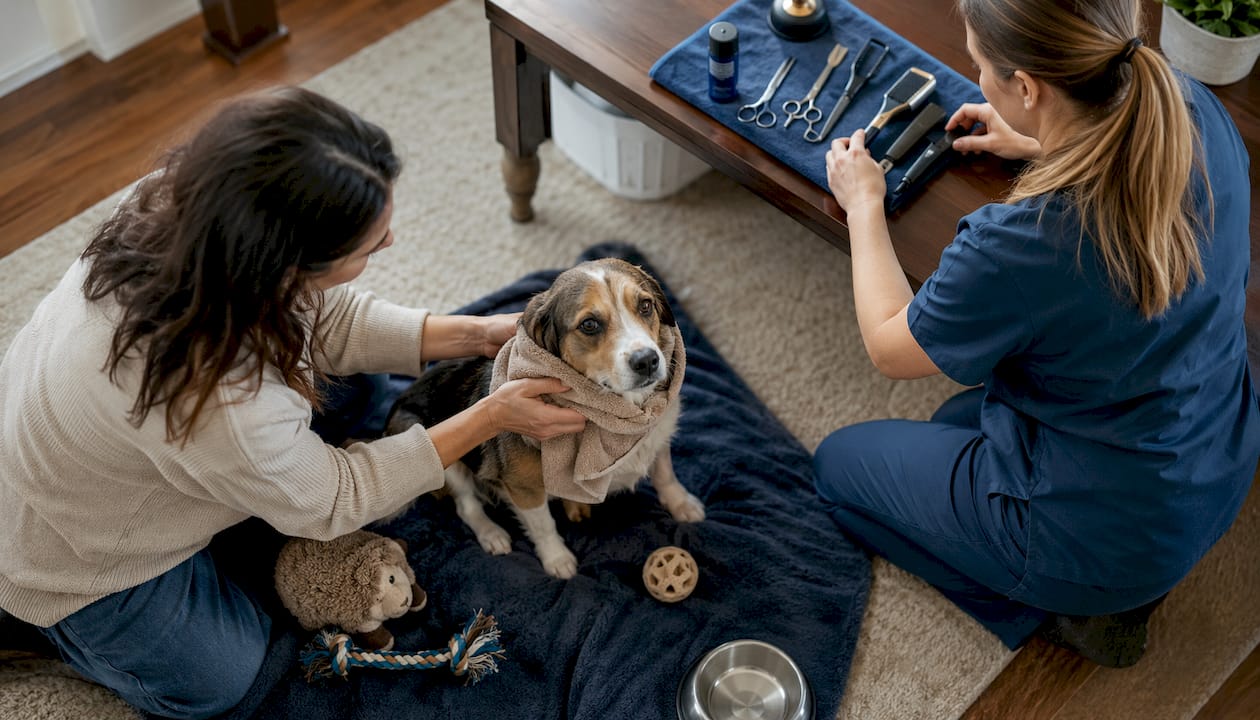
Groomers and veterinarians can work together effectively when owners facilitate that communication. Bring a written summary of your pet’s medical history, current medications, and known behavioral triggers to the first appointment. A groomer who receives that information can make smarter decisions from the very first minute.
Pro Tip: Keep a simple one-page “pet profile” with your vet’s contact, your pet’s triggers, and any medications. Share it digitally before the appointment so the groomer can review it without you needing to remember every detail at drop-off.
Key Takeaways
Fear-free grooming works because it replaces forced compliance with behavioral observation, positive reinforcement, and deliberate pacing, making every session safer and more effective for your pet.
| Point | Details |
|---|---|
| Core definition | Fear-free grooming prevents and reduces FAS using the FAS Scale, gentle handling, and environment adjustments. |
| Long-term gains | Regular low-stress sessions reduce grooming phobias, matting, skin issues, and secondary vet visits over time. |
| Verify credentials | Ask for Fear Free® certification proof and specific answers about how the groomer responds to mid-session stress signals. |
| Prepare at home | Acclimate your pet to tools, carrier travel, and brief handling before the first professional appointment. |
| Faroopets | Faroopets offers mobile, one-on-one grooming sessions for dogs, cats, and birds with a calm, pet-first approach. |
The part most owners don’t hear about
There’s a version of fear-free grooming that gets talked about a lot: the soft lighting, the quiet clippers, the treat rewards. All of that matters. But the piece that actually determines whether a session succeeds or fails is something quieter: the groomer’s willingness to stop.
Prioritizing safety over aesthetic perfection is the real test of a fear-free commitment. A pet who leaves the salon with a slightly uneven trim but a calm nervous system has had a better appointment than one who leaves perfectly styled but shaking. That’s not a compromise. That’s the goal.
The other thing worth saying plainly: fear-free grooming is not a magic fix for a pet with deep grooming trauma. It’s a framework, and for some pets, the framework needs to be built slowly across multiple visits before a full groom is even attempted. Owners who understand that from the start tend to see the best outcomes, because they’re not measuring success by how the coat looks after session one.
Faroopets brings calm, professional grooming to your door
If you’ve been searching for a grooming experience that genuinely puts your pet’s comfort first, Faroopets is built for exactly that. Our mobile grooming service comes to your location, which removes one of the biggest stressors right away: the unfamiliar salon environment. Your pet is groomed in a familiar setting, one-on-one, with no other animals nearby and no cage drying.
Whether your dog needs a full grooming session or your cat is overdue for a complete spa treatment, we offer packages designed for pets at every comfort level, including multi-session packages for anxious pets who benefit from gradual, progressive appointments. Ready to book a calmer grooming experience? Choose your service and let us come to you.
Useful sources and further reading
These are the resources we drew on for this article, and the ones we’d recommend you consult first when verifying groomer credentials or exploring the approach further.
- For certification verification: Fear Free Groomer Certification Program — the primary source for what the credential covers and how to confirm a groomer holds it.
- For understanding FAS and the science behind the approach: Fear Free Certifications overview — explains the broader Fear Free mission and how groomer training fits within it.
- For practical owner guidance on reducing grooming anxiety: Grooming for pet anxiety and low-stress grooming benefits on the Faroopets blog.
- For at-home preparation techniques: How to bathe anxious pets — step-by-step guidance you can start using before the first professional appointment.
- For understanding why traditional salons cause stress: Why pets dislike traditional salons — helpful context for evaluating any grooming environment.
