


Posted by Faroo Pets Grooming
on June 26, 2026

TL;DR:
- Grooming resistance in pets stems from physical pain, sensory overload, or fear, not stubbornness.
- Gradual desensitization, cooperative training, and a calm environment effectively reduce resistance.
Grooming resistance is defined as a stress response in pets triggered by sensory overload, physical discomfort, or fear, not by stubbornness or a desire to challenge you. Pet grooming anxiety is one of the most common concerns we hear from pet owners in Dubai, and it shows up in dogs, cats, and birds alike. Understanding why pets resist grooming is the first step toward changing the experience entirely. The causes range from hidden pain and traumatic memories to loud clippers and unfamiliar smells. Once you know what drives the resistance, you can address it with real solutions.
What are the common physical and emotional causes of grooming resistance?
Grooming resistance frequently signals an underlying physical problem before it signals a behavioral one. Arthritis or hidden skin infections cause real pain when a pet is touched, brushed, or repositioned. What looks like a pet being difficult is often a pet saying, “That hurts.” A veterinary check before starting any grooming training program is not optional. It is the foundation.
Beyond pain, sensory sensitivity plays a major role in reasons pets dislike grooming. Some pets have a lower tolerance for touch, sound, or restraint than others. Breeds like Border Collies, Chihuahuas, and Siamese cats are known for heightened sensitivity. A clipper buzzing near a dog’s ear or a brush dragging through a mat can feel genuinely overwhelming to a nervous animal.
Emotional history matters just as much as physical comfort. A single traumatic grooming session, especially one involving pain or forceful restraint, can create lasting fear. That fear becomes a conditioned response. The sight of a grooming table or the smell of a salon can trigger anxiety before a single tool is picked up.
- Hidden pain: Arthritis, skin infections, ear problems, and dental pain all cause grooming discomfort.
- Sensory overload: Loud clippers, strong product smells, and firm restraint exceed a pet’s stress threshold.
- Traumatic memories: Past negative grooming experiences create anticipatory fear.
- Breed temperament: Some breeds are genetically predisposed to higher anxiety levels.
- Loss of agency: Being held still with no ability to move or signal discomfort is deeply stressful for most animals.
Pro Tip: Before your next grooming session, gently run your hands along your pet’s body and watch for flinching, pulling away, or vocalizing. Any consistent reaction in one area warrants a vet visit before grooming continues.
How can pet owners recognize early signs of stress during grooming?
Early stress signals appear long before a pet growls, snaps, or tries to flee. Lip-licking, yawning, and whale eye are the three most reliable early warning signs. Whale eye is when a dog shows the white part of the eye while looking sideways. These signals mean your pet is uncomfortable and asking for a pause.
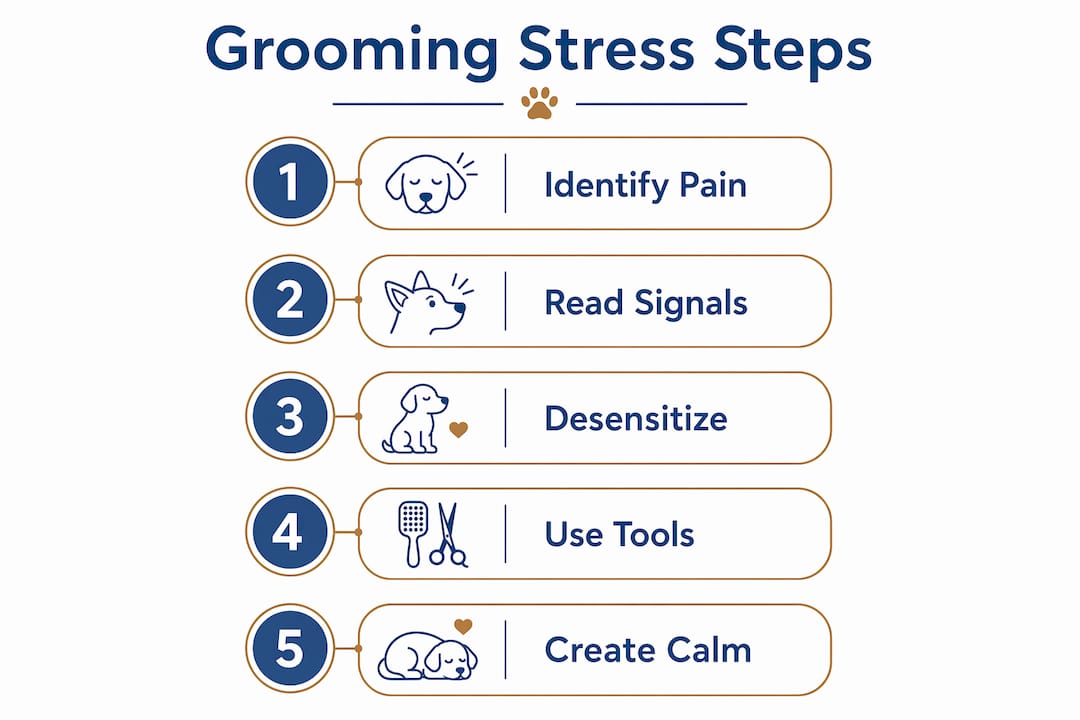
The difference between mild discomfort and severe anxiety is important to understand. Mild discomfort looks like shifting weight, turning the head away, or a low tail. Severe anxiety looks like panting, trembling, freezing, or attempting to bite. Catching the mild signals early prevents escalation to the severe ones.
Pausing grooming the moment you see early signals is the single most effective thing you can do. It teaches your pet that their communication works. That lesson builds trust faster than any treat alone. When pets learn that signaling discomfort leads to relief rather than more pressure, they become more cooperative over time.
- Lip-licking: A calming signal that means “I am stressed, please slow down.”
- Yawning: Not tiredness. A displacement behavior indicating anxiety.
- Whale eye: Whites of the eyes visible. A clear sign of fear or discomfort.
- Freezing: The pet stops moving entirely. This is a shutdown response, not cooperation.
- Panting or trembling: Signs of significant anxiety that require an immediate stop.
Recognizing these signals also protects you. Most grooming-related bites happen because early signals were missed or ignored. Extreme fear responses like panic or biting require veterinary consultation before grooming resumes. Safety for both the pet and the owner always comes first.
What practical strategies help reduce grooming resistance?
Desensitization and counter-conditioning are the two most evidence-backed methods for overcoming grooming resistance. Desensitization means gradually exposing your pet to grooming stimuli at a low enough level that it does not trigger fear. Counter-conditioning means pairing those stimuli with something your pet loves, like a high-value treat.
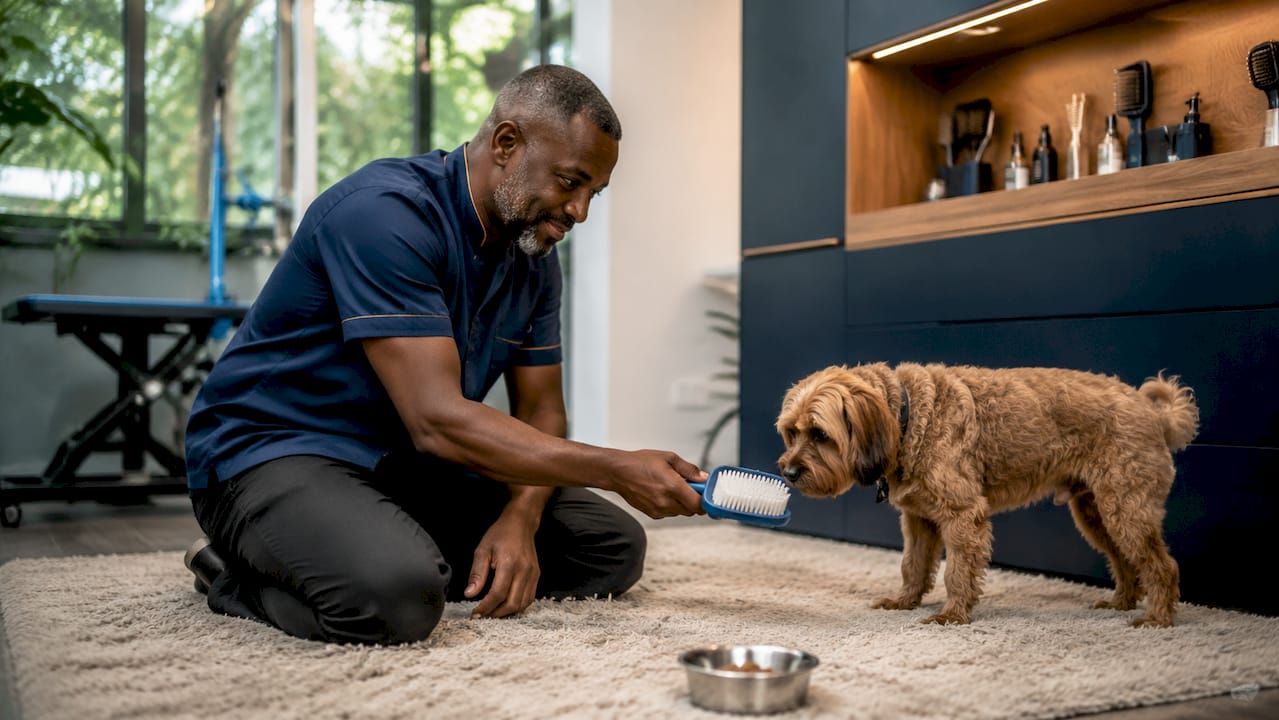
Mildly to moderately anxious dogs typically need a structured 4-week desensitization plan to show meaningful progress. Severe cases require 6–12 weeks of consistent training. That timeline sounds long, but it produces lasting results. Rushing the process almost always sets progress back.
Here is a practical starting framework:
- Week 1: Handle your pet’s paws, ears, and face daily for 30 seconds. Reward calm behavior immediately.
- Week 2: Introduce grooming tools near the pet without using them. Let the pet sniff and investigate. Reward curiosity.
- Week 3: Touch the pet with the tool briefly. For clippers, turn them on nearby without touching. Reward throughout.
- Week 4: Begin short rehearsal sessions of 2–3 minutes. Stop before stress signals appear.
Training sessions should last 2–5 minutes with frequent breaks to avoid nervous overload. Practicing in a familiar, calm environment improves cooperation significantly. The kitchen or living room works far better than a grooming table for early sessions.
Cooperative care training takes this further by teaching pets a “start button” behavior. Pets learn they can opt out of the session by moving away or breaking a specific position. This eliminates the feeling of being trapped, which is one of the biggest drivers of grooming anxiety. When pets have a choice, they are far more willing to participate.
Pro Tip: Use a lick mat spread with peanut butter or wet food during grooming sessions. It gives your pet something to focus on and creates a positive association with the experience.
Here is a quick comparison of grooming approaches and their effect on anxious pets:
| Approach | Effect on anxious pets |
|---|---|
| Forced restraint | Increases fear and resistance over time |
| Gradual desensitization | Builds tolerance and trust progressively |
| Short, positive sessions | Reduces stress and improves cooperation |
| Cooperative care training | Gives pets agency and lowers anxiety significantly |
For pet owners in Dubai who want professional support, gentle handling techniques combined with mobile grooming can make a dramatic difference for anxious pets.
How do grooming environments and tools affect your pet’s tolerance?
The environment where grooming happens shapes a pet’s stress level before the first brush stroke. Travel, strange odors, unfamiliar noise, and being handled by strangers are all documented drivers of grooming resistance. A traditional salon stacks every one of these stressors together. That is a lot to ask of an already anxious animal.
Mobile grooming removes most of those triggers by bringing the session to the pet’s own environment. The pet skips the car ride, the waiting area, and the noise of other animals. This single change can reduce resistance noticeably, especially in cats and dogs with strong territorial instincts.
Tool selection matters just as much as location. Loud, high-vibration clippers are a common source of fear. Quiet, low-vibration models reduce the auditory and tactile stress of the clipping process. Brushes with widely spaced, rounded pins are gentler on sensitive skin than fine-toothed tools used with too much pressure.
Brushing technique is also a major factor that most pet owners overlook. Surface brushing creates painful felted mats near the skin and causes brush burn. Line brushing, which means working through the coat section by section from the skin outward, prevents mats and avoids the pain that conditions pets to fear brushing. A pet that has been brushed incorrectly for months will associate the brush with pain. Correcting the technique is the fix.
| Tool or factor | Impact on anxious pets |
|---|---|
| Loud clippers | Triggers fear and startle responses |
| Quiet, low-vibration clippers | Reduces auditory and tactile stress |
| Surface brushing | Causes brush burn and painful mats |
| Line brushing | Prevents pain and builds positive brush associations |
| Traditional salon setting | Stacks multiple stressors simultaneously |
| Mobile grooming environment | Eliminates travel and unfamiliar setting stress |
You can also find a helpful dog accessories styling checklist from PawCaptain that covers tool fit and comfort considerations worth reviewing before your next session.
Key takeaways
Grooming resistance is a stress response rooted in physical pain, sensory overload, or fear, and it responds best to gradual desensitization, cooperative training, and a calm environment.
| Point | Details |
|---|---|
| Rule out physical pain first | Arthritis or skin infections cause grooming discomfort that looks like stubbornness. |
| Read early stress signals | Lip-licking, yawning, and whale eye appear before growling or biting. |
| Keep sessions short | Training sessions of 2–5 minutes with breaks prevent nervous overload. |
| Use cooperative care training | Teaching pets to opt out reduces the feeling of entrapment and lowers anxiety. |
| Match environment to the pet | Mobile grooming eliminates travel and salon stressors that drive resistance. |
What I have learned from working with grooming-resistant pets
The biggest mistake I see pet owners make is treating grooming as a task to complete rather than a relationship to build. The moment you shift from “I need to finish this bath” to “I need my pet to feel safe right now,” everything changes. Progress slows down on the clock and speeds up in real terms.
Grooming resistance is physiological and emotional, not a power struggle. Pets are not refusing to cooperate out of spite. They are communicating that something feels wrong. Treating that communication with respect, by pausing, adjusting, and trying again, is what builds the trust that makes grooming possible long term.
The hardest thing to tell a pet owner is that their well-intentioned persistence has been making things worse. Pushing through resistance does not desensitize a pet. It confirms their fear. The pet learns that their signals do not work, so they escalate. That is how mild discomfort becomes biting.
Patience and consistency are not soft advice. They are the mechanism. A pet that learns grooming is safe and predictable will eventually cooperate. A pet that learns grooming is unpredictable and forceful will resist harder every time. The choice of approach is yours, and it shapes every session that follows.
— Growth
Professional grooming designed for anxious pets in Dubai
If your pet has been resisting grooming at home or at the salon, a change of approach and environment can make a real difference.

Faroopets brings certified, patient groomers directly to your door in Dubai, removing the travel stress, salon noise, and unfamiliar handling that fuel pet grooming anxiety. Our luxury dog grooming and luxury cat grooming services are designed with anxious pets in mind. Every session moves at the pet’s pace, with gentle handling and positive reinforcement built into the process. You can also browse all grooming services to find the right fit for your pet’s needs and book at a time that works for you.
FAQ
Why does my pet suddenly resist grooming?
Sudden grooming resistance often signals a new source of physical pain, such as arthritis, a skin infection, or an ear problem. A veterinary check is the right first step before resuming grooming.
How long does it take to reduce grooming anxiety in pets?
Mildly anxious pets typically need 4 weeks of structured desensitization training. Severely anxious pets may need 6–12 weeks of consistent, patient work.
What are the first signs my pet is stressed during grooming?
Lip-licking, yawning, and whale eye are the earliest stress signals. Pausing grooming when these appear prevents escalation to growling or biting.
Does mobile grooming actually help anxious pets?
Yes. Mobile grooming eliminates travel, clinic noise, and unfamiliar environments, which are among the most common triggers for grooming resistance in pets. Many anxious pets tolerate mobile sessions far better than salon visits.
Can I train my pet to enjoy grooming at home?
You can, using short 2–5 minute sessions, positive reinforcement, and cooperative care techniques that give your pet a choice to opt out. Consistency over weeks, not days, produces lasting results.
