


Posted by Faroo Pets Grooming
on July 12, 2026

TL;DR:
- Bathing anxious pets requires a gentle, gradual approach that prioritizes calming environments and positive experiences. Using desensitization, proper setup, and calming tools transforms bath time from stressful to bonding. When home techniques fail, professional grooming services can provide a safe and comfortable experience for sensitive pets.
Bathing anxious pets is defined as a structured, low-stress grooming process that uses gradual exposure, calming tools, and consistent handling to reduce fear and build positive associations over time. Most pet owners treat bath time as a quick chore, but for anxious dogs and cats, a rushed approach deepens fear with every session. The good news is that knowing how to bathe anxious pets with science-backed methods turns a stressful event into a bonding routine. Your pet’s behavior during baths is not stubbornness. It is a communication signal, and learning to read it changes everything.
How to bathe anxious pets: setting up for success
The right environment is the first line of defense against bath anxiety. Before water ever touches your pet, the space around them sends powerful signals about safety or danger.
Start with a non-slip mat in the tub or basin. Slipping on a wet surface is one of the fastest ways to spike a pet’s fear response. A rubber mat gives your dog or cat stable footing and immediately reduces that physical panic. Pair it with a gentle, pet-formulated shampoo, and pre-dilute it in a small cup before the bath begins. Pre-diluting shampoo reduces scrubbing time and irritation, which means less handling stress for your pet.
Water temperature matters more than most pet owners realize. Test the water on your inner wrist rather than your finger, because the inner wrist mimics the sensitivity of a baby’s skin. Warm, not hot or cold, water keeps your pet comfortable and prevents a startle response the moment they step in.
One underrated stressor is the sound of running water. Pre-filling the basin before bringing your pet into the room removes that auditory trigger entirely. Keep the water depth at 1–3 inches for cats and small dogs. That shallow level gives them a sense of control without the panic of deep water.
Here is a quick reference for your bath setup:
| Tool or element | Purpose |
|---|---|
| Non-slip mat | Prevents slipping and reduces physical panic |
| Pre-diluted shampoo | Speeds application and reduces skin irritation |
| Pre-filled basin (1–3 inches) | Eliminates running water noise and controls depth |
| Lick mat with peanut butter | Activates calming nervous system response |
| Soft background music | Masks sudden sounds that trigger startle responses |
Close the bathroom door before you bring your pet in. A closed space limits escape attempts and helps your pet settle. Add a pheromone diffuser or calming spray to the room at least 15 minutes before the bath. These products, available at most pet supply stores, release synthetic calming signals that reduce baseline anxiety.
Pro Tip: Stick a lick mat to the tub wall at nose height with a thin layer of peanut butter or wet food. Your pet will focus on licking instead of escaping, and that repetitive motion actively calms their nervous system.
How to gradually introduce an anxious pet to the bathing process
Desensitization is the clinical term for gradually reducing fear through repeated, positive exposure. For anxious pets, skipping this step and going straight to a full bath is the single biggest mistake pet owners make.
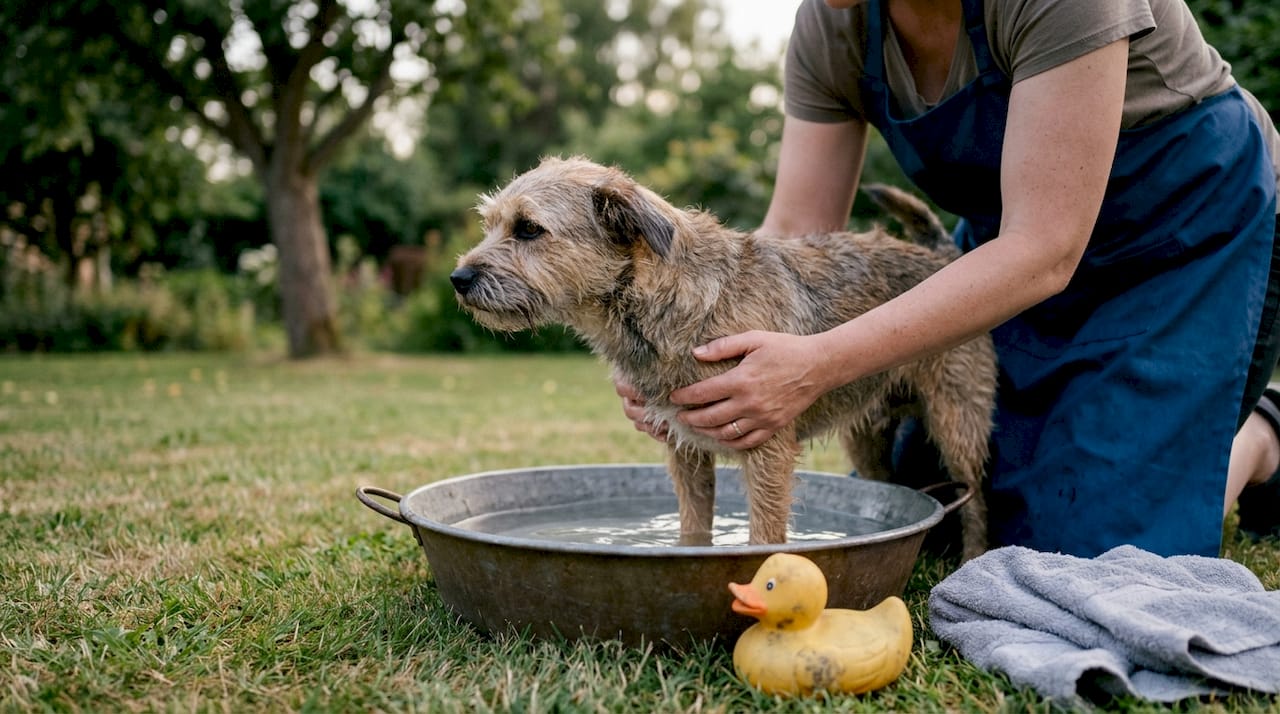
Start with the bathroom itself, not the water. Bring your pet into the dry tub or basin for a few minutes each day. Reward calm behavior with treats and praise, then leave. Repeat this for several days until your pet enters the space without visible tension. This step alone rewires the association from “danger zone” to “treat zone.”
Once your pet is comfortable in the dry tub, introduce moisture in stages:
- Damp cloth: Wipe your pet’s paws and legs with a warm, damp cloth. Keep it brief and reward generously.
- Feet in shallow water: Place just the paws in 1–3 inches of pre-filled warm water. Stay calm, speak softly, and offer treats throughout.
- Low-pressure rinse: Use a cup or pitcher to pour water gently over the back. Avoid the head and face at this stage.
- Full body wash: Only attempt a complete bath once your pet tolerates the previous steps without visible distress.
Each stage may take days or weeks depending on your pet’s temperament. Rescue pets or those with past trauma often need longer. Grooming rescue pets requires extra patience and a slower timeline than most guides suggest.
Exercise 30–60 minutes before the bath to burn off excess energy. A dog who has just had a walk or play session is calmer and more receptive than one who has been resting all afternoon. This single habit reduces resistance significantly.
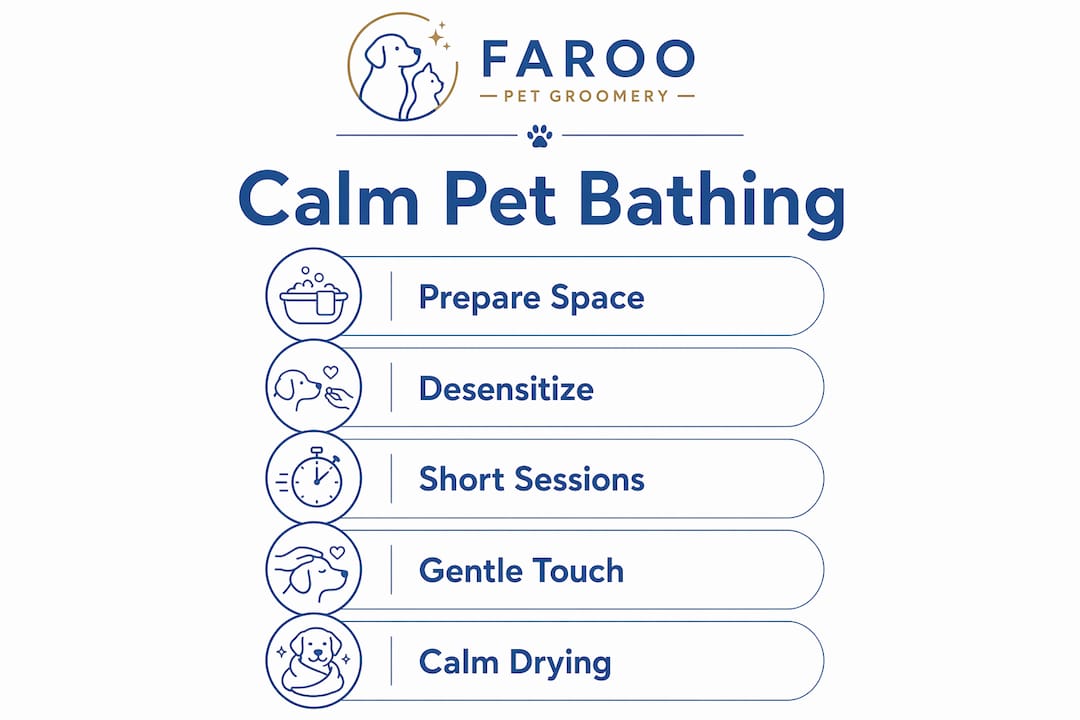
Pro Tip: Keep each bath session to 5–7 minutes maximum. Short sessions prevent sensory overload and leave your pet with a neutral or positive memory of the experience.
What techniques help soothe pets during the bath?
Calming your pet mid-bath requires both the right tools and the right body language from you. These two elements work together, and neglecting either one undermines the other.
The lick mat is the most effective mid-bath calming tool available. Repetitive licking lowers heart rate by activating the parasympathetic nervous system, which is the body’s natural “rest and digest” state. A pet focused on licking is a pet not focused on escaping. Reapply the lick mat treat between rinses to maintain engagement.
Your handling technique shapes the entire experience. Follow these principles during the bath:
- Start with less sensitive areas. Begin washing the back and sides before moving to the belly, legs, and face.
- Use a silicone bath brush. These tools distribute shampoo gently and feel like a massage rather than rough scrubbing.
- Never pour water directly over the head. Use a damp cloth for the face and ears. This is the area most likely to trigger panic.
- Move slowly and deliberately. Sudden movements signal danger. Every action should be smooth and predictable.
- Reward continuously. Offer small treats between each step, not just at the end.
“Pets mirror their owner’s emotions during stressful situations. A calm, confident owner communicates safety. A tense, hurried owner communicates threat. Your demeanor is the most powerful calming tool in the room.”
Pets detect and mirror their owner’s stress levels, which means your internal state matters as much as your technique. Take a slow breath before you begin. Speak in a low, steady tone throughout. If you feel frustrated, pause and reset before continuing. Your pet is reading you constantly.
Pro Tip: Aromatherapy can support a calmer bath environment. Learn about safe aromas for grooming before adding any scents to your pet’s space.
How to dry and conclude the bath to build lasting calm
The post-bath phase is where most pet owners lose the progress they built during the bath itself. A rough towel-dry or a loud blow dryer can undo 10 minutes of careful, calm work.
Use a large, soft towel and press it gently against your pet’s coat rather than rubbing vigorously. Vigorous rubbing creates friction, static, and discomfort, all of which spike anxiety right at the finish line. Wrap smaller pets in the towel and hold them gently for a minute before patting dry. This containment feels secure rather than threatening.
Blow dryers are a common stressor for anxious pets. Avoid them unless your pet is already accustomed to the sound and sensation. If you do use one, keep it on the lowest heat setting and hold it at least 12 inches from the coat. Introduce it gradually using the same desensitization steps you used for water.
After drying, shift immediately into reward mode:
- Offer a high-value treat your pet does not get at other times.
- Engage in a short play session or cuddling, whichever your pet prefers.
- Keep the post-bath energy calm and positive, not overly excited.
- Maintain a consistent bath schedule so your pet learns to predict the routine.
Predictability is a powerful anxiety reducer. Pets who know what comes next are less reactive than those who experience grooming as a random, unpredictable event. Pair bath time with the same sequence every session: exercise, setup, bath, treat, play.
Pro Tip: If your pet is still too stressed for a full bath after several weeks of desensitization, waterless shampoo and spot cleaning are legitimate hygiene alternatives. They maintain cleanliness without the full sensory load of a water bath.
What common mistakes make bath anxiety worse?
Recognizing the warning signs of a pet in crisis is as important as knowing the right techniques. Pushing past those signs causes lasting harm to your pet’s trust and makes future baths harder.
The clinical term for a pet who has exceeded their stress tolerance is “over-threshold.” Signs of an over-threshold pet include heavy panting, freezing in place, frantic attempts to escape, and trembling. When you see any of these, stop the bath immediately. Continuing forces a traumatic memory that your pet will carry into every future session.
Common mistakes that worsen bath anxiety include:
- Rushing the process. A bath completed in 3 minutes at the cost of your pet’s trust is not a win.
- Using loud voices or sudden movements. Both register as threats to an already anxious animal.
- Bathing too infrequently. Long gaps between baths mean your pet never builds familiarity with the routine.
- Skipping rewards. Treats are not optional extras. They are the mechanism that builds positive associations.
- Ignoring stress signs in cats and dogs. Dilated pupils, flattened ears, and a tucked tail all signal distress before the pet reaches full panic.
“The goal of every bath session is not a clean pet. The goal is a pet who trusts the process a little more than they did last time. Cleanliness is the byproduct of that trust.”
When home bathing consistently causes severe distress despite your best efforts, professional grooming is the right call. Certified groomers trained in anxiety-aware grooming techniques have tools and environments specifically designed for sensitive pets. Veterinary advice is also appropriate if anxiety is severe enough to require behavioral support or medication.
Key Takeaways
Bathing anxious pets successfully requires a calm environment, gradual exposure, consistent rewards, and an owner who stays composed throughout every session.
| Point | Details |
|---|---|
| Set up the environment first | Use a non-slip mat, pre-filled basin, and lick mat before bringing your pet into the room. |
| Desensitize in stages | Introduce the tub, then moisture, then water gradually over days or weeks before a full bath. |
| Keep sessions short | Limit baths to 5–7 minutes to prevent sensory overload and preserve positive associations. |
| Read your pet’s signals | Stop immediately if your pet shows heavy panting, freezing, or frantic escape attempts. |
| Use alternatives when needed | Waterless shampoo and spot cleaning maintain hygiene when full baths cause excessive stress. |
What I have learned from years of watching anxious pets in the tub
The most common mistake I see pet owners make is treating bath anxiety as a personality flaw to overcome rather than a communication signal to respect. An anxious pet is not being difficult. They are telling you, as clearly as they can, that something in the experience feels unsafe.
The owners who make the most progress are the ones who slow down when every instinct tells them to speed up. They celebrate the day their dog stepped into a dry tub without shaking. They count that as a win, because it is. Small wins compound. A pet who tolerates a damp cloth today will tolerate a full rinse in three weeks, if you stay consistent and patient.
One thing I wish more pet owners knew: your energy is contagious. I have watched visibly tense owners create tense pets in real time, and I have watched calm owners settle a panicking dog within minutes just by breathing slowly and speaking softly. You are not just washing your pet. You are teaching them that water, and you, are safe.
If you have tried every technique and your pet still struggles, please reach out to a professional. There is no shame in it. Some pets need a trained groomer’s environment, and some need veterinary behavioral support. Knowing when to ask for help is part of being a great pet owner.
— Growth
Faroopets is here when bath time needs a professional touch
Some pets need more than home techniques can offer, and that is completely okay. Faroopets provides mobile grooming services across Dubai, bringing trained, certified groomers directly to your door in sanitized, well-equipped vans designed with pet comfort in mind.

Our groomers are experienced in handling anxious dogs and cats with gentle, patient methods that prioritize your pet’s emotional well-being alongside their hygiene. Whether your dog needs a stress-aware dog grooming session or your cat needs a calm, expert cat grooming experience, Faroopets has a package designed for sensitive pets. Book directly through our website or send us your preferred time via message. Your pet deserves a grooming experience that feels safe, not scary.
FAQ
How long should a bath be for an anxious pet?
Bath sessions for anxious pets should last 5–7 minutes maximum. Shorter sessions prevent sensory overload and help your pet build a positive memory of the experience.
What is the best water temperature for bathing an anxious pet?
Warm water tested on your inner wrist is the right temperature. Water that is too hot or too cold triggers a startle response and increases anxiety.
Should I use a blow dryer on my anxious pet?
Avoid blow dryers unless your pet is already comfortable with the sound. If you use one, keep it on the lowest heat setting and hold it at least 12 inches from the coat.
What do I do if my pet panics during the bath?
Stop the bath immediately if your pet shows heavy panting, freezing, or frantic escape attempts. Forcing the bath past that point creates a traumatic memory that worsens future sessions.
Are there alternatives to a full bath for very anxious pets?
Yes. Waterless shampoo and grooming wipes are effective hygiene alternatives for pets who cannot tolerate a full water bath, even after gradual desensitization.
