


Posted by Faroo Pets Grooming
on June 28, 2026

TL;DR:
- Cats show early signs of grooming stress through subtle body language like skin rippling and ear rotation, which owners often overlook. Ignoring these signals can lead to severe stress responses such as biting or freezing, increasing the risk of injury and trauma. Recognizing and responding to stress cues with shorter, calmer sessions helps ensure a safer, more positive grooming experience.
Stress signs in cats during grooming are defined as a progressive series of body language and vocal cues that signal rising discomfort, fear, or pain during a grooming session. Veterinary behaviorists classify these signals under the broader term “feline stress responses,” and recognizing them early is the difference between a manageable session and a frightened, injured cat. The signals range from subtle skin rippling and ear rotation to severe biting and total body freeze. Knowing where your cat sits on that scale at any given moment is the most important grooming skill you can develop.
1. What are the early stress signs in cats during grooming?
Early cat grooming anxiety signs are easy to miss because they look almost normal. Skin rippling, pupil dilation, ears rotating sideways or backward, and tail tip twitching are the first signals your cat is approaching its limit. Each of these cues tells you to slow down or pause before the session escalates.
- Piloerection: The fur along the spine rises slightly, even if the cat is not visibly agitated.
- Pupil dilation: Eyes widen beyond what the lighting requires, signaling a stress response.
- Ear rotation: Ears swivel sideways or flatten backward, away from their natural forward position.
- Tail tip twitching: A rapid, low flick at the tip of the tail is distinct from a relaxed, slow tail sway.
- Skin rippling: The skin along the back twitches or “rolls,” a reflex triggered by overstimulation.
These signals often appear together, and they build quickly. A cat showing two or three of them simultaneously is already past comfortable. Catching them at this stage gives you the best chance to adjust your approach without ending the session entirely.
Pro Tip: Watch your cat’s face, not just its tail. Whiskers pulled back flat against the cheeks and a tightened jaw are early facial stress cues that most owners overlook.
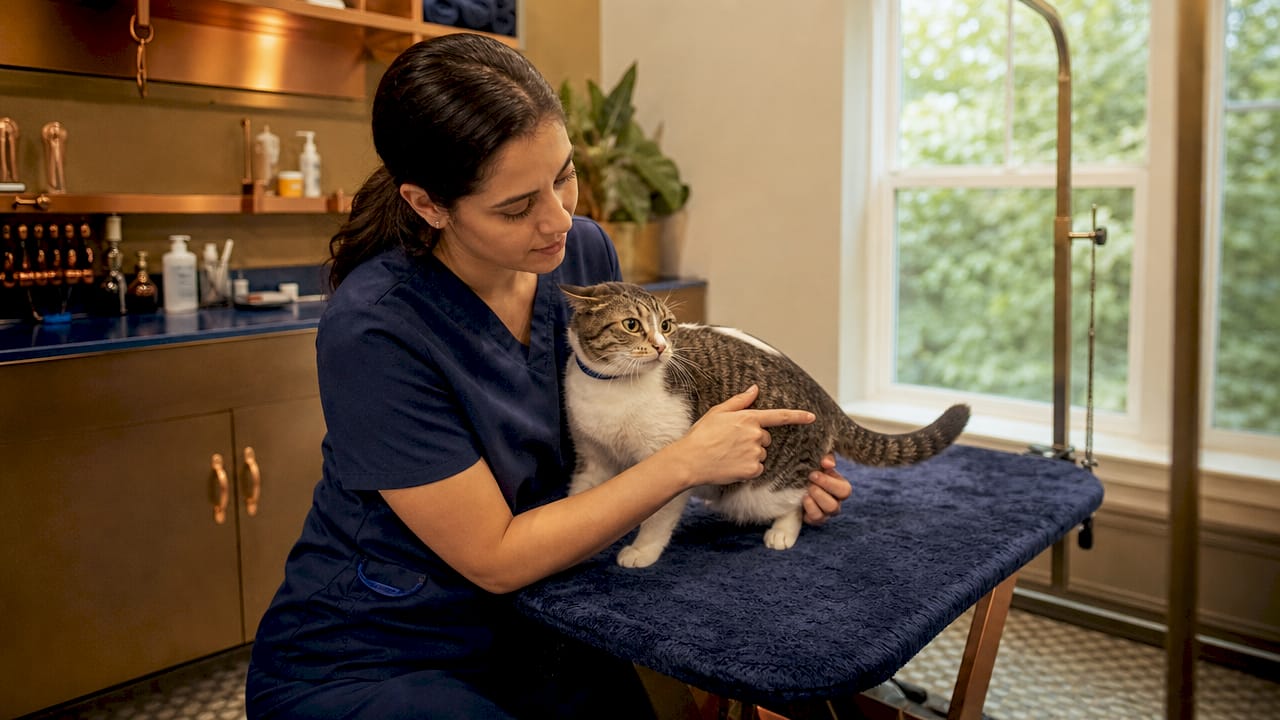
2. How moderate stress signs show up and what to do
When early cues go unaddressed, cats move into moderate distress. Common behavioral signs of anxiety at this stage include increased vocalization, crouching, flattened ears, and restless movement. Your cat may start trying to pull away, turn its head toward the brush, or shift its weight repeatedly.
The right response at this stage is a short, deliberate break, not a push to finish. Forcing the session forward at this point teaches your cat that grooming is something to dread.
Calming strategies that work at the moderate stage:
- Stop and sit quietly for 2–3 minutes before attempting to continue.
- Lower your own voice and slow your movements. Cats read your body language constantly.
- Offer a treat or a familiar toy to reset the emotional state before resuming.
- Switch to a less sensitive area of the body if you need to continue.
- Shorten the session and pick up where you left off in a separate sitting.
Short, split grooming sessions prevent cortisol overload and keep cats within their comfort zone. That means a 10-minute session three times a week often produces better results than a single 30-minute session that ends in conflict.
Pro Tip: If your cat’s vocalization increases the moment you pick up a specific tool, the tool itself may be the trigger. Try a different brush style or a grooming glove before assuming the cat dislikes grooming entirely.
3. What severe stress signs mean and when to stop immediately
Severe stress signals require you to stop grooming right away. Hissing, growling, lunging, biting, swatting, and total body freeze all indicate that your cat has entered a fight-or-flight state. Continuing past these signals increases the risk of injury to both you and your cat.
- Hissing or growling: Vocal warnings that the cat is at its absolute limit.
- Swatting with claws: A direct physical warning that contact must stop.
- Lunging or biting: The cat has moved from warning to defense.
- Total body freeze: This one surprises many owners because it looks like cooperation.
The freeze response deserves special attention. A cat’s freeze state is extreme fear, not calm acceptance. Owners who mistake freezing for cooperation and continue grooming risk causing psychological trauma. A cat that repeatedly experiences this state will develop a deep aversion to grooming that becomes very difficult to reverse.
Ignoring severe signals does not make grooming easier over time. It makes it harder, more dangerous, and more distressing for your cat at every future session.
4. How to tell if your cat is stressed, fearful, or in pain
Not all grooming distress looks the same, and the cause matters for your response. Stress signals follow three distinct patterns: gradual overstimulation, immediate panic, or a consistent reaction to one specific spot on the body.
| Cause | Key signals | What to do |
|---|---|---|
| Overstimulation | Builds slowly; skin rippling, tail twitching, then escalation | Pause, shorten session, reduce pressure |
| Fear | Immediate reaction; crouching, freezing, or fleeing at session start | Desensitize gradually; use positive association |
| Pain | Consistent negative reaction to one specific area | Stop grooming that area; consult a vet |
Misinterpreting pain as disobedience is one of the most damaging mistakes an owner can make. If your cat reacts sharply every time you touch the same spot, that reaction is information. A vet visit is the right next step, not a firmer grip.
Excessive grooming by the cat itself can also signal underlying anxiety or a skin condition requiring veterinary care. Bald patches or raw skin from self-grooming are not a behavioral quirk. They are a symptom.
5. What environmental and handling factors trigger grooming anxiety
The grooming environment shapes your cat’s stress level before you pick up a single tool. Unfamiliar scents, loud noises, forced positions, and new people all trigger cortisol spikes that put cats on edge from the start.
Common triggers to reduce or eliminate:
- Unfamiliar scents: Wash your hands before grooming and avoid strong perfumes or cleaning products near the grooming area.
- Loud noises: Choose a quiet room and turn off televisions or music with sudden volume changes.
- Forced restraint: Holding a cat still against its will accelerates stress faster than almost any other factor.
- New people in the room: Cats groom best in a calm, familiar setting with only their trusted owner present.
- Cold or wet surfaces: A warm, stable surface reduces physical discomfort that compounds emotional stress.
Gentle handling is not just kindness. It is the most effective technique for reducing grooming-related anxiety over time. Cats that are never forced learn to tolerate and eventually accept grooming because the experience stays within their control.
Pro Tip: Your own emotional state mirrors in your cat’s stress level. If you are tense or rushing, your cat feels it. End the session early on days when you are agitated rather than risk a stress spike for both of you.
6. How professional groomers read and respond to cat stress signals
Professional groomers read cat body language closely to apply breaks and reduce overstress, which directly improves grooming cooperation over time. This is a skill that takes practice, but owners can apply the same principles at home.
The core professional approach involves three habits. First, groomers observe the cat before touching it, noting posture, ear position, and tail movement as a baseline. Second, they work in short intervals with deliberate pauses, rather than pushing through to completion. Third, they treat every stress signal as communication, not defiance.
Cats communicate their grooming tolerance limits through behaviors that owners often label as “bad.” Reframing those behaviors as information changes how you respond. A cat that swats is not being difficult. It is telling you something specific, and respecting that message builds trust that makes every future session easier. You can find more practical guidance on making grooming a positive experience for your cat at home.
Key takeaways
Recognizing cat grooming anxiety signs early, responding with pauses and shorter sessions, and distinguishing stress from fear and pain are the three skills that protect your cat’s welfare and make grooming sustainable long-term.
| Point | Details |
|---|---|
| Spot early signals first | Skin rippling, ear rotation, and tail twitching are the first cues to slow down. |
| Stop at severe signals | Hissing, biting, lunging, and freezing all require immediate session termination. |
| Distinguish stress from pain | Consistent reactions to one spot indicate pain; consult a vet before continuing. |
| Control the environment | Reduce noise, unfamiliar scents, and forced restraint to lower baseline stress. |
| Match your own calm | Your emotional state directly affects your cat’s stress level during grooming. |
What I’ve learned from watching owners and cats during grooming
Most owners come to grooming with the goal of finishing. That goal is the problem. The cats that do best with grooming are the ones whose owners have shifted their goal to reading. Finishing is a byproduct. Reading is the skill.
The freeze response is the signal I see misread most often. An owner interprets a still, quiet cat as a cooperative cat and keeps going. What they are actually seeing is a cat that has shut down from fear. The session ends without incident, but the cat has just learned that grooming is something it cannot escape. That lesson compounds with every session.
The owners who get it right share one habit: they stop before they think they need to. They read the tail tip, they notice the ear rotation, and they put the brush down while the cat is still calm. The session feels incomplete to them, but the cat walks away without a negative association. Over weeks, those incomplete sessions build into full ones because the cat’s trust grows.
Patience in grooming is not passive. It is the most active and effective thing you can do for your cat’s long-term comfort.
— Growth
Faroopets cat grooming: stress-free sessions, delivered to your door
We know that grooming a stressed cat at home can feel like a losing battle, especially when you are not sure what signals to watch for or how to respond. Faroopets brings certified, experienced groomers directly to your location in Dubai, so your cat stays in a familiar environment with minimal disruption.

Our groomers are trained to read feline body language and apply gentle, break-based techniques that keep cats within their comfort zone throughout the session. Whether your cat needs a full grooming package or a gentler introductory session, we have options designed around your cat’s needs. You can also choose your service online and book at a time that works for you. Your cat’s comfort is not an afterthought for us. It is the whole point.
FAQ
What are the first signs of stress in a cat during grooming?
The earliest signs are skin rippling along the back, tail tip twitching, pupil dilation, and ears rotating sideways or backward. These signals appear before any vocalization and indicate the cat is approaching its tolerance limit.
How do I know if my cat is in pain rather than just stressed during grooming?
Pain shows up as a consistent, sharp reaction every time you touch the same specific area of the body. Stress and overstimulation tend to build gradually across the session rather than targeting one spot.
Is a cat freezing during grooming a sign of calm or fear?
Freezing is a sign of extreme fear, not cooperation. A cat that goes still and rigid has entered a shutdown state, and continuing to groom risks psychological trauma and a lasting aversion to future sessions.
Why do cats dislike grooming even when they groom themselves?
Self-grooming is fully within a cat’s control. Owner-led grooming involves restraint, unfamiliar tools, and unpredictable sensations, all of which trigger stress responses that self-grooming does not.
How often should I groom a stressed cat to reduce anxiety over time?
Short, frequent sessions work better than long, infrequent ones. Multiple brief sessions per week keep the cat within its comfort zone and build positive associations gradually, rather than overwhelming it in a single sitting.
