


Posted by Faroo Pets Grooming
on May 31, 2026

TL;DR:
- Pets may develop allergic contact dermatitis after grooming, with symptoms like redness, itching, and swelling appearing within hours. Reactions are usually localized to contact areas and can be triggered by preservatives like MIT/MCIT or fragrances, especially in Dubai’s stressful environment. Proper tracking, avoiding known allergens, and consulting a veterinarian are essential for managing and preventing future grooming allergies.
After a grooming session, your pet should look great and feel relaxed. So when they come home scratching, rubbing their face on the carpet, or developing red patches on their skin, it’s alarming. Learning how to spot grooming allergies, or more precisely, allergic contact dermatitis triggered by grooming products, is one of the most practical skills you can develop as a pet owner in Dubai. The city’s heat and dust already stress your pet’s skin year-round. Add a sensitizing shampoo ingredient to the mix, and reactions can escalate fast. This guide walks you through every step: recognizing symptoms, understanding triggers, tracking patterns, and knowing when to call your vet.
Key takeaways
| Point | Details |
|---|---|
| Symptoms appear fast | Redness, itching, and swelling typically show up within hours of a grooming session. |
| Location matters for diagnosis | Reactions confined to product contact areas strongly suggest grooming product allergy, not environmental allergy. |
| MIT/MCIT are top offenders | These preservatives in many shampoos are strongly linked to allergic contact dermatitis in pets. |
| Keep a grooming log | Recording products, dates, and symptoms helps your vet identify sensitization patterns much faster. |
| Don’t wait on breathing issues | Respiratory distress after grooming is an emergency, even when skin signs look mild or absent. |
How to spot grooming allergies: the symptoms to watch for
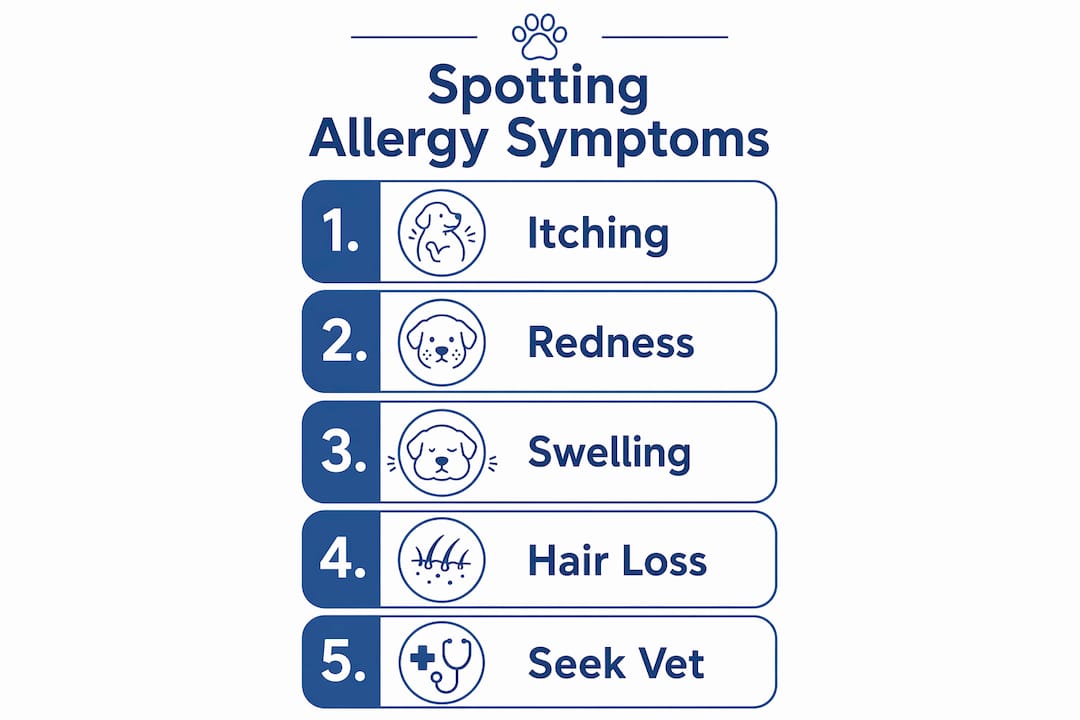
The clinical term for what we’re discussing is allergic contact dermatitis, a skin reaction triggered when your pet’s immune system identifies a grooming product ingredient as a threat. The telltale grooming allergy symptoms tend to appear within minutes to a few hours after the session ends. Knowing what to look for, and where to look, makes all the difference.
The most common signs include:
- Intense scratching or rubbing of the face, ears, neck, or the area where a product was applied
- Redness and inflammation on the skin, especially visible on light-coated pets or in sparsely furred areas like the belly and inner thighs
- Hives or raised welts appearing shortly after contact with a product
- Excessive paw licking or chewing, which often signals discomfort that started higher on the body and spread
- Watery eyes or nasal discharge, particularly after a facial wash or waterless product application
- Ear shaking or pawing at the ears, which can point to a reaction from products used around the head
Body location is one of your strongest diagnostic clues. Grooming product reactions tend to be localized to the areas where products were applied, while environmental allergies typically affect the paws, face, belly, and armpits in a broader, more distributed pattern. If your dog is only red along its back where a shampoo was rinsed over it, that’s a meaningful detail.
Severity varies widely. Mild reactions look like temporary redness that fades within a day. Severe reactions include significant swelling, open sores from scratching, or, in rare cases, anaphylaxis. Only 57% of dogs with anaphylaxis show visible skin signs, which means a pet appearing “fine” on the outside can still be in serious distress.
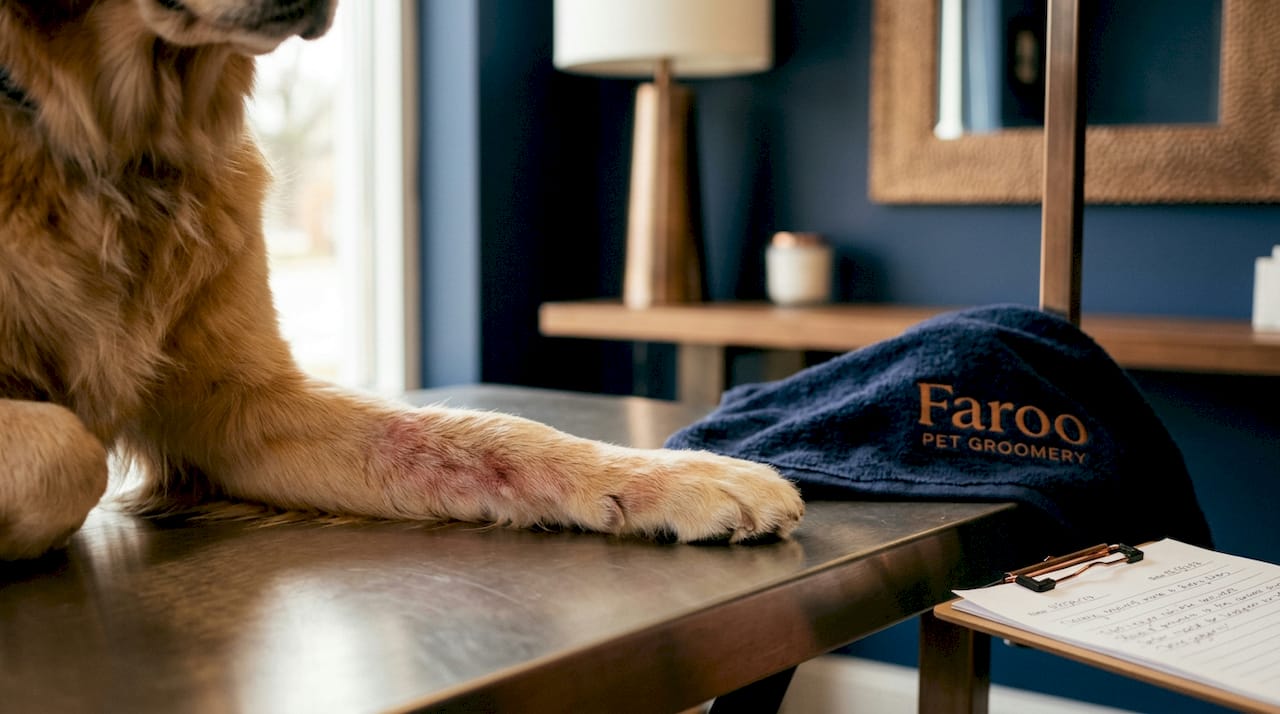
Pro Tip: Take photos of the affected skin immediately after grooming and again 24 hours later. Visual documentation gives your vet a timeline that’s far more useful than a verbal description.
Understanding what triggers grooming reactions
Not every post-grooming reaction is a true allergy. There’s an important difference between allergic contact dermatitis, where the immune system overreacts to a specific ingredient, and irritant contact dermatitis, which is a direct chemical irritation that can happen to any pet with enough exposure. Both look similar, but allergic reactions tend to worsen with repeated exposure while irritant reactions are more dose-dependent.
When it comes to allergenic ingredients, certain preservatives top the list. MIT and MCIT (methylisothiazolinone and methylchloroisothiazolinone) are among the most problematic preservatives found in grooming shampoos, and avoiding them is recommended for pets who receive frequent salon grooming. Other common triggers include artificial fragrances, certain surfactants, dyes, and botanical extracts like tea tree oil or citrus-based compounds.
Here’s a quick reference for common allergen sources:
| Allergen source | Where to find it | What to look for on the label |
|---|---|---|
| MIT/MCIT preservatives | Shampoos, conditioners, sprays | Methylisothiazolinone, Kathon CG |
| Artificial fragrances | Most scented grooming products | “Fragrance” or “Parfum” |
| Surfactants | Foaming shampoos | Sodium lauryl sulfate (SLS) |
| Botanical extracts | “Natural” pet products | Tea tree oil, citrus extract |
| Artificial dyes | Colored grooming products | FD&C colors, CI numbers |
Dubai’s environment adds a layer of complexity here. Seasonal dust storms and high humidity create baseline skin stress for many pets, and Dubai’s grooming environment means pets may already have compromised skin barriers before a single product is applied. A shampoo that causes no reaction in cooler climates might trigger a response on a pet whose skin is already inflamed from the heat.
Pro Tip: Before any grooming session, scan the product label for the word “Fragrance” or “Parfum.” These single terms can represent dozens of hidden chemical compounds, many of which are known sensitizers.
Also worth knowing: repeated exposure to a sensitizing ingredient can build up over time. Your pet may have used the same shampoo for a year with no problem, and then suddenly react. This is sensitization at work, not coincidence.
Tracking symptoms to identify the real cause
Random scratching happens. The difference between “my pet is itchy” and “my pet has a grooming product allergy” comes down to patterns. Here’s how to build a tracking system that actually works.
- Note the timing. Write down exactly when grooming occurred and when symptoms first appeared. Allergic contact dermatitis typically shows within 24 to 48 hours of exposure, while irritant reactions often appear sooner, within the first few hours.
- List every product used. Shampoo, conditioner, ear cleaner, cologne sprays, detangling products. Include brand names and, if possible, photograph the ingredient labels.
- Map the symptoms on the body. Is the itching only around the neck where the collar sits post-groom? Only on the back? Widespread? Mapping tells you whether the reaction is localized or systemic.
- Rate the severity. Use a simple 1 to 5 scale each day to track whether symptoms are improving, staying the same, or worsening.
- Record other exposures. Did your pet play in a new park? Eat something different? Sleep on a freshly washed blanket? Ruling out environmental allergy triggers is just as important as identifying grooming ones.
- Track grooming frequency. Some pets react only when groomed frequently with a particular product. Less frequent use may reduce sensitization exposure.
Detailed records of grooming products and timing are genuinely invaluable when a vet needs to reconstruct what triggered an allergic episode. A month of notes hands your veterinarian a roadmap that would otherwise take weeks of trial-and-error testing to build.
When to bring your vet into the picture
Self-observation gets you far. It does not get you all the way there. There are several situations where a veterinary assessment is not optional, and recognizing them is part of knowing how to identify grooming allergies with accuracy.
Visit your vet when:
- Symptoms persist beyond 48 to 72 hours after grooming
- Your pet is losing sleep or unable to stop scratching despite your intervention
- You see open sores, crusting, or signs of a skin infection developing
- Ear problems keep recurring after grooming sessions
- You have switched products and the reaction continues
Vets use several tools to evaluate suspected grooming allergies. A physical exam assesses the distribution and severity of skin lesions. Cytology, a simple test using skin tape or swabs, checks whether secondary bacterial or yeast infections are present, since these infections intensify itching and complicate the picture significantly. Patch testing can identify specific contact allergens. In some cases, an elimination trial rules out food allergy, which can look nearly identical to grooming product reactions.
Respiratory distress, vomiting, collapse, or rapid swelling after grooming are emergency signs. Breathing difficulties and systemic symptoms require immediate veterinary care, because skin signs alone are a poor indicator of overall severity during anaphylaxis.
Do not rely solely on what you can see on the skin. Your pet’s comfort and safety depend on a complete clinical evaluation when symptoms are serious or recurring.
Managing and preventing future reactions
Once you know your pet has a grooming-related sensitivity, the good news is that management is very practical. Most reactions can be prevented with the right product choices and grooming habits.
Here are the most effective steps:
- Switch to hypoallergenic grooming products. Look for fragrance-free, dye-free, and preservative-free formulations. Our guide on hypoallergenic pet grooming covers exactly what to look for on ingredient lists.
- Rinse thoroughly. Shampoo residue left on the skin is a leading cause of post-grooming irritation. Rinse twice if needed, especially in thick-coated breeds.
- Reduce grooming frequency temporarily. During a flare-up, give your pet’s skin a chance to recover before the next full session.
- Soothe irritated skin with vet-approved products. Colloidal oatmeal rinses and aloe-based sprays (without alcohol or fragrance) can calm mild inflammation while you get to your vet.
- Keep the environment clean. Dust and allergens in Dubai’s air settle on freshly groomed skin more readily. Brush your pet in a clean, low-dust space when possible.
- Communicate with your groomer. Tell them about your pet’s sensitivities before every session and ask them to list which products they plan to use.
Pro Tip: Ask your groomer for a product list before the appointment, then cross-reference the ingredients with your pet’s known sensitivities. A good groomer will always have this information ready for you.
Understanding types of pet shampoos and how their ingredients interact with sensitive skin gives you a real advantage when shopping in Dubai’s pet supply market.
My honest take on where pet owners go wrong
I’ve seen this pattern more times than I can count. A pet starts scratching after grooming, and the owner’s first move is to switch shampoos. They try a different brand, the reaction fades, and they assume they’ve solved the problem. Six months later, the same itching is back, and now they’re three products deep with no clear answers.
The mistake is treating grooming allergies like a product swap problem when they’re actually a detective problem. The trial-and-error approach is genuinely less reliable than working with a vet from the start to run proper elimination trials and identify the actual allergen.
What I’ve found works better is slowing down. Take notes. Give symptoms time to develop fully before switching anything. And stop assuming the most expensive or “natural” product is automatically safe. Tea tree oil, lavender, and citrus extracts, all marketed as gentle, are among the most common contact sensitizers in pet grooming.
For Dubai pet owners specifically, I’d add one more thing: don’t underestimate the baseline. Your pet’s skin is under more stress here than in cooler, less dusty climates. A product that was fine before the summer heat may not be fine anymore. Seasonal reassessment of your grooming routine is not overcautious. It’s smart pet care.
And if your pet shows any breathing changes, vomiting, or sudden weakness after grooming, please do not wait to see if it improves. Get to a vet immediately. Visible skin signs are absent in nearly half of serious allergic reactions. You cannot always see how serious it is.
— Growth
Let Faroopets take the worry out of grooming
If your pet has sensitive skin or a history of reactions, every grooming session can feel like a gamble. At Faroopets, we take that concern seriously. Our trained groomers in Dubai work with hypoallergenic product lines and are experienced in spotting early allergy signs like redness, swelling, and skin irritation before they become bigger problems.

We bring our sanitized, fully equipped mobile grooming van directly to your door, so your pet is groomed in a calm, familiar environment rather than a stressful salon. Whether you have a dog with reactive skin or a cat who needs extra-gentle handling, our dog grooming services and cat grooming services in Dubai are designed with your pet’s comfort and safety in mind. Book a session today and let us show you what allergy-aware grooming actually looks like.
FAQ
What are the first signs of a grooming allergy in pets?
The earliest signs are usually intense scratching, redness, and skin irritation appearing within hours of a grooming session. Symptoms are often concentrated in the areas where products were directly applied.
How do grooming allergies differ from environmental allergies?
Grooming product reactions are typically localized to product contact areas, while environmental allergies like atopic dermatitis tend to affect the paws, belly, and face in a broader pattern regardless of recent grooming.
Can a pet suddenly develop a reaction to a product they’ve used before?
Yes. Repeated exposure to sensitizing ingredients like MIT/MCIT can trigger an allergic response even after many uneventful uses, as sensitization builds up over time.
When is a grooming reaction a medical emergency?
Seek immediate veterinary care if your pet shows breathing difficulty, sudden vomiting, collapse, or rapid swelling after grooming. Respiratory and systemic symptoms signal anaphylaxis, which can be life-threatening even when skin signs appear mild.
What grooming products are safest for pets with sensitive skin?
Choose fragrance-free, dye-free shampoos that are free of MIT/MCIT preservatives. Products labeled hypoallergenic and formulated specifically for sensitive skin reduce the risk of triggering allergic contact dermatitis.
