


Posted by Faroo Pets Grooming
on May 26, 2026

TL;DR:
- Hypoallergenic pet grooming involves gentle practices and products that reduce allergenic residues, not eliminate allergens entirely. Regular grooming, combined with proper home cleaning, helps lower allergen buildup, especially in low-shedding breeds that trap dander and saliva. Consistency and ingredient awareness are essential, and veterinary advice is crucial for pets with skin issues or persistent allergies.
If you’ve ever assumed that a “hypoallergenic” pet or grooming product means zero allergens, you’re not alone. Most pet owners have been there. But the reality of what is hypoallergenic pet grooming is more nuanced, and understanding it can genuinely change how you care for your pet. Allergens don’t come only from fur. They live in dander, saliva, and urine too. The good news is that a smart, consistent grooming routine does more to reduce allergen exposure than any single product label ever will. This guide breaks it all down clearly, practically, and without the marketing fluff.
Table of Contents
- Key takeaways
- What hypoallergenic pet grooming actually means
- Where pet allergens actually come from
- Grooming routines and product choices for sensitive pets
- How grooming fits into broader allergy management
- The growing market for hypoallergenic grooming
- My honest take on hypoallergenic grooming
- Let Faroopets take care of your pet’s sensitive skin
- FAQ
Key takeaways
| Point | Details |
|---|---|
| “Hypoallergenic” is not allergen-free | No pet or product eliminates allergens completely; the goal is meaningful reduction. |
| Allergens come from multiple sources | Dander, saliva, and urine all carry allergenic proteins, not just shed fur. |
| Product formulation matters | Hypoallergenic shampoos should be fragrance-free, dye-free, and pH-balanced for pet skin. |
| Grooming frequency is key | Sensitive pets benefit from brushing weekly and bathing every four to six weeks. |
| Grooming supports, not replaces, vet care | For pets with chronic skin issues, professional grooming works best alongside veterinary guidance. |
What hypoallergenic pet grooming actually means
Let’s start with the word itself. “Hypoallergenic” means less likely to cause an allergic reaction, not incapable of causing one. There is no scientific evidence that any pet breed is truly allergen-free. The term is widely used in marketing, but in grooming, it refers to products and practices specifically designed to reduce irritation for sensitive pets and the people around them.
Hypoallergenic pet grooming covers two things together. First, the products: shampoos, conditioners, and sprays formulated without common irritants. Second, the practice: grooming routines that physically reduce allergen buildup on your pet’s skin and coat.
What makes a shampoo hypoallergenic? These are the characteristics you should look for:
- Fragrance-free and dye-free formulas to minimize chemical irritants
- pH-balanced for pet skin, which ranges from approximately 5.5 to 7.4
- Free from parabens, sulfates, and artificial preservatives
- Contains soothing natural ingredients like oatmeal, aloe vera, or Ophytrium
- Designed specifically for pets, not reformulated human products
That last point matters more than most people realize. Using human shampoo on a dog disrupts the skin’s natural barrier, increasing dryness and infection risk. The pH chemistry is simply different.
For routine care, brushing weekly and bathing every four to six weeks is the recommended baseline for sensitive pets. Consistency here is what drives results, far more than any single premium product. You can read more about how grooming product choices directly influence your pet’s skin health.
Pro Tip: Dilute your hypoallergenic shampoo before applying it. Full-strength application can still irritate sensitive skin, even with gentle formulas. A 1:3 dilution ratio and a thorough rinse make a real difference in how your pet’s coat responds.
Where pet allergens actually come from
Here is the part that surprises many pet owners. Allergens are not primarily about how much your pet sheds. The main allergenic proteins — Fel d 1 in cats and Can f 1 in dogs — are produced in sebaceous glands, saliva, and urine. They then attach to dander, which is microscopic flakes of skin, and spread through the home.
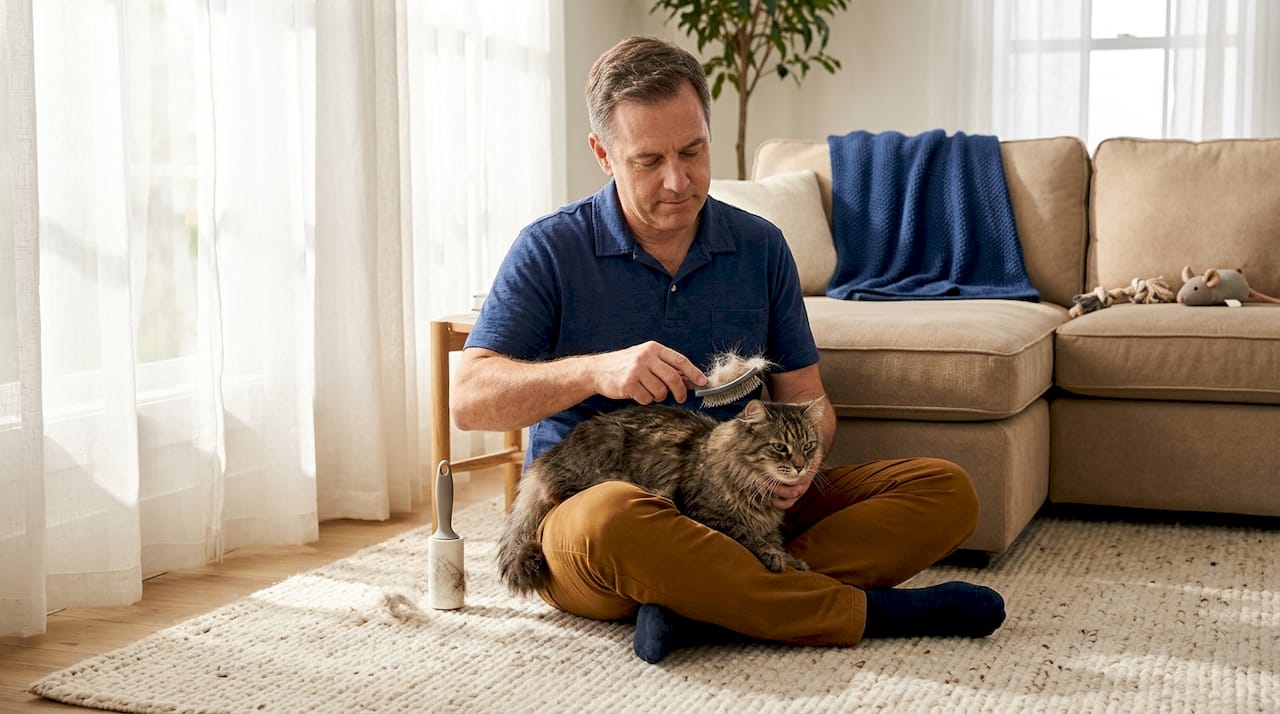
This means a low-shedding dog or cat still produces allergens. In fact, non-shedding coats trap allergens close to the skin rather than releasing them into the air. Without regular grooming, that trapped dander builds up and can actually worsen allergy symptoms over time.
Consider a Poodle or a Bichon Frise, two dogs often marketed as hypoallergenic. Their coats do not shed much, but the allergens accumulate within the curls. Without proper coat maintenance, matting develops, and matted fur holds dander, saliva residue, and environmental debris against the skin. That is a concentrated allergen environment.
A few things to keep in mind about allergen sources:
- Dander is the most persistent allergen carrier and spreads easily through air and surfaces
- Saliva deposits allergens directly onto fur during self-grooming, especially in cats
- Urine carries allergenic proteins that can linger on bedding, furniture, and litter areas
- Low-shedding coats require grooming every three to four weeks professionally to prevent allergen buildup and matting
The myth of the hypoallergenic breed has real grooming consequences. Pet owners who believe their low-shedding dog needs less grooming often end up with a pet that carries more concentrated allergens, not fewer.
Grooming routines and product choices for sensitive pets
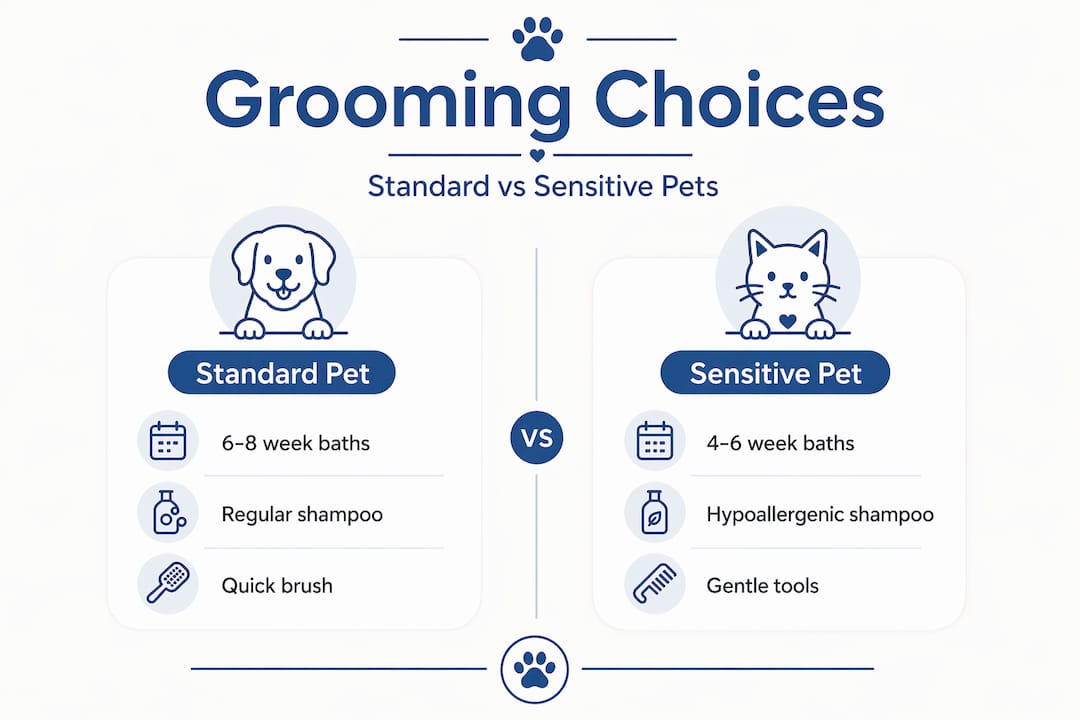
Not all grooming routines are created equal, especially when sensitivity is involved. Here is a practical comparison of what grooming looks like for a standard pet versus one with allergy concerns.
| Grooming Factor | Standard Pet | Sensitive or Allergy-Prone Pet |
|---|---|---|
| Bath frequency | Every 6-8 weeks | Every 4-6 weeks |
| Brushing | Weekly or as needed | Several times per week |
| Shampoo type | General-purpose | Fragrance-free, pH-balanced, sulfate-free |
| Professional grooming | Every 8-12 weeks | Every 3-4 weeks |
| Coat drying | Air dry or towel | Low-heat blow dry to prevent damp allergen buildup |
| Product review | Label not a priority | Check every ingredient against known irritants |
When choosing products, the label “hypoallergenic” does not carry a formal regulatory definition. Marketing claims must be examined critically. Always read the full ingredient list. If you see artificial fragrances, parabens, or sulfates, the “hypoallergenic” label on the front means very little.
For tools, a slicker brush works well on most coat types for removing loose dander before bathing. A rubber curry brush helps lift debris from short coats without irritating the skin. During bathing, dilution and thorough rinsing influence effectiveness more than the product alone. Shampoo residue left on skin is a common cause of post-bath itching, even with gentle formulas.
Diet also plays a role that many owners overlook. Omega-3 fatty acids from fish oil support skin barrier function and reduce flakiness, meaning less dander production overall. Hydration matters too. A well-hydrated pet has healthier skin that sheds less dander. You can explore a broader overview of pet shampoo types to help match products to your pet’s specific needs.
Pro Tip: When testing a new hypoallergenic shampoo, do a small patch test on your pet’s inner foreleg before full application. Wait 24 hours and check for redness, itching, or swelling. This simple step protects sensitive pets from unexpected reactions.
How grooming fits into broader allergy management
Grooming is a powerful tool, but it works best as part of a larger plan. It reduces allergen load. It does not eliminate it. If your pet has chronic skin conditions like open sores or infections, hypoallergenic grooming products provide support, but a veterinarian should guide the full treatment approach. Grooming cannot heal a skin infection. It can, however, keep a healthy pet’s skin barrier strong enough to resist one.
Here is how to build grooming into a wider allergen reduction strategy:
- Vacuum frequently using a HEPA filter vacuum, and pay special attention to your pet’s favorite spots
- Wash bedding weekly in hot water to break down allergenic proteins trapped in fabric
- Use air purifiers with HEPA filters in rooms where your pet spends the most time
- Minimize saliva contact by washing your hands after your pet licks you and avoiding face contact
- Clean litter areas often if you have cats, since urine is a significant allergen source
- Book professional grooming on a consistent schedule rather than waiting until your pet looks disheveled
Environmental allergen management works in tandem with grooming. A beautifully groomed pet still sheds allergens into a home that hasn’t been cleaned. The two efforts reinforce each other. Grooming reduces what your pet carries. Home cleaning removes what ends up in your environment.
If your pet shows signs of persistent skin irritation, hair loss, or unusual scratching, consult a veterinarian before adjusting your grooming routine significantly. Some reactions require medical diagnosis, not a shampoo switch.
The growing market for hypoallergenic grooming
The demand for specialized grooming products and services has climbed steadily, and it is not slowing down. The hypoallergenic grooming market grows at 5-7% annually in several regions, driven by rising allergy diagnoses and a growing group of pet owners who treat their animals as family members deserving premium care.
This growth has brought real benefits. Better formulations, more transparency in ingredient labeling, and expanded professional service options. But it has also created a crowded market where “hypoallergenic” on a label can mean almost anything. Here is how to navigate it smartly:
- Prioritize ingredient lists over marketing claims. A short, recognizable ingredient list is often a better sign than bold label promises.
- Look for veterinary partnerships. Brands that work with veterinary dermatologists tend to produce more trustworthy formulations.
- Choose certified groomers. Increased allergy awareness has raised standards among professional groomers, and many now specialize in sensitive-skin care.
- Ask about product sourcing. Reputable grooming services will tell you exactly what products they use and why.
- Be consistent. Premium products used occasionally will underperform basic products used on a reliable schedule.
The growth in specialized grooming services reflects a real shift in how pet owners think about their animals’ care. Hypoallergenic grooming is no longer a niche request. It is becoming the standard for thoughtful pet ownership.
My honest take on hypoallergenic grooming
I’ve worked with enough pet owners navigating allergy concerns to see the same pattern repeat itself. Someone buys the most expensive hypoallergenic shampoo on the shelf, uses it once a month, and wonders why their pet still triggers reactions. The product is not the problem. The inconsistency is.
What I’ve learned is that hypoallergenic grooming is 80% discipline and 20% product choice. You can use a mid-range, well-formulated shampoo and achieve better results than someone spending three times as much who skips grooming weeks. The allergens accumulate quietly. A missed session means your pet’s coat has two or three weeks’ worth of dander and dried saliva just waiting to become airborne.
I’ve also seen the other extreme: owners who treat every grooming product as if it’s a medical cure. Grooming will not fix a pet with untreated allergies or skin disease. If your dog is scratching raw patches or your cat is losing fur in chunks, that’s a vet conversation, not a shampoo upgrade. Getting a veterinary-informed perspective on grooming makes a meaningful difference for pets with genuine skin conditions.
My practical advice: build a grooming schedule and protect it. Check ingredients before buying anything. And if you’re unsure whether your pet’s skin issues go beyond routine sensitivity, get a professional opinion before experimenting with products.
— Growth
Let Faroopets take care of your pet’s sensitive skin
At Faroopets, we understand that grooming a pet with sensitive skin or allergy concerns requires more than a one-size-fits-all approach. We care about your pet’s comfort from the very first brush stroke.

Our certified groomers in Dubai are trained to work with sensitive pets, using carefully selected, gentle products suited to each animal’s individual needs. Whether you’re looking for professional dog grooming or specialized cat grooming services, we bring the full experience directly to your door in our sanitized, well-maintained mobile vans. Every session is designed to reduce allergen buildup while keeping your pet calm, clean, and comfortable. We also offer a curated range of sensitive-skin pet products if you’d like to maintain your pet’s coat between professional visits. Ready to give your pet the gentle care they deserve? Book your session today and let us handle the rest.
FAQ
What does hypoallergenic pet grooming mean?
Hypoallergenic pet grooming refers to grooming practices and products designed to minimize allergen exposure for sensitive pets or allergy-prone owners. It does not mean allergen-free, but rather a gentler, more targeted approach to reducing allergenic proteins in fur, dander, and skin.
Is hypoallergenic grooming effective for allergy sufferers?
Yes, when done consistently. Regular grooming reduces the allergen load your pet carries, but it works best alongside home cleaning routines like vacuuming with HEPA filters and washing bedding frequently.
What should I look for in a hypoallergenic pet shampoo?
Look for formulas that are fragrance-free, dye-free, and pH-balanced for pet skin, typically between 5.5 and 7.4. Avoid products containing parabens, sulfates, and artificial preservatives regardless of what the label claims.
Do hypoallergenic dog breeds still need grooming?
Absolutely. Low-shedding breeds trap allergens in their coats rather than releasing them. Without regular grooming every three to four weeks, dander and saliva residue build up and can worsen allergy symptoms.
When should I see a vet instead of changing grooming products?
If your pet shows persistent itching, skin infections, open sores, or significant hair loss, consult a veterinarian before making grooming changes. Grooming supports skin health but cannot treat underlying medical conditions.
