


Posted by Faroo Pets Grooming
on June 09, 2026

TL;DR:
- Aromatherapy using pet-safe, diluted essential oils can reduce stress and anxiety during grooming when properly applied.
- It works by stimulating the olfactory system and limbic brain pathways, promoting calming responses in pets.
- Responsible use requires careful oil selection, proper dilution, respecting species differences, and veterinary guidance.
Aromatherapy in pet grooming is defined as the deliberate use of pet-safe essential oils and aromatic compounds to create calming, therapeutic effects during grooming sessions. The role of aromatherapy in pet grooming goes well beyond making your dog smell pleasant after a bath. When applied correctly, scent-based therapies reduce anxiety, lower stress hormones, and transform what can be a frightening experience into something your pet actually tolerates, or even enjoys. At Faroopets, we see this firsthand with every mobile grooming visit across Dubai.
How does aromatherapy physiologically affect pets during grooming?
The science behind aromatherapy’s calming effects on pets starts with one remarkable fact: dogs have up to 300 million olfactory receptors, roughly 60 times more than humans. That level of sensitivity means a scent that barely registers to you lands with full force on your dog. Lavender, for example, does not just smell pleasant to a dog. It triggers a measurable physiological response.
Here is why that matters. Olfactory pathways access the amygdala rapidly, enabling scents to modulate fear and stress responses before conscious processing occurs. In practical terms, your pet’s nervous system begins calming down before their brain has even “decided” to relax. No other sensory input works that fast or that directly on the emotional centers of the brain.
“Aromatherapy works primarily through olfactory stimulation of the limbic system to alleviate acute stress, but it cannot replace behavioral or medical treatments for chronic anxiety. It is most effective as a sensory supplement within a comprehensive behavioral protocol.”
This is the distinction that separates aromatherapy from a gimmick. It is a real physiological tool with real limits. Scent stimulates the limbic system, which regulates emotions and stress hormones like cortisol. For pets who experience acute grooming anxiety, that stimulation can make a meaningful difference. For pets with deep-rooted behavioral issues, aromatherapy supports treatment but does not replace it. Understanding that boundary is what responsible use looks like.
What are the safest essential oils and techniques for pet grooming?
Not all essential oils belong near your pet. The ones with the strongest safety record in grooming contexts are lavender, chamomile, and marjoram, all used in heavily diluted form. These three appear consistently in professional grooming settings because they are gentle enough for sensitive animals while still delivering calming effects.
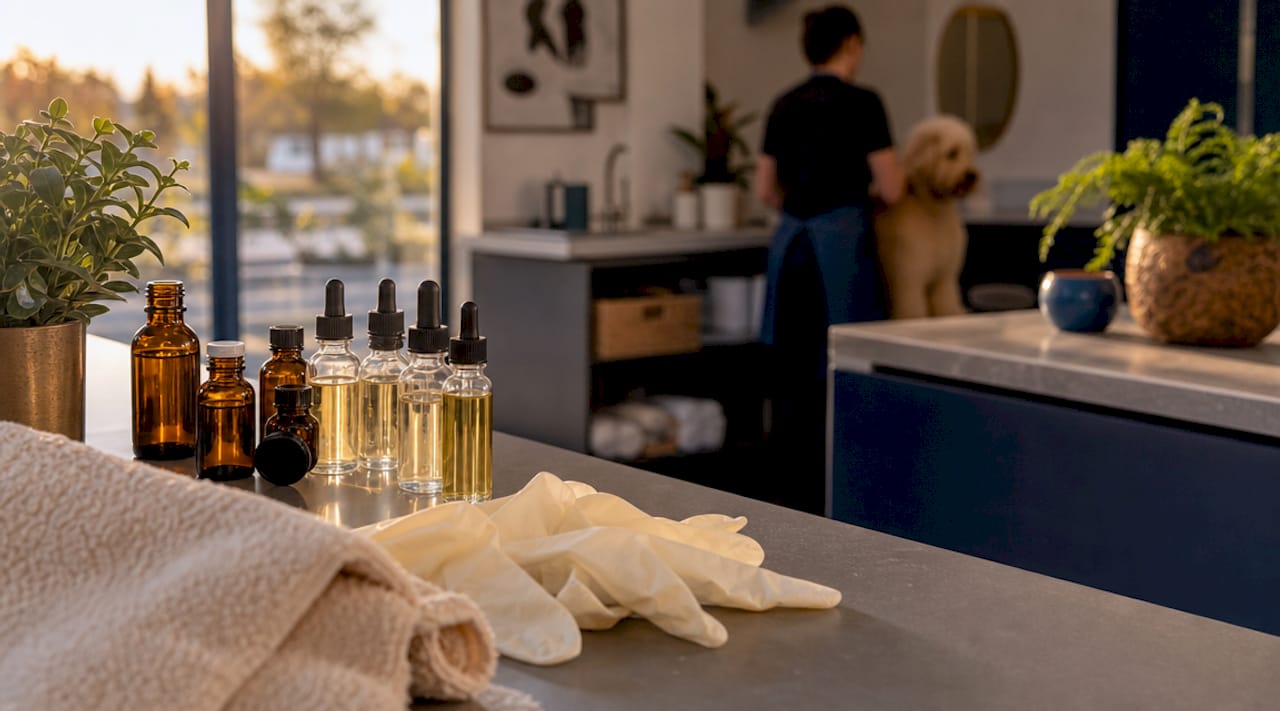
The most structured approach to applying aromatherapy during grooming is the staged bath ritual method. A staged bath ritual consists of three phases: scent introduction before the bath, aromatic support during the grooming process, and soothing tactile reinforcement afterward. Each phase builds on the last, creating a positive sensory memory your pet begins to associate with grooming over time.
Here is how to apply this method at home:
- Pre-bath scent introduction. Diffuse a diluted lavender or chamomile blend in the grooming area 10 to 15 minutes before you begin. Let your pet enter the space voluntarily and sniff at their own pace.
- During grooming. Use a lightly scented grooming spray on your hands or a soft brush. Avoid spraying directly onto the face or near the eyes and nose.
- Post-groom calming ritual. Finish with gentle massage using a diluted chamomile balm on the paw pads or between the shoulder blades. This reinforces the positive association and helps your pet wind down.
- Monitor throughout. Watch for yawning, lip licking, or turning away. These are your pet’s signals that the scent is too strong or the session is too long.
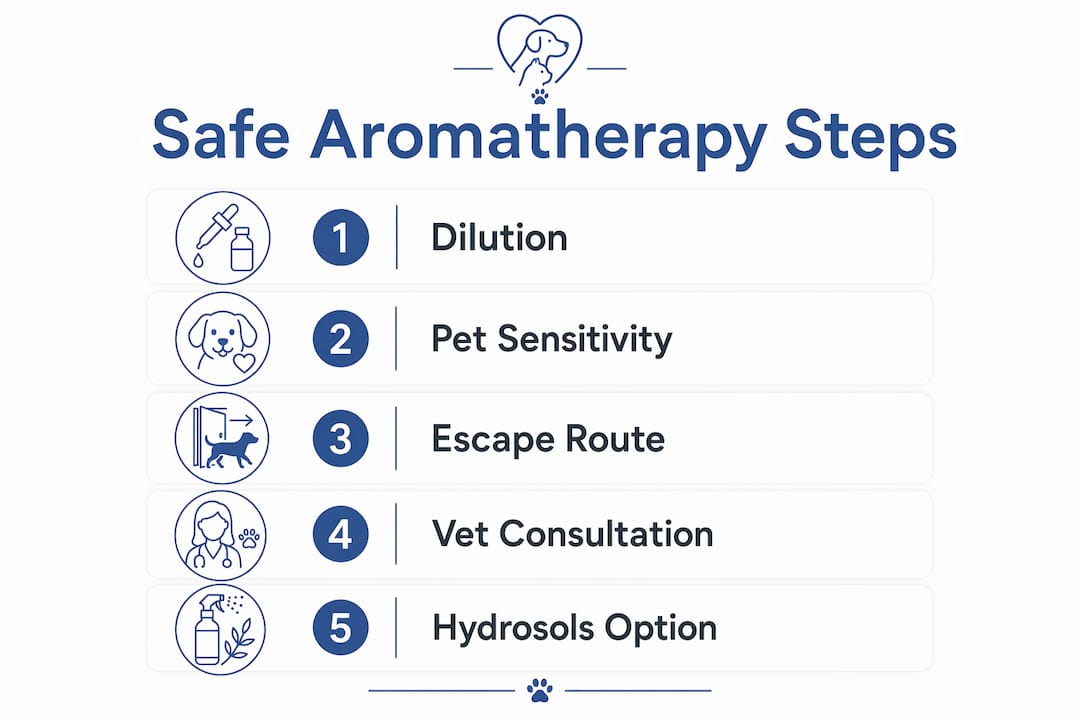
Topical application requires particular care. Essential oils must be heavily diluted and never applied undiluted to avoid systemic absorption that can cause serious adverse effects. A safe dilution ratio for dogs is typically 0.5% to 1%, which means one drop of essential oil per teaspoon of carrier oil like fractionated coconut oil.
Pro Tip: If your pet is young, elderly, or particularly sensitive, consider floral waters (hydrosols) instead of essential oils. Hydrosols are the water-based byproduct of steam distillation and carry a fraction of the aromatic concentration, making them a gentler option with significantly lower toxicity risk.
What risks and precautions must pet owners know about?
The single most important thing to understand about aromatherapy for pets is this: natural does not mean safe. Many essential oils that are harmless to humans are genuinely toxic to animals. Knowing which ones to avoid is not optional. It is the foundation of responsible use.
Oils to keep completely away from your pets include:
- Tea tree (melaleuca): Toxic to both dogs and cats even in small amounts; causes neurological symptoms and skin irritation
- Eucalyptus: Can cause drooling, vomiting, and central nervous system depression in dogs and cats
- Citrus oils (lemon, orange, grapefruit): Contain limonene and linalool, which are harmful to cats and can irritate dogs
- Peppermint: Causes respiratory distress and gastrointestinal upset, particularly in cats
- Clove and cinnamon: Highly irritating to mucous membranes and toxic at low concentrations
Improper use of essential oils can cause respiratory distress, coughing, sneezing, pneumonia, and neurological and gastrointestinal issues from licking contaminated fur. That last point is critical. Pets groom themselves. Any oil applied to their coat can end up ingested.
Cats and birds require extra caution beyond what applies to dogs. Cats lack the liver enzymes needed to process phenols and terpenes, meaning oils that are safe for dogs can cause severe toxicity in cats. Birds have extremely sensitive respiratory systems and should never be in a room where a diffuser is running.
One safety principle that often gets overlooked: always give pets an escape route during any aromatherapy session. Forced scent immersion causes stress rather than relief. If your pet moves away from the diffuser or leaves the room, that is consent in action. Respect it.
Pro Tip: Before introducing any new essential oil into your grooming routine, consult your veterinarian. This is especially true for pets on medication, since some essential oils interact with drug metabolism pathways.
How can you integrate aromatherapy into your home grooming routine?
Starting slowly is the most effective strategy. Pets build positive associations through repetition, and a rushed introduction to strong scents can create the opposite of what you want. Think of it as reducing grooming-related stress through gradual, consistent exposure rather than a single session.
Here is a practical framework for at-home integration:
- Start with one scent at a time. Introduce a single diluted oil, such as lavender, and observe your pet’s response over several sessions before adding anything else.
- Use diffusers in well-ventilated rooms. Run sessions for no more than 20 to 30 minutes. Open a window and never seal your pet in a room with a running diffuser.
- Apply diluted oils to low-risk areas. Diluted oils between shoulder blades or on paw pads provide calming effects with minimal ingestion risk. Avoid the face, ears, and groin.
- Combine with gentle handling. Aromatherapy works best alongside gentle grooming techniques like slow movements, soft voices, and positive reinforcement. Scent alone cannot compensate for rough handling.
- Keep a simple log. Note which oils you used, the dilution, the duration, and your pet’s behavior. This helps you identify what works and catch early signs of sensitivity.
One underused technique worth trying: allowing pets to self-select among diluted essential oils. Studies show rescue dogs reduce thunderstorm anxiety by choosing chamomile or vetiver scents when given the option. Offering your dog a gentle sniff of two or three diluted options before a grooming session and watching which one they move toward gives them agency and often produces better results.
Professional groomers include aromatherapy as an optional spa service, using diluted pet-safe blends with gentle massages and scented balms. Watching how a trained groomer introduces and applies scent during a session is one of the best ways to learn the right technique before replicating it at home.
Key takeaways
Aromatherapy enhances pet grooming by using diluted, species-appropriate essential oils to stimulate the limbic system and reduce acute stress, but it requires careful selection, proper dilution, and veterinary guidance to be safe and effective.
| Point | Details |
|---|---|
| Olfactory sensitivity is the mechanism | Dogs have up to 300 million olfactory receptors, making scent a powerful and fast-acting calming tool. |
| Staged rituals outperform single applications | Pre-bath, during-groom, and post-groom scent phases build lasting positive associations over time. |
| Toxic oils are a real danger | Tea tree, eucalyptus, peppermint, and citrus oils must be kept away from all pets without exception. |
| Cats and birds need extra protection | Cats lack enzymes to process many oils safely; birds cannot tolerate diffused scents in enclosed spaces. |
| Consent and escape routes matter | Never force scent exposure. Pets that move away from a scent are communicating discomfort clearly. |
Why aromatherapy deserves more respect and more caution than it gets
Most conversations about aromatherapy for pets land in one of two camps. Either it is presented as a miracle solution for anxious animals, or it is dismissed as wellness theater with no real effect. Both positions miss the point.
What I have seen, working alongside groomers and pet owners across Dubai, is that aromatherapy is a genuinely useful tool when it is treated like one. That means understanding the physiology, respecting species differences, and accepting that “natural” is not a synonym for “safe.” A dog who visibly relaxes during a lavender-scented grooming session is not experiencing a placebo effect. The olfactory pathway to the amygdala is real, and the calming response is measurable.
The mistake most owners make is skipping the education and going straight to application. They buy a bottle of tea tree oil because it smells clean, or they run a eucalyptus diffuser because it helps them unwind after a long day. That is how pets end up in emergency veterinary care. The gap between good intentions and good outcomes in aromatherapy is filled entirely by knowledge.
My honest recommendation: treat aromatherapy as a supplement to professional grooming, not a replacement for it. Use it to build positive associations, reduce acute stress, and make grooming sessions more comfortable. Pair it with personalized grooming rituals that account for your specific pet’s temperament and history. And when in doubt, ask your vet before you open the bottle.
— Growth
Give your pet the grooming experience they deserve
At Faroopets, our certified groomers in Dubai are trained to incorporate pet-safe aromatherapy techniques into every session with care and precision. We use only diluted, species-appropriate blends, and we always follow your pet’s lead. Whether your dog gets anxious at bath time or your cat needs extra reassurance, our mobile grooming service brings a calm, controlled environment directly to your door.

Book a session with our dog grooming specialists or explore our dedicated cat grooming services to find the right aromatherapy-enhanced package for your pet. Your pet’s comfort is always our first priority, and we would love to show you what a truly stress-free grooming experience looks like.
FAQ
What is the role of aromatherapy in pet grooming?
Aromatherapy in pet grooming uses diluted, pet-safe essential oils to stimulate the olfactory system and calm the limbic brain, reducing stress and anxiety during grooming sessions. It works best as a sensory supplement alongside gentle handling and positive reinforcement.
Which essential oils are safe for dogs during grooming?
Lavender, chamomile, and marjoram are among the most widely used pet-safe oils in grooming, always applied in heavily diluted form. Oils like tea tree, eucalyptus, and peppermint are toxic and must be avoided entirely.
Can you use aromatherapy on cats?
Cats require extreme caution because they lack the liver enzymes needed to metabolize phenols and terpenes found in many essential oils. Hydrosols (floral waters) are a safer alternative for cats, and any aromatherapy use should be approved by a veterinarian first.
How do you dilute essential oils for pet grooming at home?
A safe dilution for dogs is typically 0.5% to 1%, which equals approximately one drop of essential oil per teaspoon of carrier oil such as fractionated coconut oil. Never apply undiluted oils directly to a pet’s skin or coat.
Can aromatherapy replace anxiety medication for pets?
Aromatherapy is effective for acute grooming stress but cannot replace veterinary or behavioral treatment for chronic anxiety. It works best as part of a broader care plan that includes professional guidance, consistent training, and, where needed, prescribed medication.
