


Posted by Faroo Pets Grooming
on July 02, 2026

TL;DR:
- Grooming anxiety in pets results from sensory overload and stress stacking in traditional salons. Using mobile grooming and cooperative care reduces anxiety by eliminating environmental triggers and giving pets more control. Consistent at-home desensitization improves grooming comfort within a few weeks.
Grooming anxiety is a nervous system response to overwhelming sensory inputs, not a personality flaw in your pet. Fear and anxiety during handling rank among the most commonly reported behavior concerns pet owners bring to professionals. Understanding why pets dislike traditional salons means looking at the full picture: loud equipment, unfamiliar strangers, forced restraint, and waits that stretch for hours. These stressors stack on top of each other, turning what should be a simple grooming visit into a genuinely frightening experience. The good news is that once you recognize the causes, you can find real solutions that put your pet’s comfort first.
Why pets dislike traditional salons: the sensory overload problem
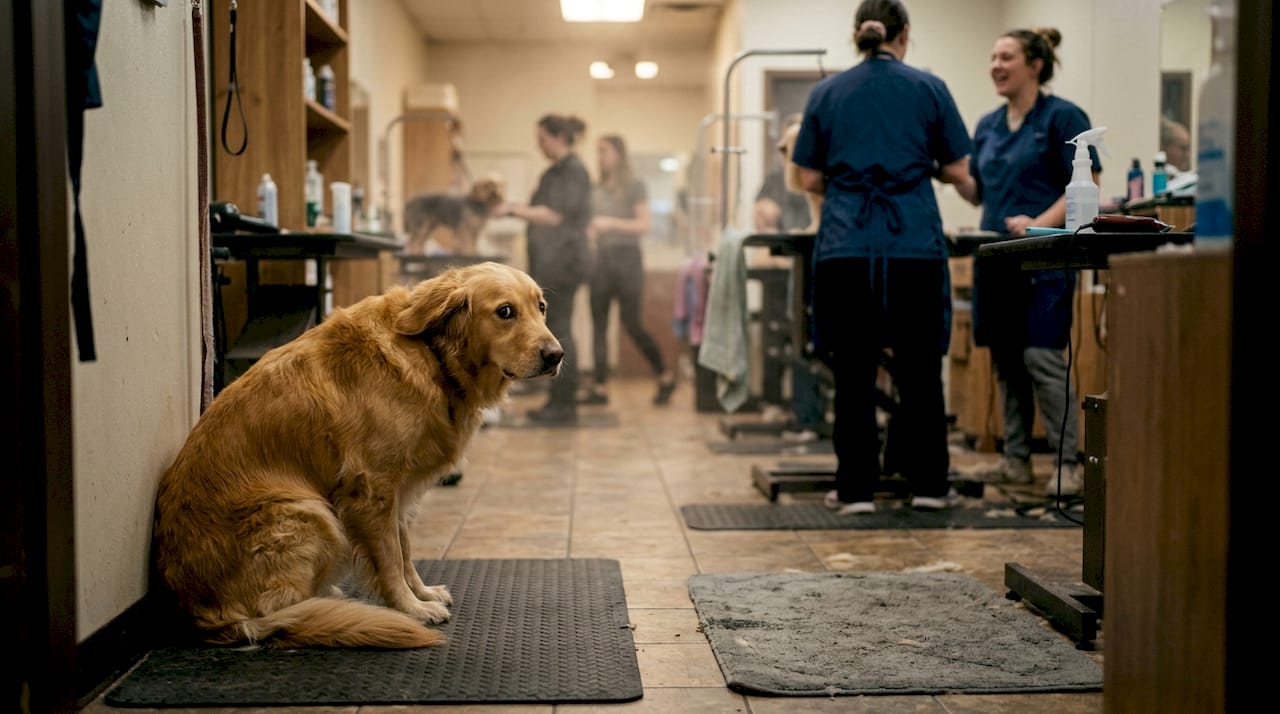
Traditional grooming salons are built for efficiency, not for animal comfort. The result is an environment that overwhelms a pet’s senses from the moment they walk through the door.
The core triggers include:
- Noise and vibration: High-velocity dryers, clippers, and barking dogs create a constant wall of sound that pets cannot escape.
- Unfamiliar smells: Disinfectants, other animals, and grooming chemicals flood a pet’s highly sensitive nose.
- Strangers handling them: Being touched by someone they do not know activates a threat response, especially in cats.
- Forced restraint: Holding a pet still against their will signals danger to their nervous system.
- Cages and waiting areas: Confinement in a strange space adds a layer of helplessness to an already stressful situation.
Grooming anxiety results from stacked stressors in salon environments rather than intrinsic pet behavior issues. This concept is called “stress stacking,” where each individual trigger may seem minor, but the combination pushes a pet past their threshold. A dog who tolerates a dryer at home may completely shut down when that same dryer is used in a room full of barking strangers.
Physical discomfort also plays a hidden role. Dental pain or joint stiffness can make being lifted, positioned, or brushed genuinely painful. Pets cannot tell you their hip hurts. They show it by pulling away, growling, or snapping, and those reactions get labeled as bad behavior.
Pro Tip: If your pet’s grooming resistance appeared suddenly, schedule a vet check before the next appointment. Underlying pain is a common and overlooked cause of grooming aversion.
How do pets show they are stressed by grooming?
Pets communicate discomfort long before they reach a full panic state. The problem is that most owners and even some groomers miss the early signals.
Common stress signs to watch for include:
- Lip licking and yawning when not tired or hungry
- Whale’s eye (showing the whites of the eyes)
- Tucked tail and flattened ears
- Panting without heat or exercise
- Freezing or refusing to move
- Excessive shedding during the appointment
Observing micro-stress signals like lip licking, yawning, and whale’s eye during grooming prevents pets from reaching full panic states. Pausing briefly when these signals appear can de-escalate the situation before it becomes dangerous. That short pause costs nothing and saves enormous trust.
Many owners misread these signals as stubbornness or a difficult temperament. Owners frequently misinterpret physical pain responses as temperament issues rather than stress reactions. This misinterpretation leads to forcing the pet through the experience, which deepens the fear and makes the next visit worse. Understanding the difference between fear, anxiety, and defensive behavior is the first step toward helping your pet rather than accidentally making things harder.
Pro Tip: Film your pet’s next grooming session on your phone. Reviewing the footage often reveals stress signals you missed in the moment, giving you a clearer picture of when to intervene.
Why salon schedules and logistics make pet stress worse
The stress of a traditional salon visit does not begin when the clippers turn on. It starts much earlier and lasts much longer than most pet owners realize.
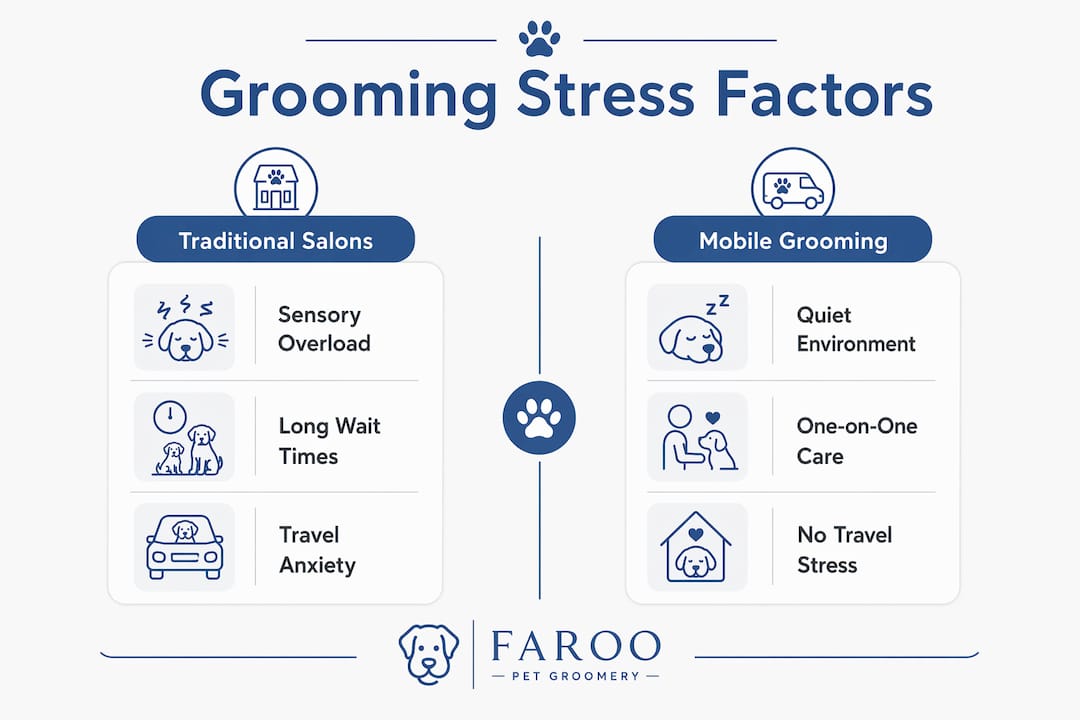
| Stage | Traditional salon | Mobile grooming |
|---|---|---|
| Travel | Car ride with anticipatory anxiety | No travel required |
| Wait time | 4–6 hours total stay | Appointment is immediate |
| Environment | Shared space with multiple animals | One-on-one, quiet setting |
| Heat exposure | Concrete areas can exceed 45°C | Controlled van environment |
| Separation | Pet left alone with strangers | Owner can stay nearby |
Traditional salon visits often involve total stays of 4–6 hours, including drop-off and pick-up, which significantly increases stress for senior or anxious pets. That extended timeline means a pet spends hours in an unfamiliar, loud environment with no way to predict when it will end. For senior pets or those with existing anxiety, this duration alone can cause lasting behavioral changes.
Heat stress adds another layer of risk, particularly in Dubai’s climate. Surrounding concrete can reach temperatures above 45°C, turning a short walk from the car to the salon into a physically taxing experience. The car ride itself triggers anticipatory anxiety in many pets, as they learn to associate the journey with the stressful destination. By the time they arrive, their stress threshold is already compromised before a single brush stroke.
How do mobile grooming and cooperative care reduce salon stress?
Two approaches have changed the way the grooming industry thinks about pet anxiety: mobile grooming and cooperative care. Both address the root causes of salon stress rather than just managing the symptoms.
Mobile grooming eliminates anticipatory stress by bringing the grooming experience to a predictable, quiet, home setting. Pets avoid travel, waiting rooms, and the chaos of a shared salon environment. Owners who have switched report a visible reduction in their pet’s pre-grooming anxiety, often within the first few sessions. You can learn more about how mobile pet care in Dubai compares to traditional salon visits in terms of safety and hygiene.
Cooperative care is a behavioral science approach that gives pets agency during grooming. Cooperative care trains pets to opt in and control their sessions, restoring a sense of choice and reducing fear related to forced restraint. The standard is simple: if a pet signals they want to leave, the session pauses. This approach rebuilds trust over time and makes each subsequent grooming session easier.
| Method | Key benefit | Best for |
|---|---|---|
| Mobile grooming | Removes travel and salon environment stressors | Anxious, senior, or reactive pets |
| Cooperative care | Restores pet agency and reduces restraint fear | Pets with deep-seated grooming aversion |
| Gradual desensitization | Builds positive associations over time | Young pets or those new to grooming |
| Positive reinforcement | Rewards calm behavior during grooming | All pets, especially during early training |
For moderately anxious pets, consistent daily desensitization sessions show improvement within 2–6 weeks. That timeline is realistic and encouraging. Short, frequent sessions at home with a brush and high-value treats build the positive associations that make professional grooming far less frightening.
Pro Tip: Start desensitization by simply placing the brush near your pet during a calm moment, then reward with a treat. Do not attempt brushing until your pet shows no reaction to the brush being present.
Practical steps to reduce grooming anxiety at home and beyond
Pet owners hold more power over their pet’s grooming experience than they often realize. Small, consistent changes at home create lasting improvements.
-
Start with short, positive sessions. Practice handling your pet’s paws, ears, and mouth daily for 30 seconds at a time. Pair every touch with a treat. This builds tolerance for the types of handling used during grooming.
-
Choose the right groomer. Look for groomers who use gentle handling techniques and who are willing to pause when your pet signals distress. Ask directly whether they practice low-stress or fear-free methods.
-
Manage your own emotions. Owner stress directly influences pet anxiety; pets read their owners’ tension and react accordingly. Staying calm and neutral during grooming preparation makes a measurable difference.
-
Use high-value rewards strategically. Reserve your pet’s absolute favorite treat exclusively for grooming sessions. The rarity of the reward increases its power as a positive association.
-
Create a consistent routine. Pets thrive on predictability. Grooming at the same time, in the same location, with the same tools reduces the novelty that triggers anxiety. Read more about why pets resist grooming and how to address it step by step.
-
Consider coat health as part of the solution. Healthy, well-maintained coats are easier and less painful to groom. Regular brushing at home reduces the intensity of professional grooming sessions and the time your pet spends on the table.
Key Takeaways
Pets dislike traditional salons because stacked sensory stressors, forced restraint, and long wait times overwhelm their nervous systems, and mobile grooming or cooperative care methods directly address each of these causes.
| Point | Details |
|---|---|
| Stress stacking is the core problem | Multiple salon triggers combine to push pets past their anxiety threshold, not any single factor alone. |
| Early signals prevent panic | Lip licking, yawning, and whale’s eye are warnings. Pausing grooming at these signs prevents escalation. |
| Salon logistics add hidden stress | Total stays of 4–6 hours and heat exposure during transport increase anxiety before grooming even begins. |
| Mobile grooming removes root causes | One-on-one, quiet, at-home grooming eliminates travel, waiting rooms, and shared animal environments. |
| Consistent home practice works | Daily desensitization sessions show measurable improvement in moderately anxious pets within 2–6 weeks. |
What I have learned from watching pets in grooming environments
I have spent enough time around anxious pets in grooming settings to say this clearly: the salon model was designed around human convenience, not animal psychology. That is not a criticism of groomers, many of whom are deeply skilled and caring. It is a structural problem.
The owners who make the most progress are the ones who stop asking “why is my pet so difficult?” and start asking “what is my pet trying to tell me?” That shift in perspective changes everything. A dog who snaps at the dryer is not aggressive. A cat who hides before a salon visit is not antisocial. They are both communicating, clearly and consistently, that something in the experience is too much.
The grooming industry is genuinely moving toward cooperative care models that give pets more control. That shift is backed by behavioral science, and it works. But it requires patience from owners, and it requires choosing groomers who prioritize the pet’s experience over speed. Happiness is just a brush stroke away when the environment and the approach are right. The right grooming approach for anxious pets is not a luxury. It is the baseline your pet deserves.
— Growth
Faroopets brings calm, professional grooming to your door
Your pet should not have to dread grooming day. Faroopets provides professional mobile grooming for dogs, cats, and birds across Dubai, with certified groomers trained in gentle, anxiety-aware handling. Every session happens in a sanitized, well-maintained van at your location, removing the travel, the waiting room, and the chaos that make traditional salons so stressful.
Whether your dog needs a full grooming session or your cat deserves a calm, specialized grooming experience, Faroopets has a package designed around your pet’s comfort. Book directly online or send your preferred time by message. Your pet’s next grooming session can be the one they actually feel good about.
FAQ
Why do pets dislike traditional grooming salons?
Pets dislike traditional salons because the environment stacks multiple stressors at once, including loud equipment, unfamiliar people, forced restraint, and long wait times. This sensory overload triggers genuine fear and anxiety responses in their nervous systems.
What are the signs my pet is stressed during grooming?
Common signs include lip licking, yawning, showing the whites of the eyes, panting, freezing, and excessive shedding. These micro-stress signals appear before a pet reaches full panic and should prompt a brief pause in grooming.
Is mobile grooming better for anxious pets?
Mobile grooming removes the core stressors of traditional salons by providing a quiet, one-on-one session at your home with no travel or waiting room. Owners consistently report reduced anxiety in their pets after switching to mobile grooming.
How long does it take to reduce pet grooming anxiety?
For moderately anxious pets, a consistent daily protocol of short desensitization sessions typically shows improvement within 2–6 weeks. Short, positive sessions with high-value treats build trust and tolerance over time.
Can my own stress affect my pet during grooming?
Owner emotions directly influence pet behavior during grooming. Pets read tension in their owners and react accordingly, so staying calm and neutral before and during grooming sessions helps your pet feel safer.
