


Posted by Faroo Pets Grooming
on July 18, 2026

TL;DR:
- Regular grooming builds a strong bond by promoting oxytocin release and calming responses in pets. Consistent, gentle handling from an early age fosters trust and reduces stress throughout their lives. Combining professional and home grooming routines enhances emotional connection and supports long-term pet well-being.
Regular grooming is defined as the single most effective daily ritual for building a deep, lasting bond between you and your pet. The advantages of grooming for pet bonding go far beyond a clean coat. Gentle, repetitive touch activates your pet’s parasympathetic nervous system, triggers oxytocin release in both of you, and creates a predictable routine your pet learns to trust. Faroopets sees this connection every day through our work with dogs, cats, and birds across Dubai. Grooming is not maintenance. It is relationship building, one brush stroke at a time.
1. How grooming activates relaxation and reduces pet stress
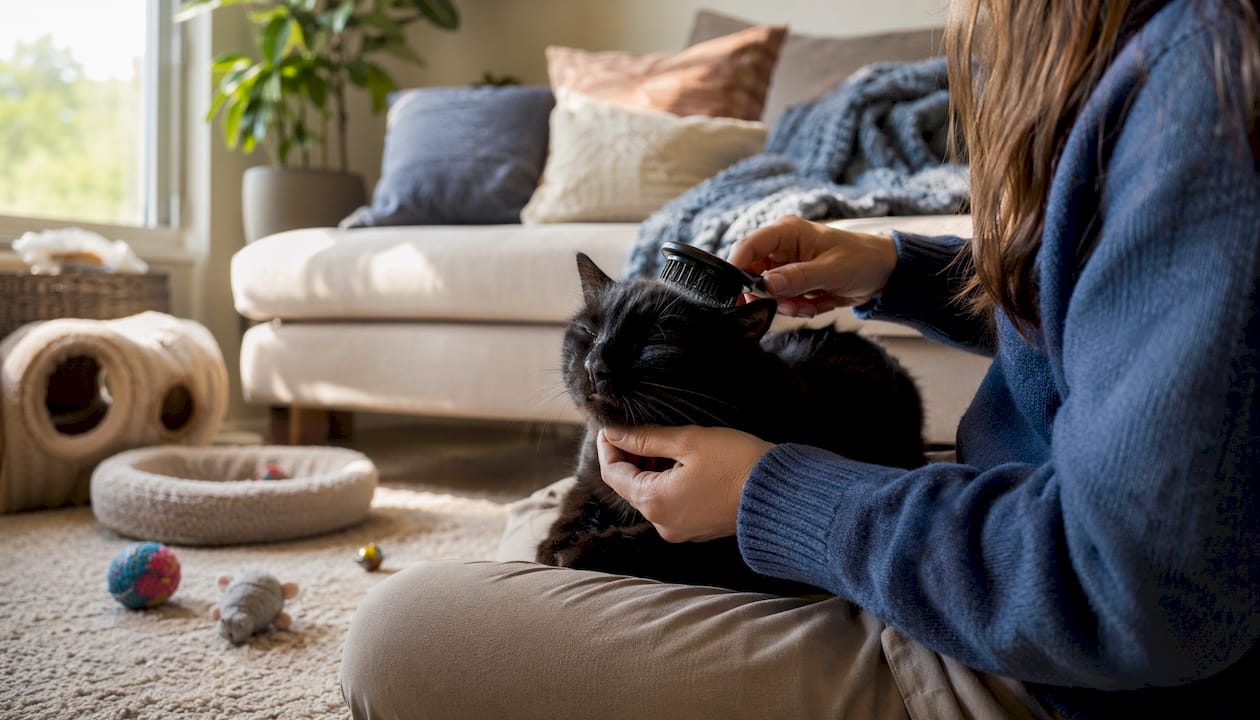
Gentle grooming activates a pet’s parasympathetic nervous system, which is the body’s “rest and digest” mode. This lowers heart rate, reduces stress hormones, and creates a physical state of calm. The effect is similar to what deep breathing does for humans. Your pet’s body literally shifts into a relaxed state when you groom with slow, steady strokes.
Calming grooming routines teach your pet to associate your touch with safety. A dog that gets brushed at the same time each evening starts to anticipate the session with relaxed body language rather than avoidance. That association builds over weeks and months into something powerful: your pet sees you as a source of comfort.
- Use slow, deliberate strokes rather than quick, nervous movements
- Start with areas your pet enjoys, such as the back or behind the ears
- Keep sessions short at first, around 5 minutes, and build from there
- Speak in a low, steady voice throughout the session
- End every session before your pet shows signs of stress
Pro Tip: Pets mirror their owner’s emotional state during grooming. Your calmness matters more than your technique. Take three slow breaths before you pick up the brush.
2. How grooming triggers oxytocin and emotional attachment
Oxytocin is the hormone your brain releases during close physical contact. It is the same chemical that bonds parents to newborns. Grooming triggers oxytocin release in both you and your pet simultaneously, which means every grooming session is a shared biological bonding event. This is not a metaphor. It is neurochemistry.
The mutual nature of this response is what makes grooming unique among pet bonding activities. Playing fetch raises your dog’s excitement. Grooming raises both of your attachment hormones at the same time. That shared hormonal response is why pets that are groomed regularly by their owners tend to show stronger attachment behaviors, such as seeking proximity and making eye contact.
- Oxytocin release requires calm, sustained physical contact, not just any touch
- Even short sessions of 10 minutes produce measurable hormonal effects
- The bond strengthens cumulatively, so consistency matters more than session length
- Cats, dogs, and birds all respond to gentle, repetitive tactile contact
The practical takeaway is simple. Grooming is one of the few pet bonding activities that works on a biological level for both of you at the same time. No other daily care task does that.
3. Building trust through consistent grooming routines
Starting grooming routines from an early age reduces lifelong grooming-related stress and defensive behaviors. Puppies and kittens that experience gentle handling early develop a baseline of trust that carries through their entire lives. That trust shows up during vet exams, nail trims, and emergency care, not just at home.
Predictability is the engine of trust. When your pet knows that grooming happens at the same time, in the same place, with the same calm energy, the session stops feeling like an unknown event. Predictability in grooming reduces anxiety and creates a genuine sense of safety. Your pet stops bracing for the unexpected and starts relaxing into the routine.
Here is a simple trust-building sequence you can follow:
- Choose a consistent time and location for every grooming session
- Let your pet sniff the brush or comb before you begin
- Start with the least sensitive areas and work toward more sensitive ones
- Pause if your pet tenses, wait for calm, then continue
- Reward calm behavior with a treat or quiet praise immediately after
Gentle handling of sensitive areas like paws and ears during grooming desensitizes pets over time. A dog that lets you handle its paws without flinching is a dog that will cooperate during nail trims and vet visits. That cooperation is a direct result of the trust you built through grooming.
Pro Tip: Never end a session immediately when your pet resists. Calm them first, then finish with one positive touch. This teaches your pet that calm behavior, not resistance, ends the session.
4. Grooming as a health monitoring tool
Regular grooming helps detect early signs of lumps, skin changes, and parasites that owners might otherwise miss for weeks. Your hands are the most sensitive diagnostic tool your pet has access to between vet visits. A lump found during a Tuesday brush session can mean an earlier diagnosis and a better outcome.
Early detection of health issues during grooming is one of the most significant benefits for your pet’s long-term well-being. Owners who groom regularly develop a detailed physical map of their pet’s body. They notice when something changes. That awareness deepens the emotional connection because it transforms grooming from a cosmetic task into an act of genuine care.
| What to check | What to look for | Why it matters |
|---|---|---|
| Skin and coat | Redness, flaking, bald patches | Early sign of allergies or infection |
| Lumps and bumps | New or growing masses | Potential cysts, tumors, or abscesses |
| Ears | Odor, discharge, dark debris | Signs of infection or ear mites |
| Paws and nails | Cracking, swelling, overgrowth | Pain, mobility issues, or injury |
| Eyes and nose | Discharge, cloudiness, crusting | Respiratory or eye conditions |
Owners who use grooming as a routine health assessment build a level of attentiveness that strengthens the bond. Your pet feels your focused, caring attention. You feel the satisfaction of knowing your pet inside and out.
5. Making grooming a positive, rewarding experience
Positive reinforcement during grooming reduces fear-based behaviors and promotes relaxation and cooperation over time. Rewarding calm behavior shapes your pet’s response to grooming the same way training shapes any other behavior. The treat or praise tells your pet’s brain: this situation is safe and good things happen here.
Fear-based behavior in grooming often arises from a lack of desensitization, not from the grooming itself. Most pets that resist grooming were simply never taught to associate it with positive outcomes. That is fixable with patience and consistency. You can find practical ideas for making grooming fun that work for different temperaments and breeds.
- Offer a small treat before, during, and after the session
- Use a calm, upbeat tone of voice throughout
- Recognize stress signals early: lip licking, yawning, flattened ears, or a tucked tail
- Adapt the session length and pace to your pet’s comfort level that day
- End every session with a moment of calm affection, such as a gentle scratch or quiet cuddle
Stopping grooming immediately upon resistance may reinforce negative behavior. The better approach is to pause, calm your pet, and then finish with a positive touch before ending the session. This small shift changes the lesson your pet learns from “resistance ends grooming” to “calm behavior brings good things.”
6. Grooming reduces anxiety and builds long-term emotional comfort
Grooming for pet anxiety reduction works because repeated calm handling rewires your pet’s stress response over time. A pet that was once nervous about being touched gradually learns that touch means safety. That shift in baseline anxiety has effects that extend well beyond grooming sessions into your pet’s overall daily temperament.
Pets with lower grooming-related anxiety tend to be calmer in other high-touch situations too. They handle vet exams better. They are easier to medicate. They recover from stressful events more quickly. The personalized grooming routine you build at home becomes a foundation for your pet’s emotional resilience across their entire life.
Regular grooming also gives you a reliable way to reconnect with your pet after a busy day. The ritual itself, the quiet time, the focused attention, signals to your pet that they matter. That signal is the core of what bonding actually is.
7. Grooming improves behavior and social confidence
Pets that are groomed regularly show better social behavior with strangers, other animals, and children. The reason is desensitization. A pet accustomed to being handled calmly by you is a pet that generalizes that comfort to other people and situations. Grooming builds a social confidence that goes beyond the home.
This is especially relevant for dogs in Dubai, where social outings, dog parks, and pet-friendly spaces are part of daily life. A dog that panics when touched by a stranger is a dog that has not been desensitized through regular handling. Grooming is the most accessible desensitization tool you have. You do not need a trainer or a special program. You need a brush and fifteen minutes.
Birds benefit from this too. Regular gentle handling during grooming sessions teaches birds that human touch is safe. That trust translates directly into a calmer, more affectionate bird outside of grooming time.
8. The role of grooming in strengthening the human-animal bond over time
The human-animal bond is defined by researchers as a mutually beneficial relationship between people and animals that positively influences the health and well-being of both. Grooming is one of the most direct ways to build and maintain that bond because it requires sustained, focused, physical attention from you and a willingness to be vulnerable from your pet.
That vulnerability is significant. A pet that allows you to handle its paws, clean its ears, and brush its belly is a pet that trusts you completely. That level of trust does not happen by accident. It is built through hundreds of small, positive grooming interactions over time. Each session is a deposit into your relationship account.
The health benefits of pet grooming compound this bond further. When your attentiveness during grooming leads to catching a skin issue early or noticing a new lump, your pet benefits directly from the relationship. The bond becomes functional, not just emotional. Your pet is healthier because of your connection.
9. Why professional grooming supports your bonding efforts at home
Professional grooming does not replace home grooming as a bonding tool. It supports it. A professional groomer handles the tasks that require specialized skill, such as breed-specific cuts, ear cleaning, and nail grinding, while you maintain the daily touch routine that builds emotional connection. The two work together.
Professional groomers trained in calm handling techniques also model the behavior you want to replicate at home. Watching how a skilled groomer approaches a nervous dog teaches you body language, pacing, and touch techniques you can use in your own sessions. That knowledge makes your home grooming more effective and your bond stronger.
Faroopets’ certified groomers use positive, calm handling as a standard practice, not an add-on. Our mobile grooming vans come to your location, which removes the travel stress that can undermine a pet’s calm state before grooming even begins. A relaxed pet arriving at grooming is a pet that bonds better during it.
Key Takeaways
Regular grooming strengthens the pet-owner bond through oxytocin release, parasympathetic nervous system activation, and the trust built by consistent, calm, positive handling over time.
| Point | Details |
|---|---|
| Grooming triggers bonding hormones | Oxytocin releases in both pet and owner during calm, sustained physical contact. |
| Routine creates trust | Predictable grooming sessions lower pet anxiety and build a lasting sense of safety. |
| Early start reduces lifelong stress | Pets introduced to grooming young show less defensive behavior throughout their lives. |
| Grooming detects health issues early | Regular physical contact helps owners notice lumps, skin changes, and parasites sooner. |
| Positive reinforcement shapes behavior | Rewarding calm responses during grooming reduces fear and builds willing cooperation. |
Why grooming changed how I see pet care
Most pet owners think of grooming as something they do for their pet. I think that framing misses the most important part. Grooming is something you do with your pet. The distinction matters because it changes how you show up for the session.
When I started paying attention to the behavioral shifts that happen with consistent, calm grooming routines, the results were striking. Pets that were once tense and avoidant during handling became genuinely relaxed. Not just tolerant. Relaxed. That shift does not come from technique alone. It comes from the accumulated trust of dozens of sessions where nothing bad happened and something good always did.
The owners who see the deepest bonding results are not the ones with the best grooming tools. They are the ones who treat grooming as a daily commitment to their pet’s emotional well-being. They show up calm. They pay attention. They end on a good note. That consistency is the whole secret.
Grooming as maintenance is a chore. Grooming as connection time is one of the most rewarding things you can do with your pet. The science backs it up, but honestly, you will feel the difference before you read a single study.
— Growth
Faroopets grooming services for deeper pet bonds
At Faroopets, we built our mobile grooming service around one belief: a calm grooming experience is the foundation of a happy, bonded pet. Our certified groomers come directly to your home in Dubai, eliminating travel stress and keeping your pet in a familiar, comfortable environment.
Whether you have a dog, cat, or bird, we offer grooming packages designed for different temperaments and needs. From our luxury full dog grooming to our cat grooming packages, every session prioritizes calm handling, positive reinforcement, and your pet’s comfort. Our sanitized mobile vans and veterinary-partnered products mean your pet gets professional care without the clinic anxiety. Book a grooming session and give your pet the kind of attentive, bonding-focused care they deserve.
FAQ
What are the main advantages of grooming for pet bonding?
Grooming strengthens the pet-owner bond by triggering oxytocin release in both parties, activating relaxation responses, and building trust through consistent, calm physical contact. These effects are biological and cumulative, meaning the bond deepens with every session.
How often should I groom my pet to build a strong bond?
Short daily sessions of 5–15 minutes are more effective for bonding than infrequent long sessions. Consistency and predictability matter more than duration when building trust and emotional connection.
Can grooming help reduce my pet’s anxiety?
Yes. Regular, calm grooming desensitizes pets to handling over time, lowering their baseline anxiety during grooming and in other high-touch situations like vet exams. Starting early produces the strongest long-term results.
Does professional grooming help with pet bonding?
Professional grooming supports home bonding routines by handling specialized tasks and modeling calm handling techniques. It works best alongside regular home grooming, not as a replacement for it.
What should I do if my pet resists grooming?
Pause the session, wait for your pet to calm down, then finish with one positive touch before ending. Stopping immediately upon resistance can reinforce the behavior. Calm re-engagement teaches your pet that cooperation, not resistance, brings the session to a close.
