


Posted by Faroo Pets Grooming
on June 30, 2026

TL;DR:
- Cooperative care in grooming teaches pets to participate willingly through consent and positive reinforcement. This method improves long-term trust, reduces stress, and enhances grooming safety for all animals. Implemented consistently, it transforms grooming into a calm, cooperative experience rather than a stressful restraint process.
Cooperative care in grooming is a training method where pets learn to willingly participate in their own handling and grooming through consent, positive reinforcement, and clear communication signals. Rather than restraining a pet and pushing through the process, this approach teaches your dog, cat, or bird to actively choose to engage. The result is a calmer pet, a safer groomer, and a grooming session that builds trust instead of breaking it. Understanding cooperative grooming techniques gives every pet owner and professional groomer a real advantage, especially with anxious or reactive animals.
What is cooperative care in grooming, and where did it come from?
Cooperative care is defined as a relationship-centered practice where the pet has genuine input into when handling starts and stops. This is not a trick or a distraction technique. It is a full communication system built on mutual respect between the pet and the handler.
The method originated in zoological management to safely handle large or dangerous animals without sedation. Zookeepers needed elephants and big cats to hold still for injections and health checks without force. The same logic applies to your dog sitting still for a nail trim or your cat tolerating a bath. Veterinary and grooming professionals adopted these methods because they produce measurably better outcomes.
Pets trained with cooperative care show measurable increases in confidence and reduced defensive behaviors during grooming and veterinary procedures. That means fewer bites, fewer scratches, and far less stress for everyone in the room.
The core shift is this: traditional grooming treats the pet as a passive subject. Cooperative care treats the pet as an active participant. That single change in mindset produces a completely different grooming experience.
Key reasons cooperative care outperforms traditional restraint:
- Pets are not forced into positions that trigger fear responses
- Handlers learn to read body language instead of overriding it
- Trust builds session by session, making future grooming easier
- Pets with a history of trauma or fear respond especially well over time
- The approach works across species, including cats, dogs, and birds
Core techniques used in cooperative grooming
Cooperative grooming techniques center on teaching specific behaviors that give pets control over the interaction. The most widely used are the chin rest and the paw offer. In a chin rest, the pet places its chin in the handler’s open palm. That position signals readiness to be touched. When the pet lifts its chin, the session pauses immediately.
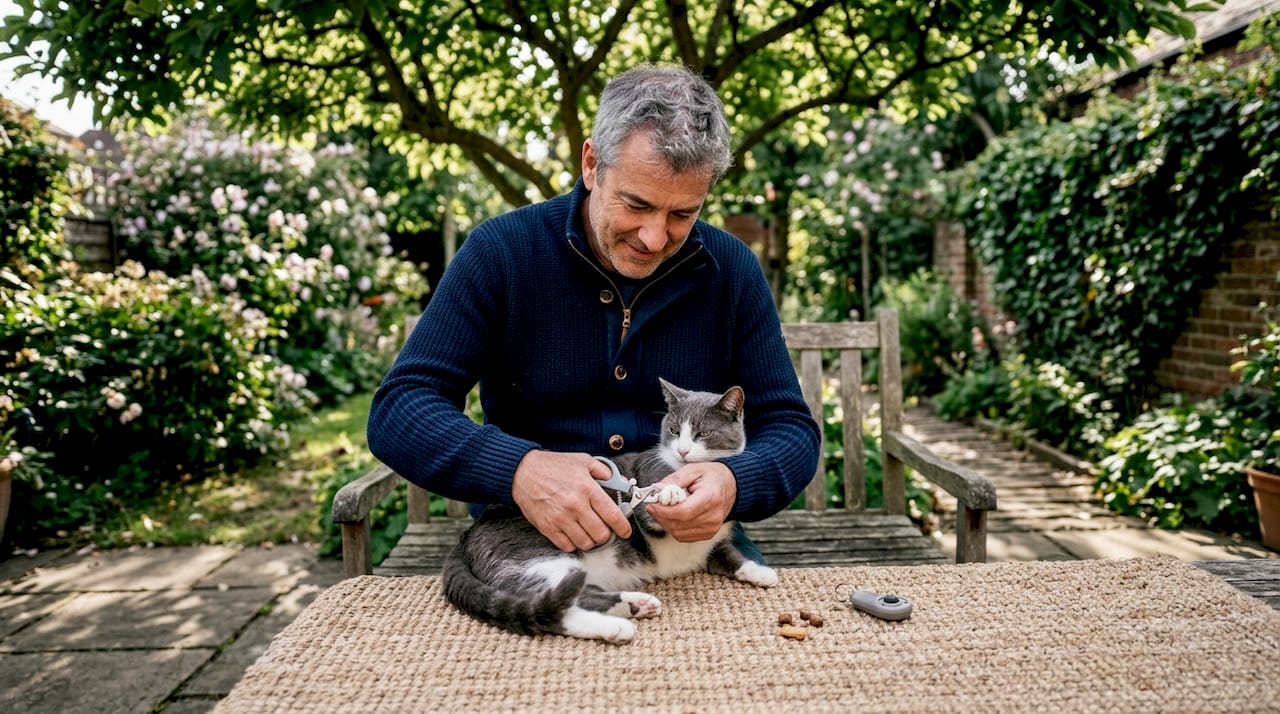
The Start Button behavior is the foundation of the whole system. The pet initiates contact, which tells the handler, “I am ready.” When the pet withdraws, the handler stops. No exceptions. This consent signal must be clear and unambiguous, and handlers must honor a lost signal immediately every single time.
Here is a step-by-step sequence for introducing cooperative care behaviors:
- Introduce your hand first. Let the pet sniff and investigate before any touching begins. Reward calm curiosity with a treat.
- Teach the chin rest. Hold your palm flat and low. Reward any nose or chin contact. Build duration slowly over multiple sessions.
- Add light touch. Once the chin rest is reliable, add a brief touch to the ear or paw while the pet holds position. Stop the moment they move away.
- Introduce grooming tools passively. Place a brush or nail clipper on the floor near the pet. Let them explore tools voluntarily without any pressure to interact with it.
- Pair tools with rewards. Once the pet is comfortable near the tool, pick it up and reward the pet for staying calm. Do not touch the pet with it yet.
- Combine tool and touch. Only after the pet is relaxed with both the tool and touch separately do you combine them. Go slowly.
Desensitization is not the same as flooding. Flooding means exposing the pet to the full stressor until they give up resisting. Desensitization means exposing them to a tiny version of the stressor until they are comfortable, then gradually increasing. Cooperative care uses desensitization exclusively.
Pro Tip: Keep every session under 3 minutes. Short sessions prevent mental fatigue and keep the experience positive. A pet that ends a session feeling good will be more willing next time.
Watch for stress signals during every session: lip licking, yawning, freezing, turning away, or a tucked tail. These are not misbehavior. They are communication. Signs of stress require an immediate pause to avoid setbacks. Pushing through stress signals is the fastest way to undo weeks of progress.
Benefits of cooperative care for pets and groomers
Cooperative care for pets produces outcomes that traditional restraint simply cannot match. The table below shows the practical difference between the two approaches.
| Category | Traditional restraint | Cooperative care |
|---|---|---|
| Pet’s role | Passive, controlled | Active, consenting |
| Stress level | High, often escalating | Low, managed throughout |
| Risk of injury | Higher for pets and groomers | Significantly reduced |
| Long-term behavior | Fear can worsen over time | Confidence builds session by session |
| Trust between pet and handler | Often damaged | Consistently strengthened |
| Session outcome | Completed by force | Completed by cooperation |
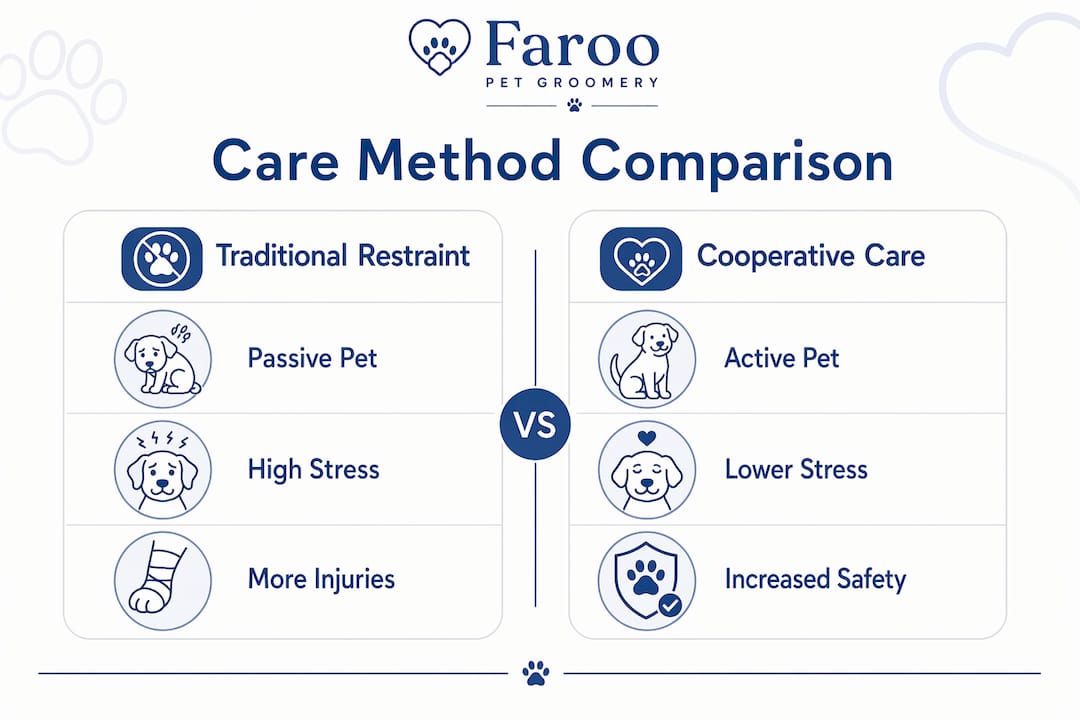
Cooperative care lowers stress and aggression compared to traditional restraint, improving long-term grooming compliance. That means a dog who once needed two people to hold it still can eventually sit calmly for a full groom. The change is not instant, but it is real and lasting.
For groomers, the safety benefit is direct. Fewer bites and scratches mean fewer injuries and less liability. For pet owners, the benefit is a pet that does not dread grooming day. That matters enormously for animals who need frequent grooming, like Poodles, Shih Tzus, or Persian cats.
The pet’s ability to say “no” is fully respected in cooperative care, which enhances trust and reduces fear in every future interaction. When a pet learns that “no” is always honored, it becomes far more willing to say “yes.”
How to start cooperative care grooming at home or professionally
Starting cooperative care does not require a professional trainer, though working with one accelerates progress. What it does require is patience, consistency, and a genuine willingness to follow the pet’s lead.
For pet owners at home:
- Start in a quiet, familiar room with no distractions
- Use high-value treats the pet does not get at other times
- Keep the first three sessions purely about hand contact, no tools at all
- End every session before the pet shows any stress signals, not after
- Practice daily, but keep it short. Five minutes of good training beats thirty minutes of pushing through resistance
- Read up on grooming for pet anxiety to understand what stress looks like in your specific pet
For professional groomers:
- Ask the owner about the pet’s known triggers before the appointment
- Allow the pet to sniff the grooming area and tools before beginning
- Use the chin rest or paw offer as a readiness check at the start of each new procedure
- Never rush a pet that is showing hesitation. A two-minute pause costs less than a bite incident
- Document each pet’s progress so every appointment builds on the last
Pro Tip: Breaking tasks into smaller steps allows pets to build confidence faster. Instead of “nail trim,” think “touch paw,” then “hold paw,” then “touch clipper to nail,” then “clip one nail.” Each step is its own success.
Working with anxious or previously traumatized pets requires extra patience. These animals may need weeks of hand-touch training before any grooming tool is introduced. That timeline is not a failure. It is the method working correctly. For rescue pets especially, check out grooming rescue pets guidance to understand how to adapt the pace.
The Start Button methodology frames handling as a consensual activity, which requires a real mindset shift for both owners and groomers. Letting go of the idea that grooming must be completed on a fixed schedule is part of the process.
Key Takeaways
Cooperative care in grooming is the most effective approach to reducing pet stress, building trust, and improving long-term grooming compliance for both pets and handlers.
| Point | Details |
|---|---|
| Consent drives the method | Pets use clear signals like chin rests to start and stop handling at any time. |
| Short sessions build success | Keep training under 3 minutes to prevent fatigue and maintain a positive experience. |
| Stress signals require a pause | Lip licking, freezing, or turning away means stop immediately, not push through. |
| Benefits are long-term | Pets trained with cooperative care show lasting confidence and reduced fear over time. |
| Mindset shift is required | Both owners and groomers must move from controlling pets to partnering with them. |
Why cooperative care changed how I think about grooming
The biggest misconception I see is that cooperative care is just about giving treats. Pet owners try it for a week, hand out a lot of snacks, and then wonder why their dog still hates the nail clipper. Treats are a tool, not the method. The method is consent.
What actually changes everything is the moment you honor a “no.” When a pet pulls its paw away and you stop, something shifts. The pet realizes it has a voice. That realization is what builds the trust that makes future grooming possible. Without it, you are just bribing an anxious animal.
I have also seen groomers resist cooperative care because they feel it slows them down. That is true in the short term. But a pet that cooperates fully takes far less time to groom than one that fights every step. The investment in the first few sessions pays back many times over.
The other thing worth saying plainly: cooperative care is not optional for fearful or reactive pets. Forcing those animals through grooming does not desensitize them. It makes them worse. If your pet is shutting down, freezing, or becoming aggressive during grooming, gentle handling techniques combined with cooperative care principles are the only responsible path forward.
— Growth
Faroopets’ approach to stress-free pet grooming
At Faroopets, we believe every grooming session should feel safe and positive for your pet. Our certified groomers in Dubai are trained to read pet body language, work at each animal’s pace, and use gentle, consent-aware handling throughout every appointment.

Whether your pet needs a full dog grooming session or a specialized cat grooming package, our mobile grooming service comes directly to your home in a sanitized, calm environment. That familiar setting makes cooperative care even more effective, because your pet is already comfortable in their own space. Book your appointment today and give your pet a grooming experience built on trust.
FAQ
What is cooperative care in pet grooming?
Cooperative care in grooming is a training approach where pets learn to willingly participate in handling through consent signals and positive reinforcement. The pet can start or stop the interaction at any time using a trained behavior like a chin rest.
How long does it take to train a pet with cooperative care?
The timeline varies by pet, but most animals show noticeable improvement within a few weeks of consistent, short daily sessions. Anxious or previously traumatized pets may need several months before tolerating full grooming procedures comfortably.
What is the Start Button behavior in cooperative care?
The Start Button is a specific consent signal, such as a chin rest or nose touch, that the pet uses to indicate readiness for handling. When the pet removes the signal, the handler stops immediately without any correction or pressure.
Can cooperative care work for cats and birds, not just dogs?
Cooperative care works across species, including cats and birds. The core principles of consent, desensitization, and positive reinforcement apply to any animal, though the specific behaviors and tools used are adapted to each species.
Does cooperative care replace professional grooming?
Cooperative care is a training method, not a substitute for professional grooming. It prepares pets to tolerate grooming procedures more willingly, making professional sessions safer and more effective for both the pet and the groomer.
