


Posted by Faroo Pets Grooming
on July 15, 2026

TL;DR:
- Cage-free grooming is a pet grooming method where animals are never confined in cages or kennels during their appointment. It involves continuous supervision in a calm, open space, reducing stress for anxious and senior pets, especially cats and brachycephalic breeds. Pet owners should ask specific questions to ensure a salon truly follows cage-free principles and consider mobile grooming for the best experience.
Cage-free grooming is defined as a pet grooming method where animals are never placed in cages, crates, or kennels at any point during their appointment. Instead, pets receive continuous human supervision in calm, open spaces from arrival to departure. This approach is sometimes called “kennel-free grooming” in professional circles, though cage-free is the more widely used term among pet owners today. The National Dog Groomers Association of America (NDGAA) and similar professional bodies recognize low-stress, humane handling as a core grooming standard. For anxious dogs, senior cats, or any pet with special needs, this method changes the entire experience.
What is cage-free grooming and how does it work?
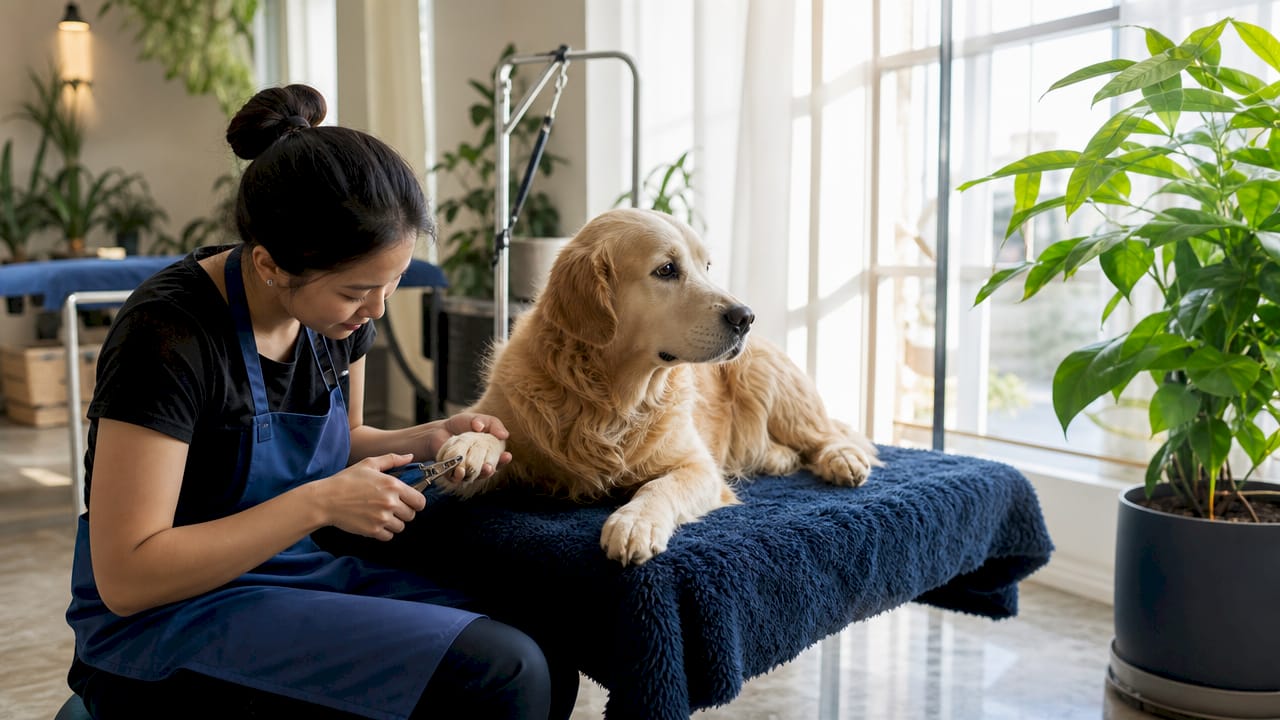
Cage-free grooming means no kennels used before, during, or after the grooming session, with a trained groomer present at all times. The pet is never left alone in an enclosed space to wait. This is the defining feature that separates it from conventional grooming.
Traditional grooming salons often place pets in crates between grooming steps, especially during the drying phase. A dog might spend 30 to 60 minutes in a kennel waiting for a dryer or for the groomer to finish another appointment. That waiting period is where much of the stress builds up, particularly for dogs who experience separation anxiety or noise sensitivity.
Cage-free services manage this differently. Pets move through each grooming step with a groomer nearby. Drying happens under direct supervision using hand dryers or low-heat methods, not inside a cage dryer. The groomer reads the pet’s body language throughout and adjusts the pace accordingly.
Pro Tip: Ask your groomer specifically what happens during the drying phase. This is the step most often handled in a kennel even at salons that market themselves as cage-free.
| Feature | Cage-free grooming | Traditional grooming |
|---|---|---|
| Waiting area | Open, supervised space | Crate or kennel |
| Drying method | Hand dryer, supervised | Cage dryer, often unsupervised |
| Appointments per session | Low volume, one at a time | Multiple pets simultaneously |
| Noise level | Controlled, quieter | Higher, more chaotic |
| Groomer presence | Continuous | Intermittent |
What are the benefits of cage-free grooming for different pets?
Cage-free pet grooming delivers the clearest benefits for pets who struggle in traditional salon environments. Industry experts recommend this approach specifically for anxious dogs, senior animals, and brachycephalic breeds like French Bulldogs and Pugs. These pets face real health risks when confined in warm, noisy spaces.
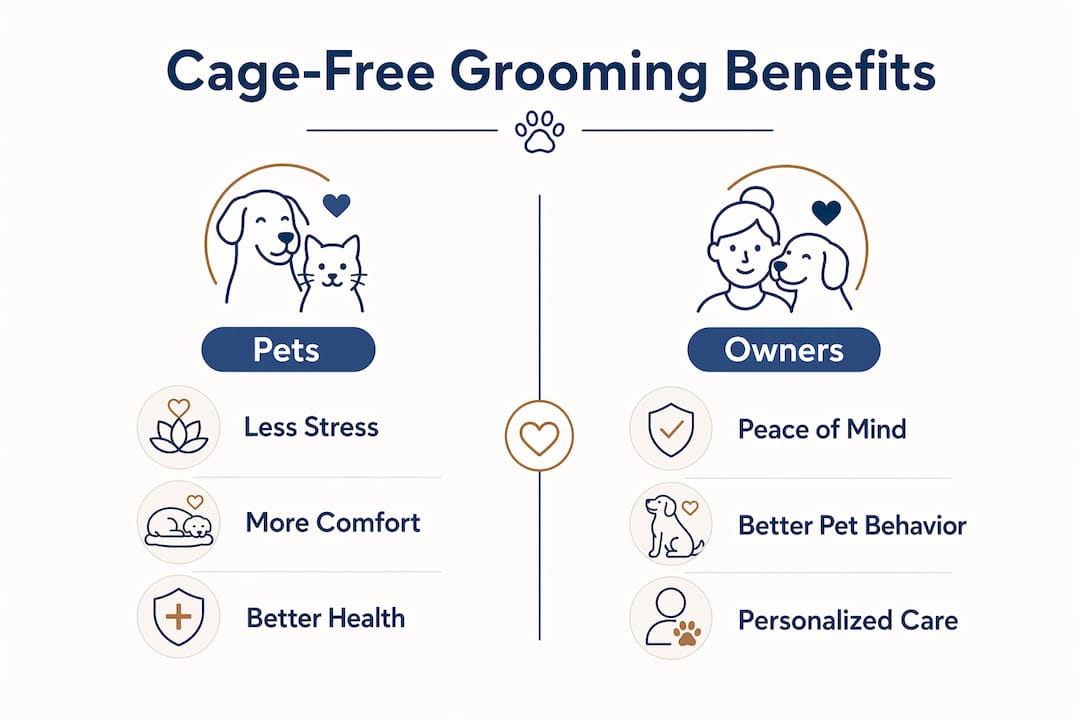
Senior pets carry an added layer of vulnerability. Older dogs and cats often have cardiovascular conditions, arthritis, or cognitive decline that makes confinement physically and mentally taxing. A calm, open environment with a groomer present reduces the physical strain of the experience. For dogs with mobility challenges, not being forced into a crate also prevents unnecessary joint stress.
Cats benefit enormously from this model. Cage-free grooming provides a safer, less stressful environment for cats, who are especially sensitive to noisy, crowded salons. Calmer cats stay still during grooming and face a lower risk of self-injury compared to cats groomed in crate-based settings. A cat that feels safe cooperates. A cat that feels trapped panics, and panicked cats scratch, bite, and injure themselves.
Pets that benefit most from cage-free grooming include:
- Anxious or reactive dogs who show stress signals like panting, trembling, or excessive vocalization in traditional salons
- Senior pets with heart conditions, arthritis, or cognitive decline who need a slower, gentler pace
- Brachycephalic breeds (Bulldogs, Pugs, Shih Tzus) who overheat quickly in enclosed spaces
- Cats of any age, since felines are highly sensitive to confinement and unfamiliar sounds
- Rescue animals with unknown histories who may have trauma responses to cages
- Puppies and kittens being introduced to grooming for the first time
Pro Tip: If your pet has ever returned from a grooming appointment trembling, hiding, or refusing food, stress from confinement is likely the cause. A cage-free appointment is worth trying before assuming your pet simply “hates grooming.”
How do you choose a truly cage-free grooming service?
Not every salon that uses the phrase “cage-free” actually operates that way. Pet owners should ask detailed questions to verify that a salon truly follows cage-free principles beyond its marketing claims. The right questions reveal the real operation quickly.
Here is what to ask before booking:
- “Where does my pet wait between grooming steps?” A genuine cage-free salon will describe an open, supervised area. Vague answers like “a comfortable space” deserve follow-up.
- “How do you dry pets after bathing?” The answer should involve hand dryers or low-heat stand dryers with a groomer present. Cage dryers are a red flag.
- “How many pets are on-site at the same time?” A genuine cage-free facility limits the number of pets onsite to maintain proper supervision. High pet-to-human ratios undermine the entire model.
- “What certifications do your groomers hold?” Certification from organizations like the NDGAA or the International Professional Groomers (IPG) is voluntary, and groomer verification rests entirely on the pet owner since no federal mandate exists. Ask to see credentials.
- “How far in advance do I need to book?” Authentic cage-free salons typically book out 2–4 weeks in advance because they limit daily appointment volume. Easy same-day availability often signals that the salon is not truly limiting its pet count.
Evaluating the physical space matters too. Walk in before booking if possible. A cage-free salon should have open floor space, minimal kennels visible, and a calm atmosphere. Noise level is a reliable indicator. If the waiting area sounds like a kennel facility, the operation likely functions like one.
What should you expect from the cage-free grooming process?
The cage-free grooming process runs at a different pace than a traditional salon appointment. Low-volume scheduling means fewer pets onsite, which creates a quieter environment but also means appointments may take longer than owners expect. Plan for a full grooming session to last 1.5 to 2 hours for most dogs.
Groomers trained in low-stress handling recognize subtle stress signals and adjust their methods in real time. Techniques include scheduled breaks, calmer tools like quiet clippers, and pacing the session to the pet’s comfort rather than the clock. This is not slow grooming out of inefficiency. It is deliberate grooming out of care.
Owner presence is a nuanced topic. Some dogs settle faster when owners are not in the room, while severe separation anxiety cases may need a different approach. Good cage-free groomers assess the pet’s temperament on the first visit and give owners honest guidance on whether staying helps or hinders.
Mobile grooming is the most consistent form of cage-free service available. Mobile units accommodate only one pet at a time, eliminating stress from other animals entirely. The van comes to your home, the environment is familiar, and the pet never enters a shared space. For pets with grooming anxiety, mobile cage-free grooming often produces the best results of any format.
Here is how to prepare your pet at home before a cage-free appointment:
- Practice gentle handling at home: touch paws, ears, and the muzzle area regularly so the groomer’s touch feels familiar
- Avoid feeding a large meal within two hours of the appointment to prevent nausea during bathing
- Exercise your dog before the appointment so excess energy is released before grooming begins
- Bring a familiar toy or blanket if the salon allows it, as familiar scents reduce anxiety in new environments
- Let your groomer know about any past negative grooming experiences so they can adjust their approach from the start
| Appointment stage | What happens | Typical duration |
|---|---|---|
| Check-in and assessment | Groomer evaluates temperament and coat condition | 5–10 minutes |
| Bathing | Warm water bath with pet-safe shampoo | 15–20 minutes |
| Drying | Hand or stand dryer, groomer present throughout | 20–30 minutes |
| Trimming and styling | Coat cut, nail trim, ear cleaning | 30–45 minutes |
| Final check and pickup | Groomer reviews results with owner | 5–10 minutes |
Key Takeaways
Cage-free grooming is the most effective method for reducing pet stress because it eliminates confinement, maintains continuous supervision, and paces the session to each animal’s comfort level.
| Point | Details |
|---|---|
| No confinement at any stage | Pets are never placed in cages before, during, or after grooming. |
| Low volume is non-negotiable | Authentic cage-free salons limit daily appointments to maintain proper supervision. |
| Cats and seniors benefit most | These animals face the highest stress and health risk from traditional crate-based grooming. |
| Ask specific questions | Verify drying methods, pet count, and groomer credentials before booking. |
| Mobile grooming leads the format | One-pet-at-a-time mobile units deliver the most consistent cage-free experience available. |
Why cage-free grooming is the standard we should all expect
I have watched the grooming industry shift over the past decade, and the move toward cage-free is the most meaningful change I have seen. Not because it is trendy, but because the old model was never designed with the pet’s emotional state in mind. It was designed for throughput.
The honest challenge with cage-free grooming is operational. Limiting appointment volume costs revenue. Spending extra time on a nervous dog costs time. These are real pressures that explain why so many salons market themselves as cage-free without fully committing to it. The traditional salon experience was built around processing pets efficiently, and efficiency and emotional welfare rarely share the same priority.
What I find most telling is how cats respond. A cat that has been groomed cage-free even once behaves differently at the next appointment. The panic is gone. The cooperation is real. That behavioral shift is the clearest evidence that the method works, and it is something no statistic captures as well as watching it happen.
My prediction is that cage-free grooming will become the expected baseline within the next few years, not the premium option. Pet owners are asking better questions, and groomers who cannot answer them honestly will lose business to those who can. The shift is already happening. The best thing any pet owner can do right now is stop accepting stress as a normal part of grooming.
— Growth
Faroopets brings cage-free grooming to your doorstep in Dubai
At Faroopets, we believe every pet deserves a grooming experience built around their comfort, not a schedule. Our mobile grooming service comes directly to your home, so your dog or cat never has to sit in a shared waiting area or a noisy salon.
Our certified groomers are trained in low-stress handling and work one-on-one with each pet from start to finish. Whether you are booking dog grooming in Dubai or looking for gentle cat grooming services, we bring the calm, personalized care your pet needs. Scheduling is simple through our online booking system, and our team is happy to discuss your pet’s specific needs before the first appointment. Your pet’s happiness is just a booking away.
Book your appointment today and give your pet a grooming experience they will not dread.
FAQ
What is cage-free grooming in simple terms?
Cage-free grooming is a pet grooming method where animals are never placed in cages or kennels at any point during their appointment. A trained groomer supervises the pet continuously in an open, calm space from arrival to pickup.
Is cage-free grooming better for anxious dogs?
Yes. Cage-free grooming removes the primary stress trigger for most anxious dogs, which is confinement in a noisy, unfamiliar space. Groomers trained in low-stress handling also adjust their pace and tools to the dog’s comfort level throughout the session.
How do I know if a salon is truly cage-free?
Ask specifically where your pet waits between grooming steps and how drying is handled. A genuine cage-free salon will describe open, supervised spaces and hand or stand dryers, not cage dryers or kennels.
Why is cage-free grooming especially important for cats?
Cats are highly sensitive to confinement and unfamiliar sounds. Calmer cats stay still during grooming and face a significantly lower risk of self-injury compared to cats groomed in crate-based settings.
How far in advance do I need to book a cage-free grooming appointment?
Most authentic cage-free salons book out 2–4 weeks in advance because they limit the number of pets on-site each day. Easy same-day availability is often a sign that the salon is not truly limiting its appointment volume.
