


Posted by Faroo Pets Grooming
on July 07, 2026

TL;DR:
- Grooming frequency depends on breed, coat type, lifestyle, and seasonal shedding cycles. Regular observation and tailored routines prevent matting, skin problems, and excessive grooming. Faroopets offers personalized grooming services for dogs and cats based on individual needs.
Grooming frequency is defined as how often your pet needs brushing, bathing, nail trimming, and professional care to stay healthy and comfortable. Why grooming frequency varies comes down to three primary drivers: breed, coat type, and lifestyle. A Poodle needs professional grooming every 4–5 weeks, while a Beagle can go 6–8 weeks between sessions. Understanding these differences helps you build a schedule that actually fits your pet, not just a generic recommendation you found online.
Why grooming frequency varies by breed and coat type
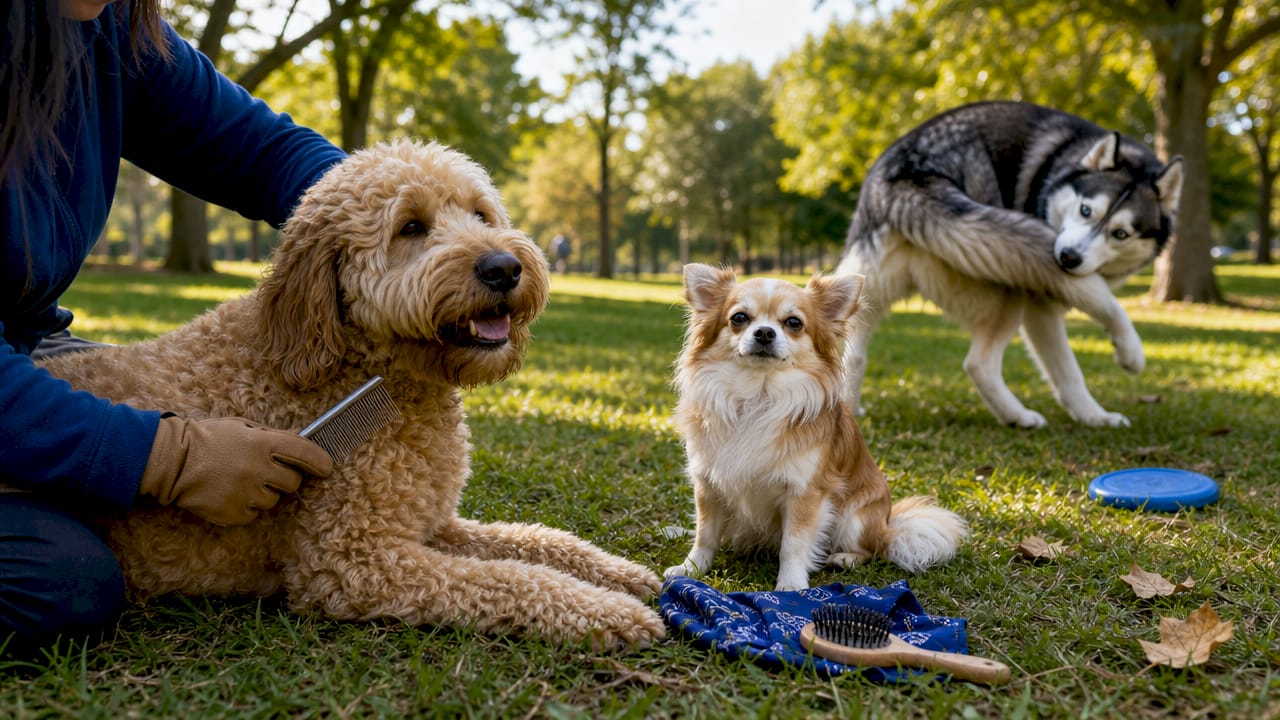
Coat type is the single strongest predictor of how often a pet needs grooming. The structure, length, and texture of a coat determine how quickly it mats, how much it sheds, and how much professional attention it requires.
| Coat Type | Breed Examples | Brushing Frequency | Professional Grooming |
|---|---|---|---|
| Curly / Doodle | Poodle, Goldendoodle | Daily to every other day | Every 4–5 weeks |
| Long / Double | Golden Retriever, Maine Coon | 3–5 times per week | Every 4–6 weeks |
| Short / Wire | Beagle, British Shorthair | 1–2 times per week | Every 6–8 weeks |
| Hairless | Sphynx, Chinese Crested | Weekly skin wipe | Every 4–6 weeks |
Professional grooming intervals follow a clear pattern: curly and doodle coats need care every 4–5 weeks, long and double coats every 4–6 weeks, and short or wire coats every 6–8 weeks. That gap between coat types exists because curly coats trap shed hair inside the coat rather than releasing it, which causes rapid matting if left unattended.
Cats follow the same logic. Persian cats need daily brushing of 10–15 minutes and professional grooming every 4–6 weeks, while a domestic shorthair only needs brushing once or twice a week and professional grooming every 10–12 weeks. That is a dramatic difference driven entirely by coat structure, not by the cat’s size or age.
Double-coated breeds carry a dense undercoat beneath a protective outer layer. This design keeps them warm in cold climates but creates serious matting risk when the undercoat sheds. Owners of Huskies, Samoyeds, and Golden Retrievers need to account for this extra layer in every grooming decision they make.
Pro Tip: Run your fingers through your pet’s coat down to the skin once a week. If you feel resistance or clumping near the skin, your current grooming schedule is not frequent enough.
How lifestyle factors influence how often pets should be groomed
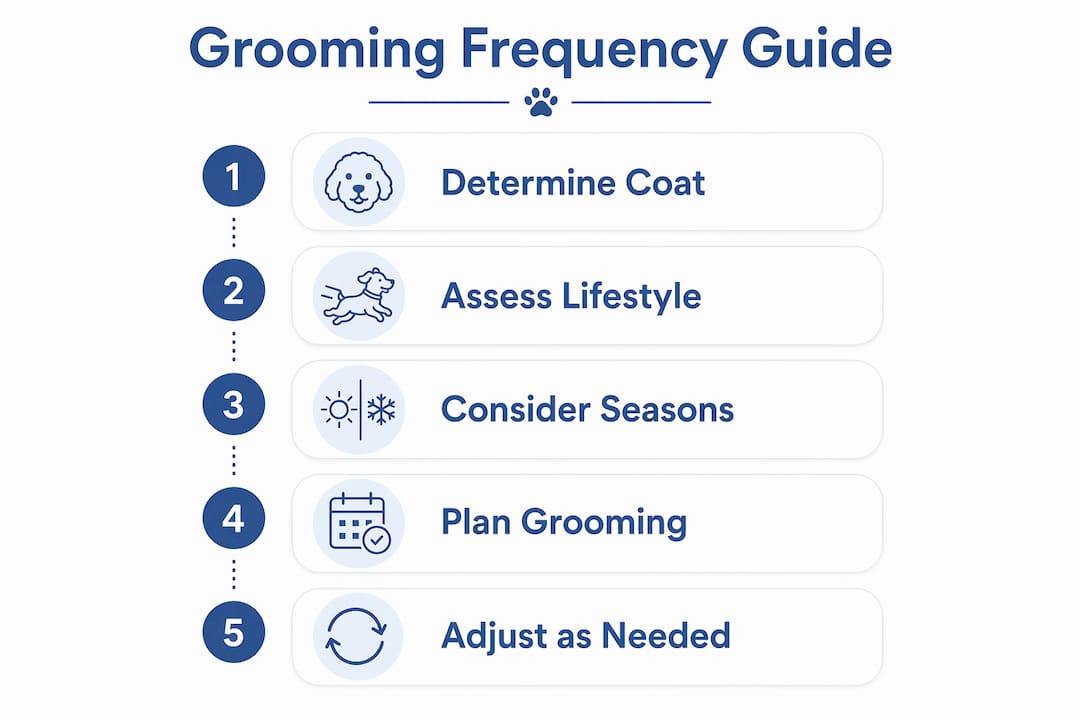
Breed and coat type set the baseline, but your pet’s daily life raises or lowers that baseline significantly. A Labrador who swims three times a week needs far more grooming than a Labrador who mostly naps indoors.
Here are the key lifestyle factors that increase grooming needs:
- Outdoor activity. Pets who spend time on trails, in parks, or in sandy environments collect dirt, debris, and allergens in their coats. This accelerates the need for bathing and brushing beyond standard breed schedules.
- Swimming. Water loosens the coat’s natural oils and encourages tangling, especially in longer coats. Active outdoor dogs may need baths every 4–6 weeks to prevent debris buildup and hygiene problems.
- Harness and collar use. Regular harness wear creates friction points around the chest and shoulders. These areas mat faster than the rest of the coat and need targeted brushing after every outing.
- Urban vs. rural environments. Pets in cities like Dubai encounter dust, pollution, and heat that dry out skin and coat faster than cooler, cleaner environments.
- Multi-pet households. Pets who play together frequently pick up each other’s saliva and dander, which can irritate skin and coat if not cleaned regularly.
Managing grooming around lifestyle changes takes observation. When you add a new activity to your pet’s routine, like hiking or beach visits, add a brushing session the same week and watch how the coat responds. Read more about grooming for active pets to build a schedule that keeps up with your pet’s energy.
Pro Tip: Keep a simple log for two weeks. Note each outdoor activity and how the coat looks afterward. You will quickly see which activities trigger the most grooming needs.
How seasons and health affect grooming schedule variations
Seasonal changes alter grooming needs in ways that catch many pet owners off guard. The shift from winter to spring and from summer to fall triggers what groomers call a “coat blow” in double-coated breeds. During this period, the undercoat sheds rapidly and densely.
Seasonal shedding is triggered by changes in natural light cycles, called photoperiods, during spring and fall. Each shedding episode lasts roughly a month. Waiting until you see fur everywhere to increase brushing is reactive. The right move is to increase grooming proactively as soon as the season shifts.
During coat blow, daily brushing for 2–4 weeks prevents the undercoat from compacting against the skin, which causes matting and skin infections. Missing this window means your groomer may face a coat that cannot be brushed out at all. Read more about seasonal grooming care to stay ahead of shedding cycles.
Health conditions also shift grooming frequency. Watch for these signs that your pet needs more frequent grooming attention:
- Visible mats or clumping near the skin, armpits, or behind the ears
- Scratching or biting at the coat, which signals skin irritation
- A dull, dry, or flaky coat that lacks its usual shine
- Unusual odor between baths, which can indicate skin infection
- Redness or inflammation visible at the skin surface
Mats that reach the skin are painful and cannot be safely brushed out. The correct correction is a shave-down to reset the coat, followed by a consistent daily brushing routine to prevent recurrence. Catching early signs prevents your pet from reaching that point.
Home grooming vs. professional grooming: Balancing schedules
Home grooming and professional grooming serve different purposes. Treating them as interchangeable leads to either over-grooming or neglect.
| Task | Home Grooming | Professional Grooming |
|---|---|---|
| Brushing | Daily to weekly, depending on coat type | Included in most professional sessions |
| Bathing | Every 4–8 weeks for most breeds | Every 4–8 weeks, with professional products |
| Nail trimming | Every 3–4 weeks | Included in full grooming packages |
| Ear cleaning | Weekly check, clean as needed | Included in professional sessions |
| De-shedding treatment | Difficult without professional tools | Recommended during coat blow seasons |
| Haircut / styling | Not recommended for most owners | Required for curly and long coats |
Home brushing is the most powerful tool you have between professional appointments. Consistent brushing extends the time between professional sessions for short and medium coats. For curly coats like Poodles and Doodles, home brushing is not optional. It is the only thing that prevents the coat from matting before the next professional visit.
Over-bathing strips natural oils from the skin and causes irritation. Bathing more often than your pet’s coat type requires does more harm than less frequent bathing. For most pets, professional bathing every 4–8 weeks combined with regular home brushing is the healthiest balance.
Professional groomers also have access to pro-grade grooming products in large quantities, including shampoos and conditioners formulated for specific coat types. These products are more effective than most retail options and reduce the cost per session for high-maintenance pets who need frequent care. Learn how to choose the best grooming frequency for your specific pet’s coat and lifestyle.
Key Takeaways
Grooming frequency varies because breed, coat type, lifestyle, and seasonal changes each alter how quickly a pet’s coat and skin deteriorate without care.
| Point | Details |
|---|---|
| Coat type sets the baseline | Curly coats need professional care every 4–5 weeks; short coats can go 6–8 weeks. |
| Lifestyle raises the baseline | Active, outdoor, or swimming pets need more frequent bathing and brushing than sedentary pets. |
| Seasons demand proactive care | Increase brushing daily during spring and fall coat blow to prevent painful matting. |
| Home brushing extends appointments | Consistent brushing between sessions reduces matting and keeps professional visits on schedule. |
| Health signals override schedules | Mats, odor, scratching, or dull coat are signs to groom sooner, regardless of your calendar. |
What I’ve learned from watching owners get grooming wrong
The most common mistake I see is pet owners treating grooming frequency as a fixed rule. They read “every 6 weeks” for their breed and follow that schedule regardless of what the coat is actually telling them. A Golden Retriever in spring during coat blow needs daily brushing for weeks. The same dog in winter may be fine with three sessions a week. The schedule must respond to the pet, not the other way around.
The second mistake is over-bathing. Pet owners who notice their dog smells or looks dirty often increase bath frequency, not realizing that breed alone does not dictate grooming needs. Skin health, coat density, and lifestyle matter just as much. Bathing too often strips the coat of protective oils, which makes the skin drier and the coat duller. The dog ends up looking worse, not better.
The fix is simple: watch your pet’s coat and skin every week. Run your hands through the coat. Check behind the ears, under the armpits, and around the collar. These are the first places mats form and skin problems appear. If something feels off, adjust the schedule. Talk to your groomer about what you are seeing. A good groomer will tell you exactly how to adapt your home routine between appointments. Consistent, attentive grooming is the single best thing you can do for your pet’s long-term health. Proper grooming maintenance also reduces vet visits by catching skin and coat problems early.
— Growth
Faroopets grooming services tailored to your pet’s needs
Every pet has a unique coat, lifestyle, and health profile. Faroopets’ certified groomers assess each dog and cat individually before recommending a grooming schedule, so you never get a one-size-fits-all answer.

Whether your dog has a curly Doodle coat that needs care every four weeks or a short-coated breed on a longer cycle, Faroopets offers professional dog grooming packages designed around your pet’s specific needs. Cat owners can explore professional cat grooming services that cover everything from Persian daily-care coats to low-maintenance shorthairs. Our mobile grooming vans come to your door in Dubai with sanitized equipment and trained groomers who genuinely care about your pet’s comfort. Book your session and let us help you find the right grooming rhythm for your pet.
FAQ
How often should most dogs be professionally groomed?
Standard professional grooming ranges from every 4–5 weeks for curly coats to every 6–8 weeks for short or wire coats. Individual needs vary based on activity level and skin health.
Does coat type really change grooming frequency that much?
Yes. A Persian cat needs professional grooming every 4–6 weeks, while a domestic shorthair only needs it every 10–12 weeks. Coat structure determines how fast mats form and how much maintenance the coat requires.
Can I groom my pet too often?
Over-bathing strips natural oils and irritates the skin. Brushing daily is safe and beneficial, but bathing more frequently than your pet’s coat type requires causes more harm than good.
Why does my pet need more grooming in spring and fall?
Photoperiod shifts in spring and fall trigger seasonal shedding cycles that last roughly a month. Double-coated breeds shed their undercoat rapidly during this period and need daily brushing to prevent painful matting.
What signs tell me my pet needs grooming sooner than scheduled?
Visible mats, scratching, dull coat, unusual odor, or skin redness all signal that your pet needs grooming attention before the next scheduled appointment. Catching these signs early prevents more serious skin and coat problems.
