


Posted by Faroo Pets Grooming
on July 20, 2026

TL;DR:
- Dog nail care includes three main methods: clippers, grinders, and files, each suited for different dogs and conditions. Proper technique and tool maintenance are essential to prevent pain, injury, and stress, especially for nervous dogs or those with dark nails. Combining clipping and grinding offers a safe, efficient approach, and professional grooming is available in Dubai for challenging cases.
Types of dog nail care include three core methods: clippers, grinders, and files, each suited to different dogs, nail conditions, and owner comfort levels. Proper nail grooming, known professionally as nail maintenance or pedicure care, directly affects your dog’s joint health, posture, and mobility. Nails that click on hard floors are already overdue for a trim. Most dogs need nail attention every 3–4 weeks, though active dogs walking on pavement may stretch that to 6–8 weeks. Knowing which method fits your dog makes every session safer and calmer for both of you.
1. Types of dog nail care: clippers, grinders, and files
The three main dog nail grooming methods are scissor clippers, guillotine clippers, rotary grinders, and nail files. Each tool works differently and suits different dogs. Choosing the wrong one does not just make the job harder. It can cause pain, fear, and injury.
Scissor clippers work like a pair of pliers and give you strong, controlled cuts. They suit medium to large dogs with thick nails. Guillotine clippers have a hole where the nail slides through, then a blade slices across. They work well for small dogs with thin nails but dull faster and require more frequent blade changes.
The right tool for your dog’s size depends on temperament as much as nail thickness. A nervous small dog may do better with a grinder than either clipper style. A calm large dog handles scissor clippers with ease.
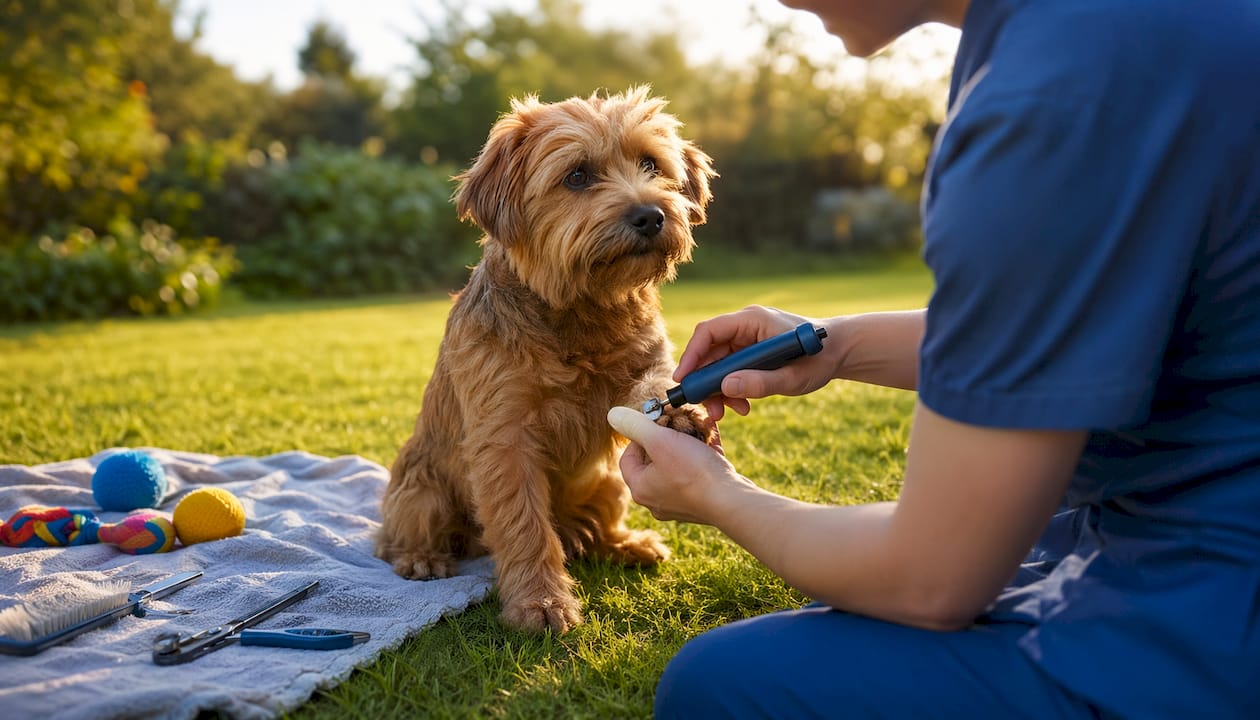
2. How to use clippers safely and effectively
Clippers are the most widely used dog nail trimming technique because they are fast, quiet, and affordable. The key is technique. A poor cut crushes the nail instead of slicing it cleanly, which causes pain even when you miss the quick.
The correct approach:
- Hold the paw firmly but gently, with your thumb on the pad and fingers on top
- Position the blade at a 45-degree angle from underneath, with the blade facing toward you
- Remove only 1–2 mm per clip to stay clear of the quick
- Work from the tip inward in small increments rather than one large cut
- Check the cross-section after each cut; stop when you see a pale or pinkish oval center
Cutting at the correct angle and removing small amounts per clip reduces bleeding incidents significantly. For light-colored nails, shining an LED flashlight through the nail shows the quick as a pink shadow. Using LED light to illuminate the nail reduces accidental quick cuts, especially on thin or pale nails.
Pro Tip: Replace clipper blades every 3–4 months. Dull blades crush rather than cut, which is the leading cause of nail splitting and dog resistance during trims.
3. Rotary nail grinders: when and how to use them
Grinders are the best dog nail care tool for nervous dogs and dogs with dark nails where the quick is not visible. Grinders allow gradual nail material removal, creating smoother edges and reducing the risk of cutting too deep. The trade-off is noise and vibration, which some dogs find stressful at first.
Safe grinder use follows a clear sequence:
- Introduce the grinder while it is off, letting your dog sniff and investigate it
- Turn it on near your dog without touching the nail, rewarding calm behavior with treats
- Touch the grinder briefly to one nail for 1–2 seconds, then stop and reward
- Build up to full grinding sessions over several days or weeks
- Keep each contact to 2–3 seconds per nail, then move to the next nail and return
- Check progress after every pass to avoid over-grinding
Heat buildup is the biggest grinder risk. Prolonged grinding creates friction heat that burns the nail bed and causes pain. Short bursts with breaks prevent this entirely. Long paw hair is the other hazard. Hair can catch in the rotating drum and cause injury or panic. Keep hair combed well away from the nail before you start, or use a guard attachment.
The most effective approach for many dogs combines both tools: use clippers to remove the bulk of the nail length, then finish with a grinder to smooth rough edges and shape the tip.
Pro Tip: Replace grinding bands every 4–6 weeks with regular use. Worn bands generate more heat and friction than fresh ones, which defeats the purpose of using a grinder for sensitive dogs.
4. Additional nail care tools every owner should know
Beyond clippers and grinders, three supporting tools complete a thorough nail care routine.
- Nail files: A coarse nail file smooths jagged edges left after clipping. Files work slowly and cannot replace clippers for length reduction, but they prevent scratches on skin and furniture between full trims.
- Styptic powder: Styptic powder stops bleeding immediately if you nick the quick. Cornstarch works as a home substitute in a pinch. Keep it within reach during every nail session, not stored away in a cabinet.
- Scratch boards: A scratch board is a piece of sandpaper mounted on a flat surface that dogs paw at to wear down their own front nails naturally. Scratch boards reduce front nail length and trim frequency, and many dogs enjoy using them. They cannot reach back nails or dewclaws, so manual trimming remains necessary.
These tools support your main method rather than replace it. Think of them as finishing touches that keep nails comfortable between full grooming sessions. For a broader look at what goes into a complete at-home routine, the dog grooming guide for Dubai owners covers the full picture well.
5. Choosing the right nail care approach for your dog
The best nail care method for your dog depends on four factors: size, nail color, temperament, and activity level. No single method works for every dog.
By size and nail type:
- Small dogs with thin nails: guillotine clippers or a low-speed grinder
- Medium to large dogs with thick nails: scissor clippers, followed by a grinder for finishing
- Dogs with dark nails: grinders are safer because you can stop gradually rather than risk one deep cut
By temperament:
- Calm, cooperative dogs: clippers are fast and efficient
- Nervous or reactive dogs: grinders with a slow desensitization process work better long-term
- Highly anxious dogs: gradual desensitization using treats and positive reinforcement over multiple sessions is the only safe path forward
By activity level:
- Dogs that walk daily on pavement or concrete wear nails down naturally and may need less frequent trims
- Indoor dogs or those on soft surfaces need more frequent attention, often every 3–4 weeks
Special cases:
Overgrown nails require a different approach entirely. The quick grows with the nail, so trimming overgrown nails back to a healthy length takes 4–6 weeks of gradual weekly trims. Cutting too much at once causes pain and bleeding. For dogs that are completely uncooperative or have severely overgrown nails, a professional groomer or veterinarian is the right call.
Preparing your dog for grooming before the first nail session makes a real difference. Dogs that associate grooming with calm handling and rewards are far easier to work with over time. For breed-specific considerations that affect nail care needs, the 2026 breed grooming guide is worth reading before you start.
For a well-rounded approach to your dog’s overall comfort and care, pairing nail care with good accessories and routines matters. The dog accessories styling checklist from PawCaptain offers practical tips on keeping your pet comfortable day to day.
Key takeaways
The most effective dog nail care combines the right tool for your dog’s size and temperament with consistent technique and a calm, reward-based approach.
| Point | Details |
|---|---|
| Match tool to dog | Use scissor clippers for large dogs, grinders for nervous or dark-nailed dogs. |
| Use correct technique | Cut at a 45-degree angle, removing 1–2 mm per clip to protect the quick. |
| Keep styptic powder ready | Stop bleeding immediately if the quick is nicked; cornstarch works as a backup. |
| Desensitize anxious dogs | Build tolerance over multiple sessions using treats and positive reinforcement. |
| Trim overgrown nails gradually | Reduce length over 4–6 weeks to allow the quick to recede safely. |
Why I always recommend the hybrid method first
Most articles tell you to pick one tool and stick with it. My experience says the opposite. The hybrid approach, clipping first to remove bulk and then grinding to smooth and shape, gives you the speed of clippers and the safety of a grinder in one session. It is the method I trust most for dogs of all sizes.
The part most owners underestimate is patience. Rushing a nail trim on a nervous dog does not save time. It creates a dog that fights every future session harder. Building a calm routine with treats and short sessions, as the grooming fun guide outlines, pays off within weeks. The dog relaxes. The sessions get shorter. Everyone wins.
Tool quality matters more than most people realize. A dull clipper blade or a worn grinder band causes more pain than a clean, sharp tool ever would. Replacing consumables on schedule is not optional maintenance. It is the difference between a dog that tolerates nail care and one that dreads it.
My honest advice: invest in one good pair of scissor clippers and one reliable low-vibration grinder. Learn the 45-degree cut angle. Keep styptic powder on the counter, not in a drawer. And if your dog is truly uncooperative, call a professional without guilt. That is not failure. That is good judgment.
— Growth
Professional nail care is always an option in Dubai
When nail care at home feels too stressful for you or your dog, professional grooming is the right next step.

Faroopets offers professional dog grooming in Dubai with certified groomers who handle nail trimming as part of every grooming session. Our mobile vans come to your location with sanitized tools and a calm, structured approach that works especially well for anxious dogs or those with overgrown nails. For owners who want the full experience, the luxury full dog grooming package includes nail trimming, conditioning, and a complete coat treatment. Book directly through the Faroopets website or send your preferred time via message. We make it easy.
FAQ
How often should I trim my dog’s nails?
Most dogs need nail trimming every 3–4 weeks. Active dogs that walk daily on hard surfaces may only need trims every 6–8 weeks.
What is the safest way to trim dark dog nails?
Use a grinder and remove material in short bursts, checking the cross-section after each pass. Stop when you see a pale or pinkish oval center, which signals you are near the quick.
What should I do if I cut the quick?
Apply styptic powder or cornstarch directly to the nail tip and hold gentle pressure for 30 seconds. Styptic powder stops bleeding quickly and is safe for dogs.
Can scratch boards replace nail trimming?
Scratch boards reduce front nail length naturally but cannot reach back nails or dewclaws. They lower trim frequency but do not replace manual trimming entirely.
How do I help a fearful dog accept nail trims?
Gradual desensitization with treats and positive reinforcement over multiple short sessions is the most effective approach. Never rush the process, as forcing a nervous dog worsens fear over time.
