


Posted by Faroo Pets Grooming
on July 03, 2026

TL;DR:
- Grooming wellness checks involve hands-on assessments to detect early signs of health issues in pets. Regular grooming appointments and at-home monitoring help build a baseline, enabling early detection of problems. Groomers are observers, not diagnosticians, and their insights should be followed up with veterinary care when needed.
Wellness checks during grooming are defined as hands-on, routine observations performed by professional groomers to identify early signs of health issues in pets before those issues become serious. These assessments go far beyond aesthetics. Groomers examine skin, coat, ears, teeth, paws, and behavioral responses during every session, acting as a vital surveillance layer between your pet’s home life and veterinary care. The industry term for this practice is “grooming health assessment,” and understanding its role helps you see grooming as a health habit, not just a beauty appointment. Faroopets builds this approach into every service we offer.
What specific health signs do groomers check during wellness evaluations?
Groomers assess a wide range of physical and behavioral indicators during every appointment. The goal is not diagnosis. The goal is observation, and trained eyes and hands catch things that owners routinely miss at home.
Skin and coat condition is the first area of focus. Groomers look for redness, hot spots, dry or flaky patches, unusual oiliness, and matting that traps moisture against the skin. A dull or thinning coat often signals nutritional gaps or hormonal changes long before other symptoms appear.
Ear health is checked visually and by smell. Odor, dark discharge, wax buildup, or swelling inside the ear canal are all red flags. Ear infections are among the most common and most preventable conditions in dogs and cats, and groomers catch them early.
Dental signs include tartar buildup, inflamed gums, and bad breath. Dental disease detected by groomers is linked to systemic health issues including heart and kidney problems. A groomer who notices brown buildup on the back molars is doing your pet a real service. Pairing groomer observations with a dental supplement can support long-term oral health between appointments.
Nail and paw condition rounds out the physical check. Overgrown nails alter a pet’s gait and put stress on joints. Swollen nail beds, cracked pads, or foreign objects lodged between the toes all require attention.
Here is a quick summary of what groomers assess at each appointment:
- Skin: redness, lumps, sores, dryness, or unusual texture
- Coat: dullness, thinning, matting, or excessive shedding
- Ears: odor, discharge, swelling, or sensitivity to touch
- Teeth and gums: tartar, bad breath, bleeding, or discoloration
- Paws and nails: nail length, pad cracks, swelling, or foreign objects
- Behavior: flinching, guarding specific areas, or unusual stillness
Tactile palpation under the coat is the key differentiator. Groomers feel for masses, tender spots, and swelling that visual inspection alone cannot reveal. This hands-on screening identifies changes from the pet’s baseline rather than diagnosing disease.
Pro Tip: Ask your groomer to narrate what they feel during palpation. This real-time feedback helps you understand your pet’s normal baseline and notice changes at home.
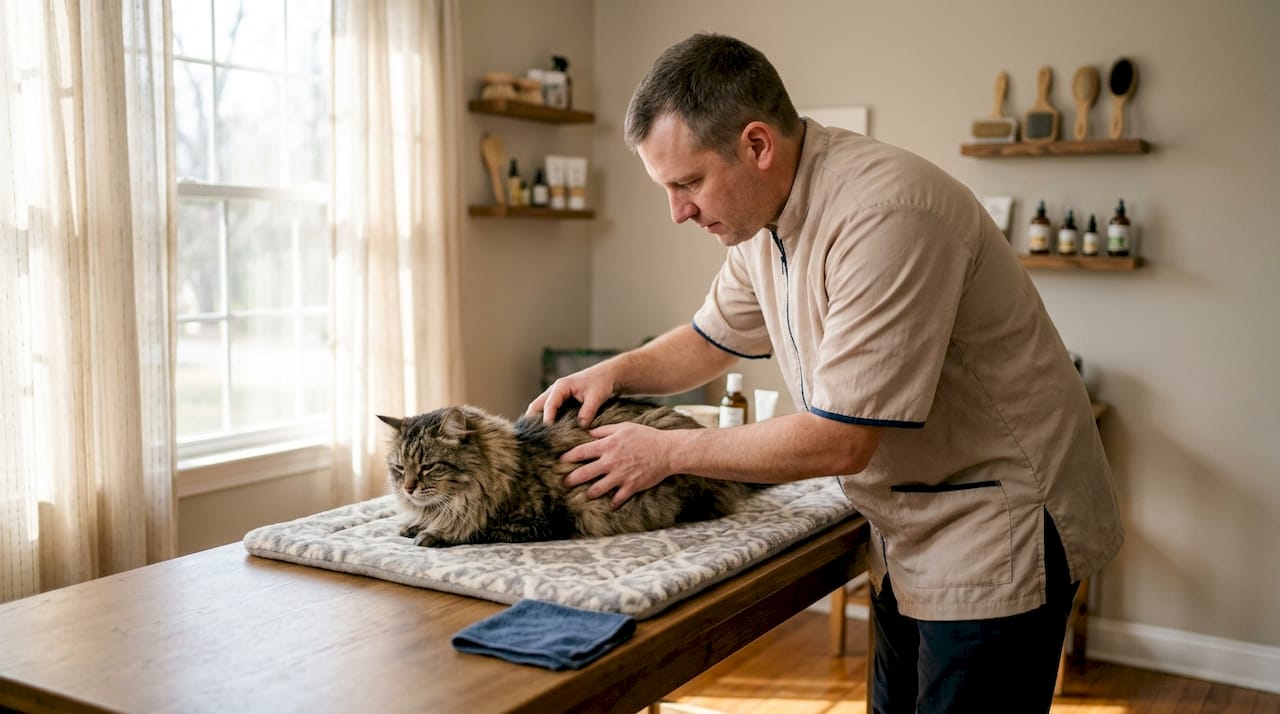
How often should wellness checks during grooming be performed?
Frequency matters as much as quality. Industry standards recommend weekly full-body palpation checks that take only 2 minutes, brushing 2–3 times per week for most breeds, and daily brushing for long-coated breeds. Ear and dental checks should happen weekly.
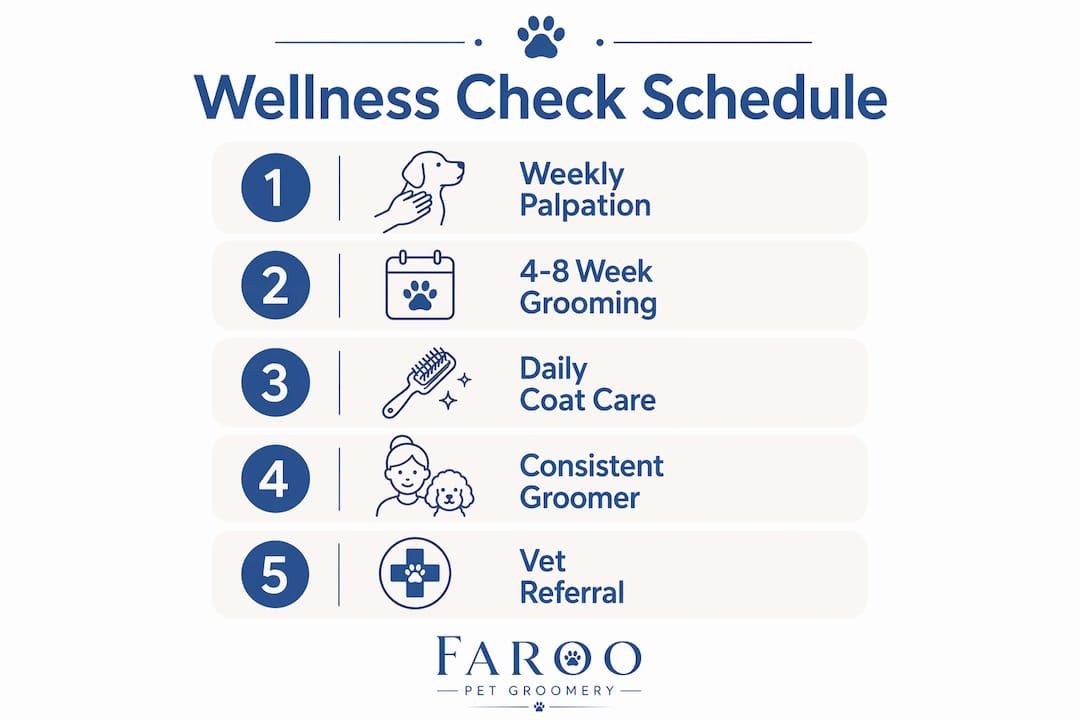
Professional grooming appointments every 4–8 weeks provide the most thorough wellness evaluations. These sessions give trained groomers the time and tools to assess areas that are difficult to examine at home.
| Check type | Recommended frequency | Who performs it |
|---|---|---|
| Full-body palpation | Weekly (2 minutes) | Owner or groomer |
| Brushing (short coat) | 2–3 times per week | Owner |
| Brushing (long coat) | Daily | Owner |
| Ear and dental check | Weekly | Owner or groomer |
| Professional grooming | Every 4–8 weeks | Certified groomer |
Long-coated breeds like Golden Retrievers, Shih Tzus, and Maine Coon cats need daily attention because their coats mat quickly and hide skin problems. Wrinkled breeds like Shar-Peis and Bulldogs need daily fold cleaning to prevent bacterial infections in skin creases.
Consistent appointments with the same groomer build a baseline that makes abnormality detection far more accurate. A groomer who sees your dog every six weeks knows what “normal” looks like for that individual animal. That knowledge is the foundation of effective early detection.
Pro Tip: Schedule your pet’s professional grooming on a fixed calendar interval rather than waiting until the coat looks overgrown. Regularity builds the baseline that makes health monitoring meaningful.
What are the limitations of grooming wellness checks?
Groomers are observation specialists, not diagnosticians. Their role is to flag changes and refer concerns to owners and veterinarians, not to identify diseases or recommend treatments. This distinction protects both the pet and the groomer.
Understanding what groomers can and cannot do helps you act on their feedback correctly. The following situations always require a veterinary evaluation, not just monitoring:
- A new lump or bump that was not present at the last appointment
- A sore or wound that has not healed within a few days
- Signs of ear infection: persistent odor, head shaking, or pawing at the ear
- Visible pain or sensitivity when a specific body area is touched
- Sudden behavioral changes during grooming, such as snapping or freezing
- Significant changes in coat texture or unexplained hair loss
Grooming can reveal silent or early-stage issues that owners overlook at home. By the time a pet shows overt symptoms like limping or persistent scratching, conditions are often already advanced. The grooming table catches problems in the window before symptoms become obvious.
If a pet shows pain or stress during grooming, a responsible groomer adjusts or pauses the session. This is both a welfare practice and a diagnostic alert. Unusual distress during a routine session signals that something may be wrong beneath the surface.
The best outcomes come from open communication. Share your groomer’s observations with your veterinarian at the next visit. Bring notes. Ask your groomer to write down anything unusual. This three-way partnership between groomer, owner, and vet is the most effective model for preventive pet health care.
How can pet owners support wellness checks between appointments?
Home care between professional grooming sessions multiplies the value of every groomer assessment. You do not need professional training to perform basic observations. You need consistency and attention.
-
Brush and palpate at home. Run your hands along your pet’s body during brushing sessions. Feel for lumps, tender spots, or changes in skin texture. This takes less than 5 minutes and builds your own sense of your pet’s normal baseline.
-
Keep a simple health log. Write down anything unusual after each home brushing session. Note the date, the location on the body, and what you observed. Share this log with your groomer and veterinarian. Maintaining grooming observation records improves communication with veterinarians and informs early treatment decisions.
-
Check ears and teeth weekly. Lift the ear flap and look for redness or discharge. Smell for unusual odor. Open your pet’s mouth gently and look at the gum line. Red gums or brown buildup on the teeth warrant a vet conversation. Supporting dental health at home with the right products makes a measurable difference.
-
Monitor behavior changes. A pet that suddenly resists being touched in a specific area is telling you something. Behavioral shifts during handling are often the first sign of pain or discomfort.
-
Clean paws after outdoor activity. In Dubai’s heat, paw pads crack and collect debris. A quick wipe-down after walks lets you check for swelling, cuts, or foreign objects before they become infections.
Home observations feed directly into the grooming and health assessments your groomer performs. The more information you bring to each appointment, the more targeted and effective the professional evaluation becomes.
Key Takeaways
Wellness checks during grooming are the most consistent early-detection tool available to pet owners, combining tactile palpation, visual assessment, and behavioral observation to catch health issues before they become serious.
| Point | Details |
|---|---|
| Groomers observe, not diagnose | Groomers flag changes and refer concerns; veterinarians confirm and treat. |
| Frequency drives accuracy | Professional grooming every 4–8 weeks builds the baseline needed for reliable detection. |
| Palpation catches what eyes miss | Hands-on assessment under the coat reveals lumps and pain points invisible to visual checks. |
| Home care multiplies results | Weekly brushing and a simple health log make professional assessments more targeted. |
| Pain during grooming is a signal | Unusual distress on the grooming table often indicates an undiagnosed underlying condition. |
Why grooming wellness checks deserve more credit than they get
Most pet owners think of grooming as maintenance. A bath, a trim, a tidy-up. What they underestimate is how much trained hands learn in a single session.
I have seen groomers catch early-stage lumps that owners had no idea existed. I have seen ear infections caught at the discharge stage, weeks before the pet started shaking its head. These are not rare events. They happen regularly when groomers are trained to look and owners are paying attention to the feedback.
The grooming table is one of the few places where a pet gets handled thoroughly, calmly, and consistently. Veterinary visits are often stressful and infrequent. Home handling is loving but untrained. The groomer sits in a unique middle position, and that position is underused.
What I find most compelling is the baseline argument. A groomer who sees your pet every six weeks for two years knows that animal’s body better than most owners do. That accumulated knowledge is what turns a routine appointment into a genuine health check. It is not about any single session. It is about the pattern over time.
The health surveillance role of professional groomers deserves recognition as part of your pet’s preventive care plan, not as an optional add-on. Treat grooming appointments the way you treat dental cleanings for yourself. Regular, consistent, and non-negotiable.
— Growth
Faroopets grooming services include wellness checks as standard
Every Faroopets grooming session includes a structured health observation as part of the service. Our certified groomers are trained to assess skin, coat, ears, teeth, and paws at every appointment, and they communicate their findings to you directly.

We tailor each grooming plan to your pet’s breed, coat type, and health history. Whether you book a luxury full dog grooming session or a cat grooming package, wellness observation is built in at no extra cost. Our mobile vans come to your door, fully sanitized and equipped, so your pet stays calm and comfortable throughout. Regular appointments with the same Faroopets groomer build the baseline that makes early detection possible. Choose your service and make grooming part of your pet’s health routine today.
FAQ
What is the role of wellness checks during grooming?
Wellness checks during grooming are hands-on observations by professional groomers that identify early signs of skin, coat, ear, dental, and paw health issues. Groomers flag concerns for veterinary follow-up without diagnosing or treating conditions.
How often should a professional groomer assess my pet’s health?
Professional grooming every 4–8 weeks provides the most thorough health assessments, while weekly at-home palpation and brushing maintain the baseline between appointments.
Can a groomer replace a veterinarian for health checks?
No. Groomers serve as observation specialists, not diagnosticians. Their observations guide owners toward timely veterinary care but do not substitute for clinical evaluation or treatment.
What should I do if my groomer finds something unusual?
Contact your veterinarian and share the groomer’s specific observations, including the location on the body and what was seen or felt. Bring any notes or photos you have from home monitoring.
Why does my pet’s behavior during grooming matter?
Unusual distress during grooming can signal undiagnosed pain or a chronic condition. Groomers are trained to distinguish normal grooming discomfort from behavioral responses that indicate a deeper health concern.
