


Posted by Faroo Pets Grooming
on July 21, 2026

How grooming acts as your pet’s first line of defense against parasites
Regular grooming does far more than keep your pet looking their best. It physically removes fleas, ticks, and mites before they can embed, feed, or reproduce, making it one of the most direct forms of parasite control available to pet owners. Research on impala restricted from self-grooming found they carried 20 times more adult female ticks than animals allowed to groom freely. That single finding tells you everything about what consistent grooming actually does.
The role of grooming in preventing parasites works through several overlapping mechanisms:
- Physical removal: Brushing and combing dislodge parasites from the coat before they attach to skin.
- Reproductive cycle disruption: Removing parasites before they feed stops them from laying eggs, cutting off population growth at the source.
- Skin barrier support: Regular grooming distributes natural oils across the coat, strengthening the skin barrier that parasites must penetrate to establish themselves.
- Reduced hiding spots: Trimmed, well-maintained fur gives fleas and ticks fewer places to hide and fewer microhabitats to colonize.
- Early irritation prevention: Grooming that happens on a schedule, rather than only when a pet scratches, removes parasites before they cause skin damage or secondary infections.
Veterinarians consistently describe grooming as preventive health care, not cosmetic upkeep. We at Faroopets share that view completely.
How grooming sessions help you spot parasites early
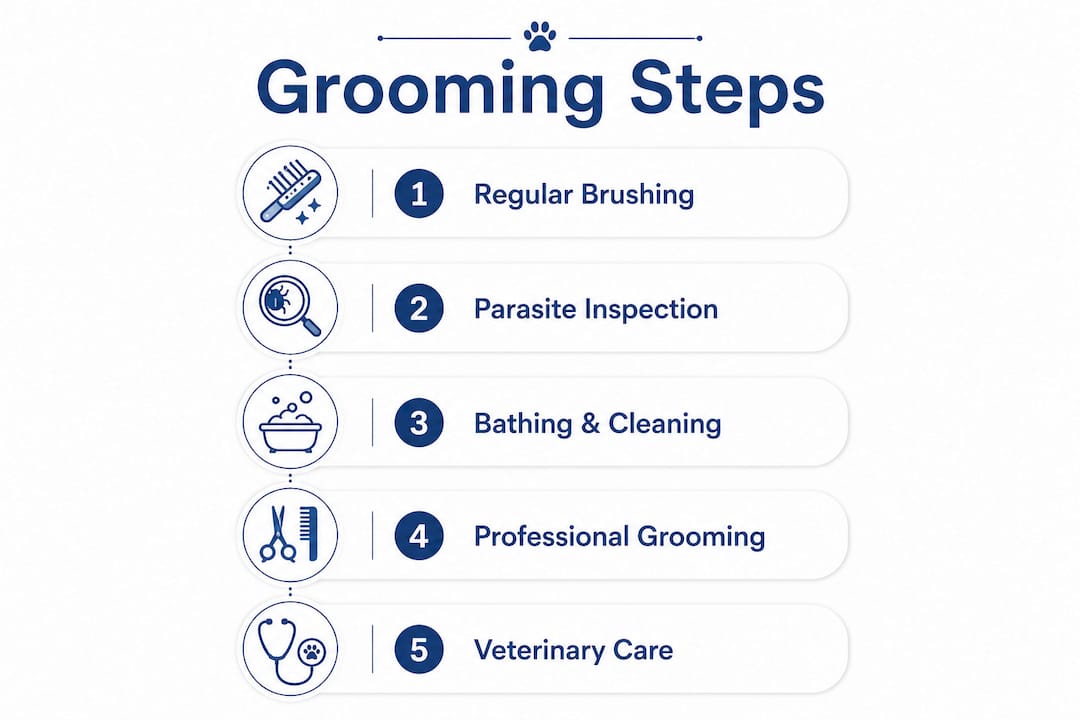
Catching a parasite problem early is the difference between a quick treatment and a full-blown infestation. Fleas can lay dozens of eggs daily, so a small problem becomes a large one within days if it goes unnoticed. Grooming gives you a structured opportunity to look closely at your pet’s coat and skin while your hands are already moving through the fur.
Here is what to look for and where to look during every grooming session:
- Flea dirt: Small black or dark-brown specks in the coat. Place them on a damp paper towel; if they dissolve into reddish-brown stains, that is digested blood from flea feeding, confirming an active infestation.
- Ticks: Feel for small, firm bumps along the skin, especially around the neck, ears, and between the toes. Ticks often attach in warm, sheltered spots.
- Mites: Look for crusty buildup, hair loss in patches, or excessive scaling, particularly around the ears and face.
- Hiding spots to check every time: Ears, paws, underbelly, the base of the tail, and the groin area. Parasites favor warm, less-exposed skin.
- Coat parting technique: Use your fingers or a fine-tooth comb to part the fur in sections, working from the skin outward. This exposes the skin surface where parasites actually live, not just the outer coat.
- Pre-bath brushing: Pre-bath brushing reveals hidden parasites and skin changes that casual petting misses entirely.
Professional groomers develop a baseline picture of your pet’s skin and coat over time, which makes subtle changes far easier to notice. That baseline is one of the most underappreciated benefits of routine grooming assessments.

Best grooming practices that actively prevent parasite infestations
Good grooming hygiene is not one-size-fits-all. The frequency, tools, and techniques that work best depend on your pet’s coat type, lifestyle, and environment. That said, a few core practices apply across the board.
- Brushing frequency: Short-coated dogs and cats benefit from brushing at least once a week. Long-coated or double-coated breeds need brushing several times a week to prevent matting, which traps heat and moisture and creates exactly the warm, humid conditions parasites prefer.
- Bathing with vet-approved shampoos: Bathing removes dirt, allergens, and loose parasites from the coat. Use shampoos recommended by your vet; some are formulated to repel or kill specific parasites without irritating sensitive skin.
- Trimming high-risk areas: Keep fur short around the ears, paws, and underbelly. These areas are prime attachment sites for ticks and fleas, and shorter hair makes inspection far easier.
- Ear checks: Include a visual ear inspection at every grooming session. Mites frequently colonize the ear canal, and early signs like dark debris or odor are easy to spot when you look regularly.
- Nail trimming: Overgrown nails can cause your pet to scratch more, breaking the skin and creating entry points for secondary infections after parasite bites.
- Groom on a schedule, not just when something looks wrong: Research on programmed grooming shows that grooming before irritation occurs is far more effective than reactive grooming triggered by scratching or discomfort. Build grooming into your weekly routine the same way you would any other health habit.
Pro Tip: Schedule professional grooming appointments at consistent intervals, not just when your pet’s coat looks overgrown. A trained groomer establishes a health baseline for your pet’s skin and coat, making it much easier to catch subtle changes like early-stage mite activity or unusual hair loss between visits. Learn more about personalized grooming routines that fit your pet’s specific needs.

When you should call your vet about parasites found during grooming
Grooming keeps parasites in check, but it does not replace veterinary care. Some situations call for professional medical attention, and recognizing them quickly protects your pet from serious harm.
Reach out to your vet when you notice any of the following:
- Persistent itching or scratching that continues even after a thorough grooming session, which may indicate a deeper infestation or an allergic reaction to parasite bites.
- Visible parasites you cannot remove or a large number of ticks embedded in the skin. Improper tick removal can leave mouthparts behind and increase infection risk.
- Skin irritation, redness, or open sores developing around bite sites, which can progress to bacterial infections if left untreated.
- Unexplained hair loss or scaly patches that appear between grooming sessions, as these may signal mange or a mite infestation requiring prescription treatment.
- Lethargy or appetite changes alongside any parasite signs. Tick infestations can cause measurable health effects, including reduced energy and weight loss from blood loss.
- Lumps or skin lesions discovered during grooming that were not present before. These need a veterinary diagnosis, not a wait-and-see approach.
Combining grooming with year-round preventatives prescribed by your vet gives your pet the most complete protection. Grooming and medical prevention work together, not as substitutes for each other. Your vet can also tailor a parasite control plan to your pet’s specific health status, age, and local parasite risks.
What the science says about grooming and parasite control
The evidence behind grooming’s protective role is clear and comes from multiple species. A study on wild baboons found that individuals receiving more grooming in the six months before examination had significantly fewer ticks than those receiving less, with grooming frequency directly predicting tick load. Baboons with higher tick burdens also showed lower packed red cell volume, a measurable sign of compromised health from blood loss.
“Grooming, in addition to having social value, is a behavioral means by which baboons reduce tick loads, and thus grooming may protect baboons from the detrimental effects of ticks.” — Amboseli Baboon Research Project, published in PMC
The health costs of ectoparasites extend well beyond discomfort. Tick infestations in cattle reduce weight gain by 10–44 kg per year through blood loss and anorexia, illustrating how parasite loads translate directly into measurable physical decline. While the scale differs for companion animals, the biological mechanism is the same.
Matted fur compounds the risk significantly. Mats trap heat and moisture, creating microhabitats where parasites breed and thrive. They can also restrict blood circulation, adding a physical health risk on top of the parasite risk. Regular grooming eliminates these conditions before they develop.
The concept of programmed grooming adds another layer to this picture. Animals that groom on a regular schedule remove parasites before those parasites cause irritation, rather than waiting until discomfort triggers a response. For pet owners, this translates to a simple principle: groom consistently, and you stay ahead of the problem rather than chasing it.
Ready to give your pet the protection they deserve?

At Faroopets, we believe every grooming session is an act of love and a genuine health investment for your pet. Our trained groomers know exactly what to look for, from flea dirt to early tick attachment, and they bring that expertise directly to your door. Whether your dog needs a thorough full grooming service or your cat is due for a professional coat check, we are here to help you stay one step ahead of parasites. Book your appointment today and let us keep your pet healthy, happy, and parasite-free.
Key Takeaways
Grooming is your pet’s most consistent, practical defense against parasites, and combining it with veterinary care creates the strongest protection available.
| Point | Details |
|---|---|
| Grooming removes parasites physically | Brushing and combing dislodge fleas, ticks, and mites before they embed and feed. |
| 20x fewer ticks in groomed animals | Impala restricted from grooming carried 20 times more adult female ticks than those allowed to groom. |
| Early detection stops infestations | Fleas can lay dozens of eggs daily, so spotting them during grooming prevents rapid population growth. |
| Matted fur shelters parasites | Mats trap heat and moisture, creating breeding conditions that regular brushing eliminates. |
| Grooming plus vet care works best | Year-round vet-prescribed preventatives combined with consistent grooming provide the most complete parasite protection. |
