


Posted by Faroo Pets Grooming
on June 20, 2026

TL;DR:
- Scented grooming products influence pets’ emotions rapidly by directly connecting to their brain’s emotional centers. Consistent use of a gentle fragrance helps pets form positive memories, reducing grooming-related stress over time. Select pet-safe, mild scents and avoid layering multiple fragrances to ensure comfort and safety during grooming.
Scented grooming products are defined as pet care formulas that combine cleaning or conditioning agents with fragrance compounds to deliver hygiene and emotional benefits simultaneously. Understanding why scented grooming products matter goes far beyond keeping your dog or cat smelling fresh after bath time. The right fragrance reaches your pet’s brain within seconds, triggering emotional responses that can calm anxiety, build positive grooming memories, and reinforce the bond between you and your animal. At Faroopets, we see this play out every single day with the pets we care for across Dubai.
Why scented grooming products matter more than you think
Scent is the fastest sense. It bypasses conscious processing and connects directly to the brain’s emotional center, which means a fragrance your pet encounters during grooming can shape how they feel about the entire experience. Scent bypasses conscious filters, triggering involuntary emotional states such as calm or confidence faster than any other sense. That speed is what makes fragrance so powerful in a grooming context.
The limbic system, which includes the amygdala and hippocampus, governs emotion and memory in both humans and animals. When a calming scent like lavender or chamomile reaches a dog’s nose during a bath, the amygdala registers it as safe and familiar. The hippocampus stores that association. Over time, the scent itself becomes a signal that grooming is a positive, comfortable event. This is not a theory. Consistent scent routines embed calming emotional memory, reducing stress responses in pets with each session.
Here is what that means in practice:
- A dog that previously trembled during nail trims can learn to relax when the same calming scent is present every time.
- Cats, who are notoriously scent-sensitive, respond strongly to familiar fragrance cues during brushing or bathing.
- Birds exposed to mild, consistent scents during grooming show reduced feather-plucking behaviors linked to stress.
“Scent routines act as a biological safety check, creating positive emotional set-points and feelings of security for pets and owners alike.” — The Conversation
The neurological case for scented grooming products is clear. Fragrance is not decoration. It is a functional tool that shapes your pet’s emotional experience from the first sniff.
How fragrance shapes your pet’s grooming routine
Fragrance does more than mask odor. Scent in pet grooming creates presence, reinforces care, and anchors grooming rituals in a way that unscented products simply cannot. Think of it like a signature. When your pet smells the same gentle scent every grooming session, their nervous system begins to recognize it as a cue for safety and attention.
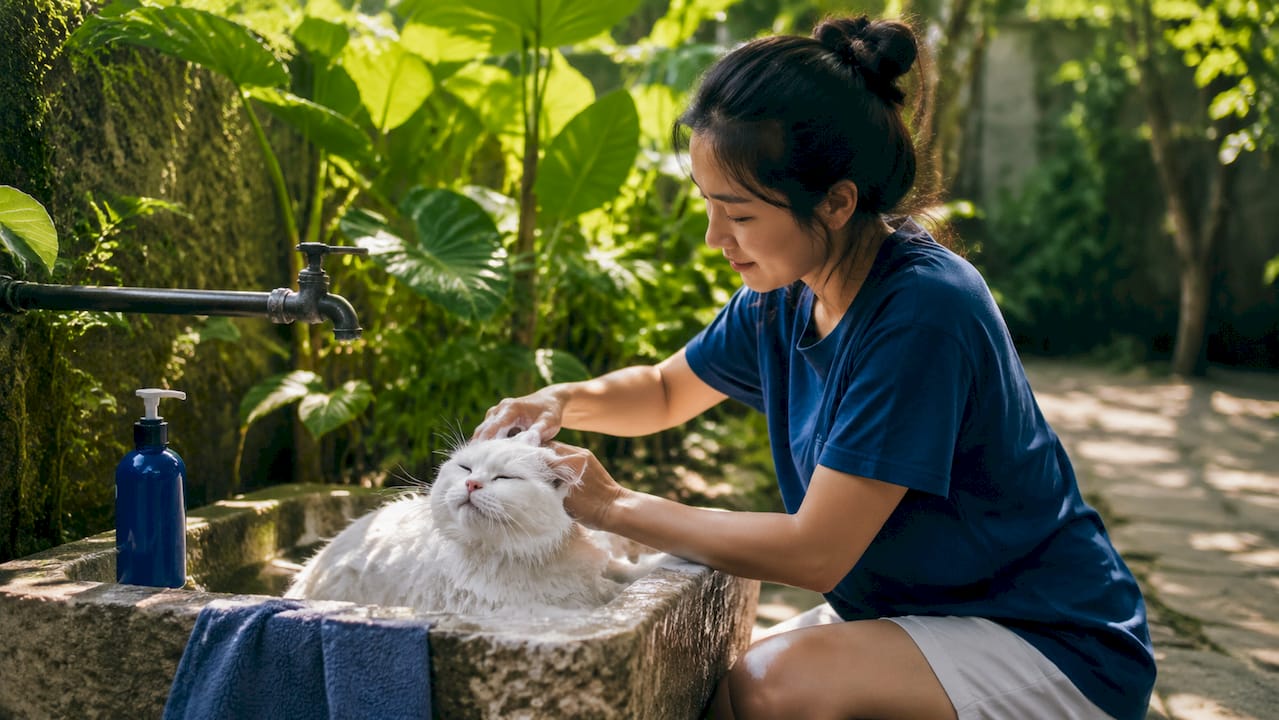
This matters for social perception too. A well-groomed pet with a clean, pleasant scent signals attentive ownership. Other pet owners, veterinarians, and groomers notice. Olfactory cues influence social and professional judgments, making scent a decisive factor in the impressions your pet makes. In Dubai’s pet-friendly spaces, from parks to pet cafes, a fresh-smelling coat communicates care and hygiene at a glance.
Fragrance also works alongside skin and fur health products. A moisturizing conditioner with a light botanical scent does double duty. It nourishes the coat and delivers a calming olfactory signal. Scented grooming products reduce cortisol and stabilize mood, serving as daily reminders of care. That cortisol reduction is not trivial. Lower stress hormones mean better skin health, less scratching, and a calmer pet overall.
Pro Tip: Choose one primary scent for your pet’s grooming routine and stick with it. Consistency builds positive associations faster than rotating between different fragrances each session.
Scented vs. unscented grooming products: which is right for your pet?
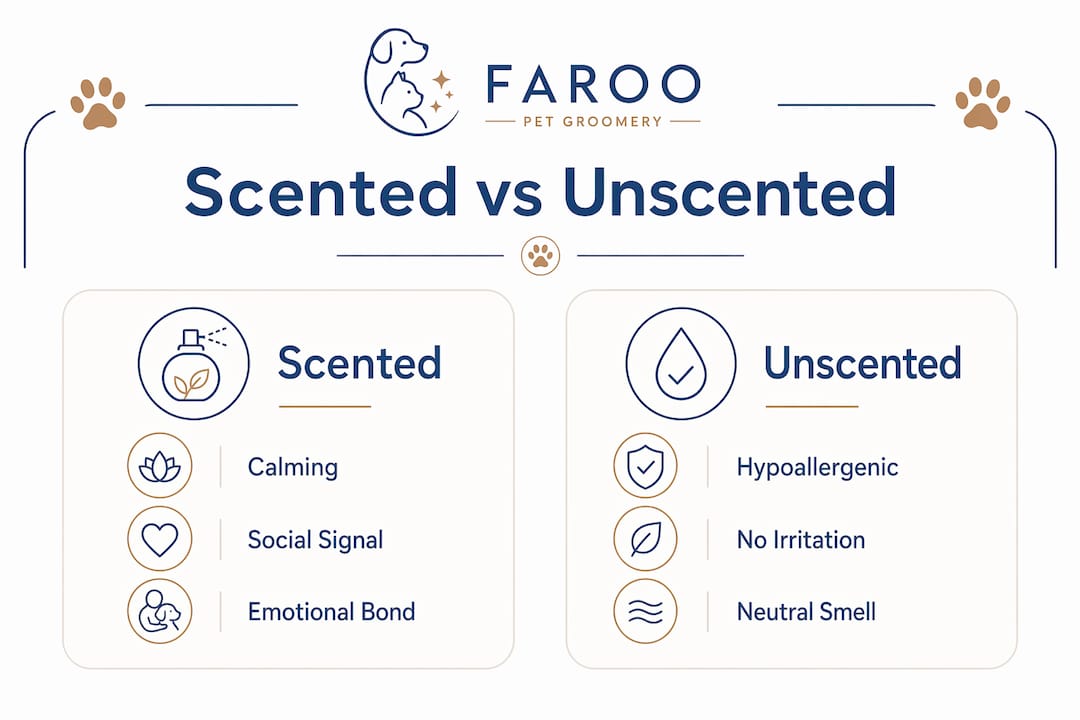
Not every pet is a candidate for scented products, and knowing the difference protects your animal from unnecessary discomfort. Here is a clear comparison to help you decide.
| Factor | Scented products | Unscented products |
|---|---|---|
| Emotional impact | Calms anxiety, builds positive grooming memory | Neutral; no emotional reinforcement |
| Social perception | Fresh coat signals attentive care | No scent signal; neutral impression |
| Skin sensitivity | May irritate pets with allergies or sensitivities | Safer for reactive or allergy-prone skin |
| Routine reinforcement | Scent cue anchors grooming as a positive ritual | No ritual scent anchor |
| Best use case | Healthy pets with no fragrance sensitivities | Sensitive skin, post-surgery, or allergy-prone pets |
The advantages of scented products are real, but they come with one firm rule: never overdo it. Overuse or mismatched scented products create what experts call “scent chaos,” which dilutes the intended effect and can confuse your pet’s highly sensitive olfactory system. Dogs have up to 300 million olfactory receptors compared to a human’s 6 million. What smells subtle to you can be overwhelming to them.
Common misconceptions about fragrance in pet grooming include:
- “More scent means cleaner.” Fragrance intensity has no connection to cleaning power. A mild scent can come from a highly effective formula.
- “Unscented means chemical-free.” Unscented products often contain masking agents. They are not automatically gentler.
- “Any human fragrance is fine for pets.” Human perfumes and colognes contain alcohol and synthetic compounds that are toxic to cats and dogs.
The goal is a coherent, light scent profile that your pet recognizes and associates with comfort. One well-chosen product beats three competing fragrances every time.
How to choose safe scented grooming products for your pet
Safe scent selection starts with the ingredient list, not the marketing label. Veterinarians and groomers recommend fragrance-free or mild scents for sensitive animals to avoid irritation or allergies. For pets without known sensitivities, the following steps make selection straightforward.
- Check for pet-safe certifications. Look for products formulated specifically for dogs, cats, or birds. Human skincare fragrances are not interchangeable with pet-safe formulas.
- Start with one product. Introduce a single scented shampoo or conditioner before adding more. This lets you observe your pet’s reaction without multiple variables.
- Watch for allergy signals. Redness, excessive scratching, watery eyes, or sneezing after grooming are warning signs. Faroopets has a detailed guide on spotting grooming allergies that every pet owner should read before switching products.
- Apply after conditioning. Applying fragrance post-moisturizer increases scent longevity and stability on fur. Hydrated fur holds fragrance far longer, so you use less product with better results.
- Avoid layering competing scents. Use unscented or neutrally scented foundation products alongside your chosen fragrance. Conflicting scents in grooming undermine the calming effect and create sensory overload for your pet.
Essential oils require special attention. Lavender and chamomile are widely considered calming and pet-tolerable in diluted, properly formulated products. Tea tree oil, eucalyptus, and citrus oils are toxic to cats and should never appear in feline grooming products. Always read the full ingredient list, not just the front label.
Pro Tip: After a grooming session, let your pet sniff the empty product bottle. This reinforces the positive scent association and helps them connect the fragrance with the comfort they just experienced.
Key Takeaways
Scented grooming products deliver measurable emotional and hygiene benefits when chosen carefully and applied consistently for your pet’s specific needs.
| Point | Details |
|---|---|
| Scent reaches the brain fast | Fragrance triggers calming emotional states in pets faster than any other sensory input. |
| Consistency builds trust | Using the same scent every session creates positive grooming memories that reduce pet anxiety over time. |
| Scent chaos harms more than helps | Layering multiple fragrances overwhelms pets’ sensitive noses and cancels out calming effects. |
| Safety comes first | Always choose pet-specific, vet-approved formulas and watch for allergy signs after introducing new scented products. |
| Apply after conditioning | Moisturized fur holds fragrance longer, so post-conditioner application gives better results with less product. |
My honest view on scent as a grooming tool
I have watched pet owners underestimate fragrance for years. They treat it as a finishing touch, something spritzed on at the end to cover up the smell of wet dog. That framing misses the point entirely.
The most meaningful change I have seen in grooming practice is when owners treat scent as the first decision, not the last. Choosing a calming fragrance before picking a shampoo formula changes the entire grooming session. The pet walks in already primed by a familiar scent. The groomer works with a calmer animal. The owner picks up a pet that associates the experience with comfort rather than stress.
The pitfall I see most often is what I call the “variety trap.” Owners rotate between three or four different scented products because they want their pet to smell different each week. This is the opposite of what works. Scent memory is built through repetition. One signature scent, used consistently, does more for your pet’s emotional well-being than a rotating collection of premium products ever will.
My advice: pick one scent your pet responds well to, pair it with a neutral conditioner, and commit to it for at least six sessions before evaluating. You will notice the difference in how your pet enters the grooming space. That calm, willing approach is the real measure of whether your scent selection is working.
— Growth
Give your pet the grooming experience they deserve
At Faroopets, we build every grooming session around your pet’s comfort, and fragrance is a deliberate part of that process. Our certified groomers in Dubai use carefully selected, pet-safe scented products that calm, clean, and leave your dog or cat smelling wonderful without overwhelming their senses.

Whether your dog needs a full refresh or your cat deserves a soothing session, our dog grooming Dubai and cat grooming Dubai services bring professional, scented care directly to your door. Our mobile vans are sanitized, our groomers are trained, and every product we use is chosen with your pet’s safety in mind. Book your session today and let your pet experience the difference that thoughtful grooming makes.
FAQ
What makes scented grooming products better than unscented ones?
Scented products deliver emotional benefits beyond cleaning by triggering calming responses in the pet’s limbic system. Unscented products are better suited for pets with known fragrance sensitivities or allergies.
Are essential oils safe to use in pet grooming?
Diluted lavender and chamomile are generally considered safe in properly formulated pet products, but tea tree oil, eucalyptus, and citrus oils are toxic to cats and should be avoided entirely.
How often should I use scented grooming products on my pet?
Use scented products at every regular grooming session to build consistent positive associations. Consistency is what creates the calming memory response, not frequency alone.
Can scented grooming products reduce my pet’s anxiety?
Yes. Consistent scent routines embed calming emotional memory in pets, reducing stress responses over time when the same fragrance is used repeatedly during grooming.
How do I know if my pet is reacting badly to a scented product?
Watch for redness, excessive scratching, watery eyes, or sneezing after grooming. These are common signs of fragrance sensitivity, and you should switch to an unscented formula and consult your vet if they appear.
