


Posted by Faroo Pets Grooming
on June 29, 2026

TL;DR:
- Bird grooming involves both natural behaviors and human care that keep feathers, beak, nails, and skin healthy. Proper grooming enhances a bird’s mobility, insulation, and comfort, which supports overall health and longevity.
Bird grooming is the full set of behaviors and care practices that keep a bird’s feathers, beak, nails, and skin healthy, supporting survival, mobility, and comfort. The term covers both natural behaviors birds perform on their own and human-assisted care that pet owners and professionals provide. Over 6.1 million American households owned parakeets or cockatiels as of january 2026, which means millions of bird owners need to understand what proper grooming actually involves. At Faroopets, we see this gap every day. Bird owners who understand grooming give their birds longer, healthier, and happier lives.
What is bird grooming and why does it matter?
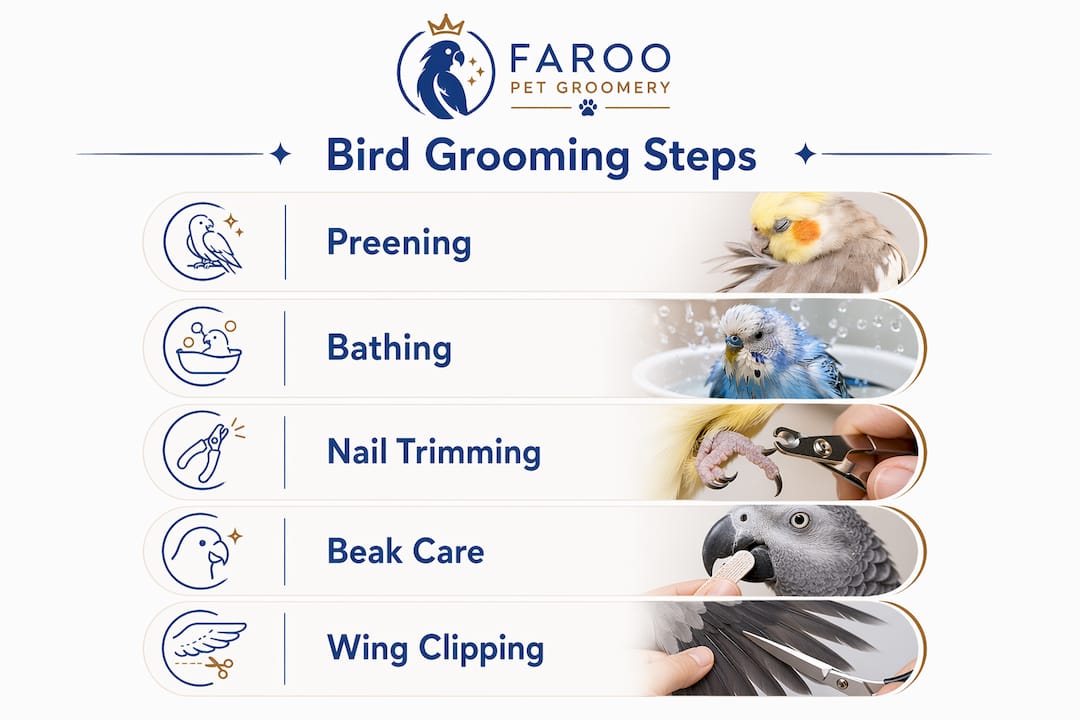
Bird grooming is defined as the combination of natural self-care behaviors and human-assisted maintenance that preserves a bird’s physical condition. The industry term used by avian veterinarians is “avian grooming,” and it covers preening, bathing, nail care, beak maintenance, and wing management. Each of these areas directly affects a bird’s ability to fly, regulate body temperature, and stay free from infection.
Natural grooming behaviors evolved over millions of years. They are not optional extras. A bird that cannot groom properly is a bird in distress. For pet birds, the controlled environment of a home removes some natural grooming opportunities, which is exactly why human-assisted care becomes so important.
The role of grooming for birds goes beyond appearance. Healthy feathers insulate against heat and cold, repel water, and enable flight. Properly trimmed nails prevent injury to the bird and to the owner. A well-maintained beak lets the bird eat, climb, and communicate without pain. Grooming is, in every practical sense, a health practice.
How does preening maintain feather health?
Preening maintains feather integrity for flight, waterproofing, and insulation by spreading oil from the uropygial gland across each feather. The uropygial gland, located at the base of the tail, produces a conditioning oil that birds apply with their beak. Think of preening as a bird simultaneously combing, cleaning, and waterproofing its coat in a single motion.
During preening, a bird uses its beak to realign the tiny barbs and barbules that zip each feather together. When these barbs separate, the feather loses its aerodynamic shape and insulating ability. Preening restores that structure, keeping every feather flight-ready and weather-resistant.
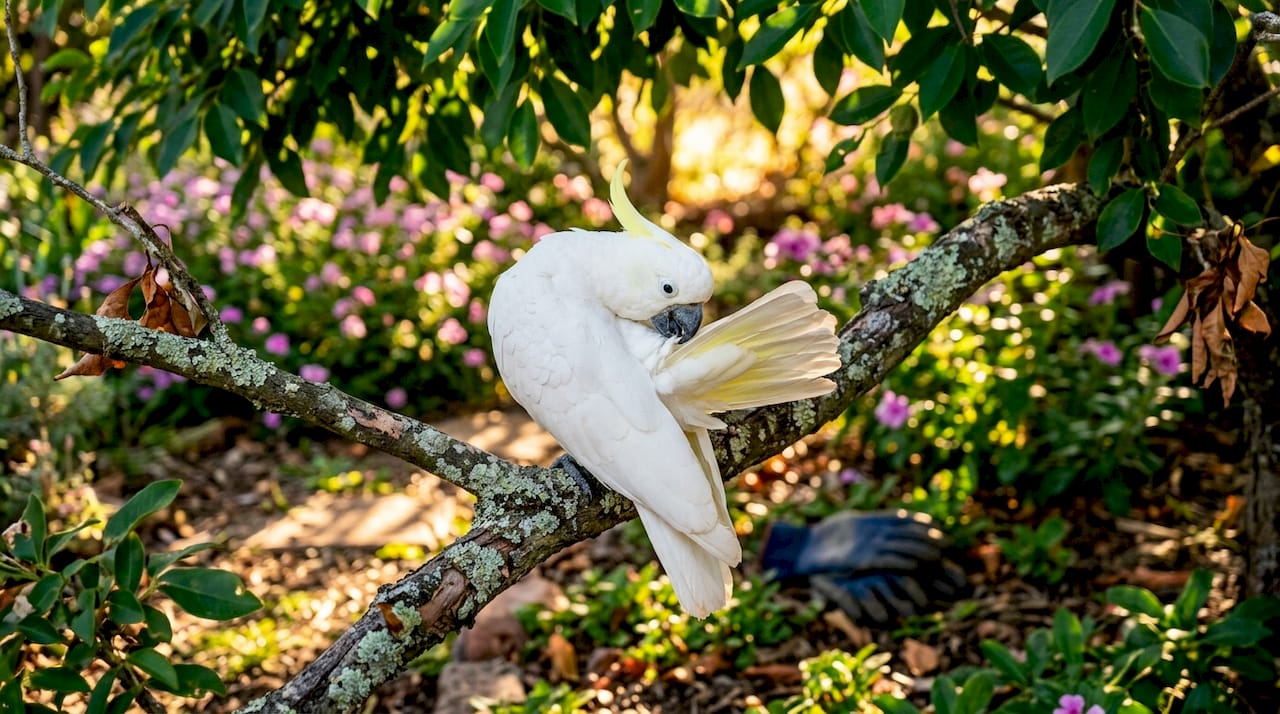
Birds also engage in mutual preening, called allopreening, to reach areas like the back of the head and neck that a single bird cannot access alone. In a home setting, a bonded bird may preen its owner’s hair or eyebrows as a sign of trust. That behavior is not quirky. It is a deeply wired social grooming instinct.
Here are the key functions preening serves:
- Feather alignment: Restores the interlocking barb structure that gives feathers their shape and aerodynamic properties.
- Oil distribution: Spreads uropygial gland secretions that waterproof and condition feathers.
- Parasite removal: Dislodges mites, lice, and debris that accumulate between feathers.
- Feather inspection: Allows the bird to detect and remove damaged or broken feather shafts early.
- Social bonding: Mutual preening between birds or between bird and owner strengthens trust and reduces stress.
Pro Tip: If your bird preens excessively or pulls out feathers rather than just cleaning them, that is called feather destructive behavior and signals stress, illness, or nutritional deficiency. A vet visit is the right first step, not more grooming.
How does bathing support grooming birds for healthy feathers?
Bathing is the second pillar of natural bird grooming, and it works alongside preening rather than replacing it. Regular bathing several times per week maintains feather and skin health, with increased frequency during molting to help new feathers grow in cleanly. Moisture softens old feather sheaths and makes preening more effective immediately after a bath.
Different bird species prefer different bathing methods. Matching the method to the species prevents stress and protects feather condition. Here are the four main approaches:
- Misting: Use a clean spray bottle set to a fine mist. Hold it above the bird so water falls like rain. This suits most small to medium birds, including budgies, cockatiels, and conures.
- Shallow dish bathing: Place a shallow dish with about one inch of lukewarm water in the cage. Many birds will step in and splash on their own. Replace the water immediately after use to prevent bacterial growth.
- Supervised shower: Some larger parrots, like African greys and Amazon parrots, enjoy a gentle shower alongside their owner. Use lukewarm water and keep sessions short.
- Leaf bathing: In the wild, many birds roll in wet foliage. Placing damp, bird-safe leaves or a wet paper towel in the cage mimics this behavior for species that prefer it.
One important caution: species that produce powder down feathers, such as cockatoos and African greys, use that powder naturally for grooming and waterproofing. Bathing these birds too frequently strips the powder and damages feather condition. For powder down species, two to three baths per week is generally sufficient.
Environmental enrichment also plays a grooming role. Perches designed to naturally wear nails reduce how often you need to trim them manually. Concrete or rough-textured perches placed near food and water bowls work best because birds land on them repeatedly throughout the day.
When does bird grooming need expert care?
Human-assisted grooming covers three main areas: nail trimming, beak care, and wing clipping. Each carries real risks when done incorrectly, which is why professional avian grooming is advised when birds do not self-maintain or when owners lack proper training.
The most serious risk in bird nail trimming is cutting a blood feather. Cutting a blood feather is a medical emergency that requires immediate intervention because the feather shaft contains an active blood supply. A small slip causes severe bleeding that a bird cannot control on its own. Professional groomers use specialized avian tools and often work with an assistant to hold the bird safely during trimming.
Using tools designed for other mammals is a major risk in DIY bird grooming. Dog nail clippers crush rather than cut, which cracks the nail and causes pain. Avian-specific nail scissors or a rotary tool designed for birds produce a clean cut with minimal pressure.
Here is a quick reference for human-assisted grooming tasks:
| Grooming task | Signs it is needed | Recommended approach |
|---|---|---|
| Nail trimming | Nails curling, snagging on fabric, or causing injury | Avian nail scissors or rotary tool; professional if unsure |
| Beak maintenance | Overgrowth, flaking, or asymmetry | Veterinarian or certified avian groomer only |
| Wing clipping | Flight safety concerns in the home | Professional groomer; never clip blood feathers |
| Feather check | Broken, missing, or discolored feathers | Veterinary examination to rule out illness |
Pro Tip: Start desensitization training early. Let your bird see and touch grooming tools before any session begins. Birds that associate tools with calm handling are far easier and safer to groom throughout their lives.
Our full bird nail trimming guide walks through safe techniques step by step if you want to learn the process at home.
How does diet affect feather quality and grooming needs?
Feather issues often stem from inadequate diet rather than grooming failures. A bird eating a nutritionally poor diet will produce weak, brittle feathers regardless of how carefully it preens or how often it bathes. Grooming maintains what is already there. Nutrition determines the quality of what grows.
The key nutritional factors that directly affect feather health include:
- Protein: Feathers are made almost entirely of keratin, a protein. Low protein intake produces thin, easily broken feathers.
- Vitamin A: Deficiency causes dry, flaky skin and dull plumage. Sweet potato, leafy greens, and bell peppers are strong natural sources.
- Omega fatty acids: Support skin moisture and feather sheen. Found in flaxseed, hemp seed, and certain mixed bird diets.
- Calcium and phosphorus: Support healthy beak and nail growth. Cuttlebone is a practical supplement for caged birds.
- Hydration: Dehydration causes feather brittleness and slows the molting cycle. Fresh water must be available at all times.
Molting, the natural cycle of feather replacement, increases grooming demands temporarily. During a molt, birds need more protein and more frequent baths to help pin feathers emerge cleanly. A bird on a complete bird diet moves through molting faster and with less discomfort than one eating seeds alone. Seed-only diets are one of the most common nutritional mistakes bird owners make, and the feathers show it clearly.
Key Takeaways
Bird grooming is a combination of natural behaviors and human-assisted care that directly determines a pet bird’s health, feather quality, and quality of life.
| Point | Details |
|---|---|
| Preening is the foundation | Birds use the uropygial gland and beak to clean, align, and waterproof every feather daily. |
| Bathing frequency matters | Most birds benefit from bathing several times per week, with more during molting season. |
| Professional care prevents injury | Cutting blood feathers is a medical emergency; use avian-specific tools or seek a professional. |
| Diet drives feather quality | Protein, Vitamin A, and omega fatty acids determine how strong and healthy new feathers grow. |
| Early desensitization reduces stress | Introducing grooming tools calmly from a young age prevents anxiety and aggression during sessions. |
My honest take on bird grooming after years of watching owners get it wrong
Most bird owners come to us after something has already gone wrong. A nail has been cut too short. A feather has been pulled. The bird now bites at the sight of a towel. We see this pattern often enough that I want to say it plainly: grooming is not a chore you do to your bird. It is something you build with your bird over time.
The owners who have the easiest grooming sessions are the ones who spent the first few months doing nothing except letting their bird get comfortable with being handled. They held the bird. They touched its feet. They let it investigate nail scissors without using them. That investment pays off for the entire life of the bird.
The biggest mistake I see is rushing. An owner gets nervous, the bird senses it, and the session turns into a struggle. Grooming sessions should be low-stress and trust-building. Rushing or using excessive restraint creates anxiety and aggression that compounds with every session. Once a bird associates grooming with fear, reversing that association takes months of patient work.
My honest recommendation: if you are not confident, do not attempt nail or beak trimming at home. The cost of a professional session is far lower than the cost of a vet visit for a bleeding bird or the long-term behavioral damage from a traumatic grooming experience. Know your limits, and know that asking for help is the right call.
— Growth
Professional bird grooming with Faroopets
Your bird deserves grooming that feels safe, calm, and handled by someone who knows exactly what they are doing.

Faroopets brings certified, experienced groomers directly to your door in Dubai, so your bird never has to travel to a stressful clinic environment. Our bird pampering service covers nail trimming, feather checks, and full hygiene care using avian-specific tools in a sanitized mobile setting. We also carry a range of pet care products to support your bird’s health between sessions. Ready to book? Choose your service and we will take care of the rest.
FAQ
What is bird grooming in simple terms?
Bird grooming is the combination of natural behaviors like preening and bathing, plus human-assisted care like nail trimming and wing clipping, that keeps a bird healthy and comfortable.
How often should I groom my pet bird?
Most birds benefit from bathing several times per week, while nail trimming is needed every few weeks depending on the species and environment.
Can I groom my bird at home?
Basic bathing and misting are safe to do at home, but nail trimming and beak care carry real injury risks and are best handled by a trained avian groomer or veterinarian.
What happens if I cut a blood feather?
Cutting a blood feather causes severe bleeding and is a medical emergency requiring immediate professional care. Never attempt to trim feathers without identifying blood feathers first.
Why does my bird’s feather condition look poor despite regular grooming?
Poor feather quality is most often caused by nutritional deficiency, particularly low protein or Vitamin A, rather than a grooming problem. A diet review with an avian vet is the right starting point.
