


Posted by Faroo Pets Grooming
on June 24, 2026

TL;DR:
- Proper grooming and styling help keep cats comfortable, reduce shedding, and prevent matting.
- Different styles suit coat types and temperaments, with professional help recommended for severe matting.
Styling cat fur is the process of grooming and trimming a cat’s coat using brushes, combs, and clippers to create looks that are both attractive and practical for the cat’s coat type and temperament. Whether you own a fluffy Persian or a sleek Maine Coon, knowing how to style cat fur correctly keeps your cat comfortable, reduces shedding, and prevents painful matting. The right cat grooming techniques combine patience, proper tools, and an understanding of your cat’s limits. We put this guide together to help you feel confident at every step, from choosing a style to finishing the look at home.
What are the popular cat fur styles and their purposes?
Cat haircuts address practical concerns like matting and hygiene far more often than they serve fashion. That said, the best cat fur styles do both jobs at once when chosen thoughtfully.
Here are the most requested styles and what each one does best:
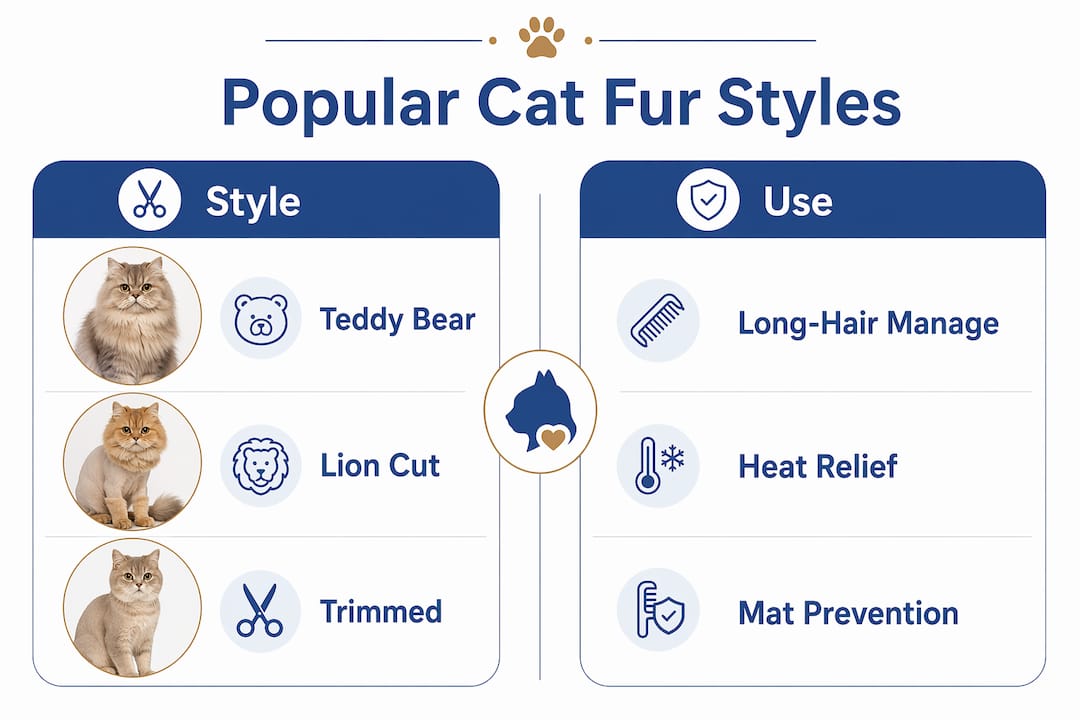
- Teddy bear cut. The most requested cat haircut, this style trims the body to a uniform length of about one to two inches while leaving the face rounded and plush. It suits long-haired breeds like Ragdolls and Himalayans who struggle with tangles. Touch-ups are needed every 4–6 weeks to keep the shape.
- Lion cut. The body is clipped short while the head, mane, lower legs, and tail tip are left full. Lion cuts are popular for long-haired cats with heavy matting or hygiene concerns. This cut is best handled by a professional groomer because it requires a calm cat and confident clipper work.
- Sanitary trim. Only the fur around the hindquarters is trimmed. This is the most practical and least stressful option for cats who resist full grooming sessions.
- Kitten cut. A lighter version of the teddy bear cut, leaving fur slightly longer. Good for cats new to grooming or those with sensitive skin.
- Panther cut. A full body clip that leaves the coat very short all over. Reserved for severe matting cases or cats in extremely warm climates like Dubai.
Pro Tip: Choose a style based on your cat’s coat type and tolerance first, then aesthetics second. A lion cut on an anxious cat causes more stress than it solves.
Here is a quick comparison to help you decide:
| Style | Best for | Maintenance frequency | Professional needed? |
|---|---|---|---|
| Teddy bear cut | Long-haired, tangle-prone cats | Every 4–6 weeks | Optional |
| Lion cut | Heavy matting, hygiene issues | Every 8–12 weeks | Yes |
| Sanitary trim | All cats, low tolerance | Every 4–6 weeks | Optional |
| Kitten cut | Sensitive or grooming-new cats | Every 6–8 weeks | Optional |
| Panther cut | Severe matting, hot climates | Every 8–10 weeks | Yes |
Which tools and products do you need to style your cat’s fur at home?
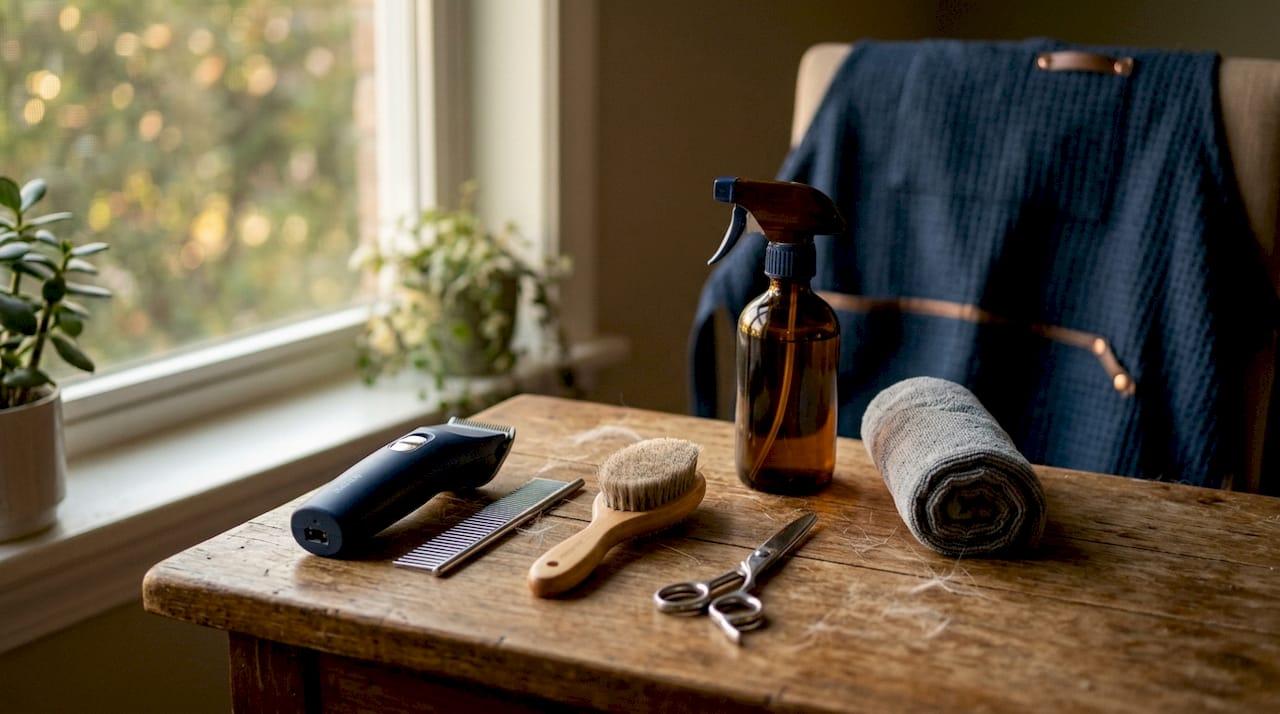
The right tools make home grooming safe and effective. Using the wrong ones causes discomfort and can injure your cat’s skin.
| Tool | Purpose | Best for |
|---|---|---|
| Slicker brush | Removes loose fur and light tangles | All coat types |
| Wide-tooth comb | Detangles and checks for mats | Long-haired cats |
| Dematting tool | Breaks apart mats without scissors | Moderate to heavy matting |
| Grooming glove | Gentle deshedding and bonding | Short-haired or sensitive cats |
| Pet clippers with guards | Trimming and shaping | All styled cuts |
| Detangling spray | Softens fur before brushing | Long-haired, mat-prone coats |
A few additional points on tool selection:
- Clippers: Use clippers designed specifically for pets. Human clippers run too hot and too fast for cat skin. Always attach a guard comb to control length.
- Scissors: Reserve blunt-tipped grooming scissors for face and paw trimming only. Never use scissors on mats. Cat skin is thin and folds into mats, making cuts a real risk.
- Detangling spray: A light mist before brushing reduces friction and makes the session more comfortable for your cat.
- Calming treats: Keep high-value treats nearby to reward calm behavior throughout the session.
Pro Tip: Buy clippers with a low noise rating. Loud clippers startle cats and make future sessions harder. Wahl and Andis both make quiet pet-specific models.
How do you style your cat’s fur step by step?
A structured approach protects your cat and gives you better results. Start grooming sessions at just 5–10 minutes and gradually increase the time as your cat gets comfortable. Rushing a session is the fastest way to lose your cat’s trust.
Follow these steps for a safe and effective styling session:
-
Prepare your space. Choose a non-slip surface at a comfortable height. Lay a rubber mat on a table or counter. Gather all tools before you start so you never need to leave your cat unattended.
-
Start with a full brush-out. Use a slicker brush to work through the coat in the direction of fur growth. Never brush against the grain on a first pass. This removes loose fur and reveals any mats hiding underneath.
-
Locate and address mats. Run a wide-tooth comb through the coat after brushing. If you find a mat, apply detangling spray and work it apart with your fingers first. Use a dematting tool for stubborn knots. Use dematting tools or professional clippers instead of scissors to avoid skin injuries.
-
Section the coat for trimming. Work in small sections from the back of the body toward the head. Clip with the direction of fur growth using your chosen guard length. For a teddy bear cut, a number 4 or 5 guard gives a good one-inch finish on most cats.
-
Trim sensitive areas last. The belly, armpits, and face are the most sensitive. Save these for the end of the session when your cat is already settled. Use blunt-tipped scissors for the face and paws only.
-
Reward throughout. Reward calm behavior with treats during and after the session. This builds a positive association with grooming and makes the next session easier.
-
Know when to stop. If your cat shows flattened ears, a lashing tail, or tries to bite, pause immediately. Forcing the session causes stress and can lead to injury for both of you. Resume after a break or book a professional for that session.
Pro Tip: For a teddy bear cut at home, clip the body first, then blend the chest and legs. Leave the tail and head for last. The whole process should feel like a slow, calm conversation with your cat, not a race.
Long-haired cats need daily to every-other-day brushing to prevent tangles from forming between styling sessions. Building brushing into your daily routine is the single most effective thing you can do to maintain any styled cut.
How to maintain styled cat fur and troubleshoot common challenges?
Maintaining a styled coat is mostly about consistency. One missed week of brushing can undo weeks of careful grooming work, especially for long-haired breeds.
Brushing frequency by coat type:
- Short-haired cats: brush two to three times per week
- Medium-haired cats: brush every other day
- Long-haired cats: brush daily or every other day
Preventing matting and skin irritation:
- Always brush before bathing. Wet mats tighten and become nearly impossible to remove without clippers.
- Check behind the ears, under the armpits, and at the base of the tail. These spots mat fastest.
- Use a light detangling spray between sessions to keep the coat soft.
Handling anxious or uncooperative cats:
Successful grooming depends heavily on desensitization. Forcing sessions causes stress and can lead to biting or flinching. Start by simply touching your cat’s paws and ears daily without any tools. Introduce the brush only after your cat is comfortable being handled. Kittens who are handled early on their paws and ears develop much higher grooming tolerance as adults.
Managing shedding season:
Cats shed heavily in spring and fall. During these periods, increase brushing frequency and add a deshedding tool like a Furminator to your routine. This reduces the amount of loose fur that can tangle into the styled coat.
“After professional grooming, cats with difficult coats often reset with improved coat manageability. Owners should supplement with routine home grooming to maintain results.” — Cat Grooming Styles Guide
When to book a professional:
Approximately 70% of cats can be groomed at home with routine brushing and care. Long-haired cats with chronic matting and anxious cats typically need professional grooming. If you find a mat larger than a coin, or if your cat refuses to stay still for clippers, a professional groomer is the right call. Regular professional sessions also serve as a maintenance reset, especially after a rough shedding season.
For cat owners in Dubai, routine grooming assessments are especially valuable given the heat and humidity, which can accelerate matting and skin issues.
Key takeaways
Styling cat fur successfully requires the right tools, a calm approach, and consistent maintenance between sessions.
| Point | Details |
|---|---|
| Choose style by function first | Pick a cut based on your cat’s coat type and matting history before considering aesthetics. |
| Never cut mats with scissors | Use a dematting tool or professional clippers to avoid cutting thin cat skin. |
| Start sessions at 5–10 minutes | Short sessions build tolerance and trust before you attempt longer styling work. |
| Brush daily for long-haired cats | Daily brushing prevents tangles and keeps any styled cut looking its best between trims. |
| Book a professional for severe matting | About 30% of cats need professional grooming for complex coats or high anxiety levels. |
What I’ve learned from watching cats get groomed
Most cat owners come to grooming with the wrong goal. They want a perfect cut on the first try. What actually matters is building a cat that tolerates the process, because a calm cat gives you far more to work with than any technique ever will.
Grooming builds the human-animal bond, and that bond is what makes every future session easier. I have seen owners with the best clippers and the most expensive brushes struggle because they skipped the desensitization work. And I have seen owners with basic tools achieve beautiful results because their cats trusted them completely.
The other thing most guides skip is this: functional cuts are almost always better than fancy ones. A clean sanitary trim and a well-maintained natural coat often look better than a rushed lion cut that the cat fought through. Style should serve the cat, not the other way around.
If your cat shows any stress signals, stop. A five-minute session that ends on a calm note is worth more than a twenty-minute session that ends in a scratch. Patience is not just kindness. It is the most effective cat grooming technique there is.
— Growth
Professional cat grooming in Dubai with Faroopets
When home grooming reaches its limits, Faroopets brings expert care directly to your door across Dubai.

Our certified groomers handle everything from basic brush-outs to full styling sessions in a sanitized mobile van, so your cat never has to leave the comfort of home. Whether your cat needs a luxury full grooming package or a basic grooming session to maintain a styled coat, we have a package that fits. We also carry grooming products to support your home routine between visits. Happiness really is just a brush stroke away. Visit our cat grooming page to book your first session or browse our full range of services.
FAQ
What is the most popular cat fur style?
The teddy bear cut is the most requested cat haircut for its rounded, plush appearance. It works well on long-haired breeds and requires touch-ups every 4–6 weeks.
Can I style my cat’s fur at home?
Most cats can be groomed at home with the right tools and a patient approach. Long-haired cats with severe matting or high anxiety typically need a professional groomer.
How often should I brush my cat’s fur to maintain a style?
Long-haired cats need brushing daily or every other day to prevent tangles. Short-haired cats do well with two to three brushing sessions per week.
Is it safe to cut mats out of cat fur with scissors?
No. Cat skin is thin and folds into mats, making scissors a serious laceration risk. Always use a dematting tool or ask a professional groomer to remove mats safely.
How do I groom an anxious cat?
Start with short 5–10 minute sessions focused on gentle handling rather than trimming. Reward calm behavior with treats and introduce tools gradually over several sessions to build trust.
