


Posted by Faroo Pets Grooming
on July 08, 2026

TL;DR:
- Managing multiple pets requires providing extra resources to reduce competition and conflict. Consistent routines, careful introductions, and early intervention prevent behavioral problems and promote harmony. Proper care involves species-specific needs, organized health management, and professional grooming to keep households calm and pets thriving.
Managing multiple pets means balancing each animal’s individual needs while keeping your household calm and conflict-free. The term “multi-pet household management” covers everything from feeding schedules and species-specific care to social introductions and health logistics. Pet owners who get this right don’t just survive the chaos. They build a home where every animal genuinely thrives. This guide gives you the practical systems, expert-backed rules, and real-world tips to make that happen, whether you have two dogs or a mixed household of cats, rabbits, and birds.
How to manage multiple pets: setting up resources the right way
The single most effective thing you can do for a multi-pet home is get your resource setup right before conflict starts. Resource competition causes 90% of tension in multi-pet households. That number tells you that most fights, stress behaviors, and anxiety in your home trace back to one animal feeling like it doesn’t have enough.

The N+1 rule every multi-pet owner needs
The N+1 rule is the gold standard for resource management. It means providing one more essential resource than the number of pets you have. Two cats need three litter boxes. Three dogs need four water bowls. This removes the pressure of competition entirely, because no animal ever has to wait or guard.
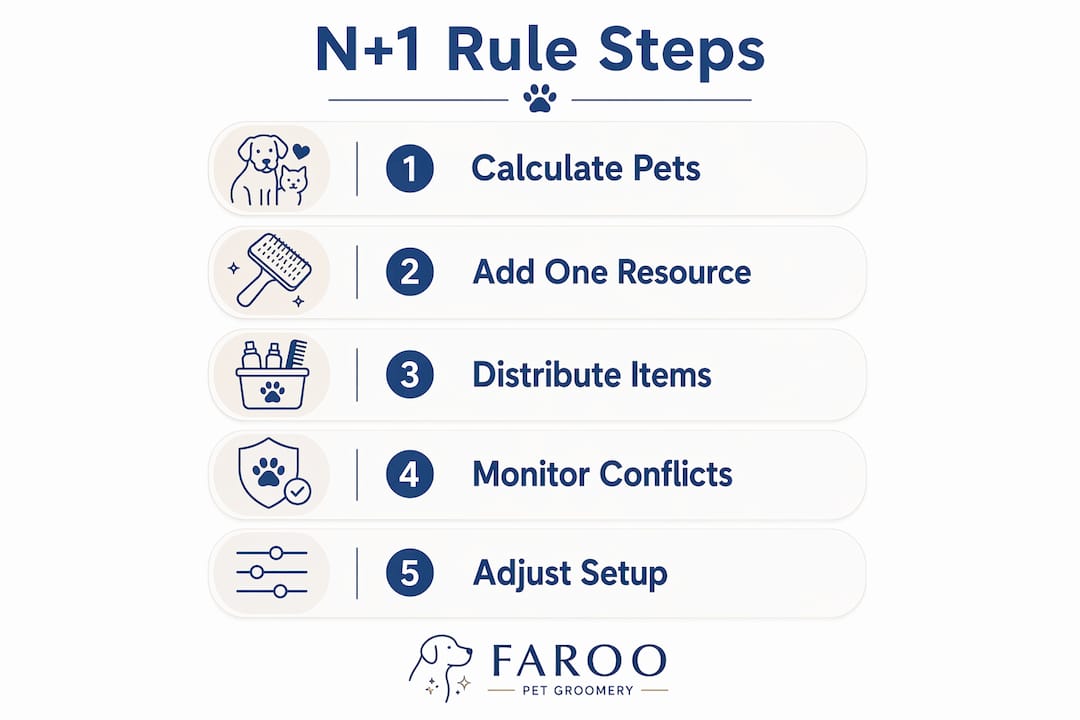
Experts stress that individualized retreats are not spoiling your pets. They are a necessity. Every animal needs a space it can call its own, whether that’s a cat tree shelf, a crate for a dog, or a quiet corner for a rabbit. Shy pets especially need these zones to decompress without being cornered by a more confident housemate.
Here’s how resource setups look across common pet combinations:
| Pet combination | Litter/bathroom spots | Feeding stations | Rest zones |
|---|---|---|---|
| 2 cats | 3 litter boxes | 2 separate bowls | 2+ elevated perches |
| 1 dog + 1 cat | 2 litter boxes (cat only) | 2 stations, different rooms | 1 crate + 1 cat shelf |
| 2 dogs + 1 rabbit | N/A | 3 stations, supervised | 2 dog beds + 1 enclosed hutch |
| 1 cat + 1 bird | 2 litter boxes | 2 stations, separate rooms | Cat perch away from bird cage |
Species-specific needs vary more than most pet owners expect. Dogs need 30–60 minutes of daily exercise, while rabbits and guinea pigs need at least 80% of their diet as high-quality hay to prevent digestive problems. A dog’s exercise routine and a rabbit’s dietary needs have almost nothing in common. Treating them the same way leads to health problems for both.
- Give cats vertical space: wall shelves, cat trees, and window perches reduce ground-level tension.
- Keep bird cages in rooms where dogs and cats cannot access them unsupervised.
- Provide rabbits with a hutch or pen that gives them a safe retreat from larger animals.
- Place water bowls in multiple locations so no single pet can guard the only source.
Pro Tip: Place resources in different rooms rather than just different corners of the same room. Physical separation removes the temptation to guard entirely.
How do you establish feeding routines for multiple pets?
Consistent feeding routines are the backbone of a calm multi-pet home. When every animal knows when and where it eats, food-related stress drops significantly. Here is a practical system that works across species:
- Assign a fixed feeding station to each pet. Use a different room or a clearly separated area for each animal. This removes the visual trigger of seeing another pet’s food.
- Feed at the same times every day. Predictability reduces anxiety. Pets that know when food is coming stop patrolling and guarding.
- Use labeled or automatic cat feeders for dietary differentiation. Automatic feeders are especially useful when pets have different meal sizes, frequencies, or prescription diets.
- Supervise mealtimes until you are confident each pet eats its own food. Some dogs will finish their bowl and immediately move to the cat’s station. Supervision catches this early.
- Remove bowls after each meal. Leaving food out invites guarding behavior between meals, even from pets that seem relaxed.
- Monitor intake weekly. Weight changes in any pet often signal that another animal is stealing food or that stress is suppressing appetite.
For households with dogs and cats together, feed cats on an elevated surface the dog cannot reach. This solves the problem without requiring constant supervision. For rabbits, hay should be available at all times in a rack inside their enclosure, completely separate from the dog or cat’s space.
Pro Tip: Color-code each pet’s bowl, placemat, and storage container. When everything for “Max” is blue and everything for “Luna” is green, family members and pet sitters make fewer feeding mistakes.
What are the best approaches to introduce new pets?
Introducing a new pet to an existing household is the moment most multi-pet problems begin. The method you use in the first days determines whether your pets bond in weeks or require months of repair work.
Forced introductions can require 3–6 months of supervised retraining, while gradual scent-based introductions often lead to bonding in days or weeks. That gap is enormous. Scent-based introductions work by letting pets smell each other’s bedding, toys, or a cloth rubbed on each animal before they ever share a space. This removes the shock of a sudden face-to-face encounter.
Key steps for a successful introduction:
- Keep the new pet in a separate room for the first 3–7 days. Let existing pets sniff under the door.
- Swap bedding between the new pet and resident pets so each gets familiar with the other’s scent.
- Allow brief, supervised visual contact through a baby gate or cracked door before full access.
- Watch for flattened ears, stiff posture, or prolonged staring. These are early tension signals, not just curiosity.
- End every session on a calm note. If tension rises, separate and try again the next day.
“Allowing pets to settle hierarchy by themselves often escalates aggression. Successful multi-pet managers intervene early, separate animals at the first sign of real tension, and reintroduce them gradually rather than waiting for a fight to resolve itself.”
Consistent household rules reduce confusion and resentment among pets over time. If one dog is allowed on the couch and another is not, both animals experience stress from the inconsistency. The “same rules for all” approach is one of the most underrated tools in multi-pet management.
How do you handle health, grooming, and medications for multiple pets?
Health logistics in a multi-pet home get complicated fast, especially when animals have different medication schedules, grooming needs, or species-specific health risks. A clear system prevents dangerous errors.
Color-coded collars or feeding stations that match medication bottles are one of the most effective ways to prevent dosing errors. When “Milo’s” collar is red and his medication bottle has a red sticker, the risk of giving the wrong dose to the wrong pet drops sharply. This system takes ten minutes to set up and can prevent a serious mistake.
Key health and grooming practices for multi-pet households:
- Schedule each pet’s veterinary check-up on a different month so you can give full attention to one animal at a time.
- Keep a written health log for each pet, including vaccination dates, medications, and any behavior changes.
- Watch for subtle stress signals during grooming sessions, including lip licking, yawning, or attempts to escape.
- Birds and reptiles often mask illness until it is advanced. Any change in droppings, feather condition, or activity level warrants a vet call.
- Groom pets separately to avoid one animal becoming anxious from watching another’s reaction.
For multi-species grooming schedules, rotating appointments across the week rather than doing everything on one day keeps each session calm and focused. A dog that just had a bath and is still unsettled will make the cat’s grooming session harder for everyone.
Pro Tip: Keep a single shared calendar, physical or digital, with each pet’s name color-coded. Medications, vet visits, and grooming sessions all go on the same calendar so nothing gets missed.
What common challenges come up in multi-pet homes?
Even well-managed households hit friction points. Knowing what to look for makes the difference between a small correction and a full behavioral crisis.
Resource guarding often shows up as subtle behaviors like blocking hallways, hovering near another pet’s bowl, or lying in front of a door. Most pet owners only recognize guarding when it becomes growling or snapping. By then, the behavior is already entrenched.
Here is a practical troubleshooting sequence for common multi-pet conflicts:
- Identify the trigger. Is the tension happening near food, a resting spot, or a specific doorway? The location tells you what resource is being guarded.
- Add resources immediately. Apply the N+1 rule to the contested item before attempting any behavioral correction.
- Separate and reset. Give each pet time in its own space to calm down before reintroducing them to the shared area.
- Adjust the environment. Rearrange furniture, add a baby gate, or change feeding locations to remove the physical trigger.
- Seek professional help if escalation continues. A certified animal behaviorist can assess the dynamic and create a reintroduction plan tailored to your specific pets.
Early intervention prevents physical fights and the long retraining process that follows them. Waiting to see if pets “work it out” is the most common mistake multi-pet owners make. Stepping in early is not interfering with natural behavior. It is responsible management.
Key takeaways
Managing multiple pets successfully depends on proactive resource management, consistent routines, and early conflict intervention rather than reactive fixes after problems develop.
| Point | Details |
|---|---|
| Apply the N+1 rule | Provide one more resource than the number of pets to eliminate competition. |
| Separate feeding stations | Assign each pet a fixed location and supervise meals until habits are established. |
| Use scent-based introductions | Gradual introductions take days or weeks; forced ones can require months of repair. |
| Color-code medications | Match collar colors to medication labels to prevent dangerous dosing errors. |
| Intervene early in conflicts | Address subtle guarding behaviors before they escalate to physical aggression. |
What I’ve learned from watching multi-pet homes up close
The pet owners who manage multiple animals with the least stress share one habit: they treat equal care as different care, not identical care. They don’t give every pet the same amount of time. They give each pet the right kind of attention for its species and personality.
The biggest mistake I see is the assumption that pets will naturally sort themselves out. They won’t. Hierarchy disputes left unmanaged don’t resolve. They calcify into chronic stress for the lower-ranking animal, which shows up as hiding, appetite loss, or compulsive behaviors. The owner often doesn’t connect those symptoms to the social dynamic at all.
Patience matters more than any single technique. The first two weeks with a new pet in the home are always the hardest. Routines that feel awkward in week one become automatic by week four. The reward on the other side of that adjustment period is a home where your animals genuinely coexist with ease. That is worth every bit of the effort.
— Growth
Professional grooming that fits your multi-pet routine
Running a multi-pet household means your grooming schedule is always full. When you add a second or third animal, the time and energy required for proper coat care, nail trimming, and hygiene checks multiplies fast.

Faroopets brings certified, professional groomers directly to your door in Dubai, so you don’t have to load multiple animals into a car or manage salon stress for each pet. Our mobile vans are sanitized between every appointment, and our groomers are trained to handle cats, dogs, and birds with calm, species-appropriate care. Whether your dog needs a full grooming session or your cat is due for a thorough coat treatment, we handle each pet individually so the experience stays calm and positive. Book a session with Faroopets and take one major task off your multi-pet to-do list.
FAQ
What is the N+1 rule for multiple pets?
The N+1 rule means providing one more essential resource than the number of pets in your home. For example, two cats need three litter boxes to prevent territorial competition and stress.
How do you introduce a new pet to existing animals?
Start with scent-based introductions by swapping bedding before any face-to-face contact. Gradual introductions typically lead to bonding within days or weeks, while forced introductions can require months of retraining.
How do you prevent food guarding between multiple pets?
Assign each pet a fixed, separate feeding station and supervise mealtimes until consistent habits form. Removing bowls after each meal eliminates the opportunity for between-meal guarding.
How do you manage medications for multiple pets safely?
Use a color-coding system where each pet’s collar, feeding station, and medication label share the same color. This visual system significantly reduces the risk of giving the wrong dose to the wrong animal.
When should you get professional help for pet conflicts?
Seek a certified animal behaviorist if tension escalates to physical fights or if behavioral corrections and environment adjustments do not reduce conflict within two to three weeks.
