


Posted by Faroo Pets Grooming
on July 28, 2026

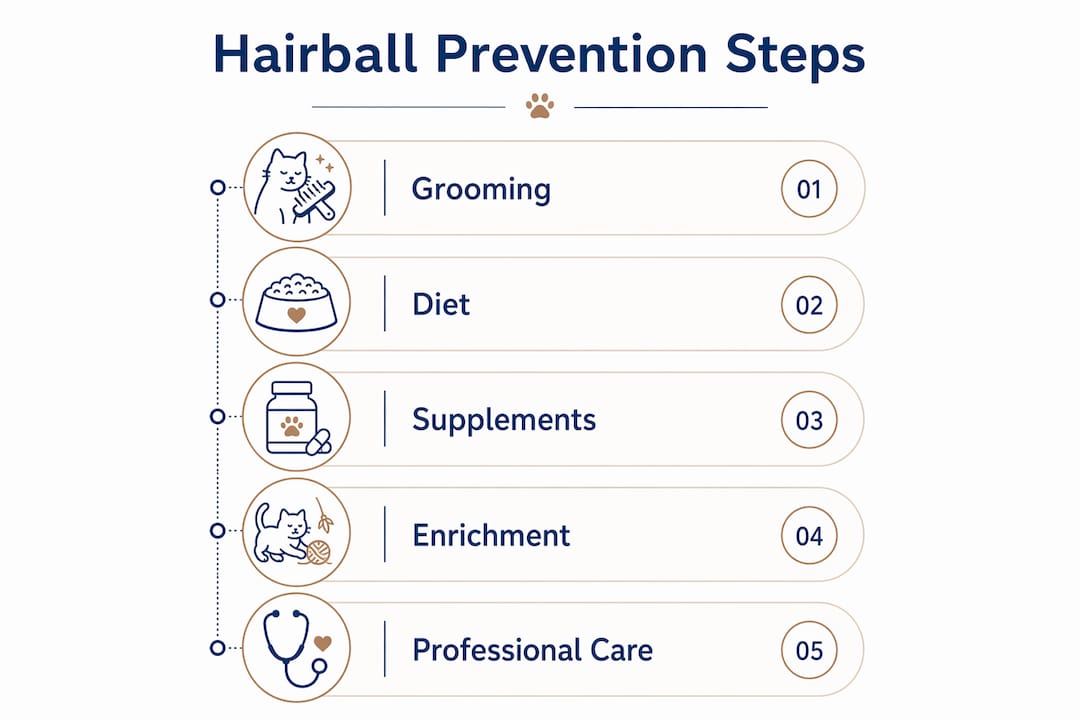
Most hairballs can be significantly reduced with three repeatable habits: brush your cat regularly (daily for long-haired breeds, weekly for short-haired ones), increase hydration through wet food or a water fountain, and add a vet-approved hairball gel or fiber supplement a few times per week. Start this week with these three steps:
- Brush today — remove loose hair before your cat swallows it during self-grooming
- Add wet food or a second water bowl — better hydration moves hair through the gut
- Ask your vet about a hairball gel — products like Laxatone are widely recommended for prevention
That combination, backed by veterinary guidance, addresses hairballs at the root rather than just managing symptoms after the fact.
Table of Contents
- What hairballs are and why your cat gets them
- Which cats are most prone to hairballs?
- How to tell a normal hairball from a warning sign
- How to prevent hairballs: your step-by-step plan
- When professional grooming makes a real difference
- What vets do when hairballs cause a blockage
- How long does prevention take, and what does it cost?
- Key Takeaways
- A groomer’s honest perspective on hairball prevention
- Faroopets: professional cat grooming that supports your prevention plan
- Useful sources and further reading
What hairballs are and why your cat gets them
When cats groom themselves, their tongue’s backward-facing barbs catch loose fur and pull it into the mouth. Most of that hair travels through the digestive tract and exits in the litter box without any drama. But some hair lingers in the stomach, clumping together into a wet mass. When that mass grows too large to pass forward through the intestines, the cat vomits it up — that familiar cylindrical, slightly discolored clump on your floor.
Cornell’s Feline Health Center explains that the stomach’s inability to break down hair is the core issue. Hair simply isn’t digestible, so anything that slows gut motility or increases the volume of hair swallowed raises the odds of a hairball forming. That’s exactly why brushing (less hair to swallow) and fiber or lubricants (better gut motility) are the two most direct prevention levers you have.
Which cats are most prone to hairballs?
Not every cat produces hairballs at the same rate. Several factors push some cats into the high-risk category, and knowing where your cat falls helps you prioritize the right prevention tactics.
Major risk factors include:
- Long or dense coats — Persian, Maine Coon, and Ragdoll cats shed more and swallow more hair per grooming session (Maine Coons in particular have a thick, multi-layered coat that requires consistent grooming)
- Seasonal shedding — spring and fall coat changes spike hair ingestion for nearly all breeds
- Excessive grooming — cats with allergies, skin conditions, or anxiety groom far more than average
- Low-fiber diets — without enough dietary fiber, hair moves sluggishly through the gut
- Poor hydration — dehydration slows gut motility, giving hair more time to accumulate
- Obesity or limited mobility — overweight cats and seniors often groom less effectively, leading to matting and increased ingestion of loose fur
- Underlying GI conditions — inflammatory bowel disease or motility disorders can disrupt normal hair passage
Senior cats deserve special attention. As cats age, their grooming habits sometimes become erratic — either over-grooming due to discomfort or under-grooming due to arthritis, both of which can increase hairball frequency. If your cat has gone from occasional hairballs to producing them weekly, that shift in pattern is worth a vet conversation.
How to tell a normal hairball from a warning sign
Occasional hairball expulsion, roughly once every week or two, falls within the range vets consider normal for cats prone to them. The sound is unpleasant, the cleanup is messy, but the cat bounces back quickly and eats normally afterward.
The pattern that warrants a call to your vet looks different:
- Repeated retching or gagging that produces nothing (unproductive heaving)
- Lethargy lasting more than a few hours after an episode
- Refusing food for more than 24 hours
- Noticeable weight loss over days or weeks
- A visibly distended or tender abdomen
- Constipation or no litter-box output for more than 48 hours
- Diarrhea following repeated vomiting episodes
Go to an emergency clinic — don’t wait for a regular appointment — if your cat is in obvious distress, cannot keep any food or water down, or has a hard, painful belly. When you call the clinic, be ready to describe how long the symptoms have been happening, how often your cat is retching, whether appetite has changed, and what the litter box looks like. That information helps the vet triage quickly.
How to prevent hairballs: your step-by-step plan
Prevention works best as a layered routine. No single tactic eliminates hairballs entirely, but combining grooming, diet, hydration, and supplements creates a system that keeps most cats comfortable year-round.
1. Groom on a schedule matched to your cat’s coat
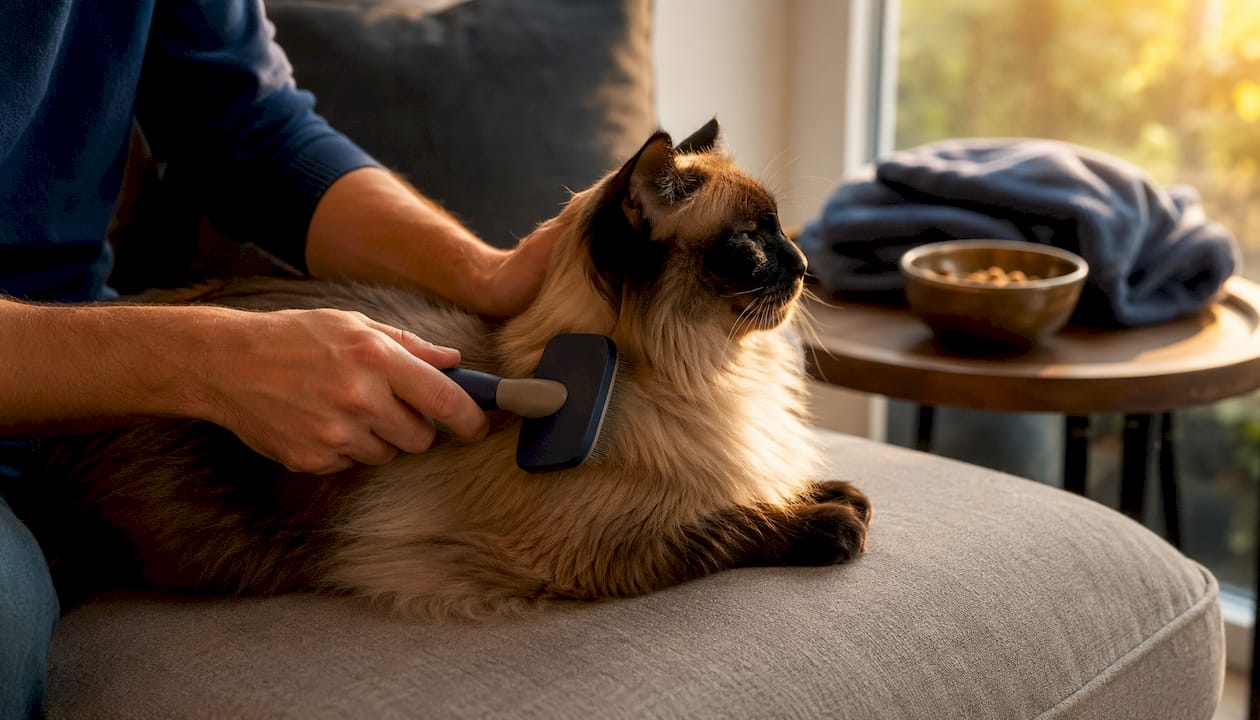
Daily brushing for long-haired cats and weekly sessions for most short-haired cats removes loose fur before it gets swallowed. During spring and fall shedding seasons, even short-haired cats benefit from brushing every two to three days.
Tool guide by coat type:
- Slicker brush — works well for medium to long coats; removes surface tangles and loose fur
- Deshedding tool (e.g., Furminator) — penetrates the undercoat and pulls out fur that’s ready to shed but hasn’t fallen yet; ideal for dense-coated breeds
- Fine-tooth metal comb — best for finishing after a slicker brush, especially around the face and legs
- Rubber grooming mitt — a gentle option for short-haired cats who resist traditional brushes
For technique, brush in the direction of hair growth using short, gentle strokes. Work from neck to tail, then do the sides and belly if your cat tolerates it. Keep sessions short at first — five minutes is plenty — and reward with a treat afterward. Cats introduced to brushing gradually almost always come to enjoy it.
If you encounter mats, never pull or cut through them with scissors. Our pet fur detangling guide walks through safe dematting techniques that won’t hurt your cat’s skin.
2. Adjust diet and hydration
Hairball-control diets and fiber additions help move ingested hair through the digestive tract before it can clump. Wet food is particularly valuable here because it adds moisture directly to the gut, supporting the motility that keeps hair moving.
Practical steps:
- Replace at least one dry-food meal per day with wet food
- Transition to any new food gradually over 7–10 days to avoid digestive upset
- Place multiple fresh water bowls around the home, or invest in a pet fountain (many cats drink significantly more from moving water)
- Some owners add a small spoonful of plain canned pumpkin (not pie filling) to meals as a natural fiber source — check with your vet on the right amount for your cat’s size
For healthy pet diet tips that go beyond hairball prevention, a well-rounded nutrition plan supports coat health and reduces shedding too, which means less hair to swallow in the first place.
3. Use vet-approved lubricants and supplements
Hairball gels like Laxatone act as mild petroleum-based lubricants that coat ingested hair and ease its passage through the intestines. Most vets recommend applying them two to three times per week for prevention, not daily. Squeeze a small amount onto your finger and let your cat lick it off, or apply it to their paw.
Beyond gels, hairball remedies come in several forms: chewable treats, high-fiber kibble, and liquid supplements. The best choice depends on what your cat will actually accept. A gel that sits untouched in the cabinet helps no one.
One firm safety note: never use cooking oils, butter, lard, or mineral oil as home remedies. Mineral oil is particularly dangerous because if your cat aspirates it during vomiting, the consequences can be severe. Stick to products specifically formulated for cats and cleared by your vet.
4. Reduce overgrooming through enrichment
Cats that groom excessively out of boredom or anxiety ingest far more hair than cats with active, stimulating environments. Behavioral enrichment — puzzle feeders, wand toys, climbing structures, and regular interactive play — gives anxious or bored cats an outlet that isn’t licking themselves for an hour straight.
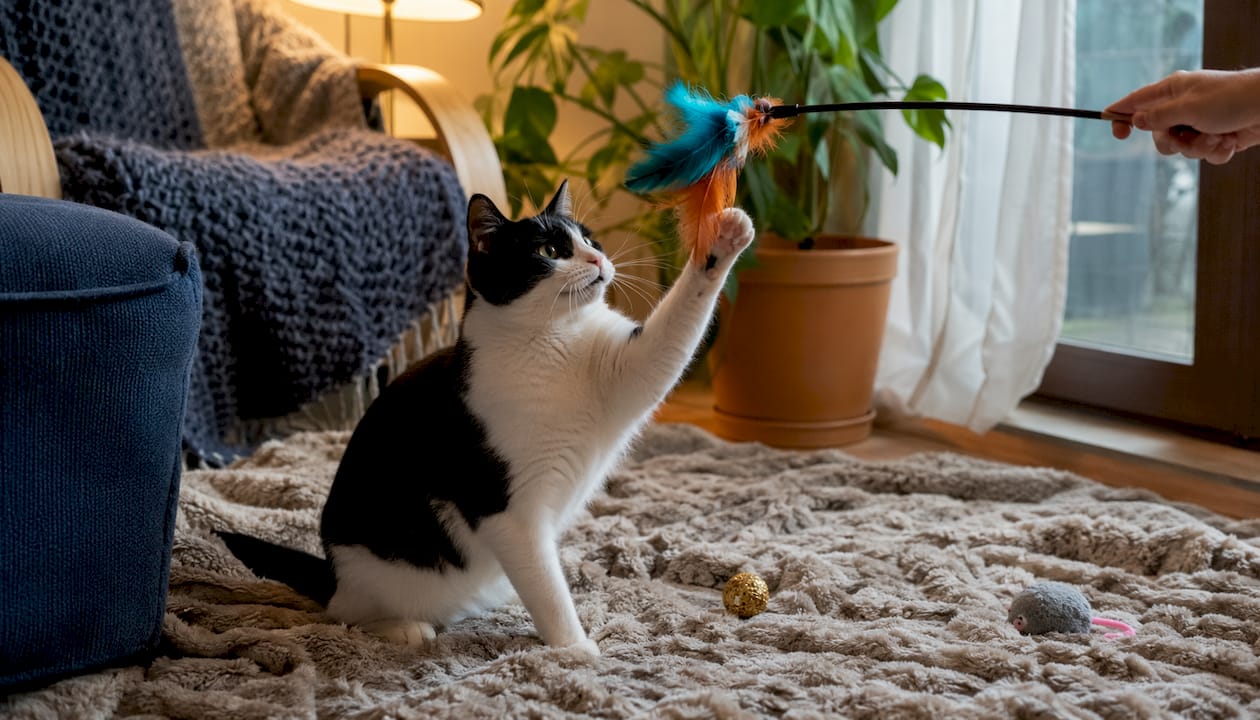
Aim for two 10–15 minute play sessions per day. Rotate toys so novelty stays high. If your cat’s overgrooming seems stress-driven rather than boredom-driven (for example, it started after a household change), mention it to your vet — there are behavioral and sometimes medical options worth exploring.
Pro Tip: Keep a simple log for two weeks: date, time, and whether a hairball appeared. Patterns (always after a meal, always during shedding season) tell you exactly where to focus your prevention efforts.
When professional grooming makes a real difference
Home brushing handles a lot, but there are situations where a certified groomer is genuinely the better option.
Consider booking a professional session when:
- Your cat has severe matting that can’t be safely brushed out at home
- Your cat is a senior with limited mobility who resists handling
- Hairballs keep recurring despite consistent home grooming
- You have a long-haired breed like a Persian or Maine Coon whose undercoat needs professional thinning
Professional groomers offer services that go well beyond a brush-out. Dematting, lion cuts, sanitary trims, and thorough blowouts that remove loose undercoat all reduce the volume of hair available for your cat to swallow. A luxury full cat grooming session typically includes a bath, blow-dry, brush-out, nail trim, and ear cleaning — the combination removes far more loose hair than a home session alone.
Safety checklist when choosing a groomer:
- Ask whether groomers are certified and trained in feline handling specifically (cats are not small dogs)
- Confirm their sedation policy — reputable groomers use sedation only in partnership with a vet, never alone
- Ask how they handle a cat that becomes distressed mid-session
- Check that equipment is sanitized between clients
For safe trimming options that reduce hairball risk, our guide on how to style cat fur covers what to expect from a lion cut and when clipping actually helps.
Pro Tip: Introduce your cat to a groomer before they desperately need one. A short, low-stakes “meet and greet” session when your cat is calm makes the next full appointment far less stressful for everyone.
What vets do when hairballs cause a blockage
A hairball that can’t pass in either direction becomes a medical emergency. Here’s what to expect if your cat ends up at the clinic with a suspected blockage.
Diagnostic steps your vet will likely use:
- Physical examination of the abdomen for pain, distension, or a palpable mass
- Bloodwork to assess organ function and hydration status
- Abdominal radiographs (X-rays) to locate the obstruction
- Ultrasound for a clearer picture of soft tissue and gut wall integrity
- Review of symptom history: duration, frequency, appetite, litter-box output
Treatment depends on severity. Mild cases may resolve with IV fluids, antiemetics, and oral lubricants or laxatives given under supervision. More significant blockages may require endoscopic or surgical removal, with anesthesia, imaging, surgical time, and postoperative hospitalization all adding to the cost. Before your visit, write down the timeline of symptoms, any changes in eating or drinking, and what your cat’s litter box has looked like — your vet will ask for all of it.
How long does prevention take, and what does it cost?
Setting realistic expectations matters. Most owners see a meaningful reduction in hairball frequency within four to eight weeks of consistent brushing and diet changes. Supplements and gels often show results faster, sometimes within two to three weeks, because they act directly on hair already in the gut.
| Intervention | Typical Cost Range (US) | Notes |
|---|---|---|
| Professional grooming session (cat) | — | Varies by coat type, location, and services included |
| Hairball-control food (monthly premium) | — | Depends on brand and cat’s size |
| Hairball gel or paste (e.g., Laxatone) | — | Lasts several weeks at preventive dosing |
| Routine vet visit | — | Exam fee varies by clinic and region |
| Emergency vet visit | — | Diagnostics, fluids, and monitoring |
| Surgery for intestinal blockage | — | Anesthesia, imaging, surgical time, hospitalization |
Regular grooming sessions cost a fraction of a single emergency visit. Cats with recurring severe hairballs who skip professional grooming often end up spending far more on emergency care than they would have on a monthly brush-out. The math is straightforward.
Key Takeaways
Consistent grooming, better hydration, and vet-approved supplements together form the most effective defense against cat hairballs — start with brushing and wet food this week.
| Point | Details |
|---|---|
| Groom by coat type | Brush long-haired cats daily and short-haired cats weekly to remove loose fur before it’s swallowed. |
| Hydration and diet | Add wet food and a water fountain to support gut motility and help hair pass naturally. |
| Use safe supplements | Vet-approved gels like Laxatone, used two to three times per week, ease hair passage safely. |
| Know the red flags | Unproductive retching, lethargy, or no appetite for over 24 hours means call your vet now. |
| Faroopets professional grooming | A luxury full grooming session removes far more loose undercoat than home brushing alone, reducing hairball risk between visits. |
A groomer’s honest perspective on hairball prevention
The advice most cat owners get focuses on products — buy this gel, switch to that food. Those things help, but the single biggest change I’ve seen make a difference is simply brushing more often and more thoroughly than feels necessary. Most owners brush for two minutes and call it done. A proper session for a long-haired cat takes ten to fifteen minutes, working through the undercoat where the loose fur actually hides.
The other thing I’d say: patience with your cat matters as much as the tool you use. A cat that associates brushing with stress will fight you every time, which means the session stays short and ineffective. Slow introductions, high-value treats, and keeping early sessions very brief build a cat that leans into the brush rather than running from it. That shift alone changes everything about your prevention routine.
Professional grooming isn’t a luxury for cats with recurring hairballs — it’s a practical health measure. A thorough blowout removes loose undercoat that no home brush reaches, and a lion cut on a heavily matted cat can reset the coat entirely, giving you a clean baseline to maintain at home. If you’ve been consistent with home care and your cat is still producing hairballs regularly, that’s the signal to bring in a professional.
Faroopets: professional cat grooming that supports your prevention plan
If you’re doing everything right at home and your cat still struggles with hairballs, a professional grooming session is often the missing piece. Faroopets offers cat grooming services delivered by certified groomers who understand feline coat care — not just aesthetics, but the health benefits of thorough deshedding and dematting.

Our grooming packages include full brush-outs, blowouts that lift loose undercoat, dematting, and coat trims that reduce the volume of hair your cat can swallow during daily self-grooming. For cats with recurring hairball issues, a scheduled grooming plan makes a measurable difference. Browse our grooming packages and book the session that fits your cat’s coat and needs. Happiness really is just a brush stroke away.
Useful sources and further reading
These vetted, veterinary-sourced references support the guidance throughout this article:
- Cornell Feline Health Center — “A Hairy Dilemma” — physiology of hairball formation, when to see a vet, and diagnostic/treatment overview
- VCA Hospitals — Hairball Remedies for Cats — causes, prevention strategies, and when medication is appropriate
- PetMD — Cat Hairballs 101 — safe supplement guidance, home remedies to avoid, and lubricant safety
- Whisker Blog — Hairball Remedies — grooming frequency by coat type, dietary strategies, and enrichment for overgrooming
- Business Insider — Best Cat Hairball Remedies — product form comparison (gels, treats, kibble) and ingredient evaluation
This article is general information for cat owners and is not a substitute for professional veterinary advice. Always confirm prevention and treatment decisions with your own vet, especially if your cat has existing health conditions.
