


Posted by Faroo Pets Grooming
on July 06, 2026

TL;DR:
- Sanitizing mobile pet spaces involves a four-step process of tidying, washing, disinfecting, and drying to eliminate bacteria, viruses, and allergens.
- Proper sanitation requires specific tools, pet-safe disinfectants, and strict adherence to contact times, especially for bleach solutions, to ensure effective pathogen removal.
Sanitizing mobile pet spaces is the process of removing bacteria, viruses, and allergens from enclosed travel and grooming environments to protect your pet’s health. Unlike a fixed room, a mobile space traps heat, moisture, and organic debris faster, making proper sanitation more urgent. The National Sanitation Foundation and the Merck Veterinary Manual both recognize a four-step protocol: tidying, washing, disinfecting, and drying. This sanitize mobile pet spaces guide walks you through every step, from choosing the right products to building a routine that keeps your pet safe on every trip.
What tools and products do you need to sanitize mobile pet spaces?
The right tools make the difference between surface cleaning and true disinfection. For mobile pet spaces, you need stiff-bristle brushes, microfiber cloths, a wet-dry vacuum, and a spray bottle for diluted solutions. These basics handle hair, dander, and surface grime before any disinfectant touches the space.
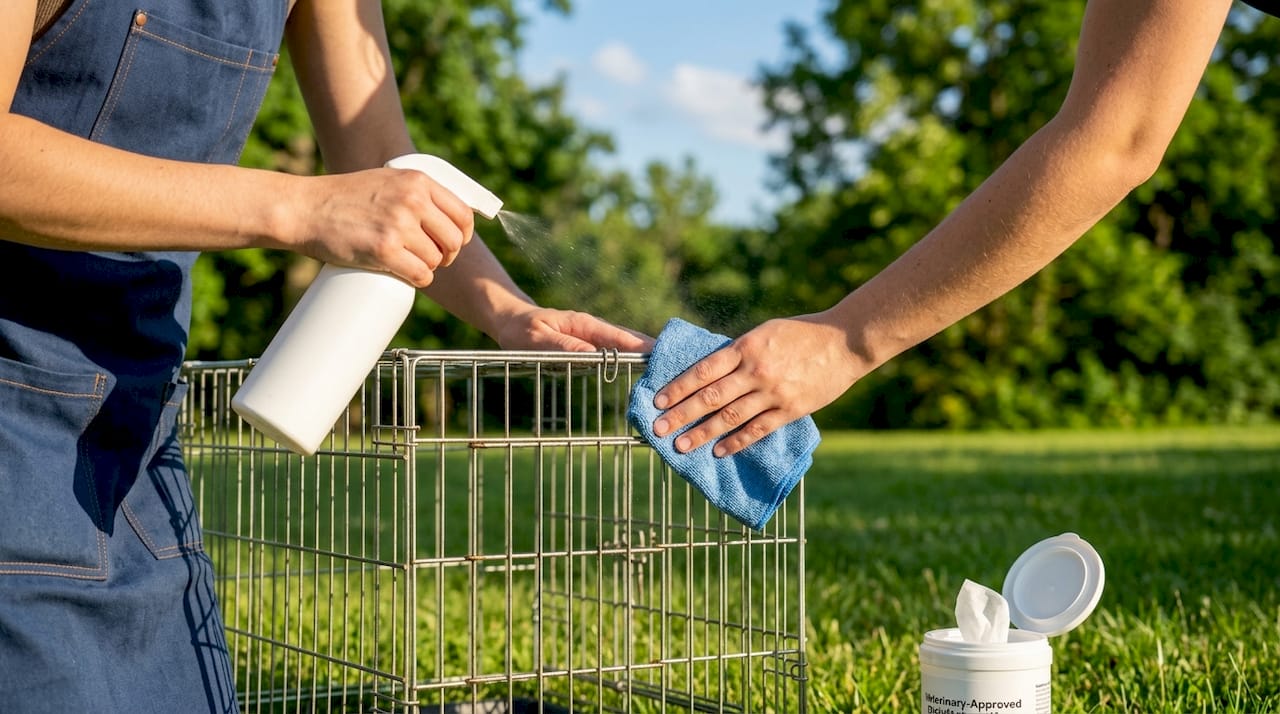
Choosing the right disinfectant is where most pet owners get tripped up. Veterinary-grade disinfectants and structured protocols prevent disease transmission and maintain safety in vehicles and equipment. Diluted bleach at a 1:32 ratio (half a cup per gallon of water) is effective against most pathogens. Pet-safe enzymatic cleaners are the other go-to option, especially for odor control.
| Product Category | Best Use | Safety Notes |
|---|---|---|
| Diluted bleach (1:32) | Disinfecting hard surfaces | Corrosive to metals; keep pets away until fully dry |
| Enzymatic cleaner | Odor removal, organic stains | Non-toxic; safe for upholstery and drains |
| Pet-safe detergent | Washing bedding, toys, leashes | Use fragrance-free formulas |
| Microfiber cloths | Wiping surfaces after disinfection | Washable and reusable |
| Wet-dry vacuum | Removing hair and debris | Use before any wet cleaning step |
Fragrance is a hidden hazard in mobile spaces. Scented sprays and heavily perfumed cleaners can irritate a pet’s respiratory tract in a confined van or carrier. Stick to fragrance-free or lightly scented, pet-approved formulas whenever possible.
Pro Tip: Always read the label for “pet-safe” or “veterinary-approved” before buying any disinfectant. If the label lists phenol or benzalkonium chloride as active ingredients, set it aside. Both compounds are toxic to cats.
How to follow a step-by-step sanitation process for mobile pet spaces
A clean-looking surface is not a safe surface. Disinfection is ineffective without removing organic debris first, because hair, oils, and dander neutralize a cleaner’s active ingredients. Skipping the pre-clean step wastes your disinfectant and leaves pathogens behind.
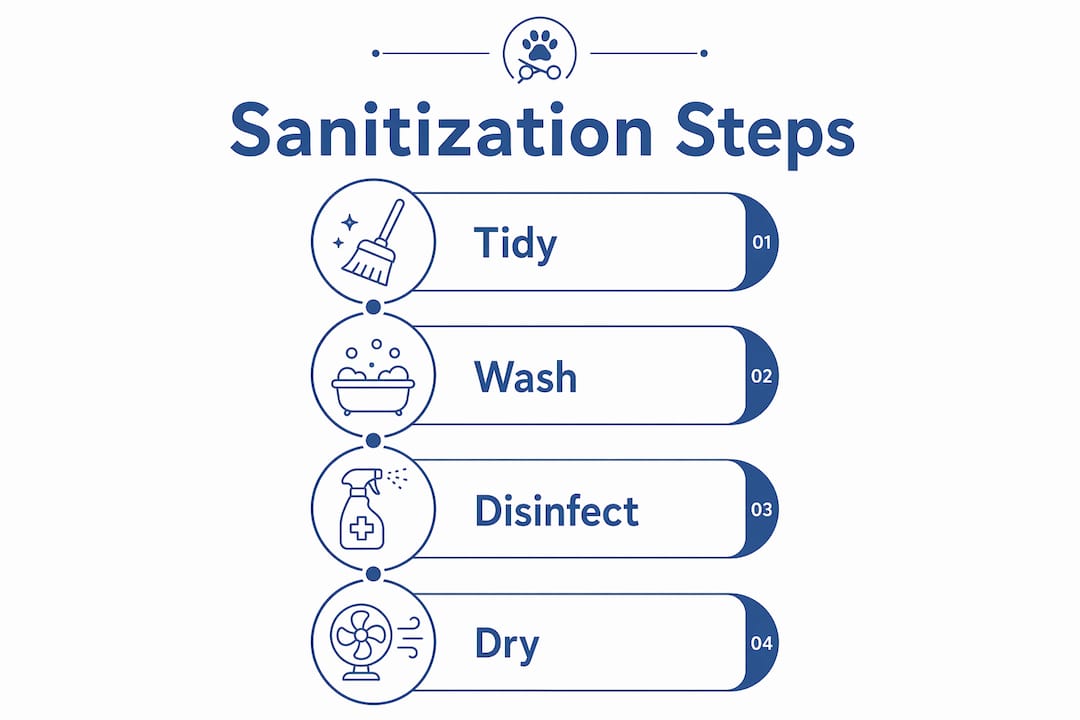
The Merck Veterinary Manual defines four sanitation steps: tidying, washing, disinfecting, and drying. Each step builds on the last. Miss one and the whole process loses effectiveness.
Daily cleaning routine
- Remove all loose debris. Use a wet-dry vacuum or lint roller to pull hair, dander, and crumbs from every surface, including corners and under mats.
- Wash surfaces with detergent. Scrub all hard surfaces with a pet-safe detergent and warm water. Rinse thoroughly.
- Disinfect with a diluted bleach solution or enzymatic cleaner. Apply your chosen disinfectant and let it sit for the full contact time. For diluted bleach, that means a full 10-minute wet contact time.
- Dry completely before your pet returns. Wipe down surfaces and allow full air-drying. Open doors and windows to speed the process.
Deep cleaning routine (weekly or after illness)
- Remove all bedding, toys, leashes, and removable mats.
- Vacuum the entire interior, including vents and seat gaps.
- Wash all removable items with hot water and pet-safe detergent.
- Scrub all hard surfaces with detergent, rinse, then apply disinfectant.
- Flush drains with an enzymatic cleaner to clear hair and bacteria.
- Allow everything to dry fully before reassembling.
“Disinfectants must be completely dry before pets return to the area. Rinsing after disinfection adds an extra layer of safety by removing residue that could cause ingestion or skin irritation.” — Merck Veterinary Manual
For a detailed walkthrough specific to grooming vans, the pet grooming van hygiene guide from Faroopets covers surface-by-surface steps with product recommendations.
Pro Tip: In a small mobile space, work from the top down and back to front. Clean the ceiling vents and upper walls first, then move to seats and floors. This prevents debris from falling onto already-cleaned surfaces.
What mistakes should you avoid when sanitizing mobile pet spaces?
The most common mistake is disinfecting without cleaning first. Organic matter like pet hair, saliva, and waste physically blocks disinfectants from reaching the surface. You end up with a space that smells clean but still carries live pathogens.
The second most common error is misusing bleach. Bleach solutions degrade quickly after dilution and require daily preparation. They also need a full 10-minute wet contact time to eliminate tough pathogens like ringworm spores. Many pet owners spray and wipe immediately, which achieves almost nothing.
Here are the most frequent mistakes and how to fix them:
- Skipping the dry phase. Wet disinfectant on surfaces can cause skin irritation or chemical ingestion if a pet licks a surface. Always wait for complete drying.
- Using masking scents instead of enzymatic cleaners. Enzymatic cleaners neutralize odors at the source. Fragrance sprays only cover the smell and can worsen respiratory issues in confined spaces.
- Neglecting drains in mobile grooming vans. Enzymatic cleaners in drains prevent hair clogs and bacterial buildup. Flush drains after every grooming session.
- Using metal tools with bleach. Bleach corrodes metal surfaces and tools. Switch to plastic or stainless-steel-rated equipment when using bleach-based solutions.
- Ignoring upholstery. Fabric seats and mats absorb bacteria and odors. Treat them with an enzymatic spray and allow full drying before use.
Pro Tip: Keep a pet first aid kit in your mobile space. If a pet has an accident or illness during travel, you can respond quickly and contain contamination before it spreads.
Managing persistent odors requires patience. A single application of enzymatic cleaner may not fully break down embedded organic matter in fabric. Apply, let it sit for 15 minutes, blot dry, and repeat if needed. Never layer a fragrance spray on top of an enzymatic cleaner. The two products work against each other.
How often should you clean and maintain a mobile pet space?
Cleaning frequency depends on how often the space is used and what type of pet travels in it. Daily use requires daily surface cleaning. Less frequent use still requires a thorough clean after every trip.
The National Sanitation Foundation guidance recommends washing pet bedding and blankets weekly at the highest temperature the care tag allows. Food and water bowls need daily washing to prevent bacterial buildup. Toys and leashes fall on a weekly to monthly schedule based on how much contact they have with saliva and soil.
| Item | Cleaning Frequency | Method |
|---|---|---|
| Food and water bowls | Daily | Hot water and pet-safe detergent |
| Bedding and blankets | Weekly | Hot wash per care tag instructions |
| Toys and chew items | Weekly to monthly | Enzymatic cleaner or hot wash |
| Leashes and collars | Monthly | Hand wash with mild detergent |
| Hard surfaces (floors, walls) | After every use | Detergent wash, then disinfectant |
| Drains (grooming vans) | After every grooming session | Enzymatic cleaner flush |
Seasonal adjustments matter, especially in Dubai’s climate. Heat and humidity accelerate bacterial growth inside a closed vehicle. During summer months, increase your cleaning frequency and always air out the space before and after use. For pet owners managing multiple species in one mobile space, the multi-species grooming guide from Faroopets outlines how to adapt sanitation routines for cats, dogs, and birds sharing the same environment.
Schedule a deep clean after any illness, after transporting a new or unknown animal, or after a grooming session involving a pet with a skin condition. These situations introduce higher pathogen loads that a daily clean will not fully address.
Key Takeaways
Effective mobile pet space sanitation requires completing all four steps in order: tidying, washing, disinfecting, and drying, with no step skipped.
| Point | Details |
|---|---|
| Clean before you disinfect | Organic debris deactivates disinfectants; always remove hair and waste first. |
| Use the right contact time | Diluted bleach needs 10 minutes of wet contact to kill tough pathogens like ringworm. |
| Dry completely before pet reentry | Wet disinfectant causes skin irritation and ingestion risk; full drying is non-negotiable. |
| Choose enzymatic cleaners for odors | Enzymatic cleaners neutralize odors at the source; fragrance sprays worsen respiratory issues. |
| Match cleaning frequency to use | Bowls need daily washing; bedding needs weekly washing; deep cleans follow illness or heavy use. |
The part most pet owners overlook
Most guides focus on what products to buy. The real gap is timing. Pet owners rush the drying phase because they want their pet back in the space quickly. That single shortcut creates the most risk. A surface that looks dry can still carry active chemical residue, especially in a warm, enclosed vehicle where evaporation is uneven.
My honest view is that the four-step protocol from the Merck Veterinary Manual is not complicated. It is just slower than most people expect. The 10-minute contact time for bleach feels long when you are standing in a van in the Dubai heat. But cutting it short means you are doing cosmetic cleaning, not real disinfection.
The other thing worth saying plainly: stress is a sanitation issue too. A pet that is anxious in a mobile space will drool, shed, and have accidents more often. That increases your cleaning load significantly. Keeping the space calm, familiar, and well-ventilated reduces both stress and contamination. A step-by-step pet van hygiene routine that your pet gets used to over time makes the whole process easier for everyone.
The best sanitation routine is the one you actually stick to. Build it around your schedule, your pet’s needs, and the products you trust. Then do it consistently.
— Growth
Faroopets’ mobile grooming services put hygiene first
At Faroopets, we built our mobile grooming service around the same veterinary sanitation standards covered in this guide. Every session uses vet-approved disinfectants, structured cleaning protocols, and fully dried surfaces before your pet steps in.
Our certified groomers handle dogs, cats, and birds with care, and our mobile vans are cleaned thoroughly between every appointment. If you want professional grooming without the stress of managing sanitation yourself, our dog grooming service and cat grooming service in Dubai are ready to book. We come to you, fully equipped and hygiene-ready. Your pet deserves a clean, safe experience every single time.
FAQ
What is the correct dilution ratio for bleach in pet spaces?
The Merck Veterinary Manual recommends a 1:32 ratio, which equals half a cup of bleach per gallon of water. This solution requires a 10-minute wet contact time to be effective against most pathogens.
How do I remove pet odors from a mobile space without harsh chemicals?
Enzymatic cleaners break down the organic compounds that cause odors at the source. Fragrance sprays only mask smells and can irritate a pet’s respiratory system in enclosed spaces.
When should I do a deep clean of my mobile pet space?
Deep clean after any pet illness, after transporting an unfamiliar animal, or after a grooming session involving a skin condition. Weekly deep cleans are also recommended for spaces used daily.
Is it safe to use bleach around pets?
Bleach is safe when fully diluted and completely dry before pets reenter the space. Wet bleach irritates skin and respiratory tracts. Always rinse surfaces after disinfection and allow full drying.
How do I keep drains clean in a mobile grooming van?
Flush drains with an enzymatic cleaner after every grooming session. Enzymatic cleaners dissolve hair and organic buildup without the corrosive effects of bleach on drain components.
