


Posted by Faroo Pets Grooming
on July 04, 2026

TL;DR:
- Grooming safety standards include protocols that protect pets’ health during every grooming session.
- Following these standards prevents injuries, reduces stress, and ensures proper sanitation and equipment maintenance.
- Pet owners should ask groomers about their safety practices, certifications, and facility hygiene to ensure pet welfare.
Grooming safety standards are defined protocols and practices that protect pets’ health and well-being throughout every stage of a grooming session. These standards cover safe animal handling, sanitation, equipment maintenance, and environmental controls. Industry bodies like the American Kennel Club have formalized these expectations through programs such as AKC S.A.F.E. (Safety, Assurance, Fundamentals, and Education), while states like New York and California have introduced grooming transparency legislation. Understanding what are grooming safety standards helps you choose a groomer who genuinely puts your pet’s welfare first, not just one who looks the part.
What are grooming safety standards and their core elements?
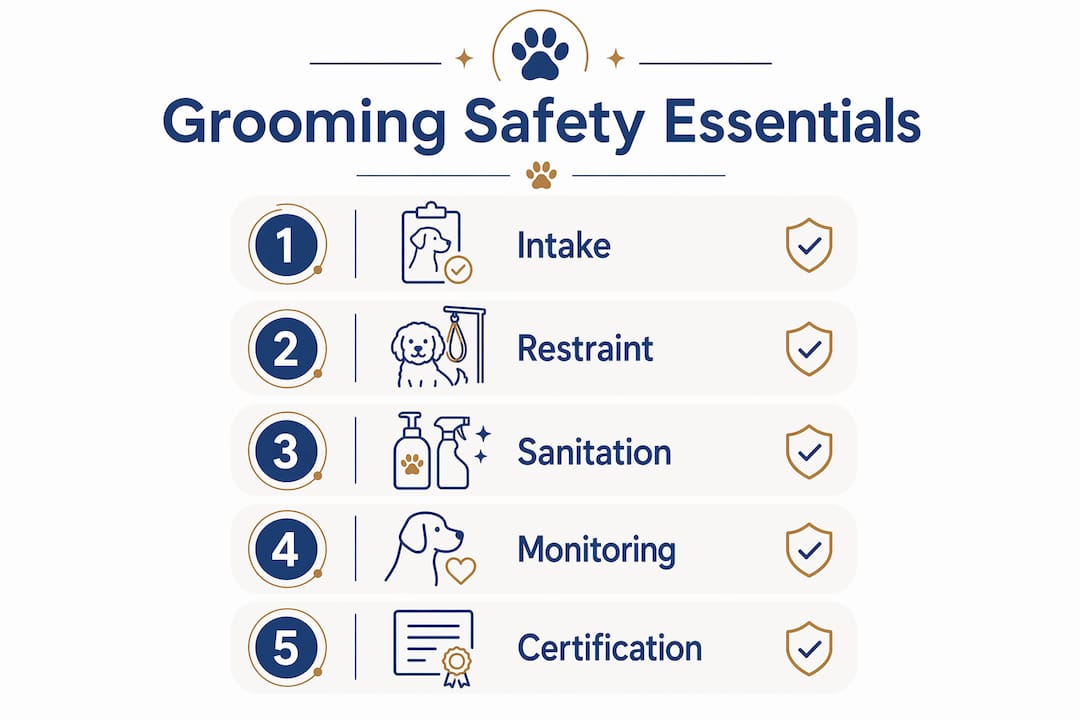
Grooming safety standards are a set of operational requirements that every responsible grooming facility must follow. They exist to prevent injuries, reduce stress, and stop the spread of disease between animals. The industry term for this framework is “grooming safety protocols,” and it spans five core areas.
Safe handling and restraint forms the foundation. Groomers use grooming loops, non-slip mats, and gentle restraint techniques to keep pets secure without causing pain or panic. Non-slip mats cost around $10 and prevent panicked pets from slipping off tables. That small investment protects against broken bones and spinal injuries.
Health intake assessments are the next pillar. A thorough intake process includes medical history, vaccination verification, and signed consent for emergency care. Health and behavioral assessments before grooming inform safe handling decisions and give groomers the right to refuse service when a pet’s condition poses a risk.
The remaining core elements include:
- Sanitation and hygiene: Disinfecting all tools, tubs, and surfaces between every animal using EPA-registered products.
- Equipment maintenance: Checking clipper blade temperature and sharpness before each use to prevent burns and cuts.
- Environmental safety: Proper ventilation, adequate lighting, and secure containment areas to reduce stress and prevent escapes.
Pro Tip: Ask your groomer to show you their intake form before your first appointment. A professional who tracks vaccination records and medical history is one who takes grooming safety regulations seriously.
How do grooming safety standards protect pets from injury and stress?
The most preventable grooming injuries share one cause: a lack of supervision. Leaving pets unattended on grooming tables or in cage dryers is a leading cause of injury and death. Falls from tables cause broken bones and spinal damage. Unattended cage dryers have caused fatal heatstroke. These are not rare accidents. They are predictable outcomes of ignoring basic safety guidelines for grooming.
Professional groomers follow a clear sequence to prevent escalation:
- Observe behavior before restraint. Signs of extreme fear, aggression, or respiratory distress signal that grooming should pause or stop entirely.
- Use grooming loops correctly. Loops secure the pet without choking. They are never used as the sole means of support on an elevated table.
- Monitor dryer temperature continuously. Force dryers must be set to the lowest effective heat and checked every few minutes.
- Inspect tools before every session. Dull or overheated clippers increase the risk of cuts and burns. Groomers must check blade heat and sharpness before touching any animal.
- Keep a first aid kit and vet contact on hand. Written SOPs covering emergency protocols reduce injury risk and legal liability when incidents occur.
“Grooming safety is a culture supported by daily habits, incident logs, and rewarding near-miss reports. Maintaining sharp, cool tools reduces grooming accidents and shows professional care, enhancing pet safety and client confidence.”
Recognizing stress signals is just as critical as physical safety measures. A dog that suddenly freezes, shows whale eye, or tucks its tail is telling the groomer something is wrong. Groomers trained in animal behavior read these cues and adjust their approach before a situation escalates into a bite or a panic injury.
What sanitation and environmental safety standards must grooming facilities meet?
Sanitation standards in grooming facilities go well beyond a quick wipe-down between appointments. Proper hygiene protocols prevent the spread of ringworm, kennel cough, and other contagious conditions that travel easily between animals sharing the same space.
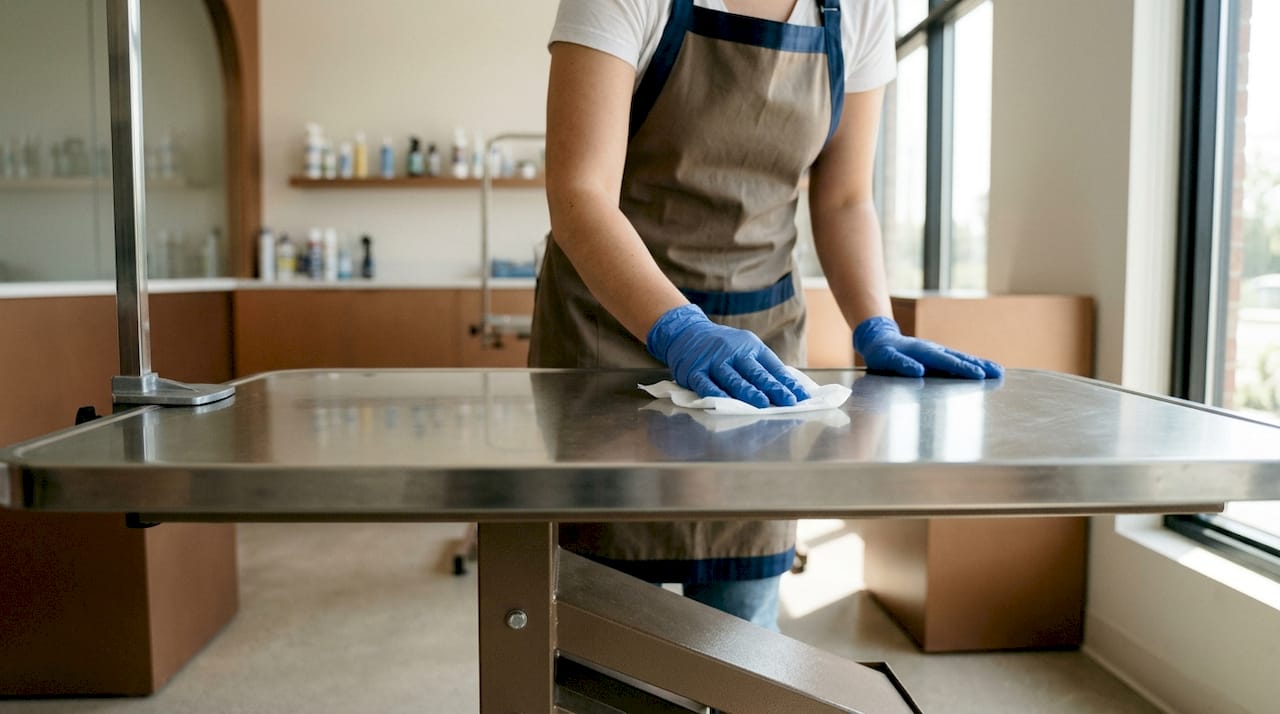
EPA-registered hospital-grade disinfectants with correct dwell times are required for effective sanitation. Household cleaners often fail to eliminate pathogens. Surfaces must stay wet for the product’s specified contact time to actually disinfect, not just appear clean.
| Sanitation Area | Requirement |
|---|---|
| Surfaces | Non-porous, easily disinfected materials only |
| Handwashing | Dedicated sink separate from grooming tubs |
| Disinfectants | EPA-registered, hospital-grade products with correct dwell time |
| Wastewater | Must drain to sanitary sewers; improper disposal risks fines of $1,000+ per day |
| Tool sterilization | Between every animal, every session |
Environmental controls matter just as much as chemical sanitation. Proper ventilation limits ammonia buildup from urine and reduces airborne pathogens. Adequate lighting helps groomers spot skin conditions, parasites, or wounds before they become serious. Facilities that use grooming management software can track sanitation schedules, incident logs, and health records digitally, reducing the chance of a missed step.
Pro Tip: When visiting a grooming facility, check whether the handwashing sink is separate from the bathing tubs. That single detail tells you whether the facility meets basic contamination-prevention standards.
What regulations and certifications govern grooming safety standards in 2026?
The regulatory environment for pet grooming is tightening. States like New York and California have introduced grooming transparency bills requiring disclosure of health-related incidents within 24 hours. Repeat offenses can result in fines exceeding $1,000. This legislative shift reflects growing public demand for accountability in the grooming industry.
Certifications signal a groomer’s commitment to safety beyond the legal minimum. The most recognized include:
- AKC S.A.F.E. certification: Formalizes knowledge of grooming safety culture and builds verifiable client trust. It covers handling, sanitation, and emergency response.
- Animal first aid training: Equips groomers to respond to choking, heatstroke, and allergic reactions before a vet can be reached.
- Pet CPR certification: Increasingly expected by premium salons and mobile grooming services as a baseline competency.
Record keeping is now a legal and operational requirement in many jurisdictions. Facilities must document incidents, near-misses, and health events. This paper trail protects both the pet and the business. Trained groomers who pursue ongoing education stay current with evolving grooming safety regulations and adapt their practices accordingly.
Salon safety culture ties all of this together. A facility where staff report near-misses without fear, where SOPs are posted and followed, and where certifications are renewed regularly is one where your pet is genuinely safe. Certifications on a wall mean nothing if the daily habits do not match them. Pet owners in Dubai can review grooming standards specific to the UAE to understand what local providers are expected to meet.
Key Takeaways
Grooming safety standards protect pets through five interconnected pillars: safe handling, health intake assessments, proper sanitation, equipment maintenance, and a certified safety culture.
| Point | Details |
|---|---|
| Health intake is non-negotiable | Always confirm your groomer collects vaccination records and medical history before starting. |
| Never leave pets unattended | Unattended tables and dryers are the leading cause of preventable grooming injuries and deaths. |
| Disinfectants require dwell time | EPA-registered products only work when surfaces stay wet for the specified contact period. |
| Certifications signal real commitment | AKC S.A.F.E. and animal first aid training show a groomer goes beyond the legal minimum. |
| Regulations are tightening | New transparency laws in multiple states require incident disclosure within 24 hours. |
Why grooming safety is the one thing pet owners cannot afford to skip
Most pet owners focus on the result of a grooming session: a clean, fresh-smelling pet. I understand that instinct completely. But after years of working closely with grooming professionals and pet owners, I have seen what happens when the process behind that result is ignored.
The risks are not theoretical. A groomer who skips the intake form does not know your dog has a heart condition. A facility that uses the wrong disinfectant is spreading pathogens between every animal it touches. These are not edge cases. They are common gaps that a well-informed pet owner can spot and avoid.
My honest recommendation: treat grooming safety the same way you treat your vet’s credentials. Ask questions. Look at the facility. Check for certifications. A groomer who welcomes those questions is one who has nothing to hide. A groomer who deflects them is telling you something important.
The safe grooming guide for Dubai pet owners is a great starting point if you want a practical checklist to bring to your next appointment. Your pet cannot advocate for itself. You can.
— Growth
Faroopets brings certified grooming safety to your door
At Faroopets, we believe every pet deserves a grooming experience built on genuine care and verified safety practices. Our certified groomers follow strict grooming safety protocols at every appointment, from health intake assessments to sanitized, well-maintained mobile vans that meet hygiene standards before they arrive at your home.

We work with veterinary supply partners to keep our tools sharp, clean, and safe for every coat type. Whether your companion is a dog, cat, or bird, our team is trained to handle each session with patience and professionalism. Explore our dog grooming services in Dubai or our cat grooming packages to find the right fit for your pet. Ready to book? Choose your service and schedule a session that puts safety first.
FAQ
What are grooming safety standards?
Grooming safety standards are defined protocols covering safe animal handling, health intake assessments, sanitation, equipment maintenance, and environmental controls that protect pets during grooming sessions.
How do I know if a groomer follows proper safety guidelines?
Ask to see their intake form, certification credentials, and sanitation procedures. Certified groomers holding AKC S.A.F.E. or animal first aid qualifications demonstrate a documented commitment to grooming best practices.
What certifications should a safe groomer have?
AKC S.A.F.E. certification and animal first aid training are the most recognized credentials in the grooming industry. Pet CPR certification is increasingly expected by professional grooming services.
Are there legal requirements for grooming safety?
Yes. States like New York and California require groomers to disclose health-related incidents within 24 hours, with repeat violations resulting in fines over $1,000. Licensing requirements are expanding in many regions.
Why is sanitation so critical in grooming facilities?
Grooming facilities handle multiple animals daily, making them high-risk environments for contagious conditions like ringworm and kennel cough. EPA-registered disinfectants with correct dwell times are the only reliable way to stop pathogen transmission between animals.
