


Posted by Faroo Pets Grooming
on July 22, 2026

Noise reduction in mobile pet grooming is one of the most direct ways to protect your pet’s comfort, safety, and cooperation during a session. About 44% of U.S. pet owners report visible stress signs in their pets during grooming, including panting, shaking, or outright refusal to cooperate, and noise is a leading trigger. The quieter the environment, the calmer the pet, and the safer and more thorough the groom.
Here is what makes sound control so central to a great grooming experience:
- Pets hear at far greater sensitivity than humans. Dogs can detect frequencies up to 65,000 Hz, making grooming equipment sounds far more intense for them than for us.
- Stress from noise compounds quickly. A pet that starts anxious becomes harder to handle, increasing the risk of nicks, slips, and incomplete grooming.
- Mobile grooming is structurally quieter than a traditional salon, but only when groomers actively manage equipment noise, power sources, and van design.
- Groomers benefit too. Sustained loud noise causes fatigue and reduces concentration, directly affecting precision and safety.
- Lithium-ion battery systems have replaced loud gasoline generators in many mobile setups, cutting one of the biggest noise sources entirely.
Understanding the role of noise reduction in mobile grooming means looking at the equipment, the environment, the technology, and the techniques together. We cover all of it below.
How grooming equipment noise affects your pet’s behavior
The loudest piece of equipment in any grooming session is almost always the dryer. High-velocity grooming dryers produce 85–95 decibels at the nozzle, a range that sits well above normal conversation (around 60 dB) and approaches the level of a lawnmower. For a dog or cat whose hearing is far more acute than ours, that sound is genuinely overwhelming.
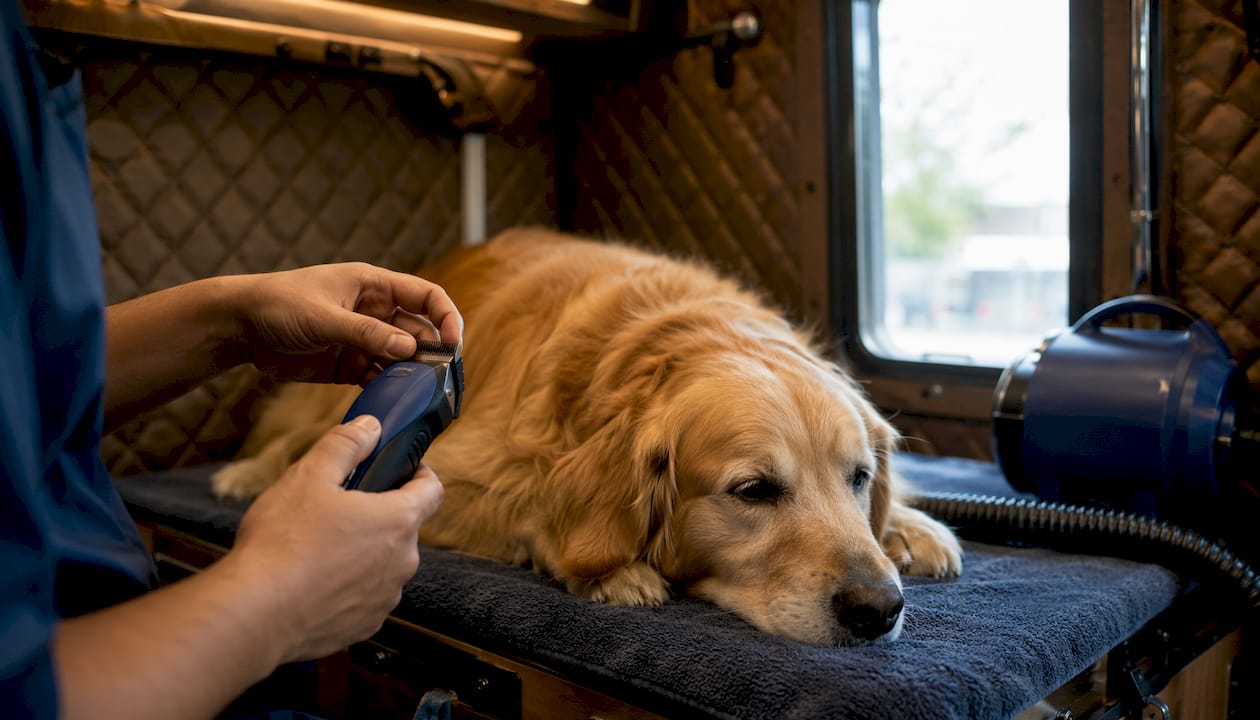
A PMC study on grooming dryer noise found that forced-air dryers used in professional grooming produce sound levels capable of causing auditory stress and potential hearing damage with repeated exposure. The study focused on both pets and groomers, noting that neither group is adequately protected in most standard salon setups. This is one of the clearest pieces of scientific evidence that noise control in pet grooming is a welfare issue, not just a comfort preference.
Behavioral responses to loud grooming sounds range from mild to severe. Pets may freeze, tremble, attempt to escape, snap, or simply shut down and stop cooperating. Cats in particular tend to go into a defensive crouch or become aggressive when exposed to sudden, high-pitched mechanical sounds. Dogs with a history of noise sensitivity, such as those who react to thunderstorms or fireworks, are especially vulnerable during grooming sessions.
| Equipment | Typical Noise Level | Primary Stress Risk |
|---|---|---|
| High-velocity dryer (at nozzle) | 85–95 dB | Auditory stress, startle response |
| Standard clipper | 60 dB | Vibration sensitivity, mild anxiety |
| Gasoline generator | 70–90 dB | Sustained background noise, fatigue |
| Lithium-ion battery system | Under 50 dB | Minimal; near-silent operation |
| Water pump/hose | — | Low-level, usually well-tolerated |
“Sensory overload from noise overwhelms dogs’ nervous systems, making it impossible for even the best handling techniques or high-value treats to calm them during grooming.” — Expert behaviorist Stephanie Zikmann, writing on low-stress grooming environments
Clippers add another layer of challenge because they combine sound with vibration. Even a pet that tolerates dryer noise may flinch or pull away when a clipper touches its skin, since the vibration transmits directly through the body. Groomers who understand this use clipper guards, slower blade speeds, and brief pauses to give pets a moment to settle.
Why mobile grooming is naturally quieter than a traditional salon
Walk into a busy grooming salon on a Saturday morning and you will hear it immediately: multiple dryers running at once, dogs barking in kennels, clippers buzzing across several stations, and the general hum of a full house. That layered noise environment is one of the biggest reasons pets find traditional salons stressful. Mobile grooming removes most of those layers by design.
A mobile grooming van operates on a one-on-one model. Your pet is the only animal being groomed at that moment, which eliminates the barking, the kennel sounds, and the competing equipment noise that define a busy salon floor. There is no waiting area filled with anxious animals, no background chaos, and no unfamiliar pets adding to the sensory load.
Mobile grooming’s structural noise advantages include:
- No kennel noise. Pets are not crated alongside other animals, so there is no barking chorus before or after the groom.
- Single equipment operation. Only one dryer and one set of clippers run at a time, keeping peak noise levels lower overall.
- Quieter power sources. Many mobile groomers now use lithium-ion battery systems instead of gasoline generators, eliminating combustion engine noise and the vibrations that travel through the van floor.
- Controlled environment. The groomer can close the van doors, reducing street noise and creating a more contained, predictable sound space.
- No intercom or PA systems. Salons often use overhead announcements or music; mobile vans stay quiet between equipment use.
- Familiar proximity. Pets are groomed close to home, which reduces pre-appointment anxiety before the noise even begins.
Noise ordinances in residential areas increasingly restrict generator use, which has accelerated the shift to battery power among mobile groomers. That shift is good for pets, good for neighbors, and good for business continuity.
Benefits of keeping grooming sessions quiet for pets and groomers
The benefits of quiet grooming extend well beyond a calmer pet on the table. When noise levels drop, the entire dynamic of a grooming session shifts. Pets that are not fighting sensory overload cooperate more readily, hold still longer, and allow groomers to work more carefully and completely.
For your pet, quieter grooming means:
- Less anxiety before and during the session, reducing cortisol spikes that can affect digestion and immune function after the appointment
- Improved cooperation, which allows the groomer to reach difficult areas like paws, ears, and the face without a struggle
- Safer handling overall, since a still pet is far less likely to be accidentally nicked or strained
- Gentler grooming practices become possible, including lower dryer heat and cooler water temperatures, which benefit pets with sensitive skin
- Positive long-term associations with grooming, meaning each session gets a little easier than the last
For groomers, the difference is just as real:
- Noise exposure causes groomer fatigue and concentration problems, which directly affect the precision and safety of every cut and clip
- Quieter sessions reduce the mental load of managing an anxious pet while also operating loud equipment
- Hearing protection becomes less urgent when baseline noise levels are lower, reducing long-term occupational health risk
- Groomers report higher job satisfaction and lower burnout rates in quieter working environments
Reducing grooming noise creates a positive feedback loop: calmer pets allow more thorough grooming, which improves coat and skin health over time and builds the kind of trust that makes future sessions genuinely easier. Pets that associate grooming with calm, predictable sounds start to tolerate and even accept the process rather than dread it.
Technologies and strategies that reduce noise in mobile grooming setups
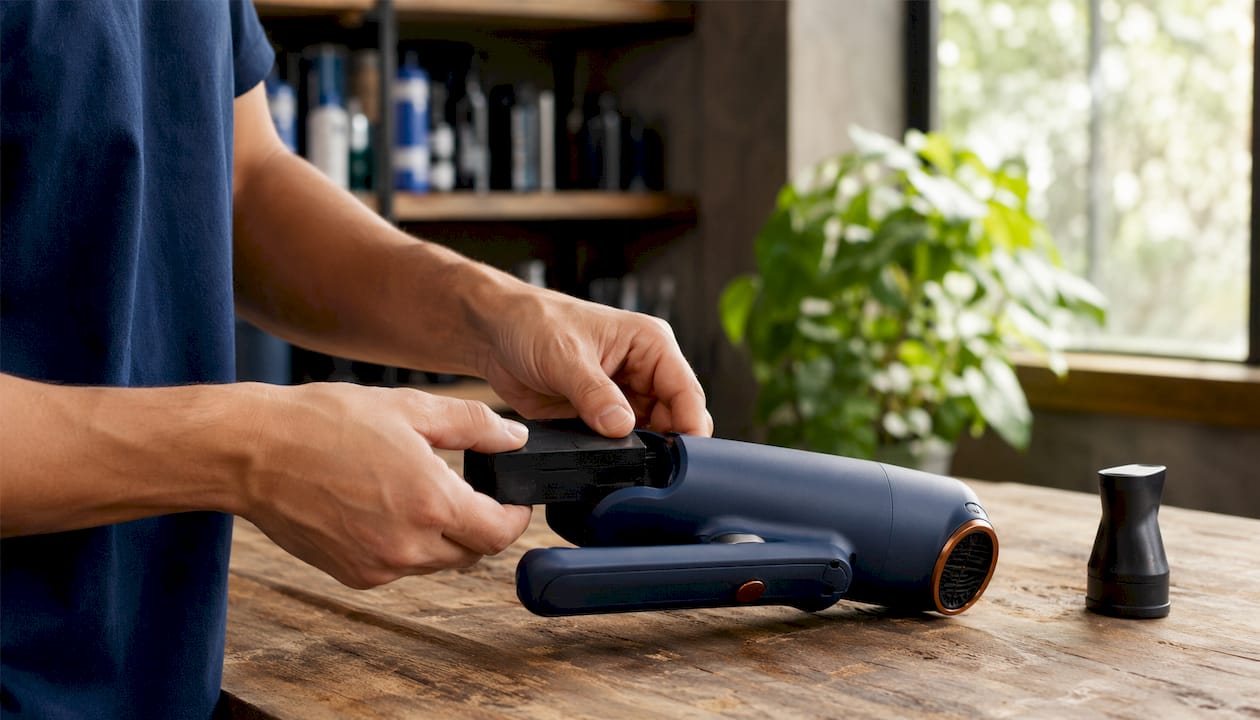
The most impactful single change a mobile groomer can make is switching from a gasoline generator to a lithium-ion battery system. Generators typically run at 70–90 dB, producing constant combustion noise and floor vibrations that travel through the entire van. Lithium-ion systems operate at under 50 dB, close to the ambient noise level of a quiet room. That gap alone transforms the baseline environment before a single piece of grooming equipment is even switched on.
Beyond the power source, van design plays a major role. Zoning noisy areas separately within the van using insulated panels and sound-dampening materials prevents noise from bouncing around the small grooming space and amplifying. Groomers who invest in this kind of build-out report noticeably calmer pets from the first session.
Quieter tools and protective accessories make a real difference at the equipment level:
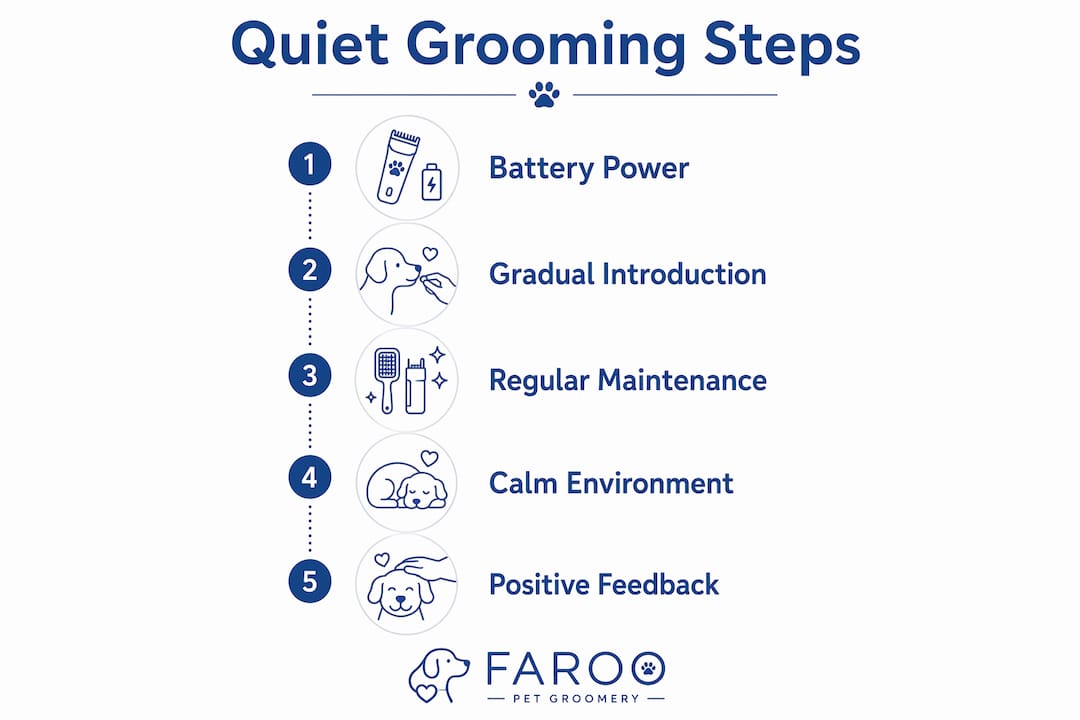
- Low-noise clippers with brushless motors produce less vibration and a softer sound than standard models, which is especially helpful for face and paw work.
- The Happy Hoodie fits gently over a dog’s ears and head, muffling dryer sound and providing light pressure that many dogs find calming during the drying phase.
- Variable-speed dryers let groomers start at a lower airflow setting and gradually increase, giving pets time to acclimate rather than hitting them with full force immediately.
- Soft restraints reduce the need for physical correction, which itself creates noise and stress.
- Rubber anti-vibration mats under equipment stands absorb mechanical vibration before it reaches the pet’s feet.
Gradual introduction is a technique, not just a philosophy. Starting a new pet with the dryer running at a distance, then slowly moving closer over several sessions, builds tolerance without trauma. The same approach works with clippers: let the pet hear and feel the vibration on a less sensitive area before moving to the face or paws.
Pro Tip: Schedule regular equipment maintenance, including blade sharpening and motor cleaning, to keep clippers and dryers running at their quietest. A dull blade or a clogged motor works harder, runs louder, and produces more vibration, all of which increase pet stress.
Real-world improvements from quieter mobile grooming
The shift toward quieter mobile grooming setups has produced clear, observable changes in how pets behave during and after appointments. Groomers who have moved from generator-powered vans to lithium-ion battery systems consistently describe the same pattern: pets that previously required two people to manage now stand calmly through the full session. The change is not subtle.
One area where the difference shows up most clearly is with noise-sensitive breeds. Breeds like Border Collies, Chihuahuas, and Bichon Frises, which tend to have heightened auditory sensitivity, often have a documented history of difficult grooming appointments in traditional salons. Mobile groomers working with these breeds report that the quieter van environment, combined with tools like the Happy Hoodie and variable-speed dryers, allows them to complete full grooms that salon groomers had previously been unable to finish safely.
Cats present an even stronger case. Feline clients that had been labeled “ungoomable” in salon settings, often because of the noise and the presence of dogs, frequently tolerate full grooming sessions in a quiet mobile van. The absence of barking, the one-on-one handling, and the lower equipment noise combine to create a fundamentally different experience. Groomers who specialize in cat grooming often cite the mobile format as the only realistic option for truly anxious feline clients.
The business impact is measurable too. Mobile groomers who invest in quieter equipment and van upgrades tend to retain clients longer, receive more referrals from pet owners whose animals had previously struggled with grooming, and face fewer cancellations driven by pet anxiety. A pet that comes home calm and well-groomed is the most effective advertisement a mobile groomer has.
Noise control also intersects with regulatory compliance. Mobile groomers operating in residential neighborhoods face increasing scrutiny around generator noise, and those who have already transitioned to silent power systems avoid the complaints, warnings, and potential bans that can disrupt or end a mobile grooming business. Quieter operation is not just better for pets. It keeps the business running.
For pet owners who want to support their pet’s grooming experience between appointments, the approach is straightforward. Play recordings of grooming equipment sounds at low volume during calm moments at home, gradually increasing the volume over days or weeks. Pair the sounds with treats or play. By the time the grooming van arrives, the sounds are already familiar rather than alarming. This kind of preparation for anxious pets takes only a few minutes a day and can transform a difficult appointment into a manageable one.
Experience quiet, caring grooming with Faroopets
At Faroopets, we built our mobile grooming service around one belief: your pet deserves to feel safe and calm from the moment we arrive. Our certified groomers work one-on-one with your dog, cat, or bird in a carefully maintained van designed to keep noise low and comfort high. No barking kennels, no competing equipment, no unnecessary stress.
Whether your pet needs a full luxury dog groom or a gentle cat grooming session tailored to sensitive animals, we bring the calm to your door. Book your appointment today and let your pet experience grooming the way it should feel: quiet, caring, and completely stress-free.
Key Takeaways
Noise reduction in mobile grooming directly improves pet safety, cooperation, and long-term grooming outcomes by removing the sensory triggers that cause stress and resistance during sessions.
| Point | Details |
|---|---|
| Dryer noise is the biggest stressor | High-velocity dryers reach 85–95 dB at the nozzle, well above safe comfort levels for pets. |
| Mobile grooming is structurally quieter | One-on-one sessions, no kennels, and single equipment use keep noise levels lower than traditional salons. |
| Lithium-ion power transforms the baseline | Switching from gasoline generators (70–90 dB) to battery systems (under 50 dB) cuts the loudest background noise source. |
| Quiet sessions benefit groomers too | Noise exposure causes groomer fatigue and concentration problems, affecting precision and safety. |
| Gradual acclimation builds tolerance | Introducing equipment sounds slowly over multiple sessions creates lasting calm associations for pets. |
