


Posted by Faroo Pets Grooming
on July 25, 2026

TL;DR:
- Humidity control in grooming vans is essential for pet safety, affecting heat stress, mold, and hygiene. Proper equipment and best practices maintain a safe environment, ensuring shorter, healthier grooming sessions. Faroopets exemplifies industry-leading standards by prioritizing climate management for Pet safety and quality.
Why humidity control is critical in grooming vans for pet safety and grooming quality
The role of humidity control in grooming vans goes far beyond comfort. It is a direct animal safety requirement, and every mobile grooming professional needs to treat it that way. A parked van heats and cools far faster than a building, and pets have no way to regulate their own body temperature inside that enclosed space. When bath moisture fills the air and humidity spikes, the risks multiply quickly.
Here is what unmanaged humidity actually causes in a grooming van:
- Heat stress and heatstroke risk rise sharply, especially during summer appointments or in warm climates
- Condensation forms on walls and equipment, leading to odors, mold, and long-term corrosion damage
- Curly and dense coats become difficult to prep and scissor accurately, compromising the finished groom
- Pathogen growth accelerates in persistently humid air, raising hygiene concerns for both pets and groomers
- Pet stress levels climb when the environment feels hot and damp, making the whole appointment harder
The SEES (Salon Equipment Evaluation Standard) recognizes humidity management as a core operational standard for grooming environments, not an optional upgrade. Proper grooming vans climate control means integrating temperature, ventilation, and moisture removal together as one system.
Table of Contents
- What equipment standards should you follow for your van?
- How does humidity affect grooming quality and your pet’s health?
- Best practices for managing humidity in your mobile grooming operation
- Why Faroopets exemplifies best-in-class humidity control in grooming vans
- Your pet deserves a grooming experience built around their comfort
- Key Takeaways
What equipment standards should you follow for your van?
Choosing the right dehumidifier starts with a clear benchmark. The SEES model specifies a minimum water removal capacity of 75 pints per day at 60% relative humidity and 80°F. That rating reflects the real moisture load that bathing and drying animals puts into a small, enclosed space. A unit that falls short of this spec will struggle to keep up during back-to-back appointments.
Beyond raw capacity, the right unit needs to work without interrupting your workflow. Professional-grade dehumidifiers should include internal pumps for hands-free water discharge, so you are never stopping mid-groom to empty a reservoir. The SEES standard also calls for a built-in relative humidity readout with manual RH target-setting, giving you real control over the van’s atmosphere.
A few other equipment considerations worth building into your setup:
- Place your humidistat near the bulkhead door, away from vents, for accurate interior readings
- Integrate your dehumidifier with the van’s HVAC system so both work together rather than against each other
- Choose marine-grade flooring and wall materials that resist moisture, mildew, and bacterial growth
- Size your air conditioning unit to account for the heat output of high-velocity dryers, the dog, and your own body in a tight space
Pro Tip: Run your air conditioning on its coldest setting the entire time you are blow-drying, and keep it running for at least 20 minutes after the dog is dry. This is your single most effective dehumidification move in a mobile van.
How does humidity affect grooming quality and your pet’s health?
High humidity complicates nearly every stage of the groom. Curly-coated breeds like Poodles and Bichon Frises are the most affected. High humidity increases difficulty when prepping those coats for scissoring, and the result is often a less precise finish than the owner expects. Being upfront with clients about this on hot, humid days protects the relationship and prioritizes the pet’s wellbeing over a perfect coat.
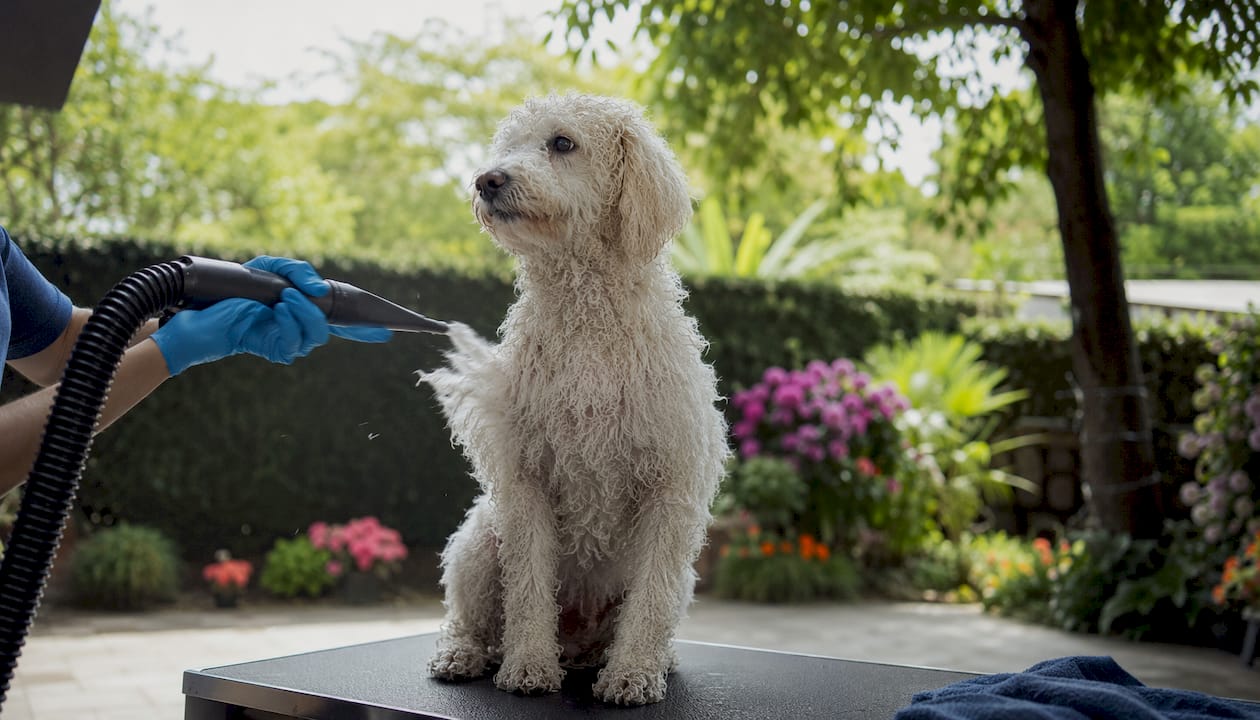
The health risks are more serious. Heat stress builds quickly in a humid van, and the warning signs in dogs include excessive panting, drooling, red-tinged gums, and lethargy. Rescheduling an appointment when conditions are extreme is always the right call. No groom is worth a heatstroke risk.
Humidity also slows drying times considerably, which extends how long a pet spends in a warm, enclosed space. Longer drying sessions mean more moisture in the air, higher energy draw on your equipment, and a more stressed animal. Managing moisture levels actively, rather than reacting after the fact, keeps every appointment shorter and safer for the pets in your care.
Best practices for managing humidity in your mobile grooming operation
The most effective approach to grooming van air quality combines smart equipment use with disciplined daily habits. Start with the basics and build from there.
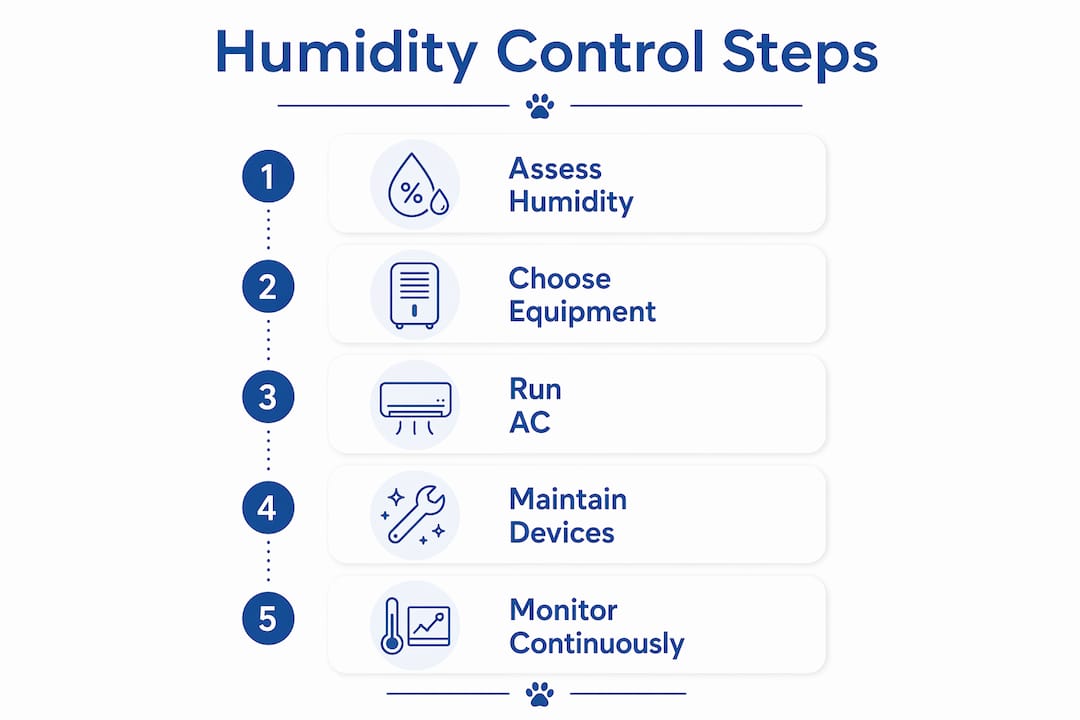
- Run the air conditioner on high with the cold dial fully engaged during every drying session, and for 20 minutes afterward to clear residual moisture
- Avoid opening exhaust vents during drying unless outside humidity is clearly lower than inside, as open vents pull humid air in and cancel out the AC’s dehumidification
- Bathe and dry one dog at a time so your climate system can recover between sessions rather than being overwhelmed
- Keep the AC running between appointments, not just during active grooming, to maintain a consistently dry interior
- In winter, run both the heater and AC on high while driving to your first appointment to warm and dry the van before any bathing begins
- Adjust your approach seasonally: humid summers in the Gulf or the American South demand more aggressive dehumidification than dry desert winters
Humidity in the air while drying is perfectly normal. Levels can become quite high during peak blow-drying. The real question is whether it drops back down once drying is complete. A well-managed system brings it back down quickly. That recovery speed is the true measure of your climate control setup.
Routine maintenance matters just as much as the right equipment. Clean dehumidifier filters regularly, inspect HVAC connections, and replace worn components before they fail mid-appointment. A system that breaks down on a hot July afternoon in a parked van is not just an inconvenience. It is a safety event.
Why Faroopets exemplifies best-in-class humidity control in grooming vans
Faroopets has built its mobile grooming operation around the understanding that pet safety and hygiene depend on a controlled environment, not just skilled hands. Operating in Dubai’s demanding climate, where heat and humidity push equipment to its limits, Faroopets treats climate management as the foundation of every appointment.
- Certified groomers follow consistent humidity monitoring protocols, checking readings throughout each session
- Vans are equipped with climate control systems calibrated for Dubai’s conditions, keeping pets comfortable from arrival to pickup
- Strict ventilation and hygiene protocols work alongside moisture management to prevent odors, mold, and pathogen buildup
- The team prioritizes one pet at a time, allowing the climate system to maintain safe conditions without overload
- Client satisfaction and animal welfare are treated as inseparable, with humidity control as a key part of delivering both
Your pet deserves a grooming experience built around their comfort
Every appointment at Faroopets reflects the same commitment: a clean, climate-controlled van where your pet’s safety comes first. While other services may focus only on the groom itself, we focus on the entire environment your pet experiences, from the moment they step in to the moment they leave looking their best.
Whether your dog needs a full grooming session or your cat deserves a luxury pampering package, our certified groomers bring professional-grade climate control and genuine care directly to your door. Book your appointment today at faroopets.com and give your pet the safe, comfortable grooming experience they deserve.
Key Takeaways
Proper humidity control in grooming vans is a non-negotiable animal safety standard that directly protects pet health and determines the quality of every groom.
| Point | Details |
|---|---|
| Humidity is a safety issue | Pets cannot regulate body temperature in a parked van, making moisture control a direct welfare requirement. |
| SEES sets the benchmark | The SEES standard calls for a minimum dehumidifier capacity of 75 pints per day at 60% RH and 80°F. |
| AC is your best dehumidifier | Running the AC on its coldest setting during drying and for 20 minutes after removes moisture most effectively. |
| One dog at a time | Bathing and drying one pet at a time prevents humidity overload and keeps the climate system in control. |
| Faroopets leads by example | Faroopets operates climate-calibrated vans with certified groomers who follow consistent humidity monitoring protocols on every appointment. |
