


Posted by Faroo Pets Grooming
on June 22, 2026

TL;DR:
- Mobile pet care provides pet services at home, reducing stress for pets and saving owners time. Although it costs more upfront, it offers significant savings in travel, waiting, and behavioral benefits for animals. Pet owners should book appointments in advance and consider recurring schedules for consistent, high-quality care.
Mobile pet care is defined as professional grooming, veterinary, and wellness services delivered directly to a pet owner’s home or doorstep. The role of convenience in mobile pet care goes far beyond saving a few minutes. It reshapes the entire experience for both pets and their owners, removing travel stress, waiting rooms, and rigid clinic schedules. Platforms like Faroopets have built their entire model around this idea, bringing certified groomers and sanitized mobile vans to Dubai residents who want quality care without the hassle. U.S. consumer spending on pets reached $152 billion in 2024, reflecting massive demand for convenient, home-based solutions. That number tells you one thing clearly: pet owners are willing to pay for ease.
How does convenience reduce stress and improve pet care outcomes?
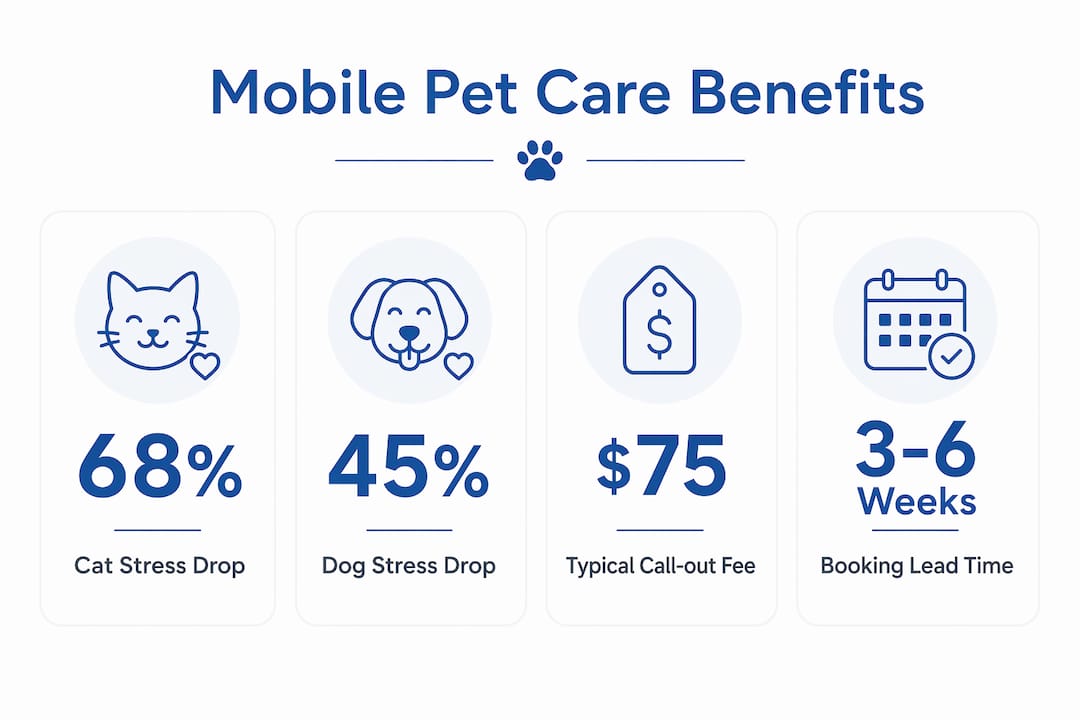
Convenience in mobile pet care delivers a measurable health benefit, not just a lifestyle perk. When pets stay in their familiar home environment, their stress levels drop significantly. Cortisol reductions of up to 68% for cats and 45% for dogs have been reported in mobile settings compared to traditional clinic visits. Lower cortisol means calmer behavior, more accurate physical assessments, and a better overall experience for your pet.

The benefits are especially clear for anxious animals. A cat that hides under the exam table at a clinic will sit calmly in its own living room. A dog that barks and trembles in a waiting room will often accept handling quietly at home. This behavioral difference is not just about comfort. It directly affects what a groomer or vet can observe and accomplish during the visit.
Mobile vets use the home environment as a diagnostic tool. A calmer pet shows clearer physical and behavioral signs, which means subtle health issues that would be masked by clinic anxiety are more likely to surface. This is why low-stress handling is considered the primary clinical benefit of mobile care, not just a nice-to-have feature.
Certain groups benefit most from this approach:
- Anxious pets that show aggression or extreme fear in clinical settings
- Senior animals with mobility issues or chronic pain that make transport difficult
- Multi-pet households where bringing every animal to a clinic is logistically overwhelming
- Pets recovering from surgery or illness that need care without the added strain of travel
Pro Tip: If your pet has a history of stress-related reactions at the vet or groomer, mention this when booking a mobile appointment. Trained mobile groomers like those at Faroopets can adjust their approach and pacing to keep your pet calm from the first visit.
What are the time and logistical benefits of mobile pet grooming and vet services?
Time is the most visible benefit of on-demand pet services, and the savings are real. Mobile grooming appointments for regular customers typically run 60–90 minutes from start to finish, with no drop-off wait, no pickup window, and no commute. For a busy professional in Dubai, that difference can free up two to three hours in a single day.
The logistical advantages go beyond time. Here is what mobile pet care eliminates from your schedule:
- Travel to and from the clinic or salon. In urban areas like Dubai, this alone can add 30–60 minutes of driving and parking to each appointment.
- Waiting room time. Traditional clinics often run behind schedule. Mobile appointments are one-on-one, so your slot is your slot.
- Multiple trips for multiple pets. Families with several pets can have all animals seen in a single visit, eliminating the need for separate appointments on separate days.
- Coordination with a partner or caregiver. You do not need someone else to drop off or pick up your pet. The service comes to you.
- Last-minute schedule disruptions. Mobile providers often offer early morning or evening slots that traditional clinics do not, fitting around work hours rather than competing with them.
Convenience also improves preventive care adherence. When appointments are easy to keep, owners keep them. Routine grooming and wellness checks happen on schedule instead of getting pushed back for weeks because the logistics feel like too much effort.
Pro Tip: Lock in a recurring appointment cadence, such as every 4–6 weeks, rather than booking one session at a time. Providers like Faroopets can plan their routes around regular clients, which often means better availability and more consistent care for your pet.
How do costs of mobile pet care compare to traditional clinics?
Mobile pet care costs more upfront, and that is a fact worth understanding clearly. Mobile veterinary visits typically cost 30–50% more than traditional clinic visits, with call-out fees ranging from $75 to $150 and sometimes reaching $250. Mobile grooming runs 15–40% higher than salon pricing. The premium is real, but so is the value behind it.
The comparison changes when you factor in the full cost of a traditional visit:
| Cost Factor | Traditional Clinic | Mobile Pet Care |
|---|---|---|
| Base service fee | Lower | Higher (includes call-out fee) |
| Transportation cost | Fuel, parking, or rideshare | None |
| Time cost | 2–4 hours total | 60–90 minutes on-site |
| Stress-related follow-up care | Possible (anxiety reactions) | Reduced |
| Multi-pet efficiency | Separate visits required | All pets in one visit |
| Preventive care consistency | Lower adherence | Higher adherence |
For multi-pet households, the math shifts noticeably. One mobile visit covering three pets replaces three separate clinic trips. The call-out fee gets shared across all animals, and the time savings multiply. Thinking of convenience as a multi-faceted bundle of benefits, rather than a single service upgrade, is the clearest way to evaluate the pricing premium.
Pro Tip: Ask your mobile provider about package deals or multi-pet discounts. Faroopets offers grooming packages that spread the cost across multiple sessions, making premium mobile care more accessible for regular clients.
The hidden costs of traditional visits add up fast. Transportation, lost work time, and the occasional stress-related vet visit after a traumatic clinic experience all carry real financial weight. Mobile care reduces those downstream costs, even if the invoice looks higher at first glance.
What operational factors shape convenience and service quality?
Behind every smooth mobile appointment is a set of logistics that most pet owners never see. Geographic clustering is one of the most important. Mobile providers group bookings by neighborhood to reduce drive time between appointments. This keeps costs manageable and allows groomers or vets to arrive on time rather than rushing between distant locations.
Route density directly affects availability. When a provider’s schedule is full in your area, booking waits of 3–6 weeks are common. This is not a flaw in the model. It reflects a well-run operation where appointments are clustered for efficiency. Pet owners in high-demand urban areas like Dubai should book ahead, especially for peak periods.
Digital booking platforms have changed how mobile care is scheduled. Owners can now select time slots, specify pet details, and confirm appointments without a phone call. Faroopets uses an online booking system that lets clients either book directly or send preferred times via messaging, reducing friction at every step. This kind of digital scheduling is now a baseline expectation for urban pet owners, not a bonus feature.
Recurring appointments are the backbone of a well-run mobile service. Clients who lock in a 4–8 week cadence give providers the route stability they need to operate efficiently. That stability translates back to the client as better availability, more consistent care, and a groomer who knows your pet’s coat, temperament, and preferences. It is a relationship, not just a transaction. You can read more about the full picture of mobile pet care in Dubai to understand how hygiene and logistics work together in practice.
Key Takeaways
Mobile pet care delivers its greatest value when convenience, clinical quality, and consistent scheduling work together as a single system.
| Point | Details |
|---|---|
| Stress reduction is clinical | Cortisol drops up to 68% in cats and 45% in dogs during mobile visits versus clinic visits. |
| Time savings are substantial | Mobile appointments run 60–90 minutes with no travel, parking, or waiting room time. |
| Cost premium has real offsets | Multi-pet households and hidden traditional costs often make mobile care cost-competitive. |
| Recurring scheduling matters | Locking in a 4–8 week cadence improves availability, routing, and care consistency. |
| Digital booking is now standard | Online scheduling reduces friction and makes on-demand pet services accessible to busy owners. |
Why convenience is not the whole story
Here is something I have noticed that most articles on this topic miss entirely: convenience is the entry point, not the destination. Pet owners choose mobile care because it is easier. They stay because the quality is genuinely better for their specific animal.
The misconception I hear most often is that mobile care is a luxury for people who are too busy to do things properly. That framing gets it backwards. A cat that has never had a calm grooming experience at a salon may finally tolerate a full groom at home. A senior dog with arthritis that dreads car rides gets the same quality care without the physical toll of travel. The convenience removes the barrier, and the care does the rest.
I also think the cost conversation is handled poorly almost everywhere. People see the call-out fee and stop reading. They do not calculate the two hours of lost work time, the Uber to the clinic, or the follow-up visit after their anxious dog had a panic response. When you add those up honestly, mobile care is often the smarter financial decision, not just the easier one.
That said, mobile care is not right for every situation. Emergencies, complex surgeries, and advanced diagnostics still require a fully equipped clinic. The best pet owners I have seen use mobile services for routine and preventive care, then lean on traditional clinics when the situation genuinely demands it. That combination gives your pet the best of both worlds. For a deeper look at how grooming affects anxiety, the difference between home and salon settings is worth understanding before you book.
— Growth
Professional mobile grooming, delivered to your door by Faroopets
Faroopets brings certified, caring groomers directly to your home in Dubai, so your dog or cat gets a full professional groom without a single stressful car ride. Every mobile van is sanitized and fully equipped, and every groomer is trained to handle pets with patience and skill.
Whether you have a nervous rescue cat or a large dog that hates the salon, Faroopets has a package built for your pet’s needs. From a luxury full dog groom to tailored cat grooming sessions, every service is designed around your schedule and your pet’s comfort. Busy professionals across Dubai trust Faroopets for consistent, high-quality care that fits into real life. Choose your service and book your first appointment today.
FAQ
What is the role of convenience in mobile pet care?
Convenience in mobile pet care means delivering professional grooming and veterinary services directly to a pet owner’s home, eliminating travel, waiting rooms, and rigid scheduling. It reduces pet stress, saves owner time, and improves preventive care adherence.
How much more does mobile pet care cost than a traditional clinic?
Mobile veterinary visits typically cost 30–50% more than traditional clinic visits, with call-out fees ranging from $75 to $150. Mobile grooming runs 15–40% higher than salon pricing, though multi-pet households often offset this premium through combined visits.
Is mobile grooming less stressful for pets?
Mobile grooming is significantly less stressful for most pets. Cortisol levels in cats drop up to 68% and in dogs up to 45% during mobile visits compared to clinic or salon settings, because pets remain in their familiar home environment.
How far in advance should I book a mobile pet care appointment?
In high-demand urban areas, booking 3–6 weeks ahead is recommended, especially for peak periods. Locking in a recurring 4–8 week appointment cadence with a provider like Faroopets improves your availability and ensures consistent care.
Can mobile pet care handle multiple pets in one visit?
Mobile pet care services can see multiple pets in a single visit, which eliminates the need for separate trips and spreads any call-out fee across all animals. This makes mobile care especially practical for households with two or more pets.
